10 MORE Star Trek Villains Who Killed The Most
These are the folks who scored the highest in Star Trek - in the absolute worst way possible.

Being a Star Trek villain is a double-edged sword, and even more so if you're a villain who appears in the films. Robert O'Reilly once joked that when he discovered the Duras Sisters were to be the antagonists in Star Trek: Generations, he breathed a sigh of relief - knowing that he would survive for another day.
To really stand out as a Trek, one needs to make their mark on history. Oh, there are simple ways to do this - killing a main character would help. Having said that, you won't see Armus anywhere on this list, because we're doubling down here. Yes, that oily b*stard did off Tasha Yar, but that's the only character we ever saw him kill. Here, it's all about the kill count, and who scores the highest.
Gear up your notepads and pens, get those calculators out, and join us as we count down the rather grim task of discovering which villains deserve their all-time positions on the pantheon of Trek monsters, and which were simply trying their best to get some attention.
Looking at you, Slick Boy.
10. Kor

Perhaps a controversial inclusion here, but one must remember that Klingons are, by and large, a warrior race. Kor's introduction in Errand Of Mercy depicts him as a brutal overseer and tyrant. This was in keeping with the description of Klingon as a whole. It was only when Deep Space Nine's Blood Oath came around that the audience saw the softer side of John Colicos' portrayal.
Kor arrives as a subjugator on Organia, bringing with him five hundred of his troops. Unknown to him is that both Kirk and Spock are on the planet, posing as traders, who proceed to wage a guerilla war against the occupiers.
Kor, in response to this, seemingly has two hundred Organians put to death. Here's where the controversy arises - technically, Kor only gave the order. But even more than this - no one actually died.
So, what the heck is Kor doing on this list then? Well, the simple fact is this - the Klingon Empire was one of the most brutal organizations of the 23rd and 24th centuries, to say the least. Kor, in being the first Klingon that the audience met on-screen - ordering a mass execution, no less - becomes the figurehead for this organization.
At least he died saving lives, so there are some hero points for that.
9. Redjac

Redjac appears in The Original Series episode Wolf In The Fold. A non-corporeal entity, it travels from planet to planet, via possession, committing murders for the simple pleasure of killing. It was during its tenure on Argelius II that it met its supposed downfall.
Redjac is an outlier on this list as it is not known for certain how many people it had killed. It was clearly hundreds of years old, as it was revealed to have been the infamous serial killer, Jack the Ripper, in the past. Traveling from planet to planet, it was responsible for murdering many women. Spock suggested this was because it enjoyed their fear more than the fear of men.
The episode saw Redjac take control of the Enterprise, though it was then forced back into Hengist's body, and was beamed into space. The expanded universe showed that it was not the end for this monster, as it latched onto another ship to survive, going dormant for a century before returning, this time to do battle with the Enterprise-D. It also appeared in the two-part comic Wolf On The Prowl and Wolf At The Door, where it was finally defeated.
8. Crell Moset

Crell Moset was introduced in the episode Nothing Human. He was a Cardassian scientist, appearing on the USS Voyager in the form of a hologram, created to assist the EMH. His affable, charming manner belied a dreadful secret: Moset was to the Bajorans what Mengele was to the Jews - a monster, through and through.
Moset had done most of his research during the occupation, using Bajoran slaves as his own private test subjects. He conducted inhumane experiments, killing thousands in the pursuit of, as he saw it, scientific advancement. Though the outcome of his research allowed the EMH to save both Torres', and an alien parasite that had attached itself to her, lives, the cost of this knowledge was simply too high.
The former Maquis members of the crew would have nothing to do with this hologram, and the EMH's own conscience couldn't allow for the continued use of this research, knowing how it had been achieved. Moset, who was very probably still alive in the Alpha Quadrant at this point, received a small form of just deserts when his research, and the hologram used to embody it, was deleted from the ship's database.
7. V'ger

Another example of accidental, yet highly destructive, power here, V'Ger was encountered by the newly-refitted USS Enterprise in the 2270s. Massive beyond anything that Starfleet had encountered before, it dwarfed not only the ship, and the cloud that surrounded the main structure was said to be greater than Earth's entire orbit around the Sun.
V'Ger had displayed its power by destroying three Klingon K't'inga class vessels, Starfleet Station Epsilon IX, and tragically, Lieutenant Ilia as well. Perhaps destroying may be a little inaccurate though, as all of these were examples of V'Ger downloading, storing, and remembering each of them, instead.
Spock, fascinated by this new encounter, underwent a space walk that took him into the heart of V'Ger's core. There, he discovered the recorded images of thousands of ships, planets, and entire galaxies, all of which it had encountered on its travels.
It is unclear if V'Ger had 'downloaded' these as it had the Klingons and Ilia, though there is no reason to believe that it hadn't. If that is so, then there is little doubt that V'Ger, in its quest to return to its maker, was simply far, far too efficient at its job - and the devastation that it wrought, despite creating a new form of life, is unparalleled in Star Trek history.
6. Jetrel
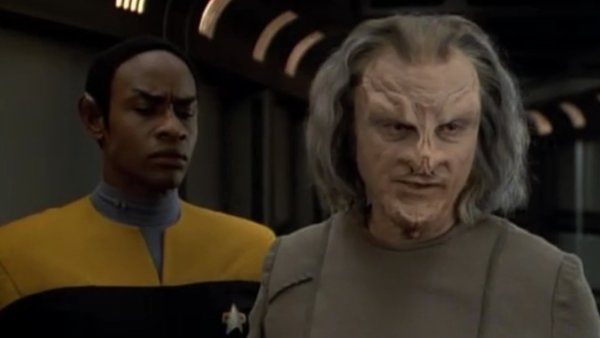
This is a controversial entry, as Jetrel is effectively the Oppenheimer of Star Trek. His work allowed the creation of the Metreon Cascade, which in turn led to a devastating attack against the Talaxians.
The man came aboard Voyager early into the ship's adventure in the Delta Quadrant, which led to a difficult meeting for Neelix. Neelix himself had suffered from Jetrel's work, losing his entire family to the Cascade, though he was off-world, thankfully, when the device was detonated.
Perhaps including Jetrel as a villain is too simplistic. Neelix himself was able to, if not entirely forgive the man, then certainly come to an understanding that there was a difference between a despotic maniac, and a misguided scientist - one who felt extreme remorse for his actions.
It may be best to let history judge men like Jetrel. He certainly was aware of the destructive power of his creation, though he personally didn't push the button. Much as Robert Oppenheimer has a complicated place in the history of humankind, so too does Jetrel in the annals of the Delta Quadrant.
5. Soran

In our previous list we discussed an entry that raised some eyebrows - Annorax. Did he actually deserve a spot on the rankings, as the giant reset button was hit? Well, we're here to tell you that not only have we NOT answered that, but we're introducing another entry just like it here.
Dr. Tolian Soran was the mad scientist who would sacrifice anything and anyone so that he could return to the Nexus. His research involved the destruction of large stellar bodies, something that would have immediate and deadly results for anyone too close by. While the destruction of the Veridian star was undone by the efforts of Picard and Kirk, that did nothing for any of the victims of Soran beforehand.
Soran's research into trilithium saw him allying with the Duras Sisters. This in turn would lead to the deaths of Romulans and Federation citizens, along with with the destruction of the Sisters' own Bird-of-Prey, and its crew.
This is yet another reason why Picard and Kirk going back to that one bloody moments on the surface of Veridian III makes even less sense - if Kirk had simply gone back to the Enterprise-B, he could have stopped Soran long before any of it happened.
4. General Nedar

Though the audience never actually heard this name on-screen, the notes for Star Trek: Picard's first season identify the half-Vulcan/Romulan Commodore Oh as Nedar, who held the rank of General within the Romulan fleet. As a member of the Zhat Vash, her hands were drenched in blood.
It was she who was responsible for reprogramming the synthetics on Mars. Thus, this one individual is responsible for almost twenty thousand deaths, and a planet that remained on fire into the early 25th Century at least.
Nedar's motives may (and that's a big may there) have come from a place of preservation, but that doesn't change the fact that her actions directly led to one of the worst massacres in Federation history. There has been nothing heard from this character since her disappearance after the arrival of Starfleet, though it is safe to say that she is still out there. The immediate threat may have passed, but this soldier infiltrated Starfleet with relative ease. There is no telling what she could do, if she really put her mind to it.
3. Gul Darheel
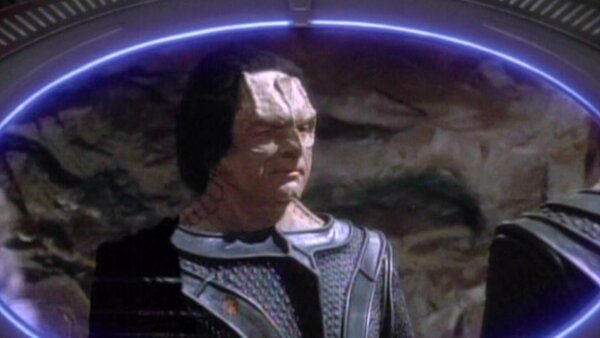
There are enough atrocities that occurred within the Cardassian Occupation of Bajor to fill several of these lists by themselves, but for this entry we look at Gul Darheel - the so-called 'Butcher of Gallitep.'
Gallitep Labour Camp was a grim and brutal destination for any Bajoran slave, analogous with Auschwitz or Dachau, and was well-known to be a location full of torture and pain. By the closing days of the Occupation, extreme crimes were commonplace, with murder as frequent as anything else.
Darheel presided over some of the worst atrocities, often ordering his men to go out and 'kill Bajoran scum.' Amin Maritza, the poor man struggling with the Cardassians' lack of accountability for their crimes, delivered a chilling monologue as Darheel - one could well imagine this man celebrating in the evil that was orchestrated under his watch. The death of Maritza at the hands of a traumatized Bajoran could simply be added to Darheel's own tally.
2. Khan

Khan Noonian Singh is often the first name out of Trekkie's mouths when asked who the biggest, baddest villain of them all is. He has the dubious honour of being maniacal in several realities, as well as being a cold-blooded tyrant to boot.
Khan-Prime was a warlord in the original timeline's Eugenics Wars. For a period, he controlled much of Asia, brutally conquering, and disposing of, those he deemed inferior. At that point, it seemed as though everyone who wasn't genetically engineered was inferior, meaning everyone was on his hitlist.
When he found himself in the future, brilliant a tactician as he was, he was foiled not once, but twice, by James T. Kirk. The first time would be a relatively bloodless affair, whereas the second time would see much of the Enterprise's cadet crew, and of course Spock, killed in the attempt to stop him.
The Kelvin-era Khan wasn't much better in terms of his goals, even if Spock got to survive in that universe. He was technically responsible for the death of Kirk, but that didn't last for very long.
Either way, Khan Noonian Singh is still a villain that should send a shiver of fear down the spine of anyone who hears it, or is on the receiving end as from hell's heart, he stabs at thee!
1. Gul Dukat

Gul Dukat is, in essence, as close to Adolf Hitler that Star Trek has ever really come to portraying. His hard-boiled hatred for the Bajorans, hidden behind a veneer of trying to help them modernise, continuously showed its ugly head in the years after the Occupation came to an end.
Dukat's numbers are slightly off-centre. Technically, the numbers of dead started to drop when he took over as Prefect of Bajor. Yet, as he would later explain with glee to Weyoun, he tried to avoid killing when possible. Instead, he wanted to dominate, bend others to his will, and force them to see why they had been wrong to oppose him in the beginning.
With his negotiating Cardassia's entry into the Dominion, he then became the author of the deaths of millions, taking the lead in a war that would devastate the Alpha Quadrant for decades to follow. Dukat himself would fall out of favour with his Dominion masters, but this would do nothing to curb his bloodlust. He simply hitched his ride to another post, slinking into the service of the Pah-Wraiths.
Between the actual murders that he himself committed, and the deaths that took place under his orders, Dukat was and remains one of the deadliest foes that Starfleet ever faced.