10 Strangest Worlds In Star Trek
Just when you think you've got your feet on solid ground, Star Trek swings for the Meridian
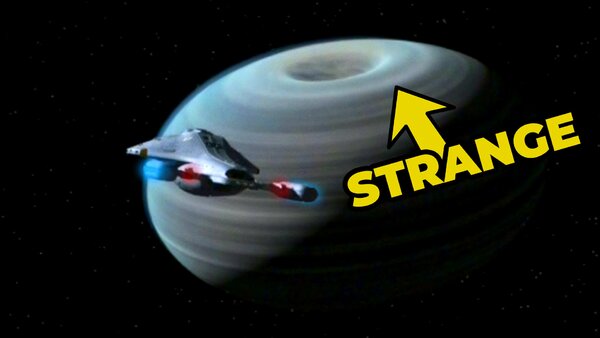
What defines a strange world? In a universe as vast as the one Star Trek inhabits, anything out of the ordinary could bear that label. Is it strange just because it looks a bit different? Yes! There it is, the end of the list. Thank you, and good night.
Or.
Perhaps strange is simply a roadmap to new? After all, the clue is in the original promise of Star Trek. Strange New Worlds, isn't that right? They even named one of the spin-offs after it, so new will be one of our leads. What does new mean? Is new just another word for unknown? Well, yes, in short. Unknown, different, unexplored. And maybe a little weird, when we get right down to it.
Star Trek has taken us to hundreds of new worlds. Some of them looked like someone's basement with a tarp thrown over the wall, while others were wondrous and thrilling to behold. Many of them sit somewhere in the middle, redressed for a new episode, waiting to cover our comrades in smoke and metamusil. The earliest new worlds in The Original Series were excuses to show off that fancy new technicolour technology, matte paintings or no.
Grab an environmental suit, a phaser rifle, and hop in the transporter. Just do yourself a favour and don't wear red.
10. Murder Planet

This charmingly named world (thank you, Jankum Pog) is one of the strangest on this list. While it's not the only dangerous planet that has been depicted in Star Trek, it is one of the few that is actively trying to kill anyone unlucky enough to set foot on its surface.
When the Protostar lands on its surface, the young crew quickly discover that it is a place where dreams come true. Those dreams might be nightmares, but they are dreams nonetheless. The entire planet is linked under its surface, allowing coordinated attacks on unsuspecting prey, while also manifesting these poor creatures' desires to entice them into traps.
The planet's own properties may have inspired a native species to take to the stars, but still retain some of the lessons that their homestead bestowed upon them. Murder Planet was located, according to Hologram Janeway, in the Hirogen System.
Almost all Hirogen representatives encountered by Starfleet before this stardate had been nomadic by nature, with no mention of a homeworld. It is unclear when Starfleet was able to discover and categorise this system as the Hirogen system. Hologram Janeway names it with some authority, suggesting absolute confirmation of the fact.
The Hirogen encountered by Starfleet began to make a little more sense after the visit to this world. If a species had been trained from birth to kill everything around them, lest they be killed by everything from the water to the plants, would that not encourage decent hunting skills?
9. Meridian
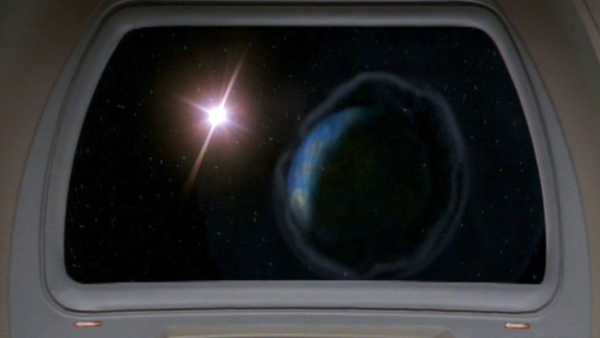
Meridian, or Trialus 1, was a planet in the Gamma Quadrant that existed in this dimension for a short period of time. In fact, when the USS Defiant entered the Trialus system, the planet popped up to say hello - for the first time in sixty years, and even then it was only due to stick around for twelve days.
The locals weren't sure what caused this dimensional hopping, though knew enough to say it was related to the Trialus star. Between periods in normal space time, the planet and everything on it shifted into a realm of pure consciousness. This was wonderful as an anti-aging method but the shortened stays in normal space had effectively killed the chance for reproduction (the old-fashioned way).
Despite Jadzia Dax's affections for a local named Deral, she could only pass on the knowledge of how to help, rather than join Meridian on its next hop into consciousness. Though she believed she had altered her body chemistry enough to join them, it wasn't to be, and her presence almost destroyed this world and everyone on it.
Jadzia herself wouldn't be around for Meridian's next phase into this reality, but it is entirely possible that Ezri Dax could have popped along to say hello in about 2431.
8. Remus
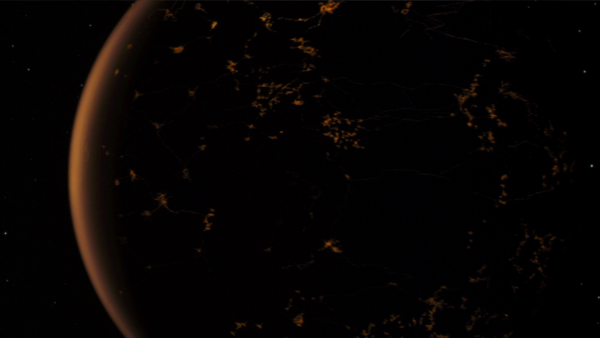
Remus was one of the planets in the Romulus system and was one of the Romulan Empire's key dilithium mining locations. The indigenous population, if indeed they were indigenous, had evolved to exist in near-total darkness, thanks to their lives on the dark side of the planet.
Remus was tidally locked, meaning that one side always faced the sun. This baked half of the world and banished everything and everyone to the other side. Though the Remans had a fierce reputation as warriors, the Romulans kept them in a state of slave labour, forcing them to dig and mine, while also engaging in brutal and bloody battles, particularly during the Dominion War.
Little more has ever been learned about Remus and its people, with most of the outside contact occurring in 2379. Shizon, the clone of Captain Picard and now leader of the Remans, orchestrated a coup d'état, poisoning the Romulan Senate with radiation and planning a full-scale invasion of the Federation for good measure. In doing so, he displayed the Remans technological advancements over their Romulan cousins. They possessed the technology to perfectly cloak their ships, while still retaining the ability to fire - something only a single prototype Klingon Bird-of-Prey had previously managed.
Remus was among the ruins of the supernova that devastated the Romulan Empire in 2387, presumably making the Remans just as nomadic as their cousins. It remains to be seen if any Remans managed to find their way to Starfleet Academy by the 32nd Century.
7. Beta Omicron Delta III

There are worlds in the Milky Way Galaxy that contain such wonders as the mortal mind could hope to possess, but there were few like the one first encountered in Shore Leave. This world was a simple playground, ready to offer its guests their hearts' desires. The only limit was their own imagination.
The now-iconic image of the White Rabbit may have struck McCoy as a little odd, but when one considers just how far down the rabbit hole this planet could have gone, he should count himself lucky, fake-out death included. In 2266, it was a relatively harmless world. Injuries could be easily repaired, and the Keeper assured his new guests that they were welcome to remain.
However, by 2269, the Keeper had passed away, and the planet began to take on a new life and new purpose. The Enterprise returned in Once Upon A Planet, ready to engage in more relaxation, but found instead a bitter and angry central computer system.
This system, rather than replicating its guests' desires, instead decided to play games with them. These games included screaming dragon-like things in the sky, as well as kidnapping Uhura. Thankfully, they kidnapped the one person who could communicate best with them, and they eventually conceded, allowing crews to return.
It was effectively a giant holodeck. And they have never, ever broken in Star Trek, so really, where's the harm?
6. Dakala
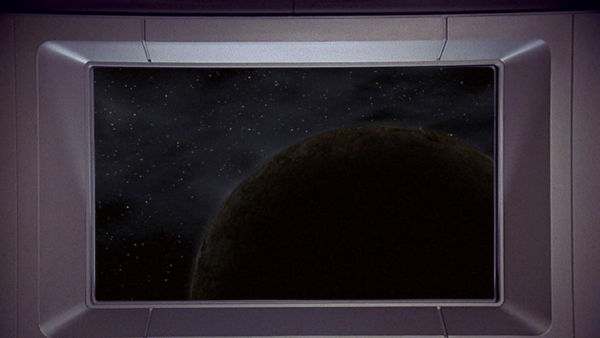
Rogue worlds can lead to strange species thereon, and such is the case with Dakala. This planet had broken free of its star's orbit, and by the time Enterprise encounters it, there is no difference between day and night. It is a dark, lonely planet, but the crew of Enterprise are not alone.
An alien species, the Eska, treat the planet as one large hunting ground. While Archer breaks bread with them, he is distracted by a beautiful woman, one he seemingly has met before, imploring him for his help. Though he does, in fact, know this woman, things are not quite what they seem.
Dakala is home to a species that is telepathic, capable of using its power to get inside the heads of others. The Eska see them as less than sentient, delighting in hunting these beings for nine generations.
Dakala was unusual for a rogue planet in that it supported indigenous life. The light of distant stars did manage to shine on the planet, even if it never lifted from night to day. T'pol theorised that the plants and fauna were sustained by the hot air vents, releasing steam from the planet's core. While the telepathic species, known as wraith by the Eska, were able to communicate with Archer, there were several other native creatures as well - including the Bore Worms.
Not the Bore Worms!
5. Megas-Tu
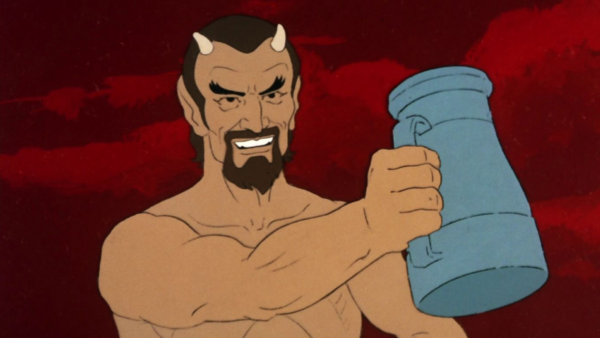
Megas-Tu was a controversial planet in Star Trek's history, not least for being one of those 'centre of the Galaxy' locations that shouldn't technically exist. The Magicks Of Megas-Tu manages to side-step that issue by also having the planet exist in an alternate dimension. One phaser blast dodged there.
The second, rather strange aspect of this strange world was the fact that it was populated by devils. When Larry Brody was writing the script for the episode, he originally pitched a story featuring the Enterprise meeting God (now, where have we heard that before?) Although, according to Drawn to the Final Frontier - The Making of Star Trek: The Animated Series, Gene Roddenberry loved the idea, the network was never going to allow the show to depict god in this way.
They were, however, perfectly happy with a depiction of a devil, cloven hooves and all.
The planet is depicted as candy-striped, though when the crew beams down, they are presented with 17th-century Salem, with the locals depicting the religious zealots of the day. Instead of a witch-burning, Kirk and Spock manage to convince the Megans to let them, and their new friend Lucien, go free. The episode received some criticism for a seemingly sympathetic portrayal of a Satanic creature, yet it was hardly the first time that particular shot was fired against the show.
A certain pointy-eared character caused some raised eyebrows in The Cage, too.
4. Theta Zeta

Theta Zeta only received its name in the script for the end of Discovery's third season, so most will know it simply as the Dilithium planet at the centre of the Burn. Located in the Verubin Nebula, it was the crash site for the KSF Khi'eth, a Kelpian ship on which Dr. Issa served.
She gave birth to her son Su'Kal in the ruins of her ship and then, knowing that she would soon die, built a holographic world for him to play in and be occupied.
Su'Kal was born on a world with various types of radiation, all of which combined to start warping his genes. He connected with the planet, and through it, the dilithium. It unfortunately acted like a resonace chamber, amplifying his own grief when his mother died. He screamed in agony and in his pain he inadvertently ended thousands of lives.
The force that spread out from Theta Zeta caused every active warp core to breach in that moment, crippling much of the quadrant and reducing Starfleet to rudimentary forms of transport. It took over a century for that crucial part of the puzzle to come to light and to also remove Su'kal from the planet, for fear that another Burn would occur.
It may have been a grand tragedy but Theta Zeta is still an interesting world in a galaxy full of them.
3. Captain Lisa Cusack's Crash Site
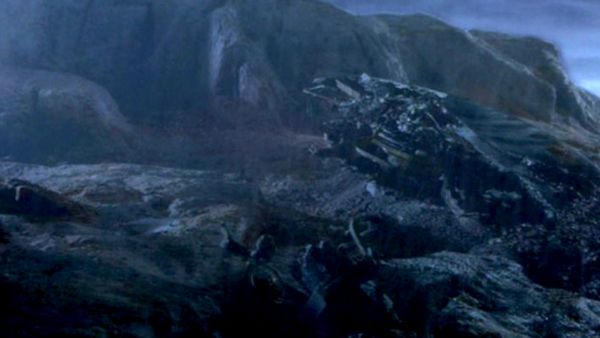
The fourth planet of a star system in the Rutharian Sector is hardly a romantic description for a starship's final resting place, yet that is where the USS Olympia met her fate in The Sound Of Her Voice. The planet was largely barren, with driving wind and rain, coupled with high CO₂ levels in the air, made it a thoroughly unpleasant place to be.
The unusual thing about this planet was not on its surface but surrounding its atmosphere. The planet was encased in an energy barrier that attracted the Olympia's attention, though when the ship initiated scans, a metreon radiation surge destroyed the ship and killed all aboard, save the captain, Lisa Cusack.
Though tragic, that still was not the strangest part. This barrier acted as a temporal transmitter. Though Cusack survived both the Olympia's destruction and the crash of her shuttle, her distress calls were heard in the wrong time. When she spoke to the crew of the USS Defiant, she was talking to the future, as the messages were transmitted forward by three years.
Though her body is eventually recovered by Sisko, Bashir, and O'Brien, it is to bring her back to Deep Space Nine for an Irish Wake, rather than a welcome home.
2. The Weird Planet Displaced In Time
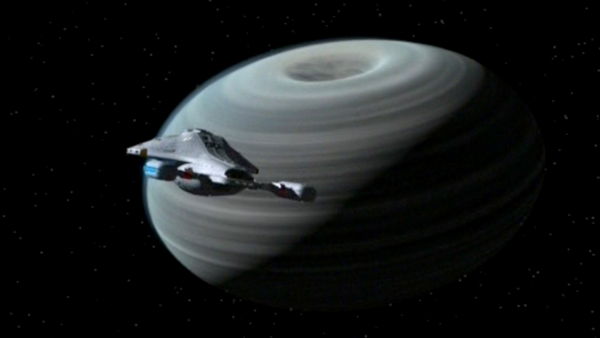
Despite Naomi Wildman's colourful description of this planet, the universe has yet to settle on a name for this world that Voyager encountered in 2376. The technical explanation for its weirdness was a tachyon core, a subspace particle field that ran between its two cores, and a spinning speed similar to a quasar. All considered, it was a fairly strange planet.
The Emergency Medical Hologram was probably best equipped to describe the world, having spent a grand total of eighteen minutes there. For the crew of Voyager, those eighteen minutes were long enough. For The Doctor, those eighteen minutes equated to over three years, a lot of memories, and a son named Jason.
It's a long story.
One suggested name for this planet was Kelemane's Planet, named for the astronomer, played by the late Obi Ndefo, who dreamed of contacting the 'Sky Ship'. The short story Eighteen Minutes by Terri Osborne calls it Tahal-Merroj, while Naomi Wildman originally voted for The Weird Planet Where Time Moved Very Fast and So Did the People Who Lived There. All solid choices in the end.
Voyager remained in orbit for mere days, while centuries passed on the planet below. They were inadvertantly responsible for seismic activity that eventually convinced enough of the indigenous species to consider them a threat. Though the planet fired a barrage of anti-matter weapons at the ship, a scientist and astronaut, Gotana-Retz, was able to convince his people to help the ship, having already visited and discovered their secret.
The planet's population were working on technology to allow them to join the rest of the galaxy by the time Voyager finally broke away, so it is very likely that they may appear again.
1. T'Khut
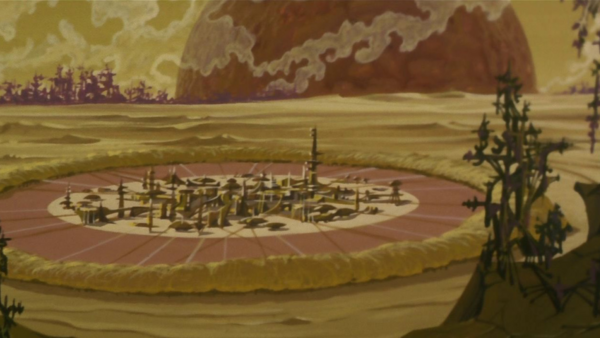
Most readers will be familiar with Vulcan, and many will be aware of its current or future name, Ni'Var. Yet how many will be aware of the planet's binary twin, T'Khut? This planet is strange because, depending on the day and the person speaking, it both exists and doesn't.
In the first televised episode of The Original Series, The Man Trap, Spock states that Vulcan has no moon. However, in Yesteryear, there is clearly something in the sky over Vulcan's horizon. This something would go on to be called T'Khut - depending on the source, and the time of the year.
T'Khut was 'accidentally' created by an animation artist during production on Yesteryear, one who evidently didn't receive the note that Vulcan should be moon-free. The theatrical edition of The Motion Picture also featured a moon or planetoid in orbit over Vulcan, but this was removed from the director's cut.
Fonata helped reconcile this error, first through print publication in 1975 via a series of stories and then later in Jean Lorrah's 1984 novel The Vulcan Academy Murders. Star Trek: Strange New Worlds finally re-canonised the planet in the first season, depicting the planet on a star chart, hovering in orbit of Vulcan.
The 1994 novel Sarek by A.C. Crispin further explains that the planet has different names for various times during the year - which also helps to explain the titles (including The Watcher) that it had been given in the course of its rather odd existence.