10 US Sitcoms Aussie Kids Grew Up With In The 80s

In the 1980s a generation of Australian kids grew up with a constant backdrop of cheesy American sitcoms. Most of them had long-since ended by the time we watched them for the first time, but they made for cheap and easy programming. It was a simply equation: networks kept them on endless rotation - we kept on watching them. Over and over and over again. But was it really just cheesy, disposable TV pap? Maybe the memory cheats. They might've had more than fair share of schmaltz and that ridiculous 'laff box' in place of a live studio audience, but were they really all that bad or just a product of another time? Here are ten of them.

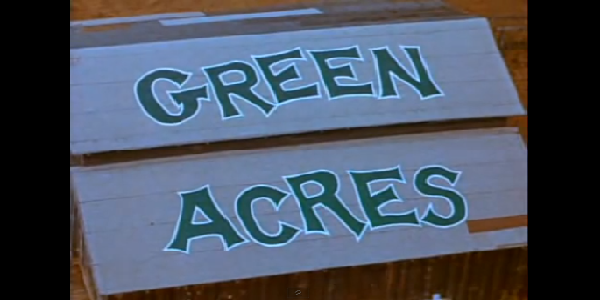
10. Green Acres

15 September 1965 €“ 27 April 1971. 6 seasons. 170 episodes New York City lawyer Oliver Douglas and his city-loving wife Lisa give up the high life and move to a run down farm in the country. Oliver's wanted to be a farmer all his life and he finally decides he's over NYC when he sees an ad for a 160 acre farm that's for sale in a place called Hooterville. He convinces Lisa to give it a try for six months. The show lasted for six years. The rest of the series deals with the Douglas's adjustments to life at Green Acres, the weird-ass Hooterville locals and all the oddball situations that such wildly clashing views of the ideal way of life can create. On the surface it was typical sitcom fare, but most episodes were driven by the absurd, with eccentric plots and bizarre concepts. Example: episode 141, "The Beeping Rock". A local child claims to've come back from the moon with a rock. One character communicates with the child via a two-way radio embedded in a dress ring on his right pinkie and the child delivers the rock to Green Acres driving a solar-powered timber go-cart propelled by a washing machine motor. When the rock starts beeping Oliver takes it to a doctor to be x-rayed to discover its contents. Later, Arnold the pig begins oinking at the rock and the rock beeps back. The rest of the series' 169 episodes were more-or-less as weird. One particular aspect of Green Acres never made sense: despite the premise of fine living and high standards established in the first episode, by episode 170 the exterior of the house was still as rundown as the day it was bought, the walls were still dirty and covered in peeling wallpaper and the Douglas's still had to climb a telegraph pole to make phone calls.

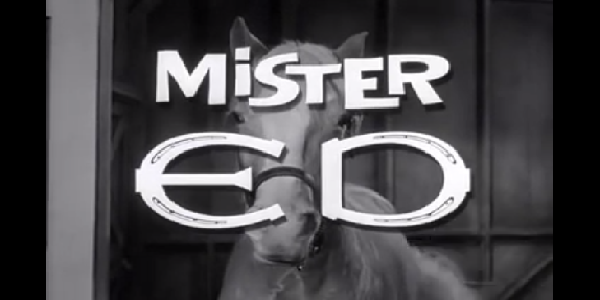
9. Mister Ed

5 January 1961 €“ 6 February 1966. 6 seasons. 143 episodes It's a preposterous notion, a talking horse. But it kept Mister Ed going for six years and into the annals of TV history. What's not to like about a talking horse, anyway? The premise of city folk relocating to more rural climbs wasn't uncommon in 60s US sitcoms and Mister Ed did it first. Architect Wilbur Post and his wife Carol couldn't wait to escape the city to their modern house in the country with its landscaped grounds and a barn that came with a free horse. It was soon apparent that the horse wasn't your run-of-the-mill equine. Ten minutes into the first episode the running gag of the entire series was set up when Ed explained to Wilbur why nobody else knew of his vocal talents, saying he only spoke to Wilbur because "you're the only one I ever liked". For six seasons, while Wilbur struggled to convince Carol that the horse could talk, 'husbands' stood around smoking cigars, reading newspapers and heading off to work in their coats and hats, while Carol and other 'wives' meandered through life looking immaculate, pottering about the house and going shopping. Much of the action from episode-to-episode was restricted to the barn, which also doubled as Wilbur's design studio. While plots were superficially orthodox, a talking horse effectively taking the place of a human character meant that, by default, each episode was actually quite absurd. Over time it became evident that Ed could do all kinds of unlikely things: open doors, wander unnoticed from place to place, get in and out of houses, even make and answer phone calls. It was all so farcical that nobody ever questioned how a horse could operate a rotary dial phone or use its handset.

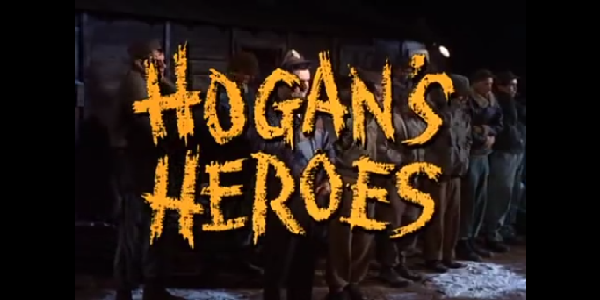
8. Hogan's Heroes

17 September 1965 €“ 28 March 1971. 6 seasons. 168 episodes Hogan's Heroes was an unlikely sitcom. Set in German prisoner of war camp Stalag 13, overseen by the monocle'd Colonel Klink and his bumbling offsider Sergeant Schultz, the show followed the misadventures of US Air Force Colonel Robert E. Hogan and his fellow POWs who were using Stalag 13 as a base for undercover Allied operations. Aiding Hogan was a US Army sergeant, a US Air Force sergeant, a French Air Force corporal and a British Air Force corporal, each of whom had a specific role to play in day-to-day operations based around their specialist skills - tailor, chef, would-be chemist and telecommunications expert. Despite best efforts, Klink's and Schultz's collective incompetence means Hogan and said heroes are effectively free to come and go as they please. Klink proudly boasts of zero escapes during his tenure as camp commandant and Hogan is eager to maintain that record, along with the ruse that he and the crew are no more than helpless prisoners of war. The truth is that there's virtually nowhere in the camp that Hogan and his men can't get to via the elaborate system of tunnels they've built, including one to the outside world, but for the sake of Allied operations Hogan ensures that escape isn't just impossible, it's undesirable. When Hogan's Heroes ended, it just stopped. It was once written that the last episode was so unremarkable that the series had already used its basic plot in eleven other episodes. The war didn't end. The Germans didn't up and leave. And Hogan and his crew never got the kudos they deserved after six years of foiling the Germans at every turn. Clearly they weren't big on finales back in 1971.

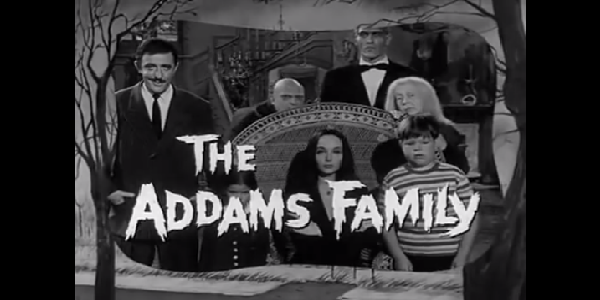
7. The Addams Family / The Munsters

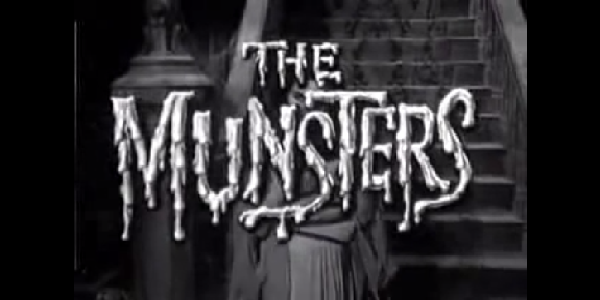
18 September 1964 €“ 8 April 1966. 2 seasons. 65 episodes / 24 September 1964 €“ 12 May 1966. 2 seasons. 70 episodes They're lumped together here as one because The Addams Family and The Munsters were effectively the same show: spooky families looking like horror-movie characters, living in spooky houses in a contemporary setting. Different names and networks maybe, but only slightly different characterisation and tone and essentially the same basic premise and character set. Basically, then, the same show. The Addams Family started six days before The Munsters and The Munsters ended just over a month after The Addams Family. Both were filmed in black and white. Both featured a spooky old Gothic house where it was almost always night time, or dark and stormy, or both. The Addams were a household of eight comprising parents Gomez and Morticia, daughter Wednesday and son Pugsley, Morticia's Uncle Fester, Gomez's mother Grandmama, Lurch the 7 foot tall butler, Gomez's Cousin Itt and Thing, a hand that lived in a box. Along with the bizarre family the household was also home to an equally bizarre collection of pets, including a spider, a vulture, piranhas, a lion and a man-eating plant. The Munsters were a slightly more mainstream household made up of parents Herman and Lily, Lily's father Grandpa (aka Sam Dracula), son Eddie and daughter Marilyn. The Munsters got about in two vehicles - The Munster Coach and Drag-U-La, both stylised old hot rods made to resemble a hearse and a coffin respectively. Although both families were seen to exist in otherwise average suburbia, The Munsters were the more ordinary of the two, with daughter Marilyn not infused with any horror movie-inspired characterisation at all. Both series' were set in a universe of slapstick and absurdity, but The Addams Family trumped The Munsters with the Addams' obvious wealth and absolute eccentricity, plus its over-the-top set pieces and bizarre characters.

6. Get Smart

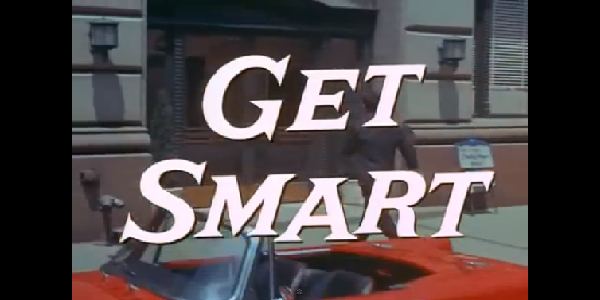
18 September 1965 €“ 15 May 1970. 5 seasons. 138 episodes Get Smart was very much a product of its time, in an age when the world was awash with spies, intrigue and espionage. The Cold War was still hitting its stride and cinemagoers couldn't get enough of James Bond and The Pink Panther. In the first episode a phone rings in a packed auditorium in the middle of a performance, a scene familiar enough to a modern audience but totally foreign in 1965. That the phone is in the sole of a secret agent's shoe is all the more bizarre, yet nobody questioned it because Maxwell Smart - aka Agent 86 - is a secret agent and secret agents obviously have phones in their shoes. Under the stern, sensible and sometimes exasperated direction of The Chief, Agents 86 and 99 work for CONTROL, a secret US government counter-intelligence organisation fending off evil rival operation KAOS. Thanks to 86's blundering incompetence, his resolution of potentially deadly situations is generally accidental and virtually everything to do with both CONTROL and KAOS is camp slapstick. Get Smart's ample supporting cast mainly portrayed other CONTROL agents, who typically rendezvous with 86 and 99 from inside mail boxes, lockers, refrigerators or anywhere else a human being shouldn't be. The nature of CONTROL missions supports the reality of absurdities in which Get Smart exists, where opposing CONTROL and KAOS agents interrupt a fight to the death to exchange pleasantries and where the robot character Hymie has such realistic human features that he can't be told apart from a real man. The cone of silence is pretty absurd too, if only because in reality it would've had virtually no effect. Get Smart was so entrenched in pop culture that it inspired two movies, a 90s TV revival and a 2005 cinema remake. It was sent up to near perfection in the 1980s by the animated series Inspector Gadget, with Adams voicing the titular character. In the late-90s the Austin Powers films, though chiefly parodying the James Bond franchise, included elements reminiscent of Get Smart, itself also a parody of Bond.

5. The Lucy Show/ Here's Lucy

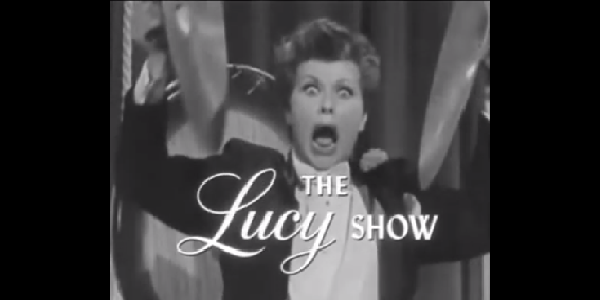
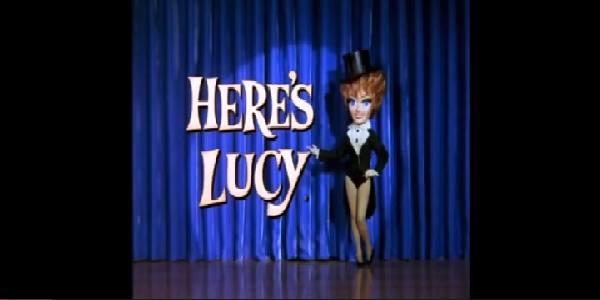
1 October 1962 €“ 11 March 1968. 6 seasons. 156 episodes / 23 September 1968 €“ 18 March 1974. 6 seasons. 144 episodes Another two lumped together because, like the Addams/Munsters thing, Here's Lucy was essentially a reboot of The Lucy Show. Lucille Ball played a widow called Lucy with two kids in both shows and even the houses she lived in were similar. Both The Lucy Show and Here's Lucy deal primarily with Lucy's general state of dysfunction in almost every aspect of life. The storylines of both series were generally derived of the commonplace and the everyday, with the humour driven by things that would never conceivably go wrong for anyone else always going catastrophically wrong for Lucy. Always filmed before a live studio audience, Lucy's fans would scream with hysterical laughter at the merest twitch of Lucy's eyebrow and be crying with laughter by the end of every episode. The Lucy Show initially sees widowed Lucy Carmichael and her two children sharing their home with Lucy's best friend, divorcee Viv, and her son. After the third season Viv and her son move away and Lucy's kids eventually disappear too. She gets a new best friend, a new job and relocates from a fictional town in upstate New York to Los Angeles. In LA she inexplicably begins meeting celebrities who invariably end up at her house for no apparent reason. By the end of season four Lucy Carmichael is an entirely different character to the Lucy Carmichael of the first season. For the 1968/69 Ball returned in Here's Lucy, a different program but with numerous similarities, including the same co-star. The character's name is now Lucy Carter. She still lives in LA, but now has two children (again), aged in their late-teens and played by Ball's actual son and daughter. An ever starstruck and stage-shy Lucy continues to chance upon celebrities who later visit her home while, almost perversely, the final season features an episode about a Lucille Ball look-a-like competition, in which Ball plays both Lucy Carter and Lucille Ball in the same scenes. Ball even gets a second credit as Guest Star for the episode. Through the course of The Lucy Show, Lucy's character becomes increasingly scatterbrained, clumsy and accident-prone. By the end of Here's Lucy, despite her voice having become far deeper and more gravely, she still cries like a baby at the drop of a hat and, despite things generally going wrong rather than right for her, always seems surprised at her various failures and howls loudly, much to the delight of her excitable audiences. Eventually Ball's brand of timeless humour fell foul of changing times and younger audiences that didn't have the same nostalgic connection to her. The last episode of Here's Lucy's in March 1974 was the final time she appeared in her own sitcom until the ill-conceived Life With Lucy which ran for only 14 episodes in 1986. Lucille Ball died less than three years later.

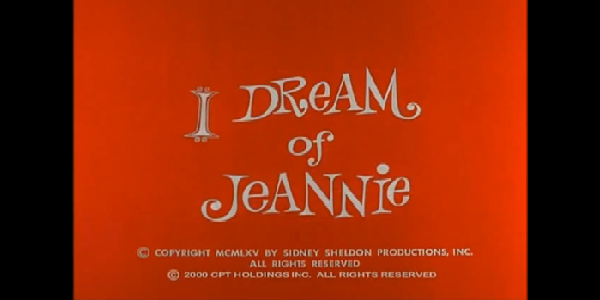
4. I Dream Of Jeannie

18 September 1965 €“ 26 May 1970. 5 seasons. 139 episodes It's the age-old story. Astronaut crashes to earth on remote desert island. Astronaut discovers bottle. Astronaut rubs bottle. Beautiful genie emerges from bottle in puff of pink-ish smoke. Larry Hagman is Florida-based US Air Force Captain and astronaut Tony Nelson. Barbara Eden is Jeannie, the genie. For five seasons Jeannie makes magic happen by crossing her arms and nodding at stuff while Eden maintained Jeannie's formal speech patterns by never once using a contraction. I Dream Of Jeannie's regular supporting cast is contained to Tony's best friend and fellow astronaut Roger Healey, Tony and Roger's boss Dr. Bellows and Dr. Bellows' wife. Other occasionally recurring characters include members of Jeannie's own family, most of whom are also played by Barbara Eden. Sitcoms built around the theme of something incongruous to its mundane surrounds - a talking horse, a family of horror movie characters, a witch or a genie - were common in the 60s and by virtue of its titular character there was always an element of fantasy present in I Dream Of Jeannie. Early storylines focused on the simultaneous adjustment of Jeannie and Tony to life with each other, while many storylines, particularly in the first season, were driven by Jeannie's lack of understanding of the world she'd become part of. In the show's final season Tony and Jeannie finally get married. The hook throughout the previous four seasons had been Tony's efforts to keep Jeannie a secret from the world, though over the years both Roger and Dr. Bellows become aware of her presence. From the moment they're engaged, somehow it suddenly becomes OK for Tony to 'introduce' Jeannie to the outside world, with the only remaining secret to maintain being Jeannie's special powers.

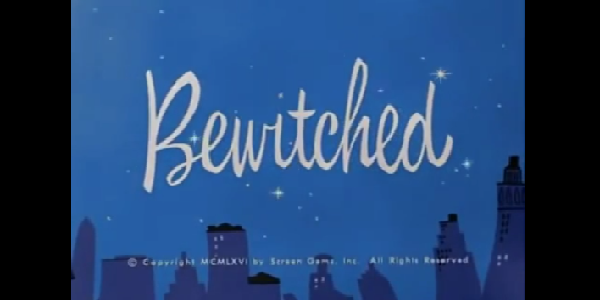
3. Bewitched

17 September 1964 €“ 25 March 1972. 8 seasons. 254 episodes Like I Dream Of Jeannie, Bewitched also had as its basis the idea of something extraordinary in a very ordinary setting. This time the wife in the cosy family home is a witch. A beautiful witch who wiggles her nose to cast spells and never rides a broomstick, admittedly, but a witch nonetheless. For eight years Samantha Stevens and her wretched mortal husband Darrin do their best to contain the effects of her witchery, in-between regular appearances by Samantha's mortal-loathing mother Endora, Darrin's boss Larry Tate and various other witches and warlocks from Samantha's extended family. The Stevens family also grows over time, with daughter Tabitha arriving in season two and son Adam in season five. Both share their mother's supernatural ability and learn the craft from her. Running gags were the order of the day on Bewitched: Endora's endless list of alternative names for Darrin; old Aunt Clara's knack for forgetting how to reverse especially unfortunate spells; and curtain-twitching neighbour Gladys Kravitz, whose husband always joins her at the window at exactly the moment when whatever she claims she saw can no longer be seen. Bewitched was so widely recognised that it was remade in numerous countries, inspired several TV crossovers, lead to the late-70s spin-off comedy Tabitha plus numerous animated series and, in 2005, it was 're-imagined' for worldwide cinematic release. It's a sad footnote to the series that by 1995 all five main players had died, with York, Sargent and Montgomery dying within three years of each other.

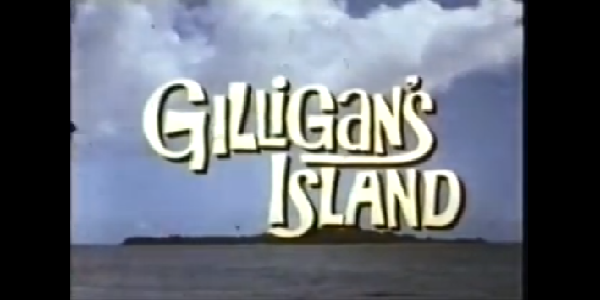
2. Gilligan's Island

26 September 1964 €“ 4 September 1967. 3 seasons. 98 episodes
Just sit right back and you'll hear a tale, the tale of a fateful trip that started from this tropic port aboard this tiny ship.The mate was a mighty sailing man, the skipper brave and sure. Five passengers set sale that day for a three hour tour. A three hour tour.The weather started getting rough, the tiny ship was tossed! If not for the courage of the fearless crew the Minnow would be lost! The Minnow would be lost!The ship's aground on the sure of this uncharted desert isle with Gilligan, the skipper too, the millionaire and his wife, the movie star, the professor and Mary-Anne, here on Gilligan's isle.
"The Ballad Of Gilligan's Island" provides a high level overview of how seven unconnected people came to be marooned on an uncharted deserted island, but it doesn't explain exactly where they were going or how far out to sea they were when this mammoth storm, which the skipper clearly hadn't anticipated, swept them away to an island that nobody had ever charted and which nobody but people who wouldn't help them escape ever went to. Given that a millionaire, his wife and a movie star are among the passengers, it's safe to assume this is no three hour fishing tour. Most episodes end with the castaways either having missed an opportunity to get away, or having come up with some ingenious but ultimately doomed scheme to escape. Their day-to-day existence on the island also raises questions: how can they expertly fashion virtually anything they need from bamboo and shells but they can't build a boat that doesn't sink, disintegrate or otherwise fail to perform the basic service of a boat? How do they so regularly feast on a variety of wholesome, healthy meals at the communal dining table? How does the radio always pick up a signal and never stop working, despite the absence of electricity and batteries? And why did the Howells, Ginger and Mary-Anne interpret "bring a change of clothes" as "bring every item of clothing you ever owned" when they set off for the three hour tour that fateful day, while Gilligan, the Skipper and the Professor wore the same clothes for three years? Curiously, two aspects of Gilligan's Island production were later mirrored by Sherwood Schwartz's other famous sitcom The Brady Bunch. The pilot episodes of both shows were filmed nearly a year before the series' debut, although unlike The Brady Bunch pilot, the Gilligan's Island planet was never broadcast during the show's original run. As well, the last episodes of both shows weren't actually intended as the final episodes of each series, however the anticipated next seasons of both were cancelled months after the last episode had aired. Maybe the networks just didn't like poor old Sherwood.

1. The Brady Bunch
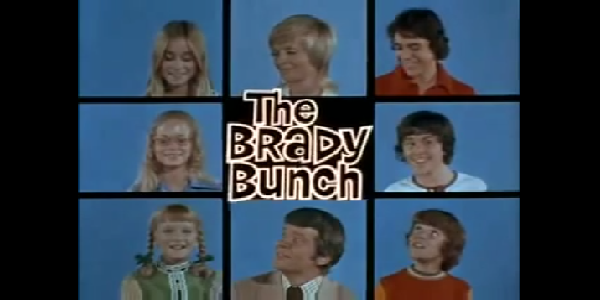
26 September 1969 €“ 8 March 1974. 5 seasons. 117 episodes A lovely lady, three very lovely girls, a man named Brady, three boys of his own, a housekeeper called Alice and disappearing pets called Fluffy and Tiger... you know how it goes. I've already made my feelings towards The Brady Bunch abundantly clear, so there's not too much more to add here, except to say that if it was a cheesy old US sitcom I was looking for with this article, then the first season of The Brady Bunch fits the bill perfectly. It was the very definition of 'cheesy US sitcom'. Over the course of five seasons the cheese factor lessened, but without ever completely disappearing. The Bradys were mired in old-fashioned family values, so old-fashioned that they seemed out of touch even when the show was new. Still, it didn't stop millions of people all over the world watching the show on repeat year after year, decade after decade. When it as cancelled in 1974 both the producer and the cast were shocked, having fully expected a sixth season to go into production any day, but it's possibly a blessing in disguise that the show ended when it did. Too much of a good thing and all that. If it hadn't ended then, who knows if anyone would even remember it now? Addendum: Honourable Mentions Had I entitled this article "15 Cheesy Old American Sitcoms That Aussie Kids Grew Up With In The 80s", I probably would've also talked about My Three Sons (29 Sep 1960 €“ 24 Aug 1972), Leave It To Beaver (4 Oct 1957 €“ 20 Jun 1963), Petticoat Junction (24 Sep 1963 €“ 4 Apr 1970), The Beverly Hillbillies (26 Sep 1962 €“ 23 Mar 1971) and The Partridge Family (25 Sep 1970 €“ 23 Mar 1974). But I didn't, on account of calling the article "10 Cheesy Old American Sitcoms That Aussie Kids Grew Up With In The 80s". Plus after remembering so much about the first ten, I kinda lost the will to live a little bit, so this is the only honourable mention these five are getting!

Contributor
Contributor

I'm just a guy who loves words. I discover vast tracts of uncharted enjoyment by chucking words together and coming up with stuff that talks about the things I enjoy and love most. I'm also a massive listaholic, so I'm probably talking about a list, looking at a list or banging away at another What Culture list as you read this. My tone's pretty relaxed and conversational, with a liberal sprinkling of sparkling wit, wilting sarcasm and occasional faux-condescension - with tongue almost always firmly planted in cheek.