The 12 Best Master Stories In Doctor Who

Did Missy give us the best Master story ever, or was it some other... um, bloke? Let's find out!

The Internet exploded a few weeks ago when Missy, the mysterious woman watching over the Twelfth Doctor all season long, was revealed to be none other than the Master, regenerated into the form of a woman. Good lord, who saw that coming? Quite a few people, as it turned out, but more people were concerned about whether or not the Master's regeneration into a woman would eventually mean that the Doctor would, too. As fascinating as that discussion is, it's clear that we'll eventually get a female Doctor - and equally as clear that the most recent Master two-parter, while not the absolute best Master story, is up there among the greats. Before you get too terribly upset, let's talk about the stories the Master has featured in and how they compare. Bear in mind that this list is not evaluating the stories themselves - it instead looks at how good a vehicle for the Master the story was, whether it stands out as a classic battle between the Doctor and his arch-enemy, and so forth. If you like this list, let us know in the comments below what you think the worst Master stories were - since, as you may have noticed, these lists always come in pairs.

12. The Mark Of The Rani (1985)

Although the Master ostensibly plays second fiddle to the Rani in this one - it's her name in the title, after all - he's hardly sidelined, providing as much annoyance for the Rani and her plans for harvesting human sleep hormone (long story) as he ever did for the Doctor. True, he does dress up as a scarecrow at one point, and then there's that silly "Finito TARDIS!" line. But the Tissue Compression Eliminator (TCE) has never looked more frightening - it has webs?! And there's something rather endearing about his description of Peri, recalling the grudging, mutually respectful relationship he shared with Jo Grant in his earlier appearances. Besides, when Anthony Ainsley and Kate O'Mara are onscreen together, it's hard to figure out which one to look at, they're both so captivating. It's amazing the Doctor gets out of this one alive. Maybe it's the tree mine thing. Not too difficult to beat a villain when they've got stuff like that in their arsenal.

11. Planet Of Fire (1984)

On the plus side, Planet Of Fire makes the Master menacing again after a string of appearances that reduced him to a standard moustache-twirling villain. Even though he's a Master-by-proxy rather than the real thing, there's something of a throwback to the Master's run-ins with the Third Doctor in the way he manipulates the adherents of Logar into doing what he wants. Speaking of the "proxy" bit, this story also finally resolves the vexing Kamelion question, making far better use of the character than...well, anything else, really. On the minus side, it also gives us Peri. And an itty bitty Master. That being said, it is Peri's first story, so she's a lot better here than she ever would be again. The Master's diminished state is... somewhat less satisfying. Still, at least he didn't get to finish his last line, "Won't you show mercy to your own ...," which producer John Nathan-Turner reportedly said would have ended in "brother." Ugh. No wonder the Tenth Doctor makes fun of the notion of a "secret brother." And speaking of which...

10. Utopia/The Sound Of Drums/Last Of The Time Lords (2007)

Yes, it's a cheat to treat these three stories as one entry - but really, aren't they simply one big three-part story? It's about the same length as an old-style six-parter, and in some ways it's a lot more satisfying. Let's get the less satisfying stuff out of the way first, though. One reason why this one isn't higher on the list is that, while John Simm's take on the Master is fresh and original, it's almost too much so. It's hard to reconcile this crazed comic book-style villain and his bizarre sense of humour with the urbane but dangerous figure that Delgado (and even Ainsley) cut. While this level of manic madness closely mirrors the Tenth Doctor's own manic qualities, the show tries too hard to sell him to us. Then there's that business with the drums (more on that in the next list), a plot point never heard before - and what's with the Doctor being shrunk down into Gollum? Some people liked the song "Voodoo Child" before this story, as well. And the ending - "If you believe in the Doctor, then clap your hands"? Once all of that is out of the way, though, there's good to be had. The phone conversation between the Doctor and his foe about the Time War is the most convincing piece of evidence that these two actually were friends at one point, and good ones at that. If not, why would the Doctor's forgiveness be something that the Master is horrified to ever receive? Also, enough can't be said about Sir Derek Jacobi's triumphant turn as the "human" Master, Professor Yana - though the main reason enough can't be said about it is that he's gone far, far too quickly. If only Simm's next appearance as the Master were as good...

9. The Claws Of Axos (1971)

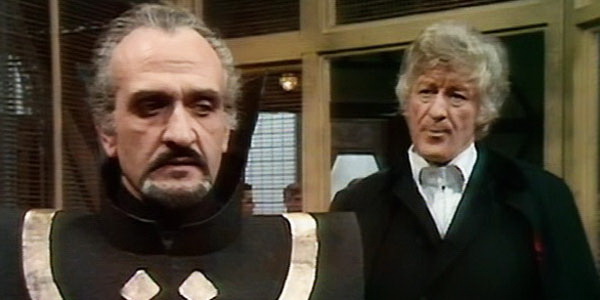
There's nothing particularly wrong with Claws Of Axos - but there is one hell of a lot in it that probably looked a lot better in 1971 than it does now. Whenever anyone enters Axos, it's a bit like stepping into some psychedelic dance club, complete with Top Of The Pops style camerawork. And what's up with the Master's "laser gun"? Surely the TCE can't be on the blink already? Apart from that, it's a good outing for Delgado's Master, even though he's already falling into some patterns that will define his character for years to come, including the whole "alliance with alien invaders" thing. This time, though, it appears for a long moment like the Doctor is going to help him. Pertwee's warm working relationship with Delgado really shines through here, making his guarded alliance with the Master to give Earth over to Axos all the more believable. One of the hallmarks of any good Master story is whether you believe these two had a friendship once, and it's easier to believe here than in just about any of the other early Master stories. Shame about the camerawork, of course, though it's better than tiny CGI Doctors in cages.

8. Frontier In Space (1973)

The Master and the Daleks - how could this story have been any better? By including a lot more of both, of course, which would have been far preferable to the tired rehash of the first Dalek story that follows this one. Then there's the rushed ending. At least Missy got a better final scene. Poor sendoffs for Delgado aside, this is still a good one, allowing Delgado to show his sense of humour while still remaining menacing. And while his hypnotism is foiled by the iron will of Jo Grant - Jo Grant, of all people - it's still fun to watch the Master, the Doctor, and Jo interact over the course of the story. His reaction to finding out that the Doctor is telling her stories about his past is hilarious, as is the "Thank you, Miss Grant, we'll let you know" line. But that final speech he gives to the Daleks about what will hurt the Doctor the most is Delgado at his most chilling - and it also gives some explanation of exactly why he does what he does later in 2007. If only someone had realized that, as fascinating as the Draconians are, what really makes this story is the Master, but no one could have predicted Delgado would die in a car crash in Turkey not long after this story was completed.

7. The Keeper Of Traken (1981)

In three of Tom Baker's appearances with him, the Master is not the suave and sinister Roger Delgado version but the emaciated one from The Deadly Assassin, doing everything he could to survive, up to and including killing anyone who stood in his way. That's one of the more remarkable things about Geoffrey Beavers' version of the Master in The Keeper Of Traken. Because he has absolutely nothing left to lose, he's far more sinister than almost every other version of the Master that has ever existed. He also exhibits one of the Master's more frightening traits: his ability to play the long game, carefully fashioning Cassia into the perfect minion. Then he brutally kills her when he's got what he wants. Even worse, he does so by materialising his TARDIS on top of her. Pretty ghastly. Even more ghastly is his new ability to take the form of another sentient being, effectively erasing them from existence while walking around in their rejuvenated corpse. He comes close to doing this to the Doctor, which would have given him several more regenerations, but he has to settle for poor Tremas (played by a surprisingly subdued Anthony Ainley - enjoy the subtlety while it lasts...). Granted, the Master's appearance in this one isn't quite as horrifying as in his previous appearance, though being able to see Beavers' expressions through the makeup rather than having them covered by a mask does wonders for his few scenes in the story - and when has the Master ever had such a creepy voice before? Even the presence of Adric, Nyssa, and that annoying thing hanging off Tom Baker's nose can't ruin this story.

6. The Sea Devils (1972)

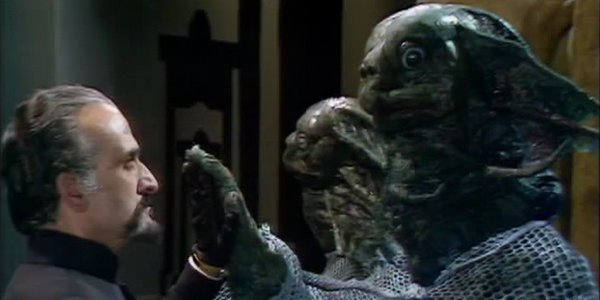
Were it not for a few of Delgado's other appearances, this would easily be the best Third Doctor-Master story, hands down. The Master gets a lot more screen time here than in previous or later appearances - the scene in which he's watching The Clangers is particularly enjoyable. We also get more evidence of how strong the his previous friendship with the Doctor must have been, given that the Doctor is willing to travel all the way to a remote island just to visit him. Sure, you could argue that he's just making sure the Master is safely under lock and key (which he isn't), but the fact of the visit itself is fairly striking. Even more striking is that, just this once, the Master isn't using hypnotism to get his way with Trenchard - instead, he uses the doddering old man's sense of patriotism and belief that he's entitled to more than he's gotten in life against him. Trenchard's death is that much more tragic in the sense that he's killed by the very creatures the Master is trying to contact - and the Master could not care less when it happens. It's not a perfect story, sadly - the music veers from being atmospheric and moody to making you want to put an icepick in your ear. The Master's escape is also a bit too convenient, to the point of being impossible in the time that he has available. But fans would love to see the Sea Devils come back someday - and they wouldn't mind the Doctor and the Master having another sword fight, either.

5. Logopolis (1981)

Logopolis marks the first time that the Fourth Doctor gets to deal with a Master who is not crumbling to bits, and as much as those other appearances the Master makes during Baker's run are fantastic, this one makes you wish there'd been more of this. Unlike the grudging bonhomie that characterised Pertwee's encounters with his former friend, the Fourth Doctor treats him like the rattlesnake he is, despite the alliance they have to make to save the universe - and he still gets bitten, fatally, in the end. This also marks the first occasion that the Master is responsible for the deaths of the loved ones of two-thirds of the TARDIS crew. Although in typical '80s fashion these deaths are never made mention of again, the Master is directly responsible for killing Nyssa's father (and continuing to walk about in his dead body) and indirectly responsible for destroying her entire planet. Meanwhile, Tegan can blame him for the death of her Aunt Vanessa. It's a nasty death, too, filmed in horrifying Master-vision. As with any Doctor Who story, there are flaws - the Master's ransom broadcast to the universe is a particular howler; and with the addition of two new characters that are much more interesting than himself, Adric seems particularly useless. But the Master still manages to shine. Pity that couldn't have carried over into the installment that followed this one...

4. Colony In Space (1971)

Despite the discussion between the Time Lords in the very first episode foreshadowing what's coming, this one doesn't even feel like a Master story until he shows up in episode four. But then it makes up for the apparent red herrings of the previous three episodes, and by then the story of the future colonists battling against a mining corporation has you hooked against your will anyway. When the Master does arrive, though, it gets really interesting: disguised as the Adjudicator, he has more clout in this future world than the Doctor does, and for once the Master is in complete (albeit temporary) control. Later, when the two make it to the forbidden city of Uxarieus, it's like watching a preview of the Twelfth Doctor's interactions with the Mistress: the Master wants to use the doomsday weapon created by the planet's indigenous population to take over the universe, and he offers the Doctor an equal share so that the Doctor can bring peace to the universe - through force. Sound familiar? What makes this one better than The Sea Devils, you might ask? Primarily, it makes better use of its length - as much as fans love that sword fight in the other story, they also recognise it as padding.

3. Dark Water/Death In Heaven

Michelle Gomez will supposedly be returning as the Mistress, despite her seeming destruction at the end of Death In Heaven. That's welcome news, as she's one of the most dynamic actors to play the part since Roger Delgado. While some people have decried making such a popular villain change genders, it works surprisingly well here: the Mistress is able to be coquettish with the Doctor in a way that none of the other actors could (except, perhaps, Ainley); and while what passes between them during that kiss can't exactly be characterized as sexual tension, it certainly is new. Also, Gomez's portrayal of the character marries the extreme mania of Simm with the cold disdain of Delgado - and in many ways she comes off as more frightening than either one as a result. Her sudden killing of Osgood and the fact that she treats it as a lark makes it far colder than it would feel otherwise. This is not the sort of Master who will be referring to the Doctor's companion as "Miss Oswald" anytime soon. It would also seem that the Master, um, Mistress is back up to her old tricks, making alliances with alien races to conquer the Earth rather than trying to take control of it on her own. Then she offers the Doctor control of her new Cyberarmy - on the grounds that she misses their friendship and knows that the only way she can have it again is if she makes him as willing to abuse power as she is. It's one of the most convincing motivations for something the Master has done, ever. Just bring her back already. No one needs explanations of how or why. After all, when have we ever gotten them before?

2. Terror Of The Autons (1971)

Wonky experimental greenscreen effects aside, the Master in this first story is unlike any other: he's far colder, much more ruthless, and more relentlessly arrogant than later versions, or even than the way Delgado himself portrays him just four episodes later. Despite the Doctor referring to him as a "jackanapes," implying he's more of a troublemaker than an actual threat, that's soon forgotten when the Doctor finds the first shrunken body and when he himself is nearly killed by the Master from afar not once but twice. This Master is less interested in humiliating the Doctor and more interested in simply getting rid of him so he can get on with his own plans. Granted, those plans are every bit as crazy as any of the Master's other schemes, but here they're brand new, as is the Master himself. Seeing the Master in this story, not only a Time Lord but one who knows the Doctor intimately, must have struck audiences back in 1971 the same way it did many of us a few weeks ago when we discovered, once again, that the Doctor is not alone. It's also one of only two times that Robert Holmes writes the Master. And as we'll see, he doesn't disappoint in either instance...

1. The Deadly Assassin (1976)

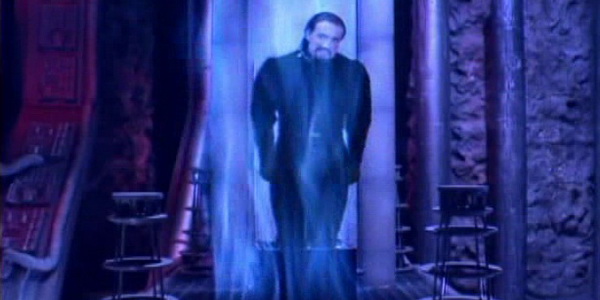
Don't let the stupidly redundant title fool you - this story is iconic. In addition to writing the Master's first appearance, Robert Holmes wrote this script, in which he takes everything we thought we knew about the Master and the Time Lords, shakes it up, and turns it into something new. This story reveals something new about the Master: whatever his outer face may be - the suave sophisticate, the moustache twirling villain, the charming but crazy lady, the politician who will stop at nothing to rule everything - his inner self is a twisted abhorrence, fuelled by greed and hatred, the sort of creature who'd delay an execution to pull the wings off a fly. It's only in The Deadly Assassin that we get to see the Master for who he really is. What we see is pretty damn horrific, and Peter Pratt uses that hideously scarred face as best he can. The one problem is that that face is a mask, and as such, a lot of Pratt's dialogue is difficult to make out, especially in the story's climactic scenes. But ignore that, and you've got a fascinatingly dark story set on both the Doctor and the Master's home world. Good thing Holmes let the Master keep his TCE, though. Too many changes, and we might not have recognised him at all. Why, that would have been as bad as turning him into a woman or something. Are there any Master stories you feel that we should have included? Are there any we should include in the list of the Ten Worst Master Stories - and which one should get the top spot? Let us know in the comments below!

In this post: 
Doctor Who
 
Posted On: 
Contributor
Contributor

Tony Whitt has previously written TV, DVD, and comic reviews for CINESCAPE, NOW PLAYING, and iF MAGAZINE. His weekly COMICSCAPE columns from the early 2000s can still be found archived on Mania.com. He has also written a book of gay-themed short stories titled CRESCENT CITY CONNECTIONS, available on Amazon.com in both paperback and Kindle format. Whitt currently lives and works in Chicago, Illinois.