Star Trek: Everything We NOW Know About The 25th Century
The history of the future may be telegraphed, but what is in the 25th Century for Star Trek?
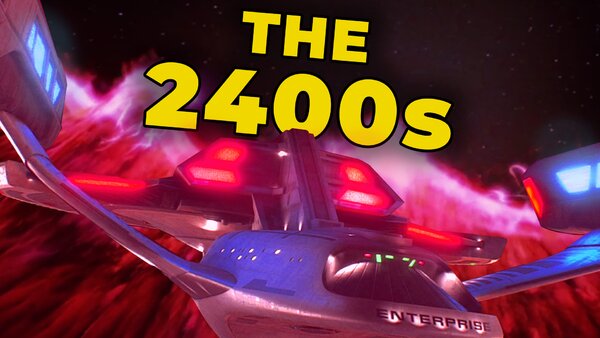
We have been teased with the cusp of this time period in Star Trek. From 1987 until 2001, the franchise offered hundreds of episodes set between 2364 and varying dates in and around the beginning of the 2400s. We time-travelled, we cameoed, and we even hopped universes to have a look.
While Star Trek: Enterprise turned the clock back, bringing us to the years before The Original Series, Star Treks Picard, Lower Decks, and Prodigy all set the majority of their stories toward the close of the 24th Century and beginning of the 25th.
What, then, have they taught us about the great unknown? With Star Treks Discovery and Starfleet Academy jumping 800 years ahead, that leaves plenty of room to dissect the history of the future. There are those events which fall somewhere in the middle of both time periods, such as the launch of the Enterprise-J, the Temporal Wars, and the last known contact with the Q Continuum.
The early years of the 25th Century are close enough in time for several well-known characters to play a large role, be they captaining starships or otherwise. At the time of writing, there are two ongoing Star Trek series - Strange New Worlds (set in the 23rd Century) and the aforementioned Starfleet Academy (set in the 32nd). While the latter could easily offer glimpses into the things we've yet to see, the existing Treks have already given us quite a bit to mull over.
Grab your field jacket as we engage the protodrive and explore the days of future past.
10. The Nexus Returns To Federation Territory - 2410, 2449, 2488
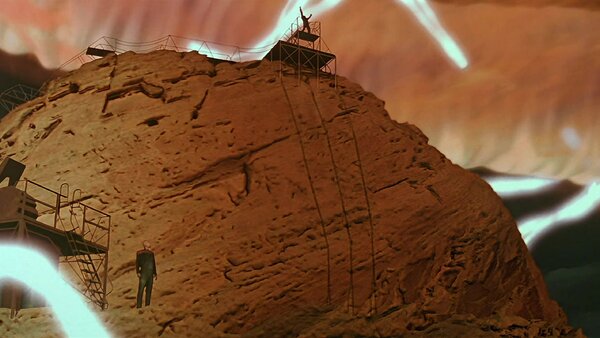
Star Trek: Generations introduced the Nexus, a giant energy ribbon in space with the power to tear starships in half. It was, of course, much more than that, also serving as a conduit between one reality and another. When Guinan was 'rescued' from the SS Lakul, she described the experience as being 'ripped' or 'torn' away from the Nexus.
Inside the phenomenon, according to Guinan, it was like being 'inside joy.' Starfleet's first recorded encounter with the ribbon came in 2293. It returned in 2332 and then again in 2371. The latter encounter saw the destruction of the Enterprise-D, the death of the Duras Sisters, and the death of one James T. Kirk.
The Nexus travels through that part of the galaxy every 39.1 years, meaning the next arrival would come in 2410. The events of Star Trek: Picard's second and third seasons take place nine years before this, with Jean-Luc (and Data) upgrading to a fancy golem body along the way. Picard, having visited the Nexus once before, would have the opportunity to revisit this mystical force. Though Dr Soran's methods were somewhat flawed, to put it mildly, there was much to learn in his research.
Moving the path of the ribbon being impractical (for so many, many reasons), by the 25th Century, one could surmise that Starfleet shields have upgraded to the point where a ship could survive the stresses outside. We know that when one enters the Nexus, they can exit anywhere, at any time, they like.
By the 25th Century, the Nexus could become the giant floating health spa of the galaxy. Consider this - Jean-Luc visiting his son as a baby, or chatting to his brother one more time. One really can understand Soran's obsession.
9. The Enterprise-G Is Launched
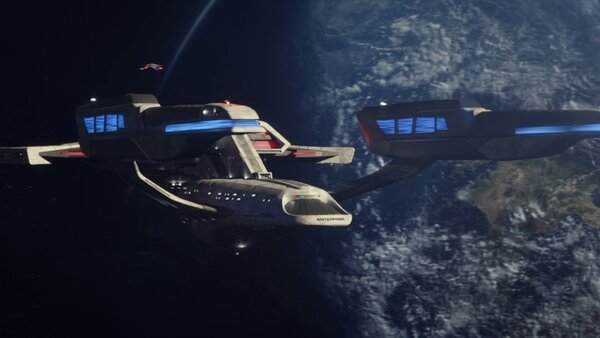
The Last Generation, set in 2401 and 2402, was monumental for historical events in Star Trek. The Borg are finally defeated (until they're not, as usual), the Enterprise-D goes for one last joyride, and the USS Titan-A is rechristened in honour of the former ship's crew.
As Picard, Crusher, and Jack's shuttle rose through space dock, the Neo-Constitution class ship's new name and registry were revealed: USS Enterprise NCC-1701-G. This symbolic gesture serves to honour the legacy of those who came before, while also serving as wholesome wish fulfilment for a production team who were having the time of their lives.
Though technically not a new ship, it was a new commission, and as such required a captain (the previous captain having faced the wrong end of a phaser). Seven of Nine, formerly of the USS Voyager, was promoted to captain on the recommendation of Shaw and presented with her pip by her former crewmate Tuvok.
With Seven in command, Commander Raffi Musiker serving as first officer, and Ensign Jack Crusher there for the ride, this new Enterprise is poised to create a new saga of stories set in the 25th Century. While there is as yet no word on a series focusing on said ship and crew, the audience has already been teased with a certain god-like being popping up on board, though more on that later.
8. The Trial Continues

Thanks to Star Trek: Discovery's fourth season episode The Examples, we know that the Q Continuum ceased contact with the Federation by around 2590. Though there is as yet no explanation as to why (this is perhaps something that Starfleet Academy may explore), this, when combined with John de Lancie's cameo in The Last Generation, means the Q were active in the interim.
Q emphatically states that the infamous trial goes on, though now the focus of said trial has moved from Jean-Luc Picard to his son, Jack Crusher. It's possible that this was sequel baiting in the hopes of a Star Trek: Legacy spin-off, but it also connects to the wider universe.
In 2401, Jack Crusher meets Q, who informs him that there is much to do still. Though at present, we have no way of knowing just how old our Jack lives to be, he can't be the last Federation representative to see a Q. He is (allegedly) in his early 20s by this point, which would mean he would be pushing 120, at least, by the dawn of the 26th Century.
Admiral Leonard McCoy was at least 137 by the time he died (though we hope he was older and that Data didn't just push him out of an airlock), asking Jack to stick around until 2590 seems like a bit of an ask. It feels, then, like a sure bet to say that Q Continuum were active in the 25th Century, perhaps with Jack alone in that century, but far more likely with several members of Starfleet.
After all, our favourite Q spent time with Captains Picard, Sisko, and Janeway at roughly the same time. There was that run-in with Captain Pike as well, but that's all very hush-hush and swept under the wedding bells.
7. Admiral Crusher Head of Starfleet Medical Again
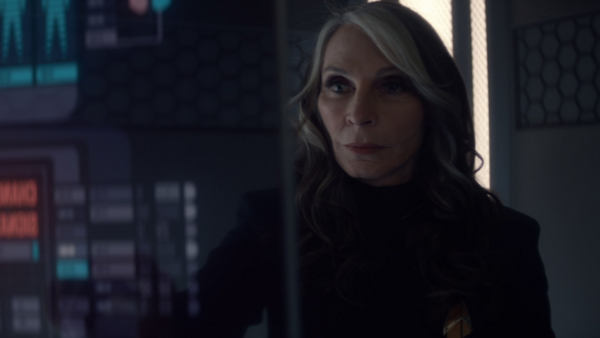
Admiral Beverly Crusher must have installed a revolving door at Starfleet Medical because, thanks once again to the events of The Last Generation, we know that she took up her old position as the head of the facility. This time, it came with a nice promotion, but it was hardly her first crack at the biobed.
Gates McFadden's absence for The Next Generation's sophomore year was that she left the Enterprise to head up Starfleet Medical. In reality, then-showrunner Maurice Hurley fired McFadden, only for her to return the following year when Hurley exited.
That would have taken place around 2364 and 2365, which is a good thirty or so years earlier than her eventual posting. However, Star Trek: Nemesis, via a deleted scene, ends with Crusher resuming her duties as head of Starfleet Medical. The film, set in 2379, shows her at the facility, some twenty two years before she finally returns in Star Trek: Picard.
While much of the time between her first and second tenures were spent on ships named Enterprise, the time between her second and third tenures were spent operating her own ship, the SS Eleos-XII, with her son, Jack. This was a far more rugged lifestyle, helping where they could, keeping mobile to avoid any who might try to gain leverage to Admiral Picard via his son.
Taking this experience into her third tenure, after a spot of Changeling identification, offers Crusher and Starfleet Medical a new perspective on what they can achieve. The Federation and Starfleet are, arguably, at their height of influence and power as they head into the 25th Century, though there is now a leader who understands the lives lived by those outside of the main supply routes. Starfleet Medical of the 25th Century, thanks to Admiral Crusher and influence from such doctors as Bashir and the Emergency Medical Hologram, must easily be one of the most well-positioned facilities to do good in the galaxy.
6. Romulans In Starfleet & The First Steps Toward Ni’Var
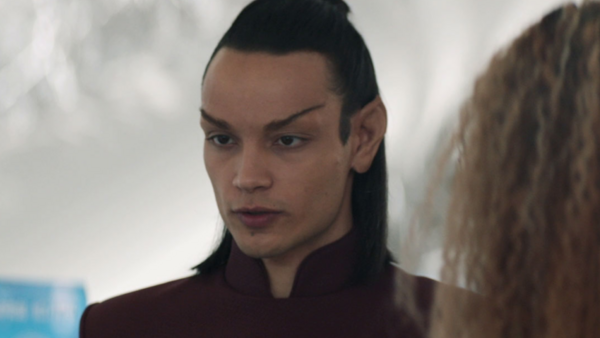
Star Trek: Picard, in being the show so closely set to the focus of this piece, has offered many of the answers we've sought for so long. The Romulan Star Empire, introduced in Balance of Terror, has been one of Star Trek's oldest adversarial forces, despite being nearly destroyed on multiple occasions.
The Neutral Zone reintroduced them after roughly 70 years of in-universe silence, though the plan had been to bring them back to kill them off. They would have been victims of the Borg at a time before anyone truly understood who or what the Borg were. Thankfully, they were spared, thus becoming one of the great enemies of the Federation in The Next Generation.
Unification brought the Romulans into the limelight again, this time in the context of a possible reunification with their Vulcan cousins. Despite Spock's initial work, by the early 2380s, this dream looked like just that - a dream. The Romulan supernova in the mid-2380s altered the landscape, reducing the Empire to a handful of fractured groups and gangs.
The Star Gazer, opening Picard's second season, depicted Elnor attending Starfleet Academy in 2401. Being the first fully Romulan cadet, he carried the weight of history on his shoulders, though he acquitted himself well and ended up serving aboard the USS Excelsior. Star Trek: Discovery, jumping forward to the 32nd Century, demonstrated the outcome of Spock's efforts. By the time of Unification III, the Romulans had returned to Vulcan, which was renamed Ni'Var to reflect both races.
It may have taken the long road, but the 25th Century was the dawn of a new age for the Romulan Star Empire, becoming a part of the Federation (eventually) and even serving in Starfleet itself.
5. A Time For Peace?
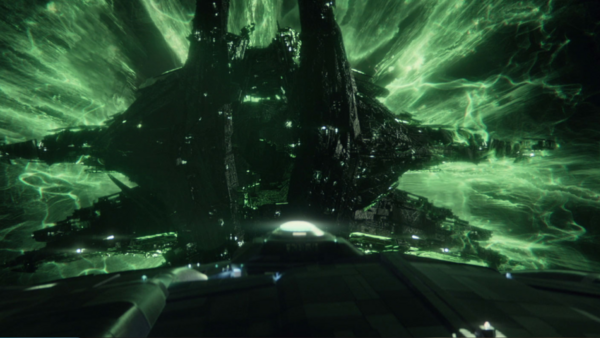
The first couple of years of the 25th Century were busy for a certain ex-Admiral Jean-Luc Picard. While the events of Frontier Day in 2401 saw the return of the Enterprise-D, along with an alliance between the Changelings and the Borg, the year began with a monumental moment in galactic affairs.
Answering a message blasted through a transwarp conduit, Picard and the crew of the Stargazer encounter a new, huge Borg vessel. After some temporal shenanigans, it is revealed that this mini-collective is controlled by Agnes Juratti, formerly of the Daystrom Institute.
In a move very few people could have seen coming, and one that Captain Liam Shaw still struggled with some time later, Juratti and the Collective ask for, and are granted, provisional Federation membership. Though perhaps not the true Borg Collective, this is still an enormous moment in history. The Borg, the cause of so much pain and devastation, can adapt and grow with the right guide.
The death of the Borg Queen on Frontier Day may spell the end of the remnants of the wider Collective, but this leaves Juratti's Borg guarding the gate, members of the Federation, and still (presumably) in possession of all of the knowledge that the Borg have amassed. Though it wasn't the end of hostilities between the two powers, it was a major change for the galaxy in the 2400s.
4. The State Of Synths
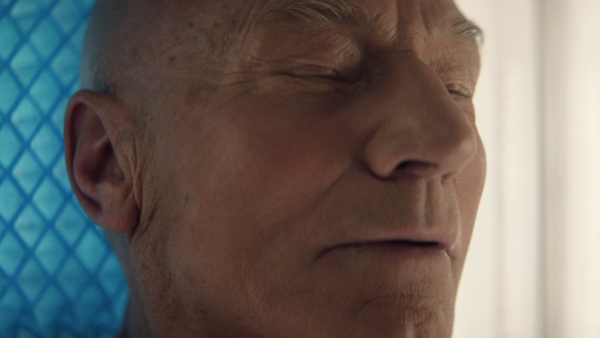
The 25th Century saw advancements in robotics, despite the ban on synthetic development that had been in place for almost twenty years. The attack on Mars by synthetic life, orchestrated by the Zhat Vash, resulted in more than 90,000 lives lost, along with hundreds of vessels being destroyed.
Dr Altan Soong, along with Bruce Maddox, began their secret work on new positronic life, with Altan going one step further. He created a golem body, originally for his own use, designed to extend organic life beyond a standard life span. Though he wouldn't benefit directly from it, Jean-Luc Picard did. With the death of his human body, his consciousness was transferred across, thus saving him.
This all took place as the truth of the Mars attack was revealed, which led to a reversal of the ban, freeing positronic life from having to remain hidden. This was certainly good news for Lieutenant Commander Data in 2401, but it would go on to have long-lasting results.
In the 32nd Century, the success of Picard's transfer was used as justification by Dr Hugh Culber to attempt the procedure again. This time, it was to transfer Gray's consciousness out of Adira's body and into their own new golem. Once again, the procedure was a success, though Culber warned that it was far from a done deal.
This suggests that Picard's success was an exception, rather than a rule, in the 25th Century. Data's was a slightly different set of circumstances, as he had always been synthetic. The 25th Century then paved the way for these procedures, though it was clearly a long journey.
3. There's A Stable Multiversal Gate Out By Starbase 80
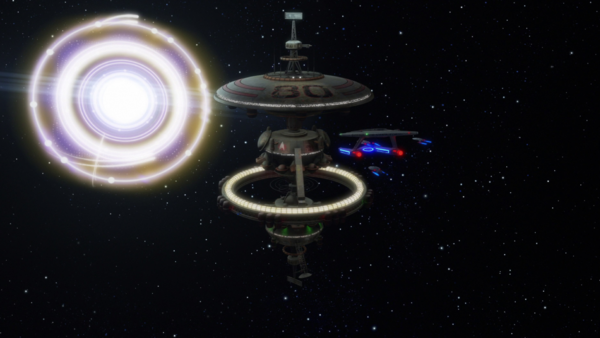
In 2382, the USS Anaximander travelled through several realities, attempting to close rifts that were causing damage to the fabric of space and time. They were largely successful, channelling all of that energy into one final place. As long as the crew there could deal with the issue, everything would come out ok.
Cue Lt. Junior Grade Bradward Boimler screaming that everyone was going to die. Classic Boims.
The events of Fissure Quest and The New Next Generation led to the creation of the first stable mutiversal subspace rift, allowing ships like the Anaximander to travel from one reality to another. Though this has yet to be revisited on-screen, the possibilities here are endless.
The Romulan supernova of the mid-2380s may never have occurred in another reality, thus offering the Romulans plenty of reason to explore. The Borg may seem to be entirely wiped out (bar Juratti's collective) in 2401, but is that the case everywhere?
With Starbase 80 in place and (barely) functional, the mission is clear. If Starfleet's mission has always been to seek out new life and new civilisations, it's clear that the exploration of this new rift is very much a part of that mission. There is also the small matter of the synthetic creatures that promised to wipe out all organic life, those same creatures who peeked their tentacles through yet another rift in Et In Arcadia Ego, Part 2. Perhaps someone should use this rift to check up on that.
Soon.
2. Solosos III Can Support Life Again And What This Will Mean
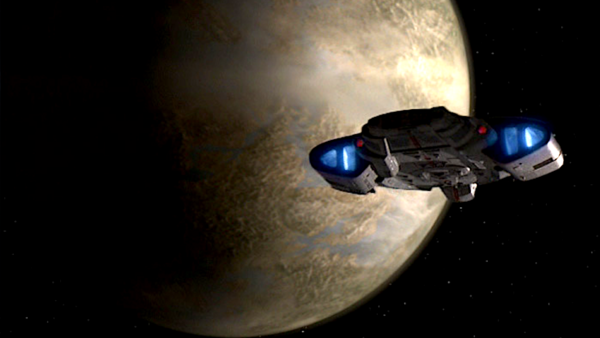
Deep Space Nine went hard. That is perhaps the understatement of the century, but it does bear mention, as here we discuss one of Captain Sisko's war crimes of the week. In For The Uniform, Sisko's obsession with catching Michael Eddington, former security chief of Deep Space Nine and then-current head of the Maquis, leads him to poison the atmosphere of Solosos III.
Though there were plenty of mitigating circumstances that led to Ben's decision, the fact is that Solosos III was unable to maintain life for fifty years, with that half-century coming to a close in 2423. The entire geography of the Alpha Quadrant has changed in the meantime.
When Sisko ordered those trilithium-loaded torpedoes into the planet's atmosphere, it was a colony used by displaced Federation citizens. Though the path to war was already paved by that point, the Dominion War had not truly erupted. This changed quickly. Dukat's deal to link the Cardassian Union and the Dominion is followed by the extermination of the Maquis and the annexation of the demilitarised zone.
Solosos III, being poisoned, didn't present any kind of target to their forces, but it was very much in their line of sight. With the cessation of hostilities and the redrawing of maps, Solosos III may find itself an untapped beacon in the 25th Century. Though the Maquis are long-gone at that point, there is no guarantee that the planet finds itself in Federation territory. It was a pawn in a Starfleet officer's gamble. Could this become a symbol of separation from that same organisation that tossed it aside?
1. The Protostar Lands On Solem
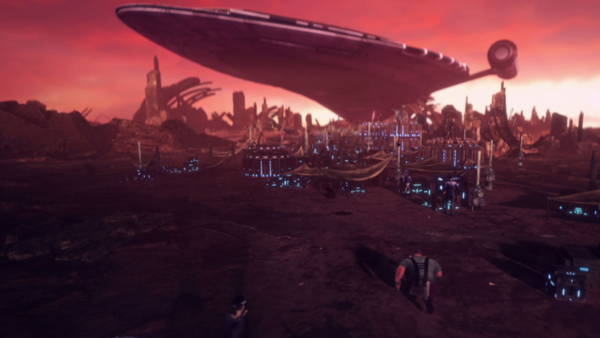
Star Trek: Prodigy may be the underdog of the franchise, but it also contains some of the most far-reaching events. Though much of the action is set in the early 2380s, some of the key moments take place in the 25th Century, including that one crash landing from which everything springs.
When travelling through a temporal wormhole, the USS Protostar emerges on Solum in the year 2436. Its crew are captured by the Vau'Nakat, though it is later rescued by the second crew of the Protostar - time travel, eh?
This sets a chain of events in motion that almost leads to the end of the space/time continuum. A new, terrifying villain known as the Loom emerges to feed on anything it can get its tentacles on, erasing them from history. That truly is a fate worse than death (and they called this a kids' show!)
Though the Loom are eventually beaten back to where it came from, the Protostar's crash landing almost led to an interstellar war, the deaths of countless millions, civil war, and the end of all life as we know it. There is no changing the fact that it happens, for so much of the history of the future springs out from this moment.
Star Trek: Prodigy told some of the biggest stories in Trek during its short run, but when it comes to the 25th Century, it foretold both the beginning of, and resolution to, one of the greatest challenges that Starfleet had ever faced.