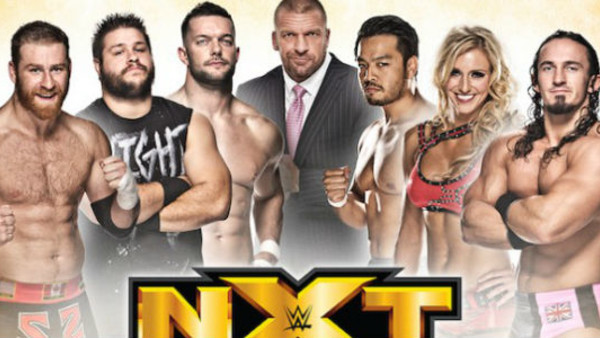
When developmental was one or more separate but linked wrestling promotions with its own local television show, correspondingly lower production values and completely non-canon storylines, WWE treated them as training and proving grounds, from which the top performers could be cherry-picked as and when a spot opened up for them on the main roster. Once WWEs final developmental promotion FCW was rebranded as the new NXT in August 2012, everything changed. Gradually, NXT began to accrue fans of its own through word of mouth alone because WWE certainly wasnt interested in promoting its training and development locus as a third brand. Nonetheless, in 2015 thats almost exactly what NXT is. Almost, because since the collapse of the brand separation Smackdown is essentially just recaps of RAW with irrelevant storylines attached. Nothing too important can happen on Smackdown, because no one watches it. In 2015, NXT isnt a third brand but WWEs second brand, with related and canonical, but entirely separate storylines, championships and characters And, as much as it pains Vince McMahon to hear it, NXT is critically acclaimed as a wrestling show, while Monday Night RAW is regularly panned by wrestling fans the world over. NXT features well-constructed, well-written wrestling angles featuring a fresh line-up of talented and highly motivated stars. RAW features nonsensical, stop-start booking, bad comedy angles and worse guest stars, an overlong running time and constant misuse of their talented but directionless stars. NXT talent is underpaid but fired-up and happy; RAW talent is paid well enough, but morale is in the crapper. More than anything, NXT features womens wrestling that actually means something, the female roster given nearly as much of a chance to shine as the men. The last few NXT special events have seen the womens match win match-of-the-night status, and it wont be long before theyre headlining. Every one of the women on the NXT roster has a persona and character distinct from one another, and are featured in compelling, idiosyncratic angles the equal of the mens storylines. Theyre over like clover, too: NXT fans arent just interested in seeing pretty ladies busting out of skimpy spandex. Its a far cry from the Divas on the WWEs main roster, who are lucky if they get more than five minutes on a pay-per-view to tell the one story theyre allowed to tell: you know, the one involving cat fights, seething jealousy and women being crazy and/or bitches. Quite simply, the NXT brand is of higher quality than the WWEs main brand, and thats a problem. No self-respecting NXT fan wants to see their favourite wrestlers dragged off to an inferior wrestling programme, to languish in badly-booked storylines and forced to mutter badly-scripted dialogue but moving people up to the main roster is the whole reason for the existence of the developmental brand, and the only reason that established indie stars like Kevin Steen, Prince Devitt, KENTA and El Generico signed up in the first place. Like it or not, the better NXT is, the more thats going to occur. Its like watching House Of Cards or Daredevil on Netflix, and knowing that at any moment your favourite character could suddenly disappear from storylines without a word, to reappear on some formulaic, generic CBS show like NCIS or CSI as a cartoon version of themselves. With NXT only increasing in popularity, somethings got to give
Professional writer, punk werewolf and nesting place for starfish. Obsessed with squid, spirals and story. I publish short weird fiction online at desincarne.com, and tweet nonsense under the name Jack The Bodiless. You can follow me all you like, just don't touch my stuff.