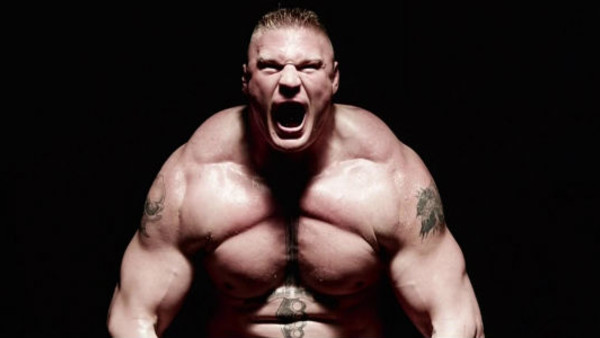
What do you say about the Beast Incarnate? Hes been called a freak of nature for good reason. Lesnar began wrestling as a tall, skinny teenager, and when he began to work out retained all of that skill and speed on a suddenly Herculean frame, putting on twenty pounds of pure muscle seemingly overnight. In four years of college, Lesnar would retain a devastating win-loss record (amongst his many other amateur accolades) as Minnesotas heavyweight replacement for one Shelton Benjamin, who was about to graduate. After his own graduation in 2000, he considered that professional wrestling would be his next port of call. Kurt Angle had proven that an ambitious, ultra-talented amateur could hit the main event like a gale force wind and given Lesnars far greater size and his flatheaded killer look, hed be a hurricane. Everyone knows what happened next: Lesnar nailed the WWF hard, being offered a developmental contract worth a virtually unprecedented quarter of a million a year. Moving to Louisville and OVW, he would impress with his ability and sheer physicality, but not so much with his persona. The two Jims, Cornette and Ross, were already expressing doubts that there was sizzle to go with all that steak. How wrong they were. Brocks mic skills werent the best, but paired with the greatest manager in modern history, Paul Heyman, he wouldnt need to talk much. He told his story in the ring: Lesnars expressions, his timing, his monstrous speed and intimidating presence were a goldmine. Brock Lesnar would be pushed harder and faster in his first year in the company than any man in history before him. Debuting on RAW on March 18th 2002, he would win the King Of The Ring tournament in June 2002 and the WWE championship from The Rock two months after that. Following this, Lesnar would feud with the WWEs big dog, the Undertaker. Some say that the true testament to McMahons faith in him is that he remains the only man in wrestling history booked to have the Dead Mans number from the moment they first locked up, pinning him in Hell In A Cell in October 2002 and beating him cleanly every other time they faced each other since. Losing the title and turning babyface, Lesnar then won the Royal Rumble in January 2003, headlining Wrestlemania XIX to win the WWE championship for the second time: one year and twelve days after his debut. Lesnars reluctance to work the heavy WWE schedule caused him to make the decision to leave in 2004 to attempt to become a star in the NFL. When that failed, he returned to professional wrestling, and then turned to mixed martial arts, becoming one of the biggest box office draws in UFC history. Returning to WWE in 2012, Brock Lesnar now works a special event superstar schedule for millions of dollars a year, and hes only thirty-seven years old.
Professional writer, punk werewolf and nesting place for starfish. Obsessed with squid, spirals and story. I publish short weird fiction online at desincarne.com, and tweet nonsense under the name Jack The Bodiless. You can follow me all you like, just don't touch my stuff.