25 Best Wrestling Shows EVER
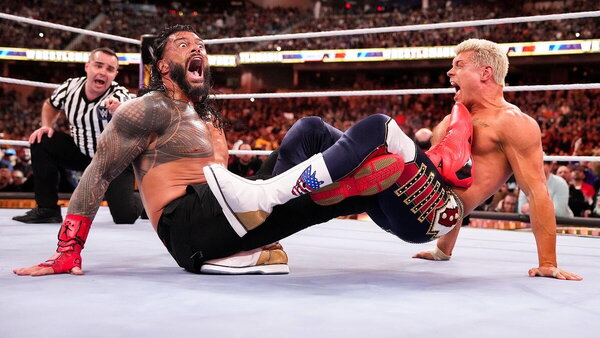
WrestleMania X-Seven: has its crown been taken?
There are many honourable mentions to wade through here.
WWE harnessed an impossible magic when reviving the ECW brand for the One Night Stand PPV specials of 2005 and 2006. Shockingly authentic, the vibes were immaculate. The feeling wasn't just elevated; it was heightened by a surge of tribalism when JBL played the role of surly, uninvited guest ruining the party atmosphere. Mike Awesome Vs. Masato Tanaka was utterly deranged, but nothing else came close to troubling it for Match of the Night at either show. This didn't really matter, and in a weird way, a few match graphics failing to live up to expectations was very much the original ECW experience. ECW mega-fan Tony Khan is intent on making every AEW pay-per-view event the best wrestling show ever. This is a good and bad thing.
It's good in that this philosophy almost guarantees at least three absurdly great matches every month - but it's also bad, or at least too much, because every match is allocated the time to reach what is apparently the mandatory length to become great. This results in an exhausted crowd struggling to maintain their energy throughout the night. On every single AEW PPV, at least one match that would be great, hot and loud on a show with better, stricter pacing instead dies a death. Some matches even feel like an imposition. It's never good when you forget how many matches are left and almost half-dread what's coming because you're ready for the main event. Khan should actually watch One Night Stand 2005.
When Khan gets the sequencing right, though, sweet Jesus: the best AEW PPVs are near-perfect...
25. AEW Dynasty 2024
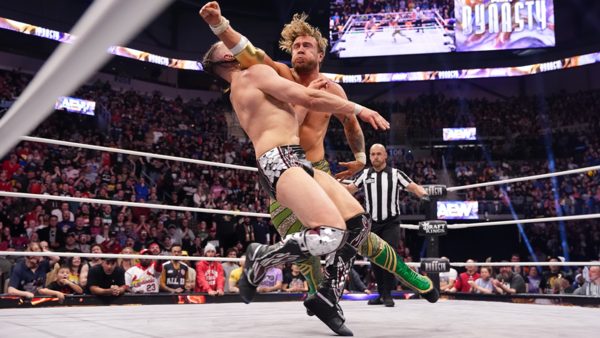
You might balk at certain omissions from this list., but at its best, AEW is better than even fiercely-protected nostalgia. Dynasty 2024 was AEW at its best.
While it wasn’t a “proper” opener, Kazuchika Okada Vs. PAC was one of the better examples of a modern trend that isn’t going away. Often - too often - a match that could headline a show opens it. This can impact the overall flow. Still, it’s virtually impossible to criticise a match as elegant and powerful as the Continental title bout. PAC displayed his range by playing sympathetic babyface with his outstanding selling, where Okada was at his best as the unsolveable puzzle. His panicked 2.99999999 kick-outs were outrageous even by his standards. The slow-burn pacing was masterful.
Roderick Strong Vs. Kyle O’Reilly was a vicious technical ripper. Thunder Rosa and Toni Storm brought an all-too-rare, hate-fuelled energy to their huge over-delivery of a Women’s title match. Adam Copeland, Eddie Kingston and Mark Briscoe Vs. the House of Black was inessential and a bit too long, but very fun. The show itself was a touch too long, as every single AEW pay-per-view is. Did Chris Jericho really need to go 17 minutes with HOOK?
Well, he did, but nobody else needed him to.
Bryan Danielson Vs. Will Ospreay was considered by many to be the greatest match ever promoted on U.S. soil. It was phenomenal - perhaps the greatest ever match sold and wrestled on the high-pressure premise of it being great. The work was out of this world. The crowd shared a collective religious experience as Danielson casually mastered the movez stalemate at the first time of asking. They had barely touched by that point. When they did touch, the action was transcendent. The physical timing was almost unprecedented. Watch Danielson counter the Oscutter with the Busaiku knee: the precision and impact, on such an ambitious and difficult exchange, was the most safe concussive-looking strike that has ever connected in wrestling history.
FTR Vs. the Young Bucks initially struggled to follow such an instant landmark of pro wrestling in the United States. However, the two teams went so incredibly hard - Cash Wheeler in particular wrestled like a man possessed, flying into barricades for fun - that the fans eventually chanted “Please be careful”. This wasn’t so much a wrestling match as cardiopulmonary resuscitation.
The Samoa Joe Vs. Swerve Strickland main event wasn’t great - doing limb work to a monster is never a great thread - but it was good, and it was very impressive. The crowd wanted Swerve to win the World title, he won, and the dead crowd woke up and stayed with him for the duration.
24. WWE In Your House: Canadian Stampede
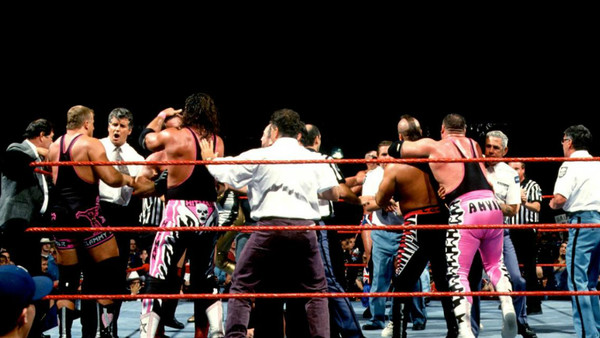
In Your House: Canadian Stampede was as devoid of filler as it was loud - and it was so loud that the hard camera was shaking as the Canadian heroes made their entrance for the main event.
Mankind and Hunter Hearst Helmsley went to a double count-out. It was solid more than it was exciting, but by 1997 Triple H standards, that was as good as it got. The Great Sasuke Vs. Taka Michinoku, conversely, was so exciting that it was thought - for all of one night, anyway - that the WWF might just rival WCW’s on-fire cruiserweight division.
Vader had one of his better nights in a WWF ring. He did the job for the Undertaker, but he looked motivated and the match, as a result, didn’t feel like a formality. It wasn’t one of his best ever matches, not by half - but Vader was the sort of captivating wrestler that was a blast to watch even when he wasn’t in the midst of anything truly special. He was the best at beating people up, and the semi-main against ‘Taker was a brisk burst of that.
The main event was immortal. Held well before the crowd not playing along with the dictated response wasn’t a familiar happening, watching (and hearing) the American babyfaces get booed out of the building was incredible. For newer fans, imagine the atmosphere of a modern Paul Levesque Era WWE international ‘PLE’ - only with a true Match of the Year candidate headlining it.
A complex and groundbreaking odyssey of a match highlighted by strong brawling throughout, the local derby chaos of it all evoked the best of both Steve Austin and layout wizard Pat Patterson, who worked in perfect synergy to give one of the loudest crowds ever something to shout about.
23. WCW Spring Stampede 1994

As was common for the era, the show took a while to get going, and suffered a lull at the midway point. The depth of talent in the mid-’90s wasn’t as strong as it is nowadays. When it peaked, though, WCW Spring Stampede ‘94 was superb.
The Nasty Boys Vs. Cactus Jack and Maxx Payne was transgressive sick filth - a legendary squelcher of a plunder brawl. Dustin Rhodes Vs. Bunkhouse Buck isn’t as infamous, but it was almost as gripping, with a stronger emphasis on emotion. Dustin’s selling was world-class. Of all people, Blondie's Debbie Harry once said that she preferred Georgia Championship Wrestling to the expanding WWF because it was "funkier", and "they get more crazed". WCW was often a joke in the early to mid '90s, but on April 17, 1994, the outfit honoured its gritty southern roots.
It wasn't all great. You'd actually be forgiven for reading the results and expecting an even better show, but two on-paper crackers failed to meet expectations. Steve Austin Vs. the Great Muta was good in places, but meandered for too long towards a rubbish DQ finish. Sting and Rick Rude, meanwhile, had an off night.
The show however ended very strongly. Vader beat The Boss, who had his best night in WCW, in a bruising, compelling hoss fight. Ric Flair and Ricky Steamboat almost approached their seminal 1989 trilogy in a heated, worthy main event that was as worked as sumptuously as you’d expect. It may well be the last truly great "pure" Ric Flair performance. He still crafted magic as an old man deep into the 2000s, opposite Triple H, but those matches stung with a sense of pathos.
At WCW Spring Stampede ‘94, Flair was the real Flair one last time. Where so much of 1990s mainstream wrestling was unfashionable, this, without being cutting edge, was timelessly beautiful.
22. WWE SummerSlam 2002
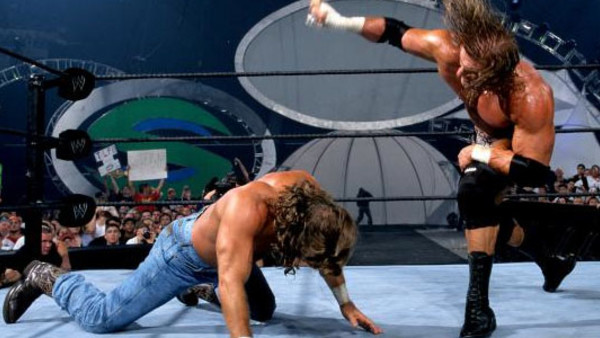
WWE tried everything to recover the glory years in 2002. It was the year of pure, rapid-fire desperation.
The state of the World title picture and lineage reflected the internal panic and chaos. Triple H, Hulk Hogan, and the Undertaker swapping the belt in a three-month timeline was nuts. As much as Hogan's nostalgic star power was always temporary in the 2000s, WWE wasn't to know this in April 2002. A long, drawn-out old man comeback story was left on the table, alongside everything else. It was as if nobody told the promotion that it was no longer in a ratings war. The amount of stuff given away on TV was relentless.
But when WWE calmed the hell down and told two very different but beautifully simple stories, the fans connected with the product. Where every metric was down, and down badly, from 2001 - Survivor Series, for example, drew 340,000, down from 450,000 - SummerSlam was the aberration. The 2002 show drew 540,000, down only 30,000 from 570,000 in 2001. The return of Shawn Michaels and the success of the unprecedented Brock Lesnar monster push drove those buys - and WWE delivered.
Shawn Michaels Vs. Triple H was unbearable drama. Michaels was histrionic in his selling at times, but he earned what would become his signature story beat on his first night back. The Unsanctioned Street Fight bordered on the harrowing - the ultra-rare match that is performed safely, but feels in the moment like a line has been crossed. Brock Lesnar Vs. The Rock, on the back of a unique and compelling sports-oriented build, wasn’t as good - but it was hot and effective.
The undercard, without being blow-away great, was without flaw nor a lull. Kurt Angle Vs. Rey Mysterio, meanwhile, was the idealised pro wrestling opener; a sub-10 minute sprint in which an infuriated Angle killed and then failed to kill Rey with his unhinged intensity and power advantage. Their chemistry was amazing, and this wasn’t a lengthy match that happened to open the show: it was a proper opener designed to unglue the crowd without tiring them out.
21. WWE WrestleMania 24

When people talk about WrestleMania 17's timeless brilliance, they gush about the sheer range of the show - but while it's not as great nor as iconic, WrestleMania 24 was also a fantastic expression of pro wrestling's endless wonder.
The opener remains a much-loved cult gem. JBL's win over Finlay in a Belfast Brawl was a brisk dumbass plunder brawl between two old men taking senseless risks with an absolutely fabulous black comedy undercurrent. You know the spot that take is in reference to. More athletic men did more spectacular things with weapons in the Money In The Bank Ladder match. This wasn't the best offering in that particular genre, but it was still very exciting.
In the tonal antithesis to that match, Shawn Michaels retired Ric Flair in an immortal moment after a match that could not possibly be bad; even when it was clunky, the pathos of watching Flair fail was agonising and inordinately effective on a dramatic level. His desperate heel work in the babyface role was a perfect subversion of standard wrestling psychology.
Randy Orton Vs. John Cena Vs. Triple H was just about worthy of the WWE title match slot, and as uninspiring and familiar as the combination of talent was, there's a reason WWE constantly opted for variations of it: this generated a big, sustained reaction. The most underrated celebrity match ever expanded the scope of the show further, when Floyd Mayweather, Jr. shockingly played the role of heel stooge to perfection in a wildly entertaining and knowingly overbooked spectacle against the Big Show.
And, in one of the best Streak matches ever, Edge grasped how to make his character work against the might of the Undertaker in a savvy, counter-driven masterclass.
20. NXT TakeOver: Brooklyn

There may have been “better” TakeOver shows on a strict match-by-match basis - New Orleans springs to mind - but the vibe and the sentiment of Brooklyn I was just ideal.
NXT, in 2015, felt like it was the answer. It was your brand, and, when it hit the big stage of the Barclays Center, it was validation. Your vision of wrestling was happening, and it was better than the main roster. This was a bird-flip to Vince McMahon - so much so that it almost felt, somehow, like he mustn’t have known about it.
Jushin ‘Thunder’ Liger beat Tyler Breeze in the opener. It wasn’t actually that good, but it hardly mattered: it was neat enough, and driven by incredulous fan investment. NJPW legend Liger's presence in a WWE ring made it feel like anything was possible. Perhaps WWE at large could become worth a damn, after all (you weren't to know it would take seven more years).
The undercard wasn’t great between the ropes, but the sight of Samoa Joe simply being Samoa Joe carried his so-so effort against Baron Corbin. That match also worked on a symbolic level: WWE had seemingly embraced a new, better version of its favoured big man.
Bayley Vs. Sasha Banks was a masterpiece. A committed, dramatic war in which everything looked so goddamn nasty, it was flawless. The demented action, ideal character contrast, heat, theatre, feel-good finish: you will struggle to find a more vital and inch-perfect story told across 18 minutes. The sight of Sasha, an obscenely young prodigy, taking an avalanche poison 'rana was so unlike WWE in every way that the moment still feels somewhat surreal 11 years later.
The main event wasn’t as great, but it was still great: Finn Bálor defeated Kevin Owens in a Ladder match that compensated for its lack of emotional heft by unleashing a torrent of violence.
A two-match show, yes, but one of the better ones.
19. AEW Revolution 2022
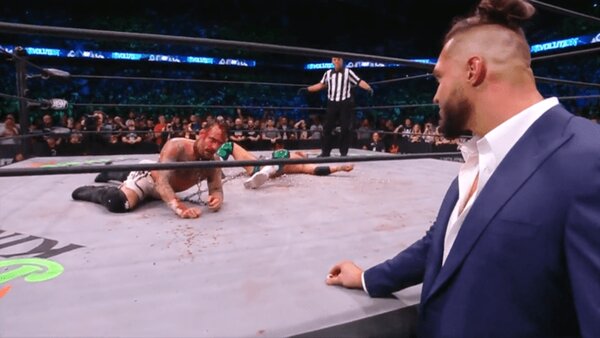
AEW has presented better top-to-bottom pay-per-views since, but as a world in which fans happily resided, Revolution 2022 was the last time, pre-Brawl Out and before All In: Texas*, that AEW felt whole. The pay-per-view wasn't just fantastic on the night. It was promoted during and elevated by a time when it felt like the best nights were still to come.
Eddie Kingston dumped Chris Jericho on his head in a fantastic match, pitched somewhere between a traditional pay-per-view opener and an epic King’s Road main event. While some people feel that Eddie leans too heavily into his AJPW tributes, this was the perfect love letter.
The teased feud between the Elite and the Undisputed Era never went anywhere, but Kyle O’Reilly was on sensational playing-dumb form when he “forgot” to co-exist with the Young Bucks against Jurassic Express in a fantastic three-way World Tag Team title match.
CM Punk Vs. MJF was a classic Dog Collar match and fitting end to their seminal rivalry. In a hate-fuelled gloopy bloodbath that earned its excess, MJF attempted to prove that he was the new CM Punk, the real snake, when he attempted the knee-to-the-corner/bulldog combo. He was punished when he took a flat-back into a smattering of thumbtacks. He registered the spot brilliantly by teetering over them like he was trying to avoid explosion in a death match. The storytelling and the threat of danger was next-level, the odd clunky moment aside.
Jon Moxley Vs. Bryan Danielson was a gory attritional war of a different but no less compelling stripe. They kicked each other flush in the face and tried to break each other’s bones in gruesome-looking holds. It was outstanding. The Hangman Page Vs. Adam Cole main event was predictable, but very good - that superkick counter to the Asai moonsault was absolutely on the money - and the show was also elevated by some rare, inspired sequencing. Too often, AEW pay-per-views suffer slightly through excess. A lull is inevitable. The Sting party match, positioned in the semi-main, felt like the shot the audience needed to restart the party.
*All In: Texas was considered here, but the show despite reaching transcendent company-high peaks was ultimately too long and took too long to get going.
18. AEW Revolution 2020

The best-built pay-per-view in modern wrestling history, Cody Rhodes said after Revolution 2020 that AEW was “heading for the moon, buddy”.
He was correct.
The promotion was so incredible that fans were hyped on the prospect of a Jake Hager match. Hager didn’t deliver in the spot; his opener against Dustin Rhodes was as generic as all hell.
Darby Allin Vs. Sammy Guevara should have opened. The deranged sprint was incredible, lean, exciting - a breakthrough match so vital-feeling that a sequel in the main event slot two years on felt like a formality. Chris Jericho Vs. Jon Moxley, conversely, was a perfectly pitched main event. It was a very fun and dramatic war, heavy on shortcuts, that could have gone either way - an all-too-rare match in which both men were 4/9 at the bookies. AEW went with the happy ending, preserving the legend of Le Champion’s perfect, hugely important run with the World title. Revolution ‘20 was also the site of Orange Cassidy’s breakthrough. His match against PAC was pure joy. In a demonstration of expert matchmaking, PAC was cast perfectly as the miserable, angry bastard who contrasted the irreverence of Cassidy’s dazzling act.
The show was not perfect.
After a phenomenal build, a case study in anticipation, MJF Vs. Cody Rhodes was a slight let-down. It was very hot in places, but they attempted to weave in one too many plot threads, and Cody’s newly-revealed neck tattoo was much too distracting. Nyla Rose defeated Kris Statlander, who battled both illness and a dead crowd flattened by the tidal wave of pro wrestling perfection that was Kenny Omega and Hangman Page Vs. the Young Bucks.
A seminal fusion of storytelling and excitement, this was best exemplified by Kenny Omega kicking out of the Golden Trigger at one. This was at once the best babyface spot of the year and the moment in which his heel turn was foreshadowed; he never reacted with such emotion when the Bucks disrespected his current partner.
17. WWE WrestleMania 40

More uneven than WrestleMania 39, in an equaliser, WrestleMania 40 delivered the happy ending.
Night one broke the two-night “era” trend, in that it wasn’t a blow-away great show. Jey Vs. Jimmy Uso, an infamous stinker, was a trite Paul Heyman layout without good moves. It was a slow duel of thrust-free superkicks. Sami Zayn Vs. Intercontinental champion GUNTHER, conversely, was the rarest of matches: so well-worked that the fans were drawn into demanding the most unexpected outcome.
Zayn shockingly ended the record 666-day reign, and finally unleashed the Brainbustaaaah! to do it. This moment, over a decade in the making, was incredible - a sequence that sparked pure disbelief and jubilation. Discipline is the best storytelling tool. If only more modern wrestlers could follow Sami's expert example. It wasn't just a cool reference for those who know, either; one the best wrestling moves ever was registered so brilliantly that you didn't even need to have seen it to recognise that it was a massive deal.
Rhea Ripley Vs. Becky Lynch and IYO SKY Vs. Bayley were both fantastic, the latter especially. IYO missing two moonsaults but flipping out of the Rose Plant was a majestic take on the intricate modern pro wrestling sequence.
The Rock & Roman Reigns Vs. Cody Rhodes and Seth Rollins ranged from interminable to undeniable. They got there in the end. The double Pedigree/double kick-out spot was the daft magic of WrestleMania, distilled.
One of the best Money In The Bank briefcase cash-ins ever happened on night two. CM Punk drove forward his awesome rivalry with a gloating, over-confident Drew McIntyre by screwing him out of the belt he’d just won. That match against Seth Rollins, contrary to Jey Vs. Jimmy, was evidence that the Paul Heyman signature and finisher spot-fest still holds value.
Logan Paul Vs. Randy Orton Vs. Kevin Owens was a delight. Orton’s sublime “Whoops, sorry mate” expression when breaking up the temporary alliance he’d formed with Owens was hilarious.
Roman Vs. Cody Rhodes II wasn’t quite as strong as their classic first match, and the big Avengers-inspired finish was effective and weird at the same time. WWE generated the desired pops, which is what ultimately matters, but didn’t you think Jon Moxley was coming out? Couldn’t Seth Rollins have hit one person with one move? And why wasn’t the Undertaker Steve Austin?!
Nonetheless, WWE delivered the happy ending. WrestleMania 40 marked the formal end of the chaotic and meaningless ‘Vince McMahon Era’. Finishing the long-term story was a far more effective way of symbolising this than the Paul Levesque victory lap.
16. WWE Monday Night Raw (September 22, 1997)

TV shows don't tend to populate lists such as these because they exist to build the memorable destination events.
Before the advent of All Elite Wrestling, the wrestling TV show more often than not promoted throwaway matches. WCW Nitro popularised the competitive all-star attraction, and Vince McMahon would promote the odd classic on Raw - Mr. Perfect Vs. Ric Flair in 1993, CM Punk Vs. John Cena in 2013 - but the flagship, with its screwy finishes and post-match angles, mostly functioned to convince you to pay for the shows that "mattered". The electrifying September 22, 1997 edition of Raw Is War mattered more than most shows in wrestling history. It was the night that the WWF discovered the battle plan to win the Monday Night War.
The best wrestling TV shows achieve a trifecta, and must feature a great match, a great angle, and a great promo. On September 22, 1997, the WWF didn't so much achieve the trifecta as perfect it.
In the great match, Mick Foley as Cactus Jack for the first time ever made Triple H look like he might actually have something. Their iconic Falls Count Anywhere war, which Cactus could not have won more selflessly and narrowly, was both a feel-good moment and a vital step in building WWE's long-term future. In the great angle, Stone Cold Steve Austin got arrested for violating Owen Hart's restraining order. He could not have looked more like an irresistible badass grinning as he was led away. In the great promo, Shawn Michaels was just as good a heel as Austin was a babyface when interrupting the Undertaker.
Set against a backdrop of Madison Square Garden and a pumped-up adoring faithful of the firm belief that the WWF was on the comeback, this was the best Raw from WWE's best-ever stretch of episodic TV.