7 Wrestlers Who Ruined Their Careers By Refusing Jobs

These performers were never the same again...
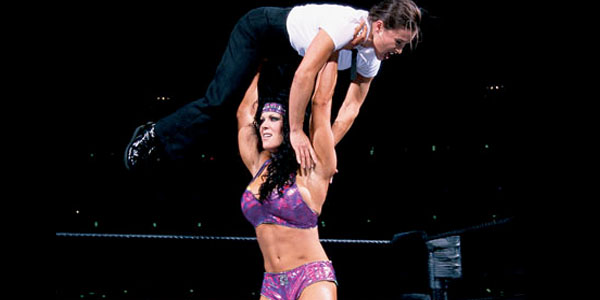
It's been said many times, but it's worth mentioning that the pro wrestling world is full of ego. The very nature of the industry demands that this is the case. This fact doesn't necessarily state that wrestling is full of bad people, but it has been crammed over the years by people with an inflated sense of self-worth. The phrase 'doing a job' means to lose to another wrestler. Often, this is designed to elevate the winner, or perhaps simply switch a title belt between performers. Pretty much every man or woman who enters a ring will do a job at some point, because the idea of winning absolutely every match is absurd. If wrestling wants to maintain some degree of realism, losing is part and parcel of the illusion. Most of the time, this doesn't present any problems. With that in mind, there have been many occasions reported when wrestlers have refused to lose. Worse yet, sometimes that refusal can lead to the downfall of a performer's career with a company. That's what is explored here, 7 different times when pro wrestlers shot themselves in the foot (at least in the long run) by refusing to do a job. There are extenuating circumstances for some of these entries, it'd be foolish to attribute one match to their career downfall. However, it's also important to note that these refusals did play a part in the gathering pace of their deterioration.

7. Rick Rude

Recently on 'Nature Boy' Ric Flair's podcast, Eric Bischoff spent a lot of time talking about Rick Rude. By all accounts, Rude wasn't the easiest man to work with, especially towards the end of his run with World Championship Wrestling. In the interest of accuracy, it was actually injury that forced him from the ring for good, a serious back problem putting a halt to his tenure. However, with that in mind, he also created problems for himself by refusing to do an all-important job. According to Flair, Rude wasn't exactly on the best of terms with Hulk Hogan. In fact, Hulk didn't really want to work with Rude, but was willing to do so if management really wanted him to. Unfortunately, Rude didn't want to lose to Hulk, which would have been the obvious outcome. It's clear just by listening to Bischoff talk about Rude that he wouldn't have had a great future even if injury hadn't forced him to retire. Hulk Hogan, upon his arrival in WCW, was the big star and the focal point of the entire promotion. Refusing a loss to him would not have endeared Rick Rude to management behind the scenes. Even without the back troubles, it's relatively easy to imagine that the 'Ravishing One' would have struggled to stay at the top of the WCW cards without jobbing to Hulk Hogan.

6. Bad News Brown

Reading Bret Hart's autobiography makes it crystal clear that Allen Coage was a tough customer. For example, unless someone was either a hard man or criminally insane, there's no way they would challenge the gargantuan Andre The Giant to a fight. Known as 'Bad News Brown' in the then-WWF, Coage was reportedly promised a top run in the company by Vince McMahon himself. That didn't come to pass, but it wasn't all straightforward. Likely feeding off McMahon's alleged promises, Brown wasn't exactly thrilled to learn that he was jobbing to Jake 'The Snake' Roberts at the SummerSlam 1990 Pay-Per-View. In the mind of Bad News, this directly contradicted what McMahon had told him was going to happen, that he'd be the WWF's first black World Champion. In the end, Bad News Brown lost to Jake Roberts via disqualification. The Big Boss Man was the Special Guest Referee, and witnessed Brown clocking Roberts with a steel chair. Thus, he was disqualified, and Jake was handed the win. It seems the original plan was for Roberts to win outright, but that didn't sit well with Bad News. He kicked up a stink backstage about the ordeal, and didn't want to be pinned. Due to this, as well as his feeling that Vince had reneged on their deal, Brown elected to leave the WWF. That proved to be his last major run in wrestling.

5. Buff Bagwell

If there's one thing WCW did for Buff Bagwell, it's give him an inflated opinion of his star power. In Atlanta, Bagwell was a home grown star, one often on the cusp of becoming a main-event level player. He'd never quite reach those heights, but he did have some reported pull behind the curtain. Giving one example, Buff - along with his then-partner Lex Luger - refused to do jobs to several up-and-comers in the company. That kind of thing may have been fine and dandy during the chaotic latter years of WCW, but it didn't much appeal to the WWF. As far as they were concerned, Bagwell's history didn't matter when they signed him out of the ashes of their former competition. Buff wasn't initially signed when WCW went to the wall, but the decision was made to bring him into the WWF to try and beef up the roster. This proved to be a mistake, because Bagwell's attitude was rotten. Officials hated his match against Booker T on the July 9th, 2001 episode of Raw, but that wasn't all he had going against him. WWE Hall Of Fame announcer Jim Ross has scratched his head numerous times over phone calls received by Buff's mother, Judy to his office. According to Judy, Buff had to pull out of events due to illness, or didn't think he should be losing to certain wrestlers. Obviously, the WWF tired of this, and sent him packing.

4. Jean-Pierre LaFitte

Once a tag-team worker alongside Jacques Rougeau in The Quebecers, Carl Oullet was finally given a golden opportunity in 1995. In order to play on the fact that he legitimately only had one eye, Oullet was repackaged as 'Jean-Pierre LaFitte', a pirate character. Initially, the wrestler wanted to turn a negative (the fact he was visually impaired) into a positive, sending a message to others with the disability. In he cartoon-like world of the WWF in '95, LaFitte was a heel. His most memorable feud was opposite Bret Hart, coming about due to the fact that the pirate stole Hart's trademark ring jacket. It was quite a bogus concept for a wrestling rivalry, but at least the man was in there with a top star. This would be as high as LaFitte would go in the company, due to his apparent refusal to do a job. On a house show in Montreal, Jean-Pierre LaFitte was booked to lose to Diesel. The main event star was scheduled to go over cleanly, but that didn't sit well with the Canadian. Instead of agreeing to this, Oullet outright refused, and his cards were marked from then on in the WWF. The match ended in a double count out instead, and from then on, The Kliq didn't like Oullet.

3. Bret Hart

This is quite the controversial one, because a lot of pro wrestling fans will see a different side of things. Admittedly, Shawn Michaels had earlier refused to job to Bret Hart, but that fact didn't serve to ruin Shawn's career. Unfortunately for Bret, his stubbornness cost him in late-1997. Setting the scene, this was the backdrop of the infamous 'Montreal Screwjob', one of the most talked about incidents in wrestling history. On his way out of the WWF and joining WCW, Bret wanted to leave with his head held high. Unconcerned with that, Vince McMahon was keenly aware that Hart was the WWF Heavyweight Champion. His only worry was removing the belt from Hart's possession, and he wanted to put it on Shawn Michaels. That's where the trouble started, because Bret didn't want to lose to Shawn, especially not in his native Canada. A conspiracy was concocted between McMahon, Michaels, referee Earl Hebner and others to get the strap from Bret at Survivor Series on November 9th, '97. In the main event, Bret was under the impression that the match would end in disqualification, and he'd still be champion. That didn't happen, and the referee called for the bell when Hart was locked in his own Sharpshooter submission move. Michaels left with the belt, and Bret left the WWF on extremely bad terms. From there, he joined WCW, but his career was never the same after Survivor Series. Bret's heart (ironically) just didn't seem to be in wrestling any longer, he was badly affected by what had happened. On one hand, it was cruel to screw him over this way. On the other, Hart didn't do himself any favours by simply refusing the job.

2. Chyna

Another murky examination is needed when looking at the final few months of Chyna's run in the then-WWF. At WrestleMania X-Seven, Chyna defeated Ivory to win the WWF Women's Title. In her own mind, this was a bit of a step down for the woman, who was under the impression that she'd be pushed in programs for both the Intercontinental and WWF Titles. Behind the scenes, there were personal problems for Chyna. Her relationship with Triple H had come to an end, after she stumbled across letters between her lover and Stephanie McMahon. 'The Game' was working with Stephanie on television, and it seemed they had become romantic away from the ring too. From that moment on, Chyna's time was perhaps borrowed in the WWF. Sadly, her ego was also inflated. It's likely she was emotionally fragile at the time, but turning her nose up at jobs against the likes of Lita and Trish Stratus didn't do her any favours. Years later, Stratus assessed that she never felt respected by Chyna, almost as though her peer was looking down on her. Refusing jobs was the straw that broke the camel's back. The WWF were almost looking for an excuse to can Chyna, and she offered one on a silver platter.

1. Honky Tonk Man

Traditionally, the Intercontinental Title has long been considered the 'workhorse' belt in the company. This stems from smaller, more wrestling-centric workers such as Bret Hart, Mr. Perfect and Shawn Michaels holding it. That trend would continue at the turn of the new millennium, with performers like Chris Benoit and Chris Jericho. The Honky Tonk Man doesn't fit that bracket. Never the best technician inside the ring, Honky was still a superlative performer. Fans loved to hate the guy, which is likely why his Intercontinental Title reign is still the longest in history. Holding the belt for 454 days, the guy's reign with the title was only ended by The Ultimate Warrior at SummerSlam 1988. Reportedly, it was due to end long before that, and Honky's refusal would change the course of WrestleMania. At 'Mania IV, Randy Savage conquered Ted DiBiase in a tournament final to win the vacant WWF Heavyweight Title. According to Honky in a shoot, that wasn't the original plan. Initially, Savage was supposed to dethrone Honky for the Intercontinental belt and Dibiase was meant to win the big one. Due to Honky's hesitancy, Savage ended up winning the WWF Title, a strap DiBiase never again came so close to. For Honky, he attributes this time as a troublesome one. Vince McMahon wasn't a fan of his refusal, and The Honky Tonk Man started to move down the card until leaving in 1991. He did have a short run in WCW during 1994, and returned to the WWF - largely as a non-wrestler - in 1997, but his career never really recovered. What other examples can you think of when wrestlers ruined their careers by refusing to job? What do you make of the entries listed here? Let us know your thoughts down in the comments section below!

In this post: 
Chyna Ivory
 
Posted On: 
Contributor

Lifelong wrestling, video game, music and sports obsessive who has been writing about his passions since childhood. Jamie started writing for WhatCulture in 2013, and has contributed thousands of articles and YouTube videos since then. He cut his teeth penning published pieces for top UK and European wrestling read Fighting Spirit Magazine (FSM), and also has extensive experience working within the wrestling biz as a manager and commentator for promotions like ICW on WWE Network and WCPW/Defiant since 2010. Further, Jamie also hosted the old Ministry Of Slam podcast, and has interviewed everyone from Steve Austin and Shawn Michaels to Bret Hart and Trish Stratus.