9 Stables WWE Debuted In The WORST Way Possible
WWE groups and factions that made the worst first impressions...

All Elite Wrestling used the inaugural edition of Dynamite in 2019 to tease towards and then create The Inner Circle as AEW's clear and present danger.
Leader Chris Jericho brought Jake Hager out of the wilderness as his secret weapon, revealed that his partnership with Proud & Powerful was more than just a one-night alliance, and saw in Sammy Guevara somebody that could not only replace him as a company talisman, but serve as bait for Cody Rhodes when he wanted to jump him after the company's first ever match. The reveal right before the show went off the air served to set countless singles and tag matches up en route to Jericho Vs Rhodes for the AEW World Heavyweight Championship at Full Gear; the first pay-per-view of the Dynamite era. It also kept the nascent company's promise to do what the opposition simply weren't back then, including using stables, because good ones are great ones, regardless of late-era Vince McMahon's dislike of them.
The former Chairman's issue with factions was all the odder considering how beneficial they were during leaner times. In 1997, The Nation Of Domination, Los Boricuas and Disciples Of Apocalypse had countless terrible matches, but the combinations allowed for a workable no-fuss TV and house show rotation on the undercard. Years after the Attitude Era boom, Evolution was effective enough to elevate Dave Batista to the WrestleMania main event. Stables are great, even when they're bad.
As long as they make a good first impression...
9. The New Nation

It could be argued that Ahmed Johnson joining The Nation Of Domination in the summer of 1997 was the death of a dream, but most Ahmed Johnson-related dreams required a reality check by then anyway.
'The Pearl River Powerhouse' had taken the company by storm since his arrival in late-1995, and a brief-but-memorable run as Intercontinental Champion (branded at the time as the "People's Champion" a year and a half before The Rock made a heel gimmick out of it) seemed to set in motion an eventual push to the top of cards that appeared in dire need of fresh new babyfaces. Unfortunately, injuries robbed him of his title and continued to chip away at his momentum too - every time he looked on track, he'd suffer a setback. The pattern repeated when he finally linked up with his fiercest rivals.
Just a week on from joining the group and subsequently getting set up to fight The Undertaker for the WWE Championship at In Your House: Canadian Stampede (a show that ended up iconic in spite of Ahmed's absence), Johnson went down hurt yet again in the new Nation's first brawl with splinter group Disciples Of Apocalypse. By the time he returned (with fantastic customised NOD gear no less), he was booted and ultimately replaced by Rocky Maivia.
8. The Corre
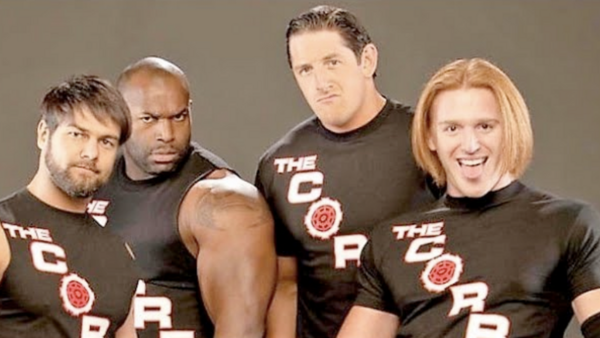
The Corre was, from the off, a fatally flawed concept.
Wade Barrett's former Nexus group had been so comprehensively humiliated by John Cena in 2010 before Barrett himself lost control of the stable to CM Punk that the very notion of bringing a crew together seemed narratively ludicrous. Having failed in his world domination attempts on Raw, Wade jumped to SmackDown to give his singles career a reboot with a January 14th 2011 match against The Big Show...for a few minutes until some familiar faces appeared.
Heath Slater and Justin Gabriel's arrival triggered a disqualification, resulting in Barrett losing his first match as leader of whatever this hodgepodge was going to be called. Then, Show battered all of them anyway to try and big up the surprise twist - Ezekiel Jackson was the fourth man, with none of the Nexus stink on him. After a legitimately awkward 30 second stare-down between Jackson and Big Show, goons Barrett, Slater and Gabriel recovered enough to take one more kicking but distract Show enough to eat a slam from Big 'Zeke.
They stood tall-ish to close the segment, taking the Corre name the following week in another pathetically weak exposition dump about why these storyline losers might not be quite so terrible second time around. SmackDown General Manager Teddy Long interrupted, and got the last word, noting that he wasn't in the mood for anybody running roughshod on the blue brand, and over the next several months, the group...followed his instructions and didn't.
7. X-Factor

The known also-ran of the infamous Kliq, the inclusion of a D-Generation-X member that the fanbase were openly sick of a good year before this spinoff group formed, and even the use of the letter X right around the time an ill-fated football league was about to make it feel extremely dated - X-Factor was doomed before it got off the ground.
Justin Credible was one of the last major Extreme Championship Wrestling names to arrive in WWE before the Philadelphia organisation was conclusively finished, but his arrival alongside X-Pac to deck Chris Jericho on the February 12th Raw was as much a wink and a nudge to those that knew he'd been an associate of Sean Waltman during the pair's last WWE runs as anything else. By the time Albert joined in March, ECW really was done, as evidenced by Paul Heyman calling the action in his earliest days with the company.
In classic Philadelphia fashion, the former T&A man's negatives were obscured behind an obvious positive - his size. He towered over X-Pac and Credible and helped them decimate The Hardy Boyz, but the addition brought with it subtraction. Far from a dominant trio, one newcomer and one company legend looked like they couldn't get anything done without a meathead on his third rebadging. From stumbling out of the blocks to disbanding without mention, X-Factor went 50/50 in most of the programmes and matches and remembered more for an Uncle Kracker that was as irritating as it was catchy.
6. The Million Dollar Corporation
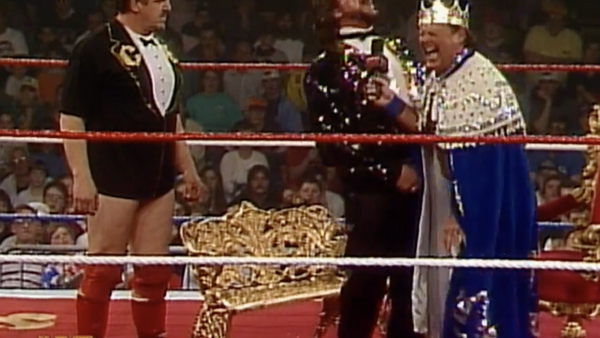
Ted Dibiase had only been absent from WWE screens since a SummerSlam 1993 loss to Razor Ramon when he returned as a commentator at the 1994 Royal Rumble, but he felt like he'd walked out of a time machine when he set about assembling a collection of talent to be his title-winning Corporation a few months later.
The whole concept failed, massively, and the terrible first impression revealed just how useless it was likely to be.
Despite his supposedly limitless resources, Dibiase reverted back to his Virgil years and decided to humiliate somebody instead. Nikolai Volkoff - somebody else that looked like they'd come from 10 eras ago rather than just one - was the chosen victim, being found living on the streets in New York and saved from his plight by Million Dollar Man and his usual brand of humiliation. In this case, it was via a pair of giant "Property Of The Million Dollar Man" trunks and tuxedo shirt with Cents where Dibiase's dollars used to be.
Despite Dibiase and Jerry Lawler pissing themselves laughing at the state of the former WWE Tag Team Champion, the whole thing fell flat in every respect. Nobody had any great nostalgic longing for one last Volkoff run, not even the hardest of the hardcores that filed into the arena for the May 16th Raw taping where the new role was assigned. He was never an impact player for the group, wrestling all of zero times on pay-per-view for the duration of his time, and never got remotely close to getting his cathartic exit either.
5. Hit Row

Hit Row made their third WWE/NXT debut on the August 12th 2022 edition of SmackDown, and fans in the building were more than happy to see them.
It had been a long road back for B-Fab, Top Dolla and Ashante "Thee" Adonis following their releases from the company in 2021, just weeks removed from their original SmackDown arrivals alongside Isiah "Swerve" Scott - the previous and future Swerve Strickland. Having originally popped off in the Capitol Wrestling Center era of NXT when just about nothing else was, they felt like a cheat code of an act thanks to the confidence and poise they brought to their performances. A year (and a firing-and-re-hiring) on from all that though, and they were now without the soon-to-be AEW World Heavyweight Champion for good. Somewhat unfairly, it hobbled their perception, particularly to those watching both shows and seeing Strickland move so quickly through the gears and up the ranks on the other channel.
Hit Row succumbed to something of a minor slump era for doubles wrestling in WWE, unable to shake off the vibe that whatever was once there had been lost. Top Dolla quickly gained infamy for a botched dive, and even though he took it in great humour for the benefit of his character's future, it added to the group's credibility problem. Dolla's release in September 2023, less than a year on from the last SmackDown relaunch, was the death knell.
4. Retribution

It was on the August 3rd 2020 Raw that announcer Tom Phillips acknowledged a series of technical hiccups that had taken place during the broadcast before throwing to footage that security cameras had picked up from "earlier that day". That this was very clearly shot at night (and thus presumably the day before) was the least of the problems with tale of insurgency and threat.
The crew threw a petrol bomb at a generator before running away from the scene, explaining why the product had suffered the blips, but the fact that they were just blips didn't bode well for whatever havoc they were looking to wreak. What really scuppered them was their pathetic assault on SmackDown a few days later.
Closing out the August 10th 2020 show, the five masked assailants hit the ring with baseball bats, pipes and other assorted weapons and knocked out a pathetic version of Nexus' original, transcendent debut. The ultimate collapse of that group wasn't tragic because some legendary or generational talents were squandered, but that the specific moment of their arrival was. It felt like an enormous shock to the WWE system, not least because even John Cena couldn't do anything to stop their wrath.
The 2020 retread carried no such gravitas. Retribution beat up a couple of the NXT talents charged with watching the COVID shows in the Performance Center, spray-painted some of the set, a bit, and cheered wildly for one of the members cutting the ropes with a chainsaw like any of it made a blind bit of difference. They rose and grew in numbers arbitrarily, some of the roster seemed to care while others were totally unmoved, and at one point they even appeared to be inexplicably aligned with The Fiend.
It couldn't have come across less threatening, so WWE, hilariously, went back to the drawing board...
3. Retribution, Again

After weeks of the group indiscriminately attacking people for various unclear reasons, the mass collection of idiots was filed down to a core few, and the leader (and "mastermind", as dumb as it would have been to take credit for anything that had happened over a cursed summer) was revealed to be Mustafa Ali - the man behind a hidden camera campaign mysteriously dropped around WrestleMania season.
A couple of weeks before Ali's reveal on the October 5th edition of Raw, the key figures were hilariously named T-Bar, Mace, Slapjack, Retaliation and Reckoning, and celebrated officially signing for as WWE Superstars (!) with a disqualification (!!) loss (!!!) to The Hurt Business. With new leadership and theoretical focus though, WWE and Ali attempted to tie his old mystery gimmick to his new one somewhat, with some social media activity bolstering the narrative that a grand plan had worked a treat.
In reality, it all reeked of desperate panic booking, retroactive stapling of bad ideas onto...other bad ideas, and when it didn't seem as if things could get any worse, their formal re-introduction was an all-time awful night for any act in wrestling history. A week removed from being drafted to Raw permanently, Ali led his charges out to interrupt Alexa Bliss & The Fiend standing still, before the lights went out to bring that to an abrupt halt.
With that squared away, The Hurt Business came out for another eight-man tag, T-Bar tapped out clean to a Bobby Lashley Hurt Lock, and they'd lost again. To make matters worse/funnier, The Fiend turned back up and decked them easily. With the new version immediately established as as toothless as the old, what might have remained of the gimmick's credibility was stone dead; salvaged only by the absence of live crowds to truly highlight the indifference.
2. The Oddities

Time has been quite kind to The Oddities as far as bizarre Attitude Era footnotes go. For the most part, they're never really spoken about one way or the other, but if they do crop up in clips or conversation, it's to talk about the Insane Clown Posse/South Park zeitgeist era and how putting three monsters together as undercard babyfaces made for a nice fit with the likes of Stone Cold Steve Austin and The Rock on top.
It's most definitely not to speak about their debut as browbeaten-yet-terrifying heels.
Working as an villainous gang of monster types under the mysterious Jackyl, The Oddities started life as a deeply unpleasant act that leaned further in on old carnival "freak show" entertainment than any traditional pro wrestling archetype. The original labelling didn't even attempt to lampshade the cruelty - "The Parade Of Human Oddities" featured eventual regulars Golga, Giant Silva and Luna Vachon, but also Howard Stern acts 'Hank the Angry Drunken Dwarf' and 'Crackhead Bob'. A link with the Don Callis character brought Kurrgan into the fold, but his time as a killer was short-lived once the crew turned babyface.
Remarkably, the supposedly scary monsters were just not a workable fit in the Attitude Era. Like a jagged version of Hulk Hogan decimating WCW's Dungeon Of Doom, Stone Cold Steve Austin would have cut through all of them with ease if he'd even permitted his character to appear on screen with them. After this bewildering start, the group were remodelled into the aforementioned slightly-more-sympathetic ensemble.
1. The Ministry Of Darkness

The Undertaker took a while to figure out how to truly fit in to the Attitude Era, particularly after his feud with Kane - a holdover from the transitional final days of the New Generation - concluded with them joining forces in the summer of 1998. With the product moving at an ungodly pace, even that was done and dusted by the winter, and donning denim and riding his bike to the ring was ultimately what got him over a pretty enormous 1999 hump.
Welcome to the hump.
After fighting and losing to Stone Cold Steve Austin to formalise his heel turn, The Undertaker as we'd known him became something of a limited offering. A shift was required, and that came in the form of the Ministry Of Darkness; a stable of wrestlers that could do his bidding while conveniently padding midcards during a hot time and keeping the mention of 'The Deadman' around even if big Mark wasn't directly involved. It was hit and miss, in-part thanks to some of the dross he associated with along the way and the rapidly declining quality of his matches, and also because weird icky goth stuff definitionally isn't for everybody.
The formation of the Ministry very literally wasn't. A ceremony involving the "sacrificing" of Dennis Knight didn't make air in all of WWE's markets thanks to some of the overtones and the smoke-and-mirrors slicing of his skin. Knight became Mideon, the first (or, third including Faarooq and Bradshaw as The Acolytes that dragged him to his fate) member of cult leader Undertaker's new army of darkness. In relatively short order, he got bored of bossing around average wrestlers, merging his crew with the Corporation to build to the Higher Power reveal that brought him all the way back to Steve Austin anyway, rendering it all as pointless as the original segment felt.