Every WWE King Of The Ring Winner Ranked From Worst To Best
Winning this tournament can be a crowning achievement, or it can be a royal pain.
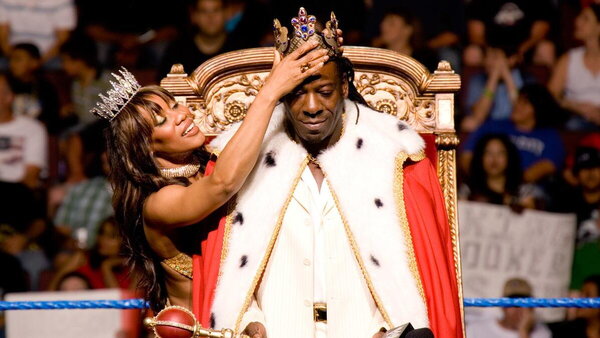
Don’t look now, but it might be safe to say that the King of the Ring tournament is back as an annual tradition.
The popular tourney was a WWE mainstay throughout the 1980s-2000s, but it disappeared from programming for years at a time during a 20-year period. Between 2003 and 2023, WWE held only six King of the Ring tournaments. But since 2024, the tournament has once again become a summer fixture, with WWE holding its third consecutive edition, which also happens to be the 25th set of brackets to crown a king.
KOTR began as a house show tournament in 1985, with the first six being held in New England. The prize was the title of King of the Ring, which didn’t technically mean anything, nor did it carry any huge benefit – only one of those early winner saw the victory recognized on television. However, the individual winners would find ways to utilize the title.
It wasn’t until 1993, when the tournament got its own PPV, that things really took off for King of the Ring. For 10 years, the annual tourney would become known for being an opportunity to elevate a mid-card wrestler that had seemingly been pegged for a promotion to the top of the card.
But not all kings have been created equal. The tournament winners fell on tough times in later years, with some of the kings being downright jokes.
Still, King of the Ring has produced some memorable winners – 12 of the victors are WWE Hall-of-Famers, and at least three others who are currently active are likely to be enshrined. Let’s take a look at how the 23 men who have won the tournament have fared.
23. Mabel (1995)

When you talk about the worst King of the Ring, you would be hard-pressed to come up with someone worse than 1995 winner Mabel.
As part of the babyface tag team Men on a Mission, Mabel was little more than a midcard act, losing to people higher up on the card. But in 1995, he turned heel, won the KOTR tournament and became the WWF’s top heel. Yes, you read that right. Mabel was a top heel a year before Austin 3:16 began to run amok in the company. Mercifully, Mabel’s run would end pretty quickly.
King Mabel would fall to then-WWF Champion Diesel at SummerSlam (just writing that sentence pretty much reveals the sad state of 1995 WWF) and enter into a feud with The Undertaker. The big man managed to injure the Deadman, which pretty much signalled the end of his run as a serious threat.
Less than seven months after winning KOTR, Mabel was buried in an eight-second loss to Diesel on the 1996 New Year’s Day episode of Raw. After a failed entry into the Royal Rumble, Mabel was gone from the company.
22. Bad News Barrett (2015)

These days, Wade Barrett is a respected member of WWE’s broadcast team, but we’re afraid we’ve got some bad news… his turn as a King of the Ring was anything but respectable.
Barrett won the crown during one of the many KOTR revivals that have taken place in the 2000s, an abrupt two-night tournament in April 2015 that was probably every bit as thrown-together as it seemed. The Englishman defeated Neville in what actually was a notable moment for WWE: a non-PPV special event on the WWE Network.
Unfortunately for Barrett, the company’s motivation for the tournament was more likely producing content (sound familiar?) than it was creating a booking mechanism to make a star.
As king, Barrett almost immediately engaged in a feud with R-Truth, where he lost multiple matches to the comedy act. He then teamed with Stardust to face Neville and Arrow actor Stephen Amell at SummerSlam in a losing effort. When you’re losing to Cody Rhodes in a gimmick that sent him heading for the WWE exits, and an actor, you know you’re not a priority.
By the fall, we would see Barrett join forces with Sheamus, Alberto Del Rio and Rusev in one of the worst factions in modern history: the League of Nations. The less that’s said about the group, the better. But suffice it to say, they were losers.
Barrett was gone from WWE shortly after WrestleMania, lasting just a year after winning the KOTR tournament, and having accomplished next-to-nothing while king. Thankfully, his second act with the company has been much kinder.
21. Billy Gunn (1999)

When you talk about trying to use King of the Ring as a vehicle to push a wrestler, you have to point to Billy Gunn as a prime example. Unfortunately, he’s a case study that even at the height of WWF’s popularity, even the then-vaunted KOTR wasn’t a sure thing.
Gunn was already a wildly successful tag team wrestler and part of one of the most popular stables during the Attitude Era, D-Generation X. But in 1999, WWF charged ahead with plans to make him the next breakout singles star. Having him win the 1999 King of the Ring tournament was the right play to launch that initiative.
Unfortunately for Mr. Ass, he fell flat on his… well, ass, right out of the gate.
Someone decided it would be a great idea to pit Gunn, who never was known as being strong on the mic outside of one hit catchphrase, against The Rock. One can only guess how that went for Billy, as Rocky wasn’t about to treat him with kid gloves. Rock shredded Gunn on the mic and beat him at SummerSlam, sending Billy back to Road Dogg for a New Age Outlaws reunion by the fall.
Gunn would putter about for a few years until he was released in 2004. He’d return to the company later, but he’s since then found a home in AEW.
20. Baron Corbin (2019)

In the case of Baron Corbin, a longer reign wasn’t necessarily better. If anything, it was worse.
Corbin was in the midst of his seemingly endless push as a not-quite top guy in the late 2010s, always floating around the upper-mid-card but never breaking through, and suffering grief from exasperated fans along the way.
In 2019, he captured the King of the Ring and immediately rechristened himself King Corbin, a gimmick that would last for 21 months, which is longer than Harley Race donned the crown and robe. Along the way, Corbin would be a constant presence on WWE television during the pandemic era, though he never really achieved any accolades: he didn’t win any titles while king, nor did he capture Money in the Bank, win the Royal Rumble or emerge from the Elimination Chamber victorious.
King Corbin’s biggest claim to fame came when he defeated Roman Reigns in a TLC match in December 2019, which would be Reigns’ last loss in a singles match until WrestleMania 40.
Corbin’s reign just kept going and going until he lost the crown to Shinsuke Nakamura in June 2021, ending the disappointing run. But fear not: Happy Corbin was on the horizon…
19. Tito Santana (1989)

Former Intercontinental and WWF Tag Team Champion Tito Santana won the fifth King of the Ring tournament in 1989, and if you weren’t among the 4,500 in attendance at the Providence Civic Center in Rhode Island, you probably had no idea that this ever happened.
At the time, the KOTR was still a house show deal that didn’t necessarily carry over to television, so you can’t fault Santana or the company for not pushing Tito after his victory.
Santana’s tournament triumph was notable for only one reason: he bested former Strike Force teammate Rick Martel to capture the crown a few months after their breakup at WrestleMania V. The two wrestled nearly 50 times – almost entirely on house shows – throughout 1989, with Martel almost always defeating Tito.
Santana’s King of the Ring victory over Martel marked the effective end of their feud that year. But beyond that, this didn’t even register on television.
18. Ted DiBiase (1988)

1988 was a banner year for Ted DiBiase.
The Million Dollar Man headlined WrestleMania 4 against “Macho Man” Randy Savage, losing in the finals of the tournament to crown a new WWF Champion. DiBiase actually had worn the gold briefly (and even defended it at a couple house shows) a couple months earlier after Andre the Giant defeated Hulk Hogan and surrendered the title to Ted in a decision that was retconned on TV.
Despite coming up short in that tournament, DiBiase would triumph in the 1988 King of the Ring, defeating Savage (via count-out) in the finals. As with nearly all of the pre-televised KOTR tournament winners, DiBiase was never referenced as king on television.
However, DiBiase would introduce the Million Dollar Championship six months later and continue on a winding career with WWF that lasted until 1993, when he all but retired from in-ring activity.
17. Don Muraco (1985)
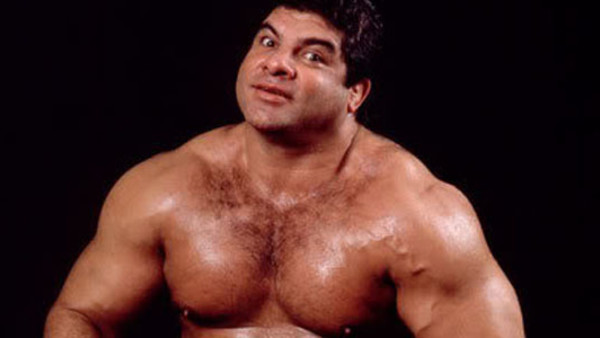
Similar to “Hacksaw” Jim Duggan (who won the first Royal Rumble), it’s difficult to rank the very first King of the Ring, Don Muraco.
When Muraco won the 1985 tournament, it was nothing more than a one-night, 16-man tourney at a Massachusetts house show, a gimmick to fill out a card, entertain the fans and give them the illusion that they were seeing something truly unique.
The win came a little over a year after Muraco’s second run as Intercontinental Champion had ended, four years into his WWF career. Magnificent Muraco hung around the company’s midcard for another three years before departing.
Muraco’s King of the Ring victory never found its way onto television or storylines, and it was barely a footnote to WWF/E history until the company started referencing him as the first winner while hyping the tournament. Despite those caveats, we still have to leave his ranking low compared to others.
16. Sheamus (2010)

When Sheamus won the King of the Ring tournament in 2010, it felt a bit like the playbook was run in reverse.
For years, the king gimmick was used to elevate mid-card talent that was on the cusp of breaking through to the main event (several names will show up later to confirm that mentality). And while it was true that the Celtic Warrior had only been on the roster for less than two years, he was already a former WWE Champion, making this an odd move.
The Irish-born superstar would eschew the normal crown and purple cape, opting instead to dress more like a traditional Irish king.
Storyline-wise, Sheamus followed up his late 2010 tournament win by: losing a feud to John Morrison; being attacked by Triple H as payback for putting him on the shelf months earlier; and winning the United States Championship (four months after KOTR). Quite the “elevation” after winning the tournament.
It wasn’t until 2012 when Sheamus would sniff the main event scene again, when he won the Royal Rumble and defeated Daniel Bryan at WrestleMania 28 – in that match.
15. Xavier Woods (2021)

Most young kids dreaming of becoming a wrestler envision themselves winning the World championship on the biggest stage possible.
Not Xavier Woods. He dreamt of becoming King of the Ring.
That’s why it felt so satisfying to see Woods – the only member of the New Day to never win a World title in WWE – finally achieve that goal in 2021. Xavier triumphed in an eight-man tournament that saw him defeat Finn Balor in the finals in Saudi Arabia.
Given his fascination with becoming King of the Ring, it was no surprise that Woods had a coronation and played up the king gimmick to the hilt. However, his reign was somewhat short-lived. He won the tournament in mid-October. Less than three months later, Xavier went down with an injury that kept him out of action for two months. When he returned, the king gimmick was gone.
On one hand, Woods really didn’t have a chance to do much with the king gimmick other than enjoy the costuming and theatrics a bit. But on the other hand, he also didn’t have the opportunity to flounder and flail under late-stage Vince McMahon. Call it a wash.
14. William Regal (2008)

Oh, what could have been.
William Regal could have been one of the greatest kings WWE ever had, if not for a wellness policy violation.
You see, in April 2008, Regal, then the Raw GM, won a one-night tournament to become King of the Ring. The tournament was immaterial. It was the potential that was laid at his feet: a GM, a Brit and a crown, all rolled into one. You don’t need an active imagination to figure out where this was headed with Regal descending into a mad king.
But a month into his reign, Regal was dinged with a 60-day suspension, which derailed his entire push as king. Even after returning, it was a slog to get back into the swing of things. But the GM/king push was gone, and he never really achieved a main-event focus again – at least as a wrestler.
Modern WWE fans more likely recognize Regal not from his wrestling, but from his onscreen role as NXT GM at the height of its popularity in the 2010s.