Black Saturday | Moments That Changed Wrestling Forever
1. The After
The butterfly effects from every major incident in wrestling history are fun to explore, not least because the circumstances encourage chancers to take bigger gambles, desperate people to do desperate things or invariably a combination of the two.
There's a reason why that domino effect meme still loops on socials; the funnier the gap between the tiny moment and the huge one, the better the tale. This was maximalist pro wrestling in the 1980s though - there were no such things as "tiny" moments at boardroom level. And "huge" mostly understated just how seismic the moves were. Vince McMahon's failed attempt to steamroll the last major holdout in 1984 kicked off a chain of events that can be felt to the very day you're reading this. Consider the initial kick in the backside he got from Ted Turner when, years after their relations soured from the WTBS days, he got the call to say he was in "the rasslin' business" in 1988. Turner purchasing the promotion from Crockett and (eventually) creating the full separation between the NWA and WCW resulted in a bitter battle between a shrewd and cynical billionaire, and a lunatic with aspirations of becoming one.
This is easier said in hindsight than in the trenches of the early part of the 1990s, but the Monday Night Wars were simultaneously improbable and inevitable half way through that turbulent decade. The rampaging success of a Nitro-fuelled World Championship Wrestling between 1995 and 1997 had plenty to do with the resurgence of the World Wrestling Federation between 1997 and 2000. Being beholden to television had been at the roots of all of it, but the changing face of Turner's empire inadvertently became a noose around WCW's neck as McMahon was given free rein to push boundaries and envelopes alike in order to win. By 2001, Ted Turner couldn't pull strings for the company as a money-loser following a merger between AOL Time Warner the prior year, and new boss Jamie Kellner cancelled WCW programming across the Network. Without television coverage at the time, the property was deemed virtually valueless, and McMahon infamously bought the rights, roster, branding, back catalogue and everything else associated with the company for just over $4.2million dollars - money he made back a gazillion-fold in DVD sales alone with a new library of matches and moments to mine.
It was a good job he had that market to service longstanding fans too, because they'd never been less satisfied than during the near-two decades in which he held dominion over the mainstream with his monopoly. WWE's creative decline was magnified by the lack of viable opposition, and though change took longer than in the 80s and 90s, it happened in more spectacular fashion in 2019.
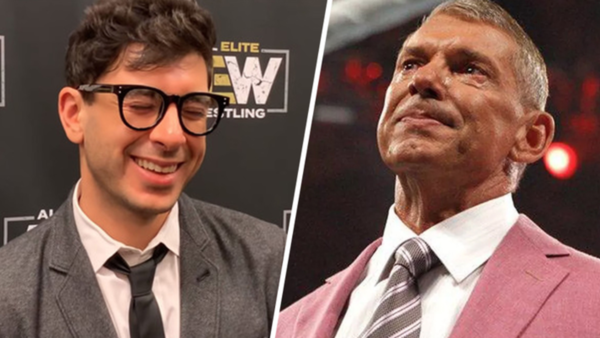
It wasn't just the launch on TNT that resulted in Nitro comparisons for All Elite Wrestling. Tony Khan was a self-confessed wrestling megafan, with his tastes folding in much of the stuff McMahon attempted to trample over in the 1980s as well as World Championship Wrestling at its various critical peaks. He wanted to establish an alternative rather than an also-ran, and with WWE in such rudderless creative shape by the end of the 2010s, did so by almost using Raw and SmackDown as an example of every possible opposite.
All Elite Wrestling has outlasted every major challenger brand post-1984, and will continue to do so in-part thanks to a rock solid relationship with Warner Bros Discovery - a mass media entity that has Turner in its DNA. It was revealed in early-2026 that the Network even owned a small stake in AEW - not enough to protect against every possible obstacle but certainly a reason for the two sides to stay on great terms. Black Saturday was for so many fans the darkest day because it theoretically brought about the permanent end of a product they loved. That proved temporary, and the ramifications of McMahon's gross misreading of the situation delayed that for another decade and a half. That proved temporary too, even if it didn't feel that way deep into the 2000s and 2010s. Once again, McMahon's mishandlings cost him what he wanted, and the monopoly was lost.