How Good Was Goldberg Actually?
Looking back at his career, just how good was Bill Goldberg?
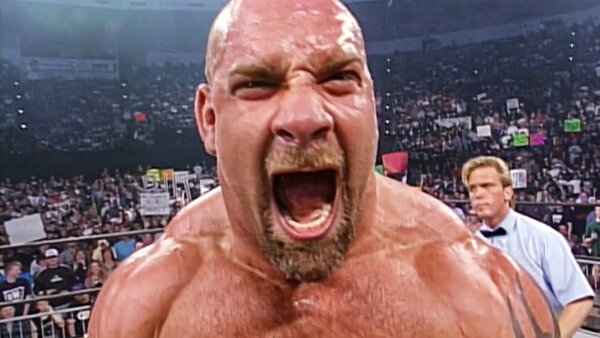
History is written by the victors, and as the eventual winners of the Monday Night War, WWE has been able to cast its version of events all over WCW's reign on top. Just look at how many stories are out there about how WCW fell apart and why that happened, versus tales of how WCW became dominant and overthrew the status quo of wrestling for 83 weeks straight.
This WWE-tinted version of wrestling history dilutes the modern-day perception of certain WCW wrestlers and their impact in the late '90s, and Bill Goldberg is certainly one of the victims of that.
Sure, WWE has worked with Goldberg a whole bunch since Vince McMahon shut WCW's doors for good, but would they dare to tell you that Goldberg was a much more popular superstar than The Undertaker during the Monday Night Wars? They have turned the presentation of The Streak into an exaggerated punchline due to inflated numbers, but does that tell the whole story?
There's more to Bill's career than ending Bret Hart's time in the ring and aging badly. What does that mean for his overall legacy? Join us as we investigate how good Goldberg actually was.
Get Nord VPN with 77% off, 4 months extra free AND an Amazon gift card today! https://go.nordvpn.net/aff_c?offer_id=564&aff_id=3013&url_id=33286source=WCYT
10. Presence/Look/Presentation

The presentation of Goldberg for the first 15 months of his WCW career was pretty much perfect.
This is vital when you have to hide the negatives (of which there were many) and accentuate the positives. For a company that couldn’t make some of the best performers of their generation main event-level talent (Eddie Guerrero, Chris Jericho, Rey Mysterio, etc), WCW took Goldberg, via great presentation, to a level of popularity that few in wrestling history have ever achieved.
Fans are perpetually gaslit to believe that WCW’s years on top were just a blip for WWE before they figured out their problems and took over, but it was the presentation and rise of Bill Goldberg’s undefeated streak that contradicts that narrative more than anything else. Goldberg had limitations in so much of his game that WCW had to get all of the little things right around his persona, and they did so spectacularly.
Goldberg's walk from the dressing room to the ring was unique, giving him an aura of danger akin to Cyrus the Virus in Con Air as he was flanked by rows of security guards. His pyro was unique and iconic, being shrouded in a curtain of flames and blowing smoke out of his mouth like Daenerys' most dangerous dragon. The explosions that accompanied Goldberg punching and kicking the air were also something fans had never seen before that made people lose their minds.
It would have been so easy to give Goldberg Metallica-lite entrance music, too. Instead, Godberg's 'Invasion' theme by Christian Poulet and Jean-Yves Rigo feels like the kind of epic Alan Silvestri conjured up for The Avengers and the heroes of the MCU. It's cold and methodical, builds intensity, and perfectly fits the crowd's deafening "Goooooldberg! Gooooooldberg!" chants.
Goldberg's whole presentation is underplayed because WWE didn't invent it. Make no mistake about it: Goldberg's iconic entrance is as good as any pro wrestling has ever seen and was a massive part of what made him Da Man.
When it comes to his look, there’s no escaping that Goldberg’s appearance is almost identical to Steve Austin’s. The uniform of both WWF and WCW’s lead babyface having a shaven head, goatee, black trunks, and black boots is there for all to see. The difference being that, while Austin was a loose-lipped, beer-swilling wild man with a ring technician’s psychology and ability, Goldberg was an intense killing machine who relied on his physically imposing look, brute force, and an ice-cold stare.
Goldberg's promo shots were immaculate, too. His snarls into the camera were more essential to his popularity than so much of what traditionally gets a superstar over. It may not be the most sophisticated presentation ever put together for a wrestler, but this is one occasion that WCW got everything right on the money.
9.5/10
9. Promos
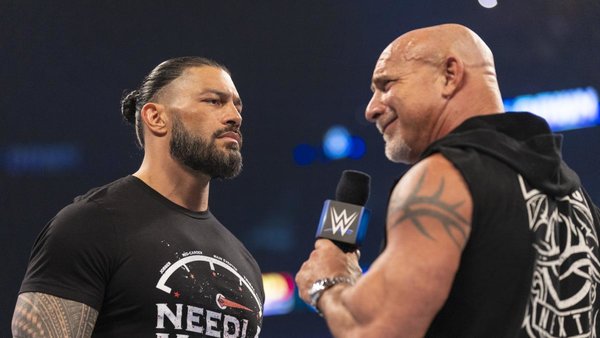
Today, a superstar needs to be able to verbally joust. The best promos in the modern game are from people like CM Punk, MJF, and Toni Storm; people who rely on charisma, character, and narrative to connect with an audience. Goldberg’s approach was much more monosyllabic, but no less effective for its time.
Goldberg was a man of few words. He didn’t even speak in the first stages of his WCW push. Not only was he built like an '80s action hero, but he also relied on a catchphrase that’s right up there with “I’ll be back”. For the longest time, Bill Goldberg only needed to snarl “Who’s Next?” or “You’re Next” into the camera or a microphone, and it was enough to make audiences lose their mind.
Over time, Goldberg began cutting longer promos that involved nothing more than generic, cookie-cutter, tough-guy spiel. He delivered the kind of formulaic babyface promo that Roman Reigns was lambasted for before he found himself as The Tribal Chief. These rubbish promos got drastically worse after WCW turned Bill heel in 2000, when he lacked the nous or conviction to deliver motives for his dastardly way of thinking. His first promo as a heel fell flat, and his new catchphrase of “Fear This” felt forced and like a product of a marketing meeting, in a way that "Who's Next?" never did.
His promo game was exposed further when Goldberg eventually joined WWE in 2003 following WCW’s closure. For star power, throwing Goldberg straight into a feud with The Rock made a lot of business sense. The problem with Bill sharing promo time with the man dubbed The Michael Jordan of the Mic is that he was woefully out of his depth when trying to establish himself with a new fanbase.
Goldberg signed a year-long contract in WWE that saw him feud with Triple H and Evolution, where he also felt like he had to be verbally carried by Triple H and Ric Flair, and a feud with Brock Lesnar on the road to WrestleMania 20 that saw him have to go mic-to-mic with Brock's advocate, Paul Heyman. In one segment on that particular Road to WrestleMania, Heyman verbally assassinated Goldberg while Vince McMahon and 'Stone Cold' Steve Austin smiled in the background. The segment ended with Goldberg spearing Heyman out of his shoes, but if this scenario wasn’t putting Bill in his place after the Monday Night War, it sure felt like it.
As for his various WWE comeback runs from 2016 until his retirement in 2025, Goldberg was again regularly outshone by his adversaries in promos. Gunther in particular buried Goldberg in their verbal back-and-forths.
All of which isn’t to say Goldberg didn’t have charisma and character, because he did - you don’t get as insanely over as Goldberg did without those attributes - but he delivered that charisma with gurning into the camera and violent squash matches, more than witty comebacks and memorable promos.
4/10
8. In-Ring Ability
Bill Goldberg is open about the fact that his passion in life was “football”. His passion was playing as a defensive tackle in the NFL, where he had two short stints with the LA Rams without making an appearance, made 14 appearances for the Atlanta Falcons, and became the first player to ever be cut by the then-new Carolina Panthers franchise (without playing a minute for them).
This is important because pro wrestling wasn’t even a backup plan for Bill. It was only when he was approached by Sting, Buff Bagwell, and Lex Luger in an Atlanta gym and encouraged to think about giving it a try that Goldberg signed with WCW. Pro wrestling found Bill Goldberg, not the other way around.
As such, Goldberg’s skill set and passion for the business are lower than 99% of people we’ll cover in this feature. He wrestled dark matches, and crowds took to him instantly. Eric Bischoff rushed him onto TV before he was ready to go, and people didn’t care because his matches had a winning formula. A brief set-up, a vicious spear that came naturally to a defensive tackler, and a really cool finishing move in the Jackhammer.
Goldberg had a drastic lack of in-ring skills, but it didn't impact his rise. Only four of his first 50 televised matches on WCW television went longer than three minutes, and yet every sold-out arena and the millions at home were crazy for Goldberg’s “set-up, spear, Jackhammer” formula. Just watch the crowds in these moments compared to anything you see on WWE or AEW TV today. It wasn't pretty, it was definitely a product of its time, but people LOVED it.
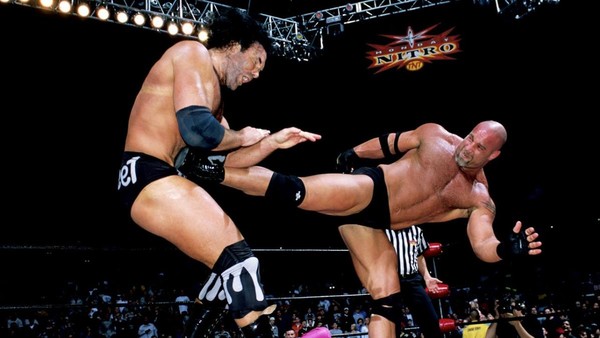
For all of his faults in the ring, that includes his infamous bone-headed kick to Bret Hart’s head that concussed Bret and ended his in-ring career, and a match with Steven ‘William’ Regal in the early part of his career that showed his lack of ability bare for all to see, Goldberg did popularize the Spear. It’s a move that everyone from Adam Copeland to Roman Reigns to Jey Uso deploys today, but the devastating impact and sheer ferocity of Goldberg’s Spear made the move mainstream for the first time.
The Jackhammer was also a great-looking finisher that played into Bill’s sheer physicality. Goldberg Jackhammering The Rock at Backlash 2003 felt like one of the only moments that captured the essence of what the Monday Night Wars could have been after Vince bought WCW. It also looked unreal in WCW when he would lift people the size of The Giant up like it was nothing and smash them into the ground for the finish.
The Bret Hart incident makes it easy for modern audiences to believe that Goldberg was an oaf who offered nothing in the ring, but he himself has played a part in that being the accepted reality. The paydays were huge, and his kids got to see him wrestle, but Goldberg's latter-day comebacks stank like a bad fart. Wrestling into his 50s, Goldberg wasn’t able to replicate the trademark intensity that made him a believable attraction in his heyday. His aging body took away the one attribute he excelled at, and only furthered the idea that he wasn’t ever fit to wrestle at the highest level.
Even when pointing out his cool moves and people's fanatical reactions to them, there's no way of hiding that Goldberg is one of the worst wrestlers ever to make it to wrestling’s main event scene when it comes to in-ring ability.
3/10
7. Time's Test
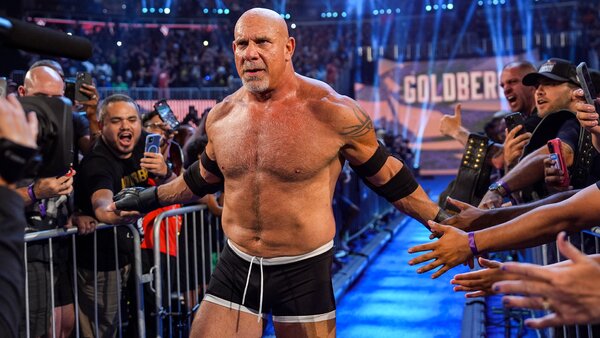
The more time rolls on, the more Goldberg’s popularity seems as if it fit the zeitgeist of the late '90s more than capturing something timeless.
WWE and AEW have both tried the Goldberg method of booking someone as an unstoppable monster and having a talent smash their way to the top. Ryback and Wardlow are wrestlers with limited mic ability, given nicknames like ‘Mr. Mayhem’ or handed a Schwarzenegger-lite catchphrase like “Feed Me More”. Ryback even employed a Spear as one of his signature moves, while Wardlow also had a period where he was dovetailed by security guards.
Neither of these wrestlers were able to sustain momentum. In the age of social media, where fans can tire of a wrestler quicker than ever before, it’s hard to make the argument that Goldberg would be able to work at the highest level in the modern era. Oba Femi is currently being booked like a bone-breaking killing machine, but the gap in promo and in-ring skills between Goldberg and The Ruler is enormous.
There’s always a market for a Goldberg-style character with kids. Power is aspirational to children, and smashing an opponent in record time, a long winning streak, and a 90+ rating on a 2K game would be enough to secure popularity with the youth market, but the IWC would eat Bill alive if he were in his prime in this era. Jey Uso is a man with a great entrance and limited promo and in-ring skills, and just look at how his 2025 moment in the main event scene went.
3/10
6. Cultural Significance

For as long as wrestling fans and the business itself talk about the Monday Night Wars, they will talk about Bill Goldberg. WCW’s biggest babyface during these hallowed years is a straight shoot-out between Sting and Goldberg. If we are talking about popularity in the moment, Goldberg wins that battle by a mile (even if Sting’s character, stories, and skill-set have aged far better).
Don’t let WWE’s revisionist history fool you; Goldberg is one of the top five most popular wrestlers of the Monday Night Wars era. He was a bigger draw than Shawn Michaels, Triple H, Mick Foley, The Undertaker, and basically everyone on WWE’s side of the trenches apart from Stone Cold and The Rock. Only Hollywood Hulk Hogan was worth more during this time period to WCW, too.
Goldberg’s streak is legendary. For the majority of the time that he was undefeated, he was as hot as anyone you want to name in any era of wrestling. WWE has turned this period into a joke, pointing at WCW embellishing the number of wins he racked up between broadcasts, but the truth is that Goldberg went 151 actual televised wins before the streak was broken. WCW claimed he was 173-0 when the streak was broken, which only exaggerates that number by 22 matches. Not quite the punchline that WWE’s version of events makes it out to be, is it?
As already discussed, Goldberg hasn’t had much in the way of lasting impact on the business, outside of making the Spear fashionable. There aren’t many of today’s wrestlers who call Goldberg their inspiration. Maybe it’s just the way WWE likes to reframe history, but even an act like Batista, who followed Goldberg’s formula of cool pyro and overall intensity, is considered to have left a bigger mark on the business than Goldberg.
The narrative of wrestling history has essentially been controlled by Vince McMahon and Paul Levesque, two men who fought on the frontlines of the Monday Night War. No matter how much either man would protest it, there’s always an undercurrent of disdain that cheapens the impact of WCW stars like Scott Steiner and Goldberg. Like it or not, that has diminished the cultural legacy of both men.
5/10
5. Rivalries
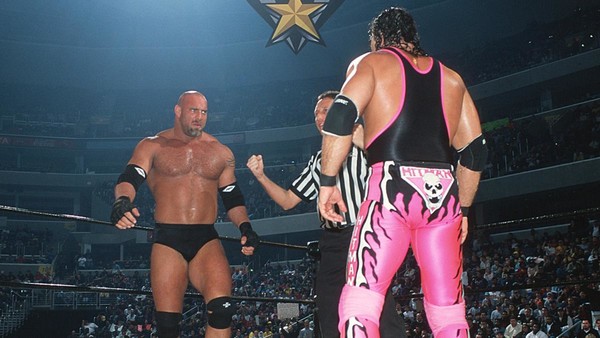
Goldberg's streak was largely made up of victories, more than sustained rivalries, due to Bill's monosyllabic smash-mouth style. At a time when WCW was on top, it was plagued by bad booking and a refusal to pull the trigger on things with momentum. Goldberg was being unwillingly dragged into a rivalry with Chris Jericho, in which Jericho would continually call out Goldberg and even fought a little person version of Goldberg. It was great television, but the two didn’t have an actual match until they were in WWE in 2003.
In WWE, Goldberg and Brock Lesnar have shared the ring in two of Bill’s three WrestleMania appearances, but that feud is neither looked back on fondly by fans or the performers themselves. Paul Heyman makes the point that Goldberg is one of the only people who could credibly beat Brock Lesnar’s ass in 90 seconds, but these are two men of very few words. It was never a recipe for a good feud.
Despite having marquee matches with Hulk Hogan, The Rock, Triple H, The Undertaker, and Sting, Goldberg doesn’t really have a rivalry to hang his hat on.
If there is a rivalry that Bill Goldberg is known for, it’s his long-running real-life beef with Bret Hart. The Hitman holds Goldberg responsible for cutting his career short and has never let it go. Bret brings up Goldberg in interviews and is asked about Bill in almost every high-profile interview he gives, because the media know that he is willing to give them a new quote about why Goldberg sucks. Goldberg does his best to be gracious about Hart’s feelings, but has been known to lash out in response to the bombardment of insults Bret hurls his way. That this is his defining rivalry is a damning indictment of the way Goldberg was booked outside of the streak.
3/10
4. Moments

What Goldberg lacks in rivalries, he more than makes up for in moments. Just watch the crowds in Goldberg matches, and they are as bonkers as anything you see in the Attitude Era.
Goldberg’s biggest moment came when he beat Hollywood Hulk Hogan for the WCW Title in front of 44,000 people in the Georgia Dome in Atlanta. Continuing his streak by beating the biggest name in wrestling cleanly in Bill's hometown was one of the biggest moments in the history of Nitro, WCW, and the whole Monday Night War.
At a time when Goldberg was unable to have great matches, he also made his name in great moments. Blowing off 'Mean' Gene Okerlund’s interview questions after his debut victory over Hugh Morris was a masterstroke that built intrigue and gave him his intensity. Beating Raven for the United States Title to win his first championship felt monumental.
Goldberg's one truly great match with DDP at Halloween Havoc '98 for the WCW World Heavyweight Championship goes against everything that’s said about Bill in the ring. Playing to a white-hot crowd at the MGM Grand in Las Vegas, Page’s popularity and Goldberg’s streak created magic that stands the test of time to this day for drama and star power.
Hell, even Goldberg’s WWE debut is a great moment. Fans had spent years fantasy booking the Monday Night Wars, so to see Goldberg arriving on Raw in a Harley Davidson leather jacket, with Jim Ross and Jerry Lawler losing their minds on commentary, felt surreal and enormous. Hearing him tell The Rock “You’re Next!” before hitting him with a Spear was probably the best moment Goldberg ever had in WWE.
It would be remiss not to point out that Goldberg is also part of some moments that are remembered for all the wrong reasons. The crowd may have gone ballistic for it in the moment, but Goldberg’s streak dying as a result of Scott Hall coming out of the crowd in a security uniform to hit him with a cattle prod was awful. It killed the streak and his momentum for good in one stinky moment.
Then there’s the December 23rd, 1999 episode of Thunder in which Goldberg injured his arm because he punched out the window of a limousine that featured real glass. This put him out for five months, and the story of him doing this did nothing to quell the perception that Goldberg was a bit of a brain-dead oaf.
Vince Russo turned Goldberg heel for the first time shortly after he returned from this injury by turning on Kevin Nash and joining the New Blood faction at The Great American Bash 2000. The image of Russo looking proud of himself while Goldberg and Eric Bischoff look visibly unconvinced at the heel turn as it happened in real time is an absolute stinker.
Goldberg is also responsible for one of the worst moments in WrestleMania history at WrestleMania 20, where he and Brock Lesnar were booed out of Madison Square Garden in one of the worst 'Mania matches of all time. The contest was wrestled at a slug’s pace, and fans knew both men were leaving the company after it. New York's famously cynical crowd decided to voice their displeasure at two men who didn't love the business by passionately booing both mercilessly for the whole duration of the match.
There are other forgettable moments for Goldberg in his latter years, as fans hated him winning the WWE Universal Title in seconds against Kevin Owens and Bray Wyatt. Then there’s the Super ShowDown match between him and The Undertaker in 2019, in which both men nearly suffered fatal injuries due to being unable to replicate their moves in their 50s. Even Bill's retirement moment involved Saturday Night’s Main Event going off air while he was giving his farewell speech, so it’s safe to say he has as many bad moments as he does good. Nevertheless, this is a large number of moments that have lived on in fans' memories.
7/10
3. Range

Throughout this piece, we’ve referred to the limitations of Bill Goldberg. The term “flat track bully” was invented for him. He’s a man of few words and fewer wrestling moves. It wouldn’t even be an exaggeration to say that Goldberg literally has no range. No matter how popular he was, and he was VERY popular, he is the definition of a one-dimensional performer.
Paul Heyman famously encapsulated Goldberg’s run at this time with the compliment that “Goldberg was not paid by the minute, nor by the word”. It perfectly summarizes what worked about Bill, but also points to him not having much in the way of depth and nuance.
He’s an icon of the squared circle, but the evidence for Goldberg's lack of range is exposed by everything that happened after the streak. Whether you put it down to poor booking or the lack of skills necessary to have longevity, once Kevin Nash ended the streak, the aura of Goldberg was never the same again. If he had more tricks up his sleeve, there would surely have been more greatness to come from a superstar as popular as Goldberg, but the formula never changed. It only got staler and more dated as time ticked on.
2/10
2. Drawing Power

Goldberg’s streak is the only legitimate reason that the second half of the Monday Night War existed. Without Goldberg’s magical run getting fans invested, WCW would have continued to circle the drain towards oblivion by hooking their programming around aging main eventers and losing viewers by the millions. They let Chris Jericho, Rey Mysterio, Eddie Guerrero, and other notable exceptions cross over to WWE because of the impenetrable field around the main event scene. Goldberg was the only other superstar to breach that gap.
He was also one of the only WCW stars to find themselves on the cover of magazines such as Entertainment Weekly and TV Guide. It sounds ridiculous in the digital age, but this was a big part of keeping WCW ticking as a mainstream entity during a time that WWE was wrestling back the battle for dominance.
Bill is also on the cover of the Monday Night Wars edition of WWE 2K26. Considering this is almost 30 years after the streak began, it’s a testament to the lasting power of Goldberg’s moment in the sun that it’s still part of WWE’s marketing today.
The most surprising thing about Goldberg’s WCW run is that he doesn’t crack the top three for PPV buy rates in company history. His first loss to Kevin Nash at Starrcade '98 is the fourth biggest PPV in company history, with a massive 460,000 buys. Shockingly, his match with Hulk Hogan at the Georgia Dome drew 44,000 paying fans, but didn't crack the top ten ratings in Nitro history either.
The biggest question mark over Goldberg's drawing power comes when he moved to WWE. Vince McMahon has a long-running history of burying things he didn't create. This is definitely a factor in Goldberg not ever feeling like he had the same aura as he had in WCW, despite WWE giving him a much better rogue's gallery of heels to work with. He walked into Titan Towers as one of the biggest names in wrestling, but by the time his contract was up, just one year later at WrestleMania 20, Goldberg no longer felt like one of wrestling's biggest draws.
His various comebacks have also felt like unwanted distractions. Snatching the Universal Championship from Kevin Owens didn't lead to big business for WWE, nor did it when the same fate happened to Bray Wyatt. Goldberg's retirement was worth so little that the broadcast went off-air before he'd finished speaking.
All of which is to point out that Goldberg did draw money. It just entirely came in a relatively short amount of time.
6/10
1. Conclusion
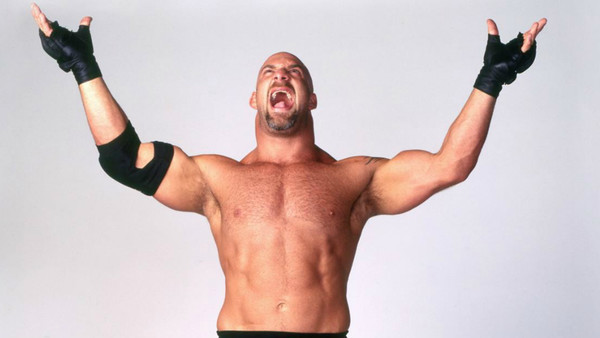
For just over two years, Goldberg is what every wrestling promoter would sell their soul for. From 1997 to the end of 1999, fans went wild for him, pop culture embraced him with open arms, and Bill Goldberg was one of the biggest stars during wrestling's most notorious era. Bigger than any member of D-Generation X and more over in this period than The Undertaker ever managed in his whole career, Goldberg's period of success is as big as anything wrestling has ever seen.
This is counter-balanced by a deserved reputation as one of the worst in-ring talents to ever reach these heights. It's become a meme, but ending the career of Bret Hart is something that will arguably be the moment that defines Goldberg's career. His matches would have had today's audiences spitting blood with how generic they were, and his lack of ability to deliver layered promos has aged like a pint of milk.
If Eric Bischoff knew how to book better feuds, Goldberg may have had a longer run at the top to build a better legacy. If WCW would have promoted their incredible midcard talent to work alongside Bill, he doubtlessly would have had better rivalries than the array of elder statesmen he was forced to work with. If Vince McMahon didn't have a pathological need to remind everyone that WWE is the only place that matters every time he inherited a superstar from WCW, there may have been more chapters in Goldberg's story and a feud with Steve Austin that would have made the maniacal billionaire a truckload of money.
As it is, Goldberg sits alongside the Nintendo 64, MTV's TRL, and Napster as touchstone cultural relics of their time. He was better than WWE's narrative-controlling machine makes him out to be, and his run on top was a phenomenon like very few others in wrestling history, but Goldberg's legacy has all the depth of an ant's swimming pool.
6/10
Get Nord VPN with 77% off, 4 months extra free AND an Amazon gift card today! https://go.nordvpn.net/aff_c?offer_id=564&aff_id=3013&url_id=33286source=WCYT