How Good Was Roddy Piper Actually?
3. Range
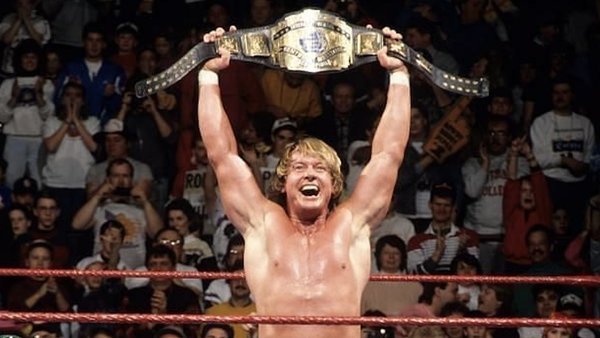
When CM Punk and MJF feuded in AEW across 2021 and 2022, both men cited Piper, their mutual idol, quite a lot. MJF said that he was as over in Long Island as Piper was in Portland.
Piper in Portland was a babyface over to a transcendent extent. He wasn’t just the top star in the territory; he was the most popular attraction in the Pacific Northwest in over a decade. Piper was most famous as a vile sh*t-talking heel with a brutal quick wit, but he had the fire and charisma and expert grasp of the struggle to star as a babyface. It was only his size and acting aspirations that meant it never happened for him in the WWF. He was so great as a babyface that he could have easily achieved something comparable to Macho Man Randy Savage in 1988, who was a phenomenal draw for Vince McMahon when he was allowed, albeit very briefly, to emerge from Hulk Hogan’s shadow.
Piper was a God in Portland. His matches with heel Buddy Rose were major attractions. Piper, an eye-poking rule-bender, was outstanding as a gutsy hero in that series. He literally did not know when he was beaten, holding onto the top rope when taking a bump just so that he could keep his balance and send Rose flying with a desperation kick. Piper was an animal in there with Rose, aiming knees at his temple like he didn’t know it was a work.
Piper could sell the catharsis of a richly-deserved ass-kicking equally as well; Bruno Sammartino had a whale of a time repeatedly drilling the back of Piper’s skull into the ring canvas. Piper’s eyes were as wild as his insults, too; he could make it seem like he was truly trying to break somebody’s fingers with a test of strength spot.
In a famous line of his, CM Punk once said he was the best in the world “even on commentary”. This was a source of great pride to him, and that’s probably because he spent his career trying to equal Piper’s achievements. Piper was also the best even on commentary; he popularised the heel colour role on national television when working for Georgia Championship Wrestling in 1981. His stint at the booth informed its success as the second highest rated TV show in the entire country.
“In that ring, on this mic, even on commentary”: the first bit wasn’t true in Piper’s case, but he could do everything a wrestler must do to get themselves and the product over, often to the best possible level. He could do it all.
10/10