The WORST Wrestling Story Every Year (1989-2025)
Before WWE was cinema, it was dollar bin trash.
WWE and AEW are in a strange, unfamiliar place in 2025.
Wrestling fans tend to classify periods of time in the business as “eras”. What is this era called? Is ‘Bland Competence’ a fitting descriptor?
For decades, millennial-aged wrestling fans have known only one reality: the two most prominent wrestling organisations in the U.S. cannot be good or hot at the same time. Since the territories died, there has been one rule-proving exception to this strange phenomenon: the competitive brilliance between the WWF and WCW across 1997. Otherwise, one of two things happens:
Both majors are bad at the same time - which, between WWE and TNA, was true for virtually all of the 2000s.
Or, one promotion does a great job of servicing its base, and the other doesn’t. AEW annihilated WWE creatively between 2019 and 2021; across 2023 and 2024, a resurgent WWE, led by Paul ‘Triple H’ Levesque, reenergised its fanbase at the precise same time Tony Khan’s dismal experiments with sports entertainment and poor mismanagement of the CM Punk drama tanked interest and belief in his product.
This has changed in 2025. Two competent students of the game are running the respective majors. Neither is quite in peak form. Triple H has failed to craft a storyline as intriguing as the Bloodline saga, and is becoming lazy with his TV formats. Tony Khan meanwhile continues to place far too much emphasis on match quality ahead of emotionally-charged stories. And yet, at time of writing, neither fanbase seems too upset by the impromptu match versus All-Star 8-Man tags we’re calling a wrestling war.
As uninspiring and patterned as too much of mainstream U.S. output is, be grateful. Wrestling was arguably more interesting in times gone by.
It was inarguably worse…
Get 76% off and three months for free when you sign up to NordVPN here: https://go.nordvpn.net/aff_c?offer_id=704&aff_id=3013&source=WCWRE
1989 - Hulk Hogan Vs. Zeus
1989 was one of the best wrestling years ever, so this entry was a challenge.
The legendary animosity between Ric Flair and Terry Funk. Flair casually working a second all-time great programme in the same year, opposite Ricky Steamboat. The Great Muta blowing everyone’s mind in his series with Sting. The Mega Powers Exploding. The Strike Force break-up. The Midnight Express heel turn. Rick Rude making the Ultimate Warrior look like he was worth a damn.
It was all good stuff - with the very notable exception of Hulk Hogan’s feud with Zeus.
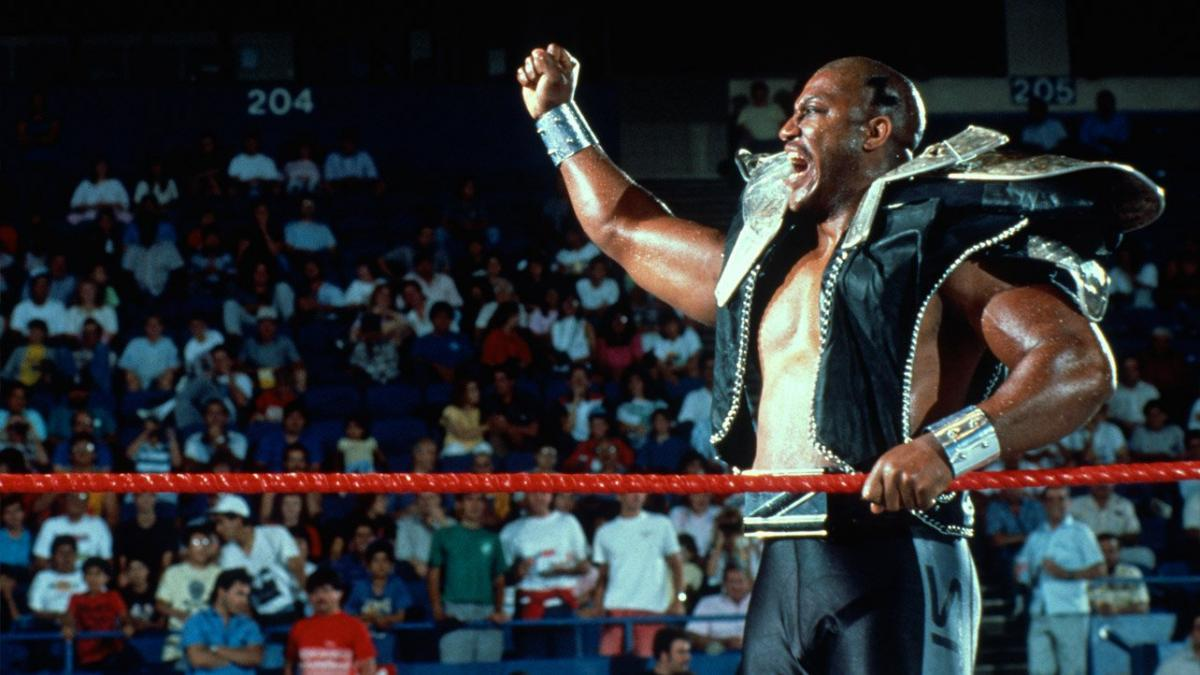
Zeus was a non-wrestler portrayed by actor Tiny Lister, and this was an attempt by Vince McMahon to generate interest in Hulk Hogan vehicle No Holds Barred: his catastrophic failure of a movie. Zeus played the heel in a film so bad that even Hogan never lied about being rumoured for an Oscar nomination. Even his mind, an impenetrable fortress against an unflattering reality, never let himself believe it was good.
Zeus arrived in the Fed and adapted their silver screen feud to the small by claiming he should have received top billing over Hogan. This resulted in a match at SummerSlam between Hogan and Brutus Beefcake and Zeus and Randy Savage. It was actually quite the over-delivery, given that a non-wrestler was in it. Zeus did well too.
Still, the feud was naff, and the stench of No Holds Barred was “dookie” enough to begin the creative downfall of the promotion, which had peaked creatively at WrestleMania V.
What’s that smell?
1990 - The Black Scorpion
Ole Anderson was a weird guy.
Notorious within wrestling circles for being a miserable, profoundly agitated fellow, a personality he barely had to adapt when playing his stern, calculating heel character, he was also responsible for some of the most dorky wrestling material ever. This was a man who wrote off Ric Flair as a mere entertainer, someone who lacked the legitimacy of his Minnesota Wrecking Crew, and as WCW booker made Vince McMahon look like Josh Barnett.
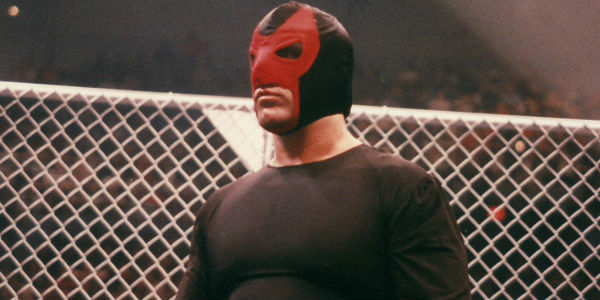
Anderson took over the pencil in 1990, cursing the wrestling audience with the naff ‘Black Scorpion’ character. Perhaps he saw where the business was headed, and tried to compete with Vince on the field of wrestling b*llocks. Who knows. Maybe he just liked doing “the voice”.
He provided the gruff, distorted voice of both the Black Scorpion, and later the Shockmaster, offscreen. There’s something almost endearing about Ole trying to get that over twice, like it was some incredible hidden talent that he was desperate for the world to see.
Less charming was the storyline, in which the Scorpion, an ill-defined creepy magician, was fixated on Sting. He played tricks on audience members and tormented the Stinger in lame segments. Ole had no idea where he wanted to go with it, and according to Ric Flair, who was eventually revealed as the Scorpion, the mystery man was meant to be Al Perez. What was meant to be the pop, there?
“No way! It’s…that guy!”
WCW business was dire at this time, but the whole thing was quite funny in retrospect.
“I don’t need a fake showman like Flair as my top heel. I’ll stick with the masked magician in the sparkly jacket, thank you very much.”
1991 - Hulk Hogan Vs. Sgt. Slaughter
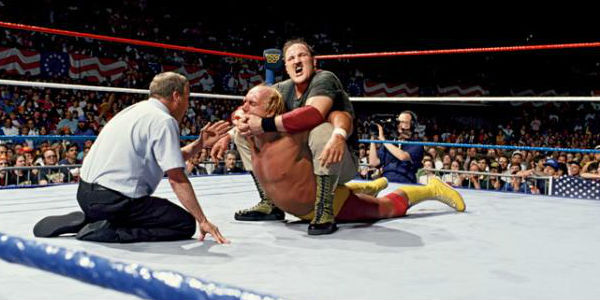
The programme between Hulk Hogan and Sgt. Slaughter was worse for what it represented, and how poorly it reflected on the WWF, than the actual plotting.
The actual plotting was really strong, when the story overlapped with Macho Man Randy Savage vs. the Ultimate Warrior; Savage’s unreal, intense performance level was so good at Royal Rumble 1991 that his frenzied assist got Slaughter over as a credible transitional champion.
Otherwise, this was lamentable stuff, and it was almost worse; Vince McMahon allegedly wanted Slaughter to burn the American flag, before relenting. Slaughter instead burned a Hulk Hogan t-shirt, which was attached to a pole. The WWF knew what they were doing there.
Slaughter was an Iraqi sympathiser who had betrayed America against the backdrop of a very real, ongoing Gulf War that would claim a gruesome total of casualties. The Immortal Hulk Hogan defended America, and in dropping the leg, saved the world. When you think about it, Hogan practically pinned Saddam Hussein right in the middle of the ring, Jack.
Inflammatory, exploitative trash, this was also pure desperation on the part of McMahon. He knew the glory days were fading, and his response was dementedly arrogant. He thought he could unite a nation with this crap; in the end, the great promotional genius couldn’t even draw a house. WrestleMania VII had to be downsized from the Los Angeles Memorial Coliseum to the Sports Arena.
If Slaughter was such a mega-heel that his life was apparently in danger, why did so few people - 400,000, well down from WrestleMania V (767,000) and VI (560,000) - pay to watch him lose?
1992 - Ultimate Warrior Vs. Papa Shango
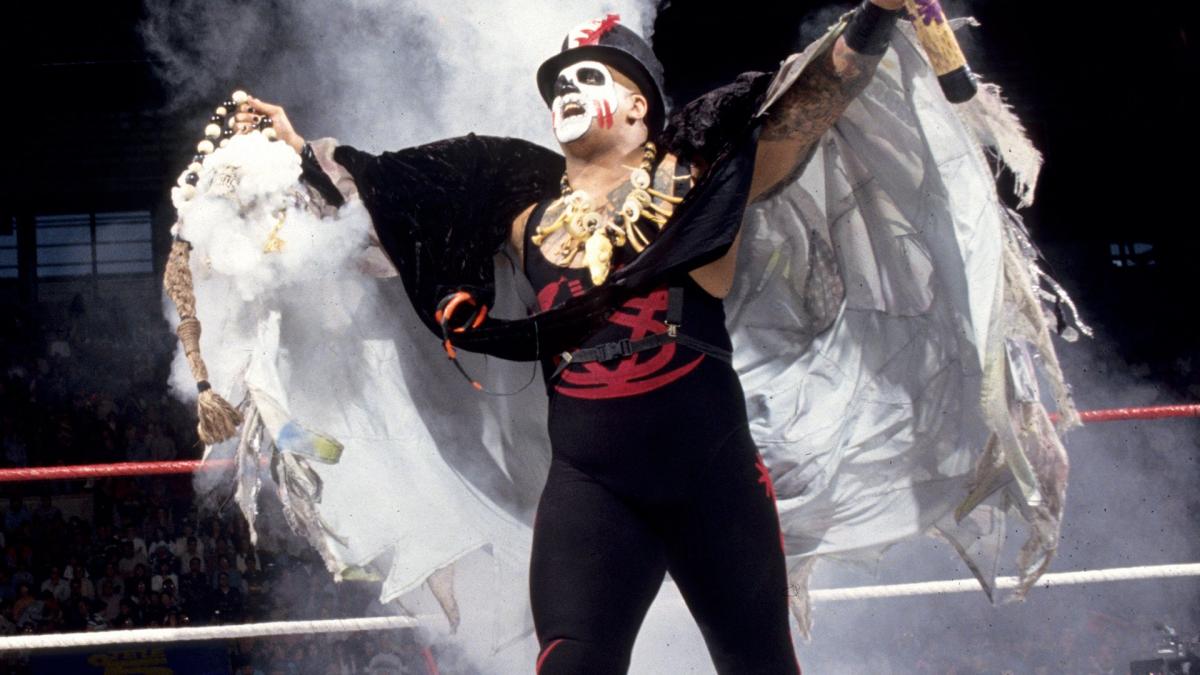
The Ultimate Warrior appealed to children for a few reasons.
He was stupidly energetic, which they identified with. He looked like a living version of one of their toys. His numbskull power game was easily comprehended and enjoyed by the tiniest of minds. Also, while children are very curious and will ask multiple questions per day, as if possessed, they don’t question much. Ask them why exactly they like or want something, and they’ll look baffled. So they didn’t pay attention to what the Warrior was actually saying, not that anybody else could understand him. You didn’t have to be discerning to enjoy the Warrior; in fact, he was infinitely more effective if you weren’t.
All of which is to say: his programme with Papa Shango must have been weapons-grade bobbins to go down as badly as it did. And it was.
In an infamously bad angle, Shango, a voodoo with doctor character, cast a spell on the Warrior that induced a vomiting fit. He basically put what looked like creamed corn into his mouth and spat it back out, shaking violently as if he’d just seen a minority succeed. In another segment, Shango’s curse caused a runny black liquid to cascade down Warrior’s face. It looked like an insecure old man’s black hair dye was caught in the rain.
This was hokey nonsense, of course, but it was also pointless, in that Warrior was meant to be acting moodily and strangely as a result.
He was like that from the moment he woke up.
1993 - Lex Luger Vs. Yokozuna
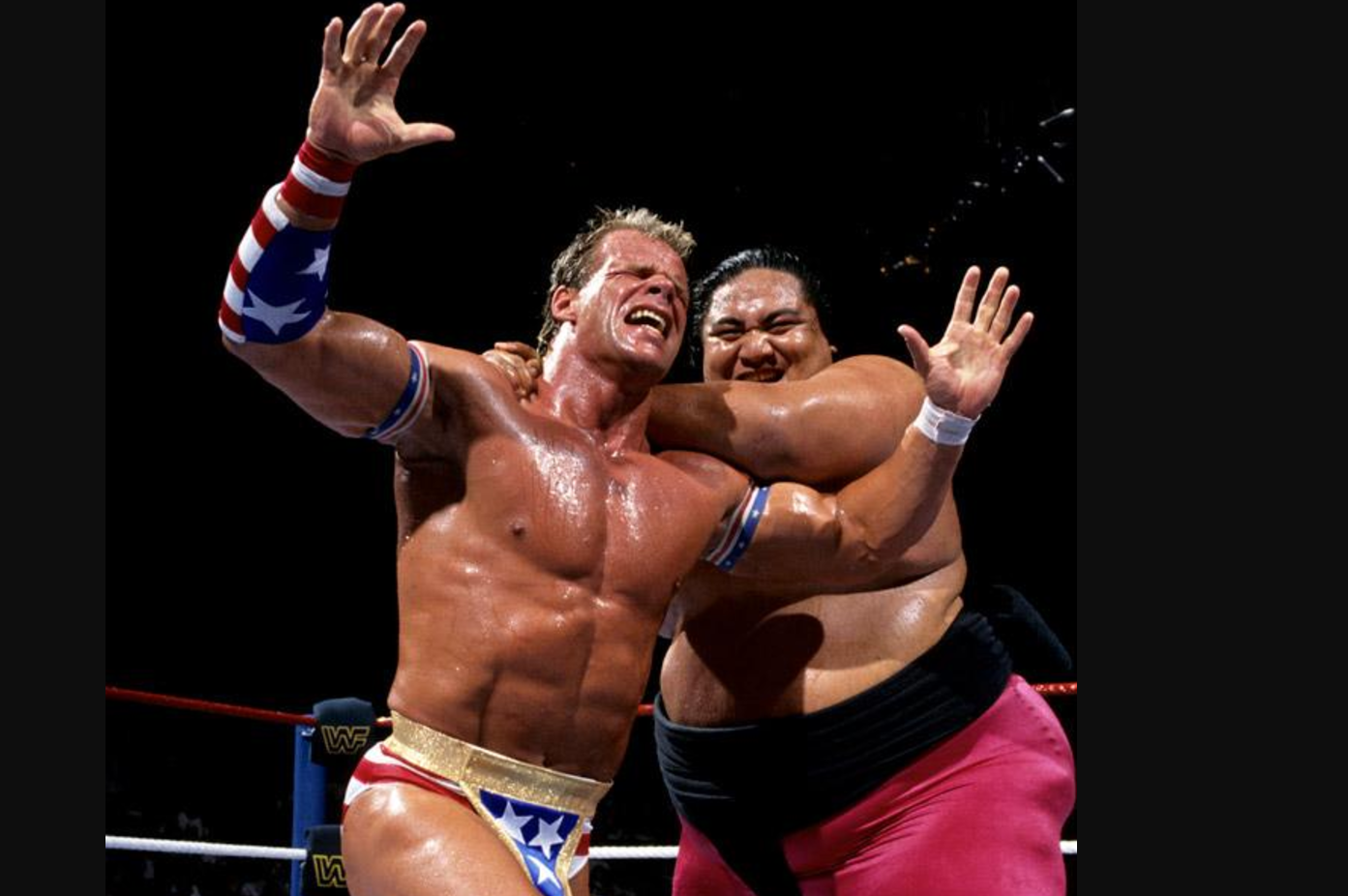
The WWF was in a strange position in 1993.
The fad was half-dead on a commercial scale. The buildings were smaller. So were the wrestlers. Vince McMahon sensed that his dwindling ultra audience was far more into the full-blooded wrestling angles - the Bret Hart Vs. Jerry Lawler business was incredibly well-done - but he was Vince McMahon. He could not help himself. If he had a soul, it sang to him a familiar tune: “Book a muscle freak and have him racially abuse a foreigner, you know you want to”.
Enter Lex Luger, who referred to heel Japanese (Hawaiian) champion Yokozuna as a “sushi-eating’, rice-chompin’” wrestler before he cosplayed as Hulk Hogan and hit Yoko with the body-slam on the USS Intrepid. Luger then spent the time between his big angle and the big encounter at SummerSlam riding on a bus and visiting his fans. He didn’t wrestle a single match on Raw. This was such an odd move, particularly since Luger’s babyface turn was so sudden and rushed. Young, thoroughly bemused fans were expected to receive this guy as their new hero, except, he did nothing heroic. He did nothing at all!
This was the plan:
Be racist.
Ride a bus.
Beat Yokozuna by count-out, fail to win the World title, celebrate like he had.
Become the next Hulk Hogan.
It’s genuinely weird that Vince McMahon thought there was even a choice to make between Luger and Bret Hart at Royal Rumble 1994. Then again, Luger did have a better physique.
1994 - Doink Vs. Jerry Lawler
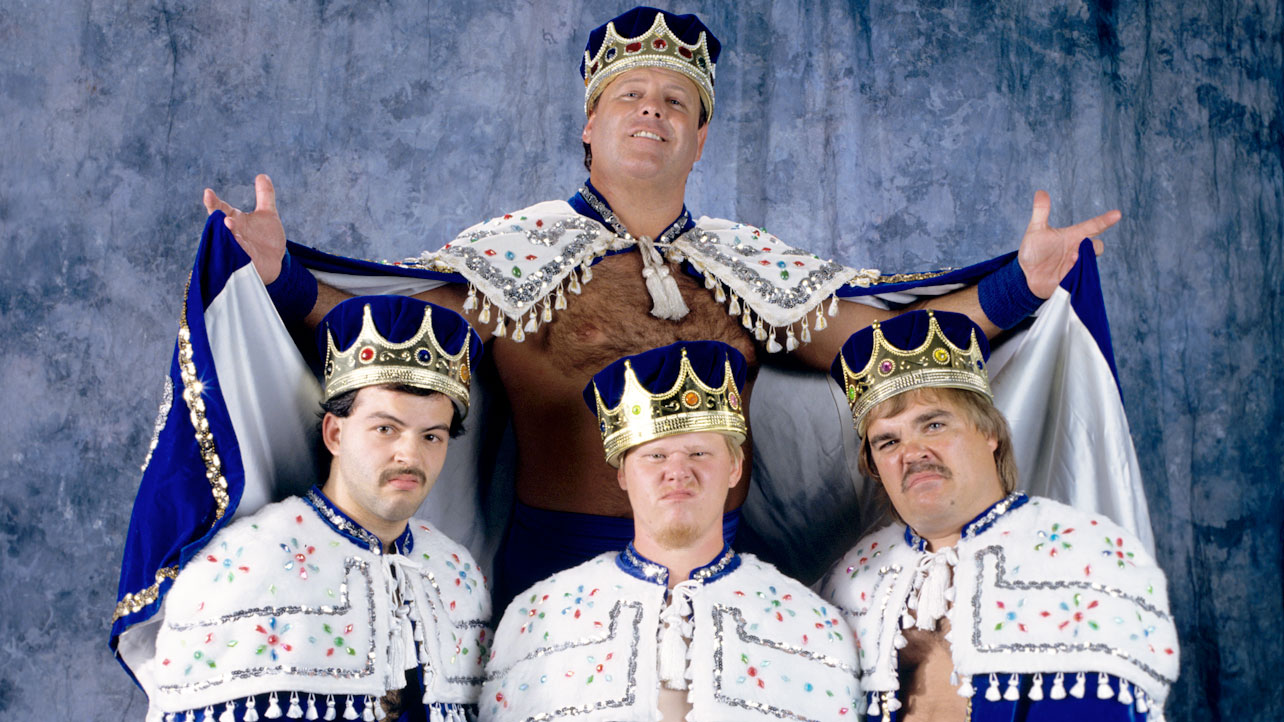
How did the WWF book this and the Bret Vs. Owen Hart feud in the same year?
Bret Vs. Owen was a masterclass - incredibly sophisticated by Vince McMahon’s standards (naturally, Vince had to be persuaded by Bret and Bruce Prichard that brothers do in fact fight). It was the most believable conflict in WWE to that point, and perhaps ever; Owen had a right to feel held down, because Bret could have just tagged him at Royal Rumble 1994, but Bret had a right to protect his younger brother because he truly loved him and boasted significantly more big match experience.
God, the frisson of it all, the exquisite technicality boiling over at WrestleMania. It was amazing.
Jerry Lawler Vs. Doink, conversely, was the least sophisticated material of the year. Doink was by this point a terrible, shoot babyface clown, removed entirely from the brilliantly unsettling sad sack loser portrayed by Matt Borne. This was an embarrassing, brutally unfunny prank-based storyline. You were meant to point and laugh at Lawler getting a taste of his own medicine, for his roast comedy insults, but there was no relief because Doink was a preschool kids’ TV show character. Their only value is in hypnotising a restless child and granting an exhausted parent a moment’s rest. Doink, looking at WWF business, couldn’t even do that.
This led to a terrible match, a Worst of the Decade contender, at Survivor Series 1994 - in which the side-splitting punchline was watching little people get tripped over.
The Undertaker Vs. Undertaker feud was dire, but this was produced for three year-olds.
1995 - Hulk Hogan Vs. The Giant
Hulk Hogan’s adventures with the Dungeon of Doom stable were brilliantly awful.
It was every kind of ancient - a 1980s wrestling TV show and a live-action ‘80s cartoon at the exact same time - in 1995, when Paul Heyman was making wrestling cool with ECW.
The Dungeon was steeped in irony, in that the members were meant to scare you, but were in fact cartoonish, unintentionally hilarious losers. This would have been awful in any context, but WCW fans actually valued and wanted to watch wrestling with an ambition of being rough and rugged. Hogan entering the dungeon itself and expecting the water to be boiling hot, only to be disappointed, is particularly infamous - but the entire saga was drenched in schlock.
It was such a completely asinine attempt at doing various scary things all at once that an aquatic predator was involved in a group that foretold the demise of Hulk Hogan by a giant that was written in stone. The Dungeon of Doom were all powerful across land, sea, and time - just not at the box office.
Said giant was named ‘The Giant’, and did in fact bring Hulkamania to its knees, for a week, after the fact, when it was revealed that his disqualification win over Hogan at Halloween Havoc actually granted him the belt via a clause in his contract. This clause didn’t hold up (?). WCW was so systemically broken that its administrative uselessness bled into storylines.
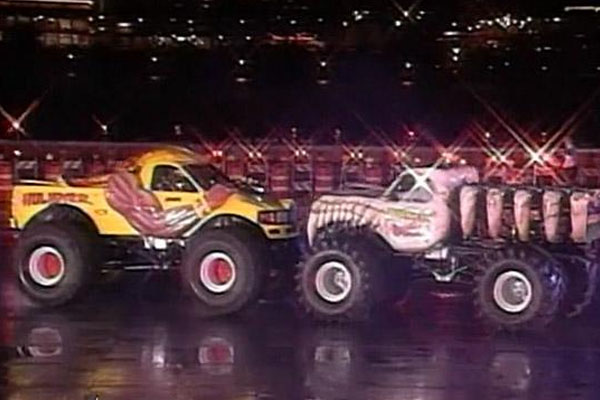
This all followed by Hogan’s win over the Giant in a monster truck sumo match (!), after which the Giant fell from the roof of Cobo Hall. It was sold as his death, but he emerged from it unscathed.
A terrifying fall from a skyscraper didn’t hurt the Giant, but he could only go over the Hulkster via the screwy finish, brother.
1996 - Fake Diesel And Razor Ramon
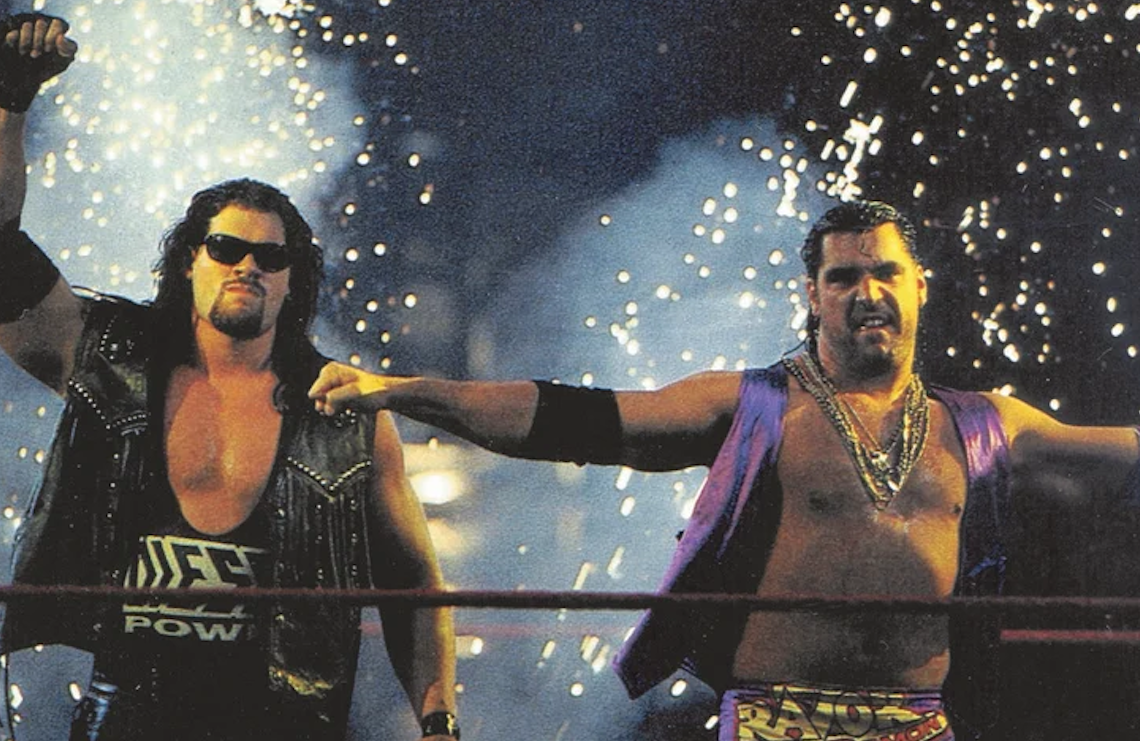
What’s often lost, amid this notoriously pathetic development, is that Jim Ross was incredible in his role as the pissed-off, browbeaten punching bag out to avenge Vince McMahon. He was almost as good at the heel promo as he was condemning the heels throughout the Attitude Era.
In 1996, Scott ‘Razor Ramon’ Hall and Kevin ‘Diesel’ Nash used their rights as independent contractors to secure for themselves a better deal and lighter schedule with WCW - having bumped on one of wrestling’s hardest ever rings for the entire duration of their contracts with the WWF. They then participated in a fictional storyline dreamed up by their boss, Eric Bischoff, as WCW basically copied Vince’s own recruitment playbook of the 1980s.
An infuriated Vince, realising that he owned the intellectual property, inflicted an imposter Razor and Diesel on his audience, played, respectively, by Rick Bognar and Glenn Jacobs.
The WWF was very aware that it was a sham within the parameters of the story itself; Ross brought in patently phoney doppelgangers precisely to make Vince look like a fool. It was an early, necessary experiment in pushing creative boundaries. It was also a terrible experiment; Vince was gotten-to, and made a spectacular d*ck of himself trying to get one over on WCW. This absolutely did not work, and was the real thrust of the idea behind the meta posturing.
Also, after the Ross angle was dropped, the WWF realised they needed the depth on a tiny, raided roster, and so Fake Razor and Fake Diesel simply became cast members.
In the end, the WWF really did bring back the lamest version of two cool guys and pretended they were the real thing. What’s worse, Hall and Nash were cooler than even the real Razor and Diesel.
1997 - Hulk Hogan Vs. Roddy Piper
A wrestling promotion can get away with anything when they’re hot.
The Attitude Era undercards bordered on Heroes of Wrestling-tier until the year 2000. ECW was the hipster league of the mid 1990s, but every other key match was often a full 10 minutes too long. AEW in 2021 had Matt Hardy.
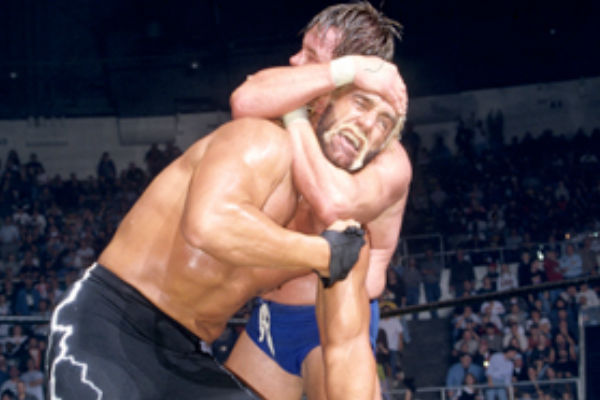
The on-fire WCW of 1997, meanwhile, presented to its public Hulk Hogan Vs. Roddy Piper - twice. They’d actually recaptured the old magic, in the build-up to and at Starrcade 1996, but everything else they did was rubbish. Piper, one of the best talkers ever, entered his nonsensical era around this time.
And so did WCW’s booking, after only a few months of peak New World Order bombast and mystery.
Piper, in the Starrcade build, said he didn’t need the help of the Four Horsemen to battle the nWo. He reiterated this ahead of Uncensored ‘97, preferring instead to assemble his own ‘Family’, which was a bizarre name for a bunch of no-marks, the guy who’d become Road Block, and John Tenta. Piper wrestled them in a gauntlet trial, to apparently prove their worth - and they must have sucked, because after the selection process was complete, he dumped them the very next Nitro to lead the Horsemen.
The plotting was inscrutable, and the source of conflict silly. A lot of this was based on Hulk bragging that he was the superior actor, which infuriated Piper so much that he trapped himself on Alcatraz island to train for their fight.
These vignettes were more hokey than the WWF of 1995 - but this gets glossed over in retrospectives. The WWF had to beat the very cool nWo to make its comeback all the more impressive.