10 Terrible Comic Book Covers DC Want You To Forget
Lois Lane must be stopped!

Comic books have been an important media for almost a century, but not every comic book ever made has been unforgettable for a good reason. There are plenty of books out there that introduced a new character or crossed a line in an innovative or creative way, but for every stellar example, there are thousands of terrible ones sitting in boxes somewhere collecting dust.
Not every book can be worthwhile, but there are some that take the cake as being unforgettable for all the wrong reasons. When it comes to bad books, it's not always about the artwork or the story - many times, it's all about the cover.
Comics book covers are what draw in a reader, and a comic book cover can often be the most memorable part of an entire book. When people think of Action Comics #1, they don't consider the stories inside, they mostly focus on that iconic front page depicting Superman holding up a car.
Covers have a lasting impression on fans, which is why some of the worst covers DC has done are ones they wish everyone would forget.
10. Wonder Woman #178

It's not uncommon for comic books to push the limits and court controversy, but when a major change is made to one of the brand's core characters, things aren't often going to go by unnoticed. That may have been the plan when DC released Wonder Woman #178 in 1968, but it would be unlikely DC imagined quite the level of controversy they would unleash with this book.
Wonder Woman has always stood as an icon of feminism. By the time the sixties were in full swing, so was the equal rights movement involving women in the workplace and everywhere else. Why DC decided to relaunch Wonder Woman in line with the Women's Liberation movement when she was already a powerful woman was anyone's guess.
They relaunched her without her signature costume, sent her to open up a boutique and teach martial arts to a handful of students. While that doesn't sound too bad, they also stripped her of her powers.
Famed feminist Gloria Steinem spoke out about the changes and insisted that depowering Diana was the same as stripping her of her feminism and power as a woman. It wasn't long before she reverted back to normal.
9. Robin III: Cry Of The Huntress

Robin III: Cry of the Huntress was a exceptionally well-written series DC debuted in 1992, which suffered from the unfortunate allocation of a poorly constructed gimmick.
First off, the books came in a polybag, which meant any serious collector who actually wanted to read it, would have to purchase two copies. That was an annoying trait, but it was hardly the only problem with these covers.
The six-issue miniseries featured a rather innovative technology, which would animate the image on the cover. These lenticular images could be made to look like a moving picture when a pull-tab on the bottom was drawn down.
It was one of those things that was cool the first time you saw it, but every time thereafter, it was something of an eyesore. Not only were these books difficult to look at thanks to the lenticular image's distorted appearance when not "in use," the pull-tab would often be pulled out and flipped over, which would effectively ruin the book.
8. Superman #75

Superman #75 is one of the best-selling single-issue comic books of all time, which begs the question: why is it on this list? The problems that come from the issue's cover also stems from its existence as a gimmick.
Killing off Superman was always going to be a temporary thing, but DC marketed the storyline like it was bursting out a fire-sale. Millions of speculative collectors bought copies of these books with the hope they would be worth something someday, but it never happened.
The speculation caused the market to crash and comic sales suffered for years as a result. When you get to the cover, the problem wasn't the image of Superman's cape blowing in the wind on some rebar; that was a beautiful and evocative image.
The problem had to do with the fact that DC bagged the book in an opaque black (or white) polybag, which completely obscured the image. DC's crime with this book wasn't the drawing on the cover, it's that the cover was covered up!
7. Catwoman #0

Typically, a comic book cover features bold artwork used to capture a reader's attention. Maybe someone who has never read a Catwoman title before will be happy to try it out after walking by and seeing something interesting or even provocative, but while that may be the goal, it doesn't always work out like it was planned.
The cover of Catwoman #0, illustrated by Guillem March, clearly attempts to capture the reader's eye. It features the titular character in a skin-tight suit showing off all the goods in as sexy a way as possible, but there's only one problem: the human body can't do that!
To be clear, a human body could stretch out in the way illustrated on the cover, only it would require the person was dead and broken in ways nobody would ever want to be broken.
Usually, March has no problem illustrating the human body in a way that makes sense, but this drawing stands as a rare exception. Not only was the drawing a bit off, it got called out by fans... a lot. Memes flooded the Internet depicting how broken her spine must be to look like that, and Catwoman #0 remained a notorious issue from that point on.
6. Eclipso #1

Eclipso #1, published in 1992, was one of DC's worst cover decisions ever made and the book stands in infamy as one nobody wants to collect. To be fair, the book's contents aren't the problem here. This book's issues are all with the cover and it doesn't have anything to do with the art.
It may be difficult to tell from the photo, but the gem he is holding between his thumb and forefinger in the picture was an actual plastic piece affixed to the cover. It was an interesting way to represent the gem and it might have been a fun addition to the book had it not been... well, a comic book.
Comics are shipped flat, stacked atop one another. That plastic gem, which measured about 2mm deep, would damage all the books atop it. Furthermore, putting these into a bag with a board and placing them in a vertical position in a box only damaged all the books laying with it.
While cover gimmicks were a big thing in the nineties, it didn't take long for publishers to learn from this mistake that each and every book had to remain flat and two-dimensional on its face or the fans might riot.
5. Batgirl #41

Batman: The Killing Joke is one of the Dark Knight's greatest stories ever told. Alan Moore wrote the story, which would shape the nature of Batman books for years. In the book, Barbara Gordon, also known as Batgirl, was shot and paralyzed by the Joker.
It was a brutal depiction of the depths of insanity and carnage the Crown Prince of Crime would sink to and it changed Batgirl for years. Fast-forward to 2015 and DC nearly published a variant cover for Batgirl #41 that caused a lot of problems.
The illustration by Rafael Albuquerque was certainly done perfectly, but the content is a bit too graphic and frightening to go unnoticed. DC immediately received calls to pull the cover from their lineup, which led to the artist himself requesting it not make it to store shelves:
My intention was never to hurt or upset anyone through my art. For that reason, I have recommended to DC that the variant cover be pulled. I'm incredibly pleased that DC Comics is listening to my concerns and will not be publishing the cover art in June as previously announced.
DC quickly acquiesced, which was fortunate as the imagery was disturbing to many women who faced assault over the years.
4. Action Comics #289
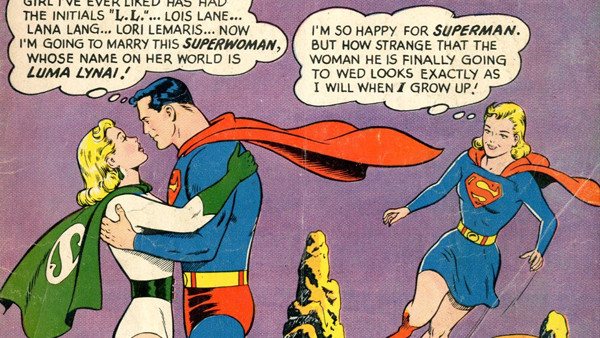
We all know that Kara Zor-El is Superman's cousin, right? That should have been solidly in the minds of the people who sat down and wrote the story found in the pages of Action Comics #289 because this is the issue where Supes dates Kara... sort of.
Seeing her cousin as a lonely fellow who has trouble keeping a woman in his life, Kara set out to find him the love of his life. She first traveled back in time to try and hook him up with Helen of Troy, but that didn't work out.
A jaunt into the 30th Century also proved fruitless, which pushed Kara to look elsewhere within their own time. She cast her gaze upon the planet Staryl, which was home to a superhero named Luma Lynai.
The two hit it off initially, but their differing powers put a damper on their relationship. The reason the comic and the cover are so risqué has to do with the implication that Superman is dating a woman who looks exactly like his cousin. The suggested incest doesn't go over well with an audience who prefers their superheroes a bit more wholesome and traditional.
3. Superman's Girlfriend Lois Lane #106

When it comes to infamous DC comic books, they don't get much worse than Lois Lane #106, written during the 1970s. "Blackface" was still just as offensive in the seventies as it is today, which is why it was so odd that DC chose to greenlight this story.
In a story titled "I am Curious (Black!)," Lois was having trouble getting the people in Little Africa to talk to her on record. She asked for Superman's help, which he provided with his Plastimold Machine, which turned Lois Lane into a black woman. She was then free to interview anyone she wished.
This sort of story wasn't new when it was published and it stuck around for a long time after, but having it pop up in a Superman comic book this way was both crass and ignorant. Good intentions or not, all it did was remain as an example of what not to do when telling a story, and of one best left in the past.
2. Captain Marvel Adventures #23
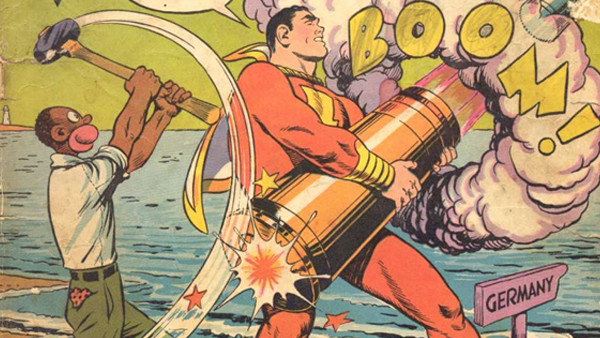
Back in the early 1940s, comic books were all about supporting the war effort. Characters like Wonder Woman, Superman, and Captain Marvel all got into the fight by promoting the purchase of War Bonds as well as rallying potential troops through some good, old-fashioned propaganda.
That aspect of this cover isn't what landed it on this list. Captain Marvel giving it to old Adolf is something many people can be proud of. Sadly, pride slips out the window when you take a look at the fellow standing beside him.
Swinging a sledgehammer to fire off the round may be a good way to stick it to the bad guys, but the drawing of a black man is just shameful.
It's racism pure and simple. The character's lips are exaggerated in a cartoonish way, bearing the echo of Jim Crow, and he isn't wearing a sailor's uniform. In the end, this image may have intended to stir up patriotic zeal against the Germans, but it stands as an archaic - and racist - depiction of a black person.
1. Wonder Woman #158
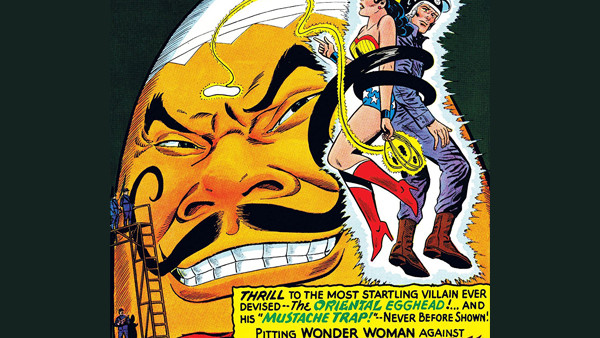
If you look back through the pages of Wonder Woman comics, you will find a plethora of inappropriate and offensive stories. There have been times she was into bondage, displayed outright racism (by the artists), and the time she fought a giant egg with a Fu Manchu moustache.
Wonder Woman introduced the character Egg Fu, which was about the most offensive and culturally insensitive depiction of Japanese people this side of a WWII propaganda poster.
The book came out 20 years after that war ended so there was no excuse in depicting a gigantic Japanese character with a horrible accent and prehensile moustache he could use to grab and throw things. Here's a sample of some of the dialogue attributed to the character within the book:
The foolish Amelicans do not know that the instant any of their pilots attempt to take photoglaphs of our installations--they might just as well pless a tligger against their own blains
The cover of Wonder Woman #158 depicted Egg Fu, and given the outright racism of the cover, this is probably one issue DC would like to leave in its past.