10 Fan Theories That Link Totally Unrelated Movies

You won't cope with how ridiculous some of these are.
Shared universes are all the rage in movies and have been long before Marvel stepped up to the plate. Sure, their Cinematic Universe has revolutionised blockbuster cinema, providing a new franchise model that other studios with superhero rights are keen to replicated, but long before Nick Fury swung by Tony Stark's pad late one night, film-makers have been having purposeful links between their films. The king of this has to be Quentin Tarantino. What started off as a little name drop in Pulp Fiction (Vince Vega is the brother of Reservoir Dogs' Mr Blonde) has become a definitive part of the director's filmography. There's way too many to list here, as evidenced by this whopping article that brings together all these references. Tarantino's contemporary, Kevin Smith, has likewise created his own universe, starting with Clerks and running through to its bleated sequel. The Askewniverse is particularly interesting because on top of having all of Smith's early movies linked, it also contains the Scream series; in a strange crossover Jay And Silent Bob Strike Back and Scream 3 see the stoner heroes visit the set of Stab 3, the in-world adaptation of the events of the horror series events. These are all intended as part of the world by those involved. Today we're going to look at something slightly different, where it's the fans who have read extra meaning into in-jokes or recurring elements to create their own shared universes, some convincing, some flat-out bonkers.

10. We Find Out What's In The Briefcase From Pulp Fiction In The Usual Suspects
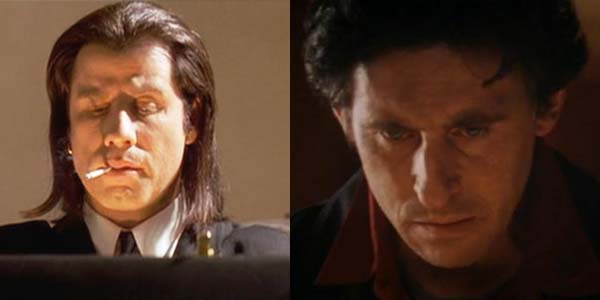
In the twenty years since its release fans of Pulp Fiction have endlessly speculated what was in the briefcase that drives the Jules and Vince side of the plot. Is it the diamonds from Reservoir Dogs, Marsellus Wallace's soul or perhaps something even stranger? That other-worldly glow and the sheer awe Ringo expresses when Jules shows it him in the Epilogue only serve to deepen the still unsolved mystery. Well, what if the question of the briefcase's contents was answered one year later in The Usual Suspects? After the gang have begun to make a name for themselves, they find themselves confronted by lawyer-cum-porcelain magnate Kobayashi, who works for legendary crime boss Keyser Söze. He blackmails them into taking on one massive last job using a briefcase containing personalised envelopes; the same briefcase we saw in Pulp Fiction, perhaps. The main link is the colour that pours onto the character's faces (in The Usual Suspects light reflected from the envelopes makes the character's faces orange), but it can be further justified why it was present in Pulp Fiction in the first place. Söze heads up a vast and intricate crime empire, but remains a mysterious figure by using pawns who don't realise they actually work for him. So if it was indeed the envelopes that wowed Ringo, Wallace will have been unknowingly working for Söze. How Likely Is It? Quite why envelopes would create so much wonder is the main reason this remains pure speculation, but it's one of the more interesting (and grounded) answers to the briefcase mystery.

9. E.T. Is From The Star Wars Galaxy

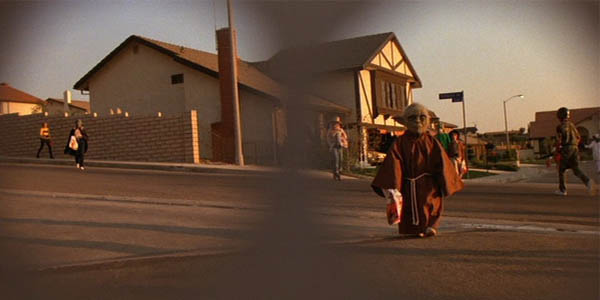
One question we're going to have to ask ourselves today is at what point does a plethora of in-jokes stop being simple fun and actually become the argument for a shared universe. And this one really toes the line. When E.T. first came out Star Wars hype was at its peak, so partially to ground his film in contemporary Americana and partially to give a shout out to his close friend George Lucas, Steven Spielberg threw in some references to that galaxy far, far away. Elliott has a sizeable collection of Star Wars Kenner action figures, while later on, when sneaking E.T. out of the house, the extra-terrestrial sees a kid dressed up as Yoda and runs towards them, screaming "home, home". That's all a bit of fun, but in 1999 Lucas returned the favour in Star Wars Episode I: The Phantom Menace, making the whole thing very complicated. During the scene in the Galactic Senate when Amidala calls for a vote of no confidence (so... much... politics) in one shot you can see that E.T.'s species has a pod in the Senate. So, according to Star Wars, E.T. is from the same galaxy as the Jedi. How Likely Is It? Yoda's species isn't that prevalent in the galaxy, but with their long life-spans it's possible for E.T. to have seen one of his kind to recognise on Earth. Of course, to buy this you need to accept the coincidence that Star Wars is both historical fact and a movie in the same reality.

8. Wanted Takes Place Inside The Matrix
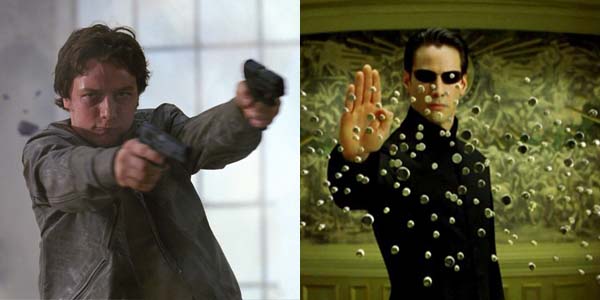
Plenty of people noticed that Wanted, which sees James McAvoy plucked out of obscurity to become a superhuman fighter (sometimes in slow-mo), has some very similar beats to The Matrix. It's to be expected to a degree - the Wachowski's sci-fi spawned a bunch of imitators - but could the similarities have a purpose; does Wanted take place in the Matrix? Essentially this works by saying the members of the Fraternity are people with a weaker link to the Matrix mainframe. They haven't been woken up and are unaware of their computerised existence, but they are able to bend the rules to the point of super-heroics similar to Neo, Trinity et al. It's fleeting, with little bearing on the plot, but it's pretty fun. You could even argue that McAvoy's Wesley, with his dead end job and enhanced abilities was even a trap laid by the machines to make Morpheus think he was the one, kind of explaining the ridiculousness of his journey. There is a danger here of taking any film with exaggerated action that was less than impressive on its own and stating it was inside the Matrix (or, to be more up-to-date, an Inception-style dream) to boost its cred, but here it kinda feels justified. Ish. How Likely Is It? There's nothing to directly disprove it, so if it helps your enjoyment of Wanted go ahead. It also explains the questionable CGI.

7. Prometheus Ties Together Blade Runner And Alien
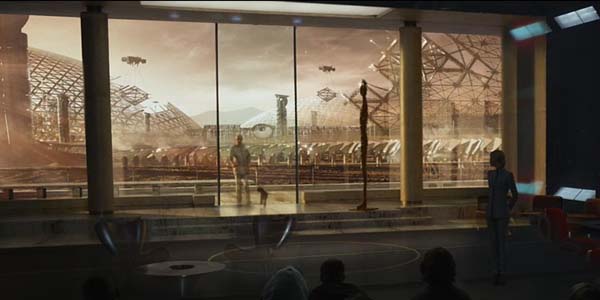
The continuity across the Alien series is rather fluid. Alien Vs. Predator were always questionable additions to canon and with Prometheus bringing an alternate version of Weyland it seems like everyone involved is keen to forget the time Paul W.S. Anderson held the reigns. But in getting rid of one franchise, it seems that Ridley Scott has pushed the series towards the world of another film. In the bonus features on the Prometheus Blu-Ray there's an excerpt of a journal written in-universe by Peter Weyland that discusses competitor Eldon Tyrell, a calming CEO who meets a gruesome end in Blade Runner. Subsequently fans have jumped on evidence in the film itself, suggesting the buildings being built behind an aged, hologram Weyland are the future skyline of Los Angeles. That takes it a little far (they look nothing like the Hades Landscape, but there is an interesting idea here. Prometheus, with its questions of creation and human nature, is a tonal fit to Blade Runner and if someone can come up with a solution to the major issue that the latter boasts more advanced androids almost a century before the stilted David we may buy this. How Likely Is It? Sequels to both Blade Runner and Prometheus are on Ridley Scott's slate, so even if the evidence is thin on the ground at the moment odds are in a year or two this may be fact.

6. Frozen, The Little Mermaid And Tangled All Exist Around Each Other
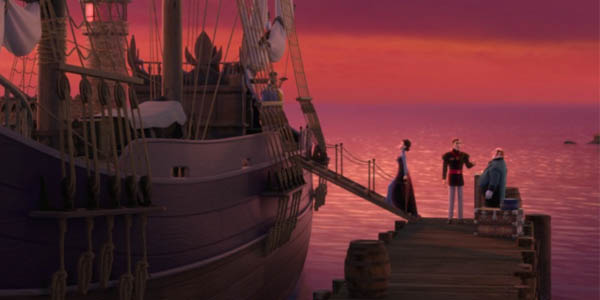
There's enough crossover Easter Eggs in Disney movies that this list could have been entirely about them, but most are pretty thin ideas based off single in-jokes; Scar's pelt in Hercules, Belle in Hunchback (centuries before she was born), Sebastian in Aladdin. This one, however, is so delightfully sound it needs a mention. The central sister-strife of Frozen kicks off because the two girls are orphans. Their parents died at sea, which provides the link to The Little Mermaid (a film, like Frozen, based on a Hans Christian Andersen story); their boat providing the shipwreck from the 1989 classic's opening. While that relies a little on goodwill, Frozen's link to Tangled is less tenuous; Rapunzel and husband Flynn/Eugene both appear at Elsa's coronation. With her hair short and brown as seen at the end of her film, this places Frozen a couple of years after Tangled; could Disney be starting their own real-time continuity? Some fans like to push it further by stating Anna and Elsa's parents died on the way to Rapunzel's party at the end of Tangled, hence why she and Flynn turn up at the coronation. Unfortunately here the timeline's don't match up (the two characters have hardly aged in the time Elsa has gone from little girl to of-age ruler). How Likely Is It? Never expect Disney to straight-up recognise it, but with shared universes all the rage (just think of the merchandise) expect them to tease it a little more in upcoming movies.

5. Captain Phillips Cameos In All Is Lost
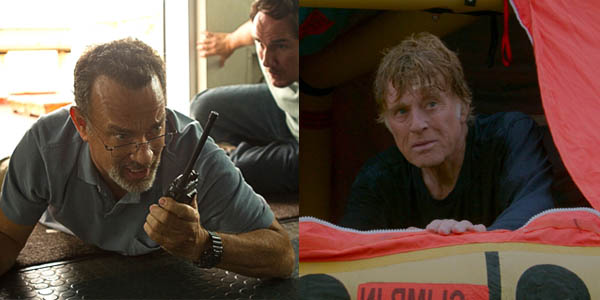
Captain Phillips was a characteristically tense thriller from Paul Greengrass that has Tom Hank's cargo ship taken by Somali pirates. All Is Lost is a much more low-key film from the up-and-coming J.C. Candor that features Robert Redford is an almost dialogue-less performance as a sailor stranded at sea. So yeah, their main link it that they're both set at sea, but thanks to one scene in the latter we can theorise they're in fact two vaguely interlinked stories. Near the end of All Is Lost we see Redford begin to totally lose hope when passing cargo ships fail to spot his life raft. Both the ship shown here and the one in Captain Phillips are branded Maersk, suggesting the whopping coincidence that it could have been Phillips who failed to spot him. Check out a slightly jovial edit of the encounter below. https://www.youtube.com/watch?v=XSte__HGfic How Likely Is It? The only real link here is the Maersk ship and as they have 600 cargo carriers out there the link seems rather unlikely.

4. The Pixar Theory

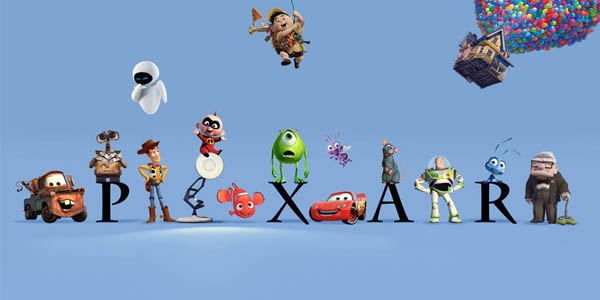
It's bonkers and requires giant leaps of faith but thanks to the sheer amount of depth to its argument we have to put The Pixar Theory on this list. A massive, millennia spanning plot that links together all the films from animation powerhouse Pixar in one semi-cohesive narrative, it deserves recognition for bringing together fourteen films (and counting). The theory proper goes shockingly in depth, but here we'll try for a summary of the broad strokes. Animals begin to gain sentience from magic (Brave) and centuries later they develop their own societies (Finding Nemo) and are capable of properly interacting and sharing ideas with humans (Up, Ratatouille). While this is going on, new, super artificial intelligence is developed (The Incredibles) and it begins to propagate in all manners of life (Toy Story Trilogy). Eventually humans, either through the increasingly-smart machines or their own mistakes make Earth uninhabitable and leave (Wall-E). Some robots rise up and dominate the world for a period (Cars, Cars 2), before it becomes a wasteland. Once the human's return at the end of Wall-E, the balance between animals and humans is different; animals have more sophisticated societies (A Bug's Life) and soon they mutate and overrun humans. Realising they need them to harness energy, these mutants develop time-travel so they can still access the extinct species (Monsters University, Monsters, Inc.). One human girl accidentally goes through the time-travel portals (or doors) and once returned becomes obsessed with returning to the future, eventually developing magical abilities (and becoming the witch from Brave). Cycle complete. How Likely Is It? The guys at Pixar are smart, but they're not this obsessive. It's a fun exercise and stronger than any of the Disney universe theories out there, but doesn't really add much to the already brilliant films.

3. Leonardo DiCaprio's Performances Are All Part Of Inception's Limbo
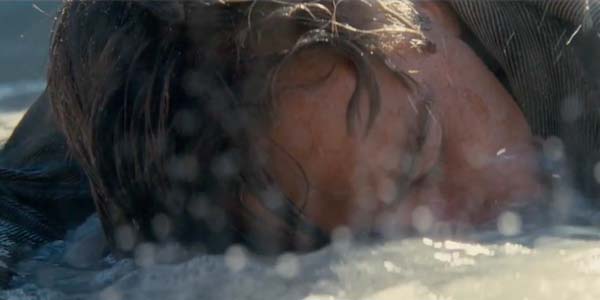
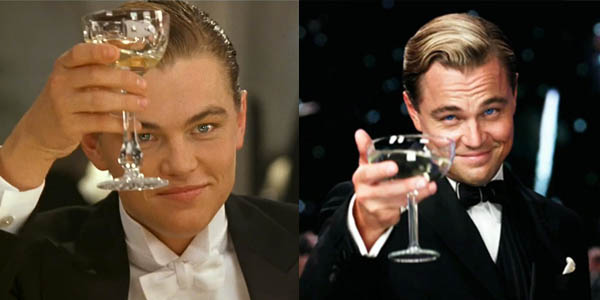
If you thought that Pixar one pushed things too far, just you wait until you check this out. It's another intricate story that requires huge leaps of fancy, but it's pretty damn cool. The kernel of the idea is that across several of his movies Leonardo DiCaprio is actually playing multiple versions of the same character. The setting for the films involved is limbo, a expansive dreamscape where DiCaprio's Dom Cobb finds himself trapped before the events of Inception. We know he and wife Mal grew old in there, so what if before realising the falseness of this reality Leo went a little cuckoo. This timeline kicks off with Titanic, where penniless Jack Dawson falls for aristocrat Rose. Contrary to portrayed events, he survives the ship sinking and, with some money he pilfered manages to build extreme wealth, becoming known as Jay Gatsby, a man who is haunted by past actions. In an attempt to rationalise these clashing events (and multiple deaths), Cobb imagines he's actually in a mental asylum on Shutter Island who suffering from extreme visions. Fear of the sea has not only given him an obsession with the landscape around the Island, but inspired the original Titanic fantasy and a further personality where he takes up all manner of profession, but not a sea captain (Catch Me If You Can). Through all this the character's various love interests - Rose, Daisy and Dolores - are all various manifestations of Mal. It's not an airtight theory my any means, but it raises some interesting themes throughout the actor's filmography. How Likely Is It? Damn impossible, although given how loose the rules of limbo are for all we know it could be true.

2. The Lord Of The Rings Is A Game Of Thrones Prequel
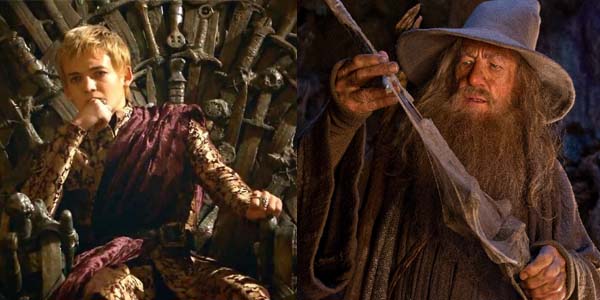
The Iron Throne, that uncomfortable looking chair which pretty much everyone in Westeros craves, is made from the melted down swords of the enemies of King Aegon Targaryen. Among those swords is Glamdring, Gandalf's sword from The Lord Of The Rings and The Hobbit. So did the White Wizard take on the The Conqueror and lose? While it may sound totally ridiculous to tie together the two fantasy epics there's some internal logic at work here. In Middle-Earth magic is rife, with mystical beings popping up left, right and centre, but Return Of The King sees this begin to shift with the elves leaving. Over time could other magic has receded, with adept beings moving north or overseas and dragons being the only mythical creatures still prominent? From what's presented in Game Of Thrones we know that magic plays a big part in the history of Westeros, so there's certainly an outside chance it's a latter-day Middle-Earth. Although if that sounds a little farfetched then maybe Westeros is merely in the same world as Tolkien's characters; Galmdring ended up in the chair after Aegon bested Gandalf on his travels. How Likely Is It? Also in the Iron Throne are swords for Kingdom Of Heaven, Ridley Scott's film set during the crusades, so it seems like this really is just reusing props and nothing more.

1. Indiana Jones Exists In The Marvel Cinematic Universe
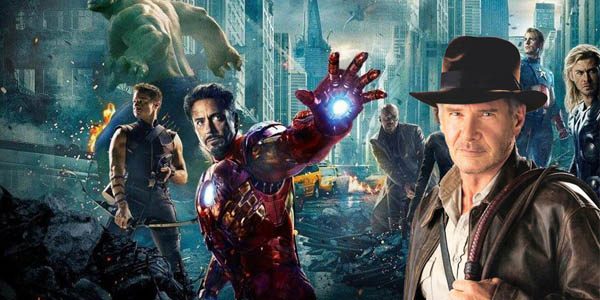
If you had to link Indiana Jones to another film series it surely would be Star Wars. It's a well known fact R2-D2 and C-3PO pop up as hieroglyphs in Raiders Of The Lost Ark, while a non-canon comic shows Indy coming across a crashed Millennium Falcon complete with Han Solo's skeleton. But here's another one that not only has some (rather slight) evidence, but also serves to explain some of the more fantastical moments in the series. In Captain America: The First Avenger, the Red Skull mocks Hitler for "digging for trinkets in the desert". Although Hitler did indeed have an obsession with mystical artefacts and this is likely just director Joe Johnston acknowledging the thematic inspiration for his period superhero flick, it could also be really saying the events of Indiana Jones are actually a part of the Marvel Cinematic Universe. Sounds bonkers, but think about the sort of thing Indy discovers. Stones with destructive powers, artefacts that open up portals to zap people away and beings from other dimensions; they're some of the most integral elements to the wider mythology of the MCU. Whether or not he's part of the world bears little significance on the story - he predates most major events by decades - but it's fun to theorise that he could have played some part in forming S.H.I.E.L.D. The most delerious element of this is that, with Marvel and Lucasfilm both under the Disney banner there is a slither of a chance that the two series could be brought together. Just imagine Harrison Ford popping up in the Agent Carter TV series. How Likely Is It? Incredibly unlikely. But that doesn't make it any less fun. Which of these theories was your favourite? And what other links between unrelated films do you like? Let us know in the comments below.

Contributor
Contributor

Film Editor (2014-2016). Loves The Usual Suspects. Hates Transformers 2. Everything else lies somewhere in the middle. Once met the Chuckle Brothers.