10 Lessons The Gaming Industry Must Learn From #GamerGate

The ride never ends on the #GamerGate front. But can the industry learn from this?

The #GamerGate saga continues and is marching strong. Both the #GamerGate and #Notyourshield hashtags have surged in popularity in the last few days as gamers from all backgrounds, genders, and races have gathered on social media to call out the haphazard journalism within the videogames industry. Some are tired of being misrepresented, while others are concerned about the overall quality of articles from mainstream gaming websites. Signs of progress are slowly starting to shine, further fuelling the movement and showing that some are genuinely willing to listen to the voice of the gamer. From the very beginning, it was obvious that #GamerGate was something that would not easily be brushed away. Some people thought the release of Destiny would do a good job at moving everyone along; others thought the movement would dissipate on its own. However, discussion is still rampant on mainstream social media (especially Twitter) €“ with videos, infographics, and screencaps being distributed on a regular basis. This truly is a war of information. But what should the industry itself take from the cries of #GamerGate? After all is said and done, and in light of new events what should everyone learn from all this? Here are some pointers.

10. Zoe's "Evidence" Wasn't Evidence At All
Zoe recently posted logs from an IRC chat titled #burgersandfries, which allegedly prove that #GamerGate was a huge €œconspiracy€. However, for this to even qualify as evidence €“ a few things must be assumed. First, that #GamerGate was a centralised effort €“ which of course isn€™t true, as the tens of thousands of tweets on Twitter prove (along with various threads on Reddit and posts on Tumblr). As a lot of critical individuals have brought up: what do a few conversations in a public (i.e: not hacked) IRC prove exactly? The answer? Nothing, and it€™s just a desperate bid to scapegoat 4chan and distract people. It€™s also a prime example of using the genetic fallacy to try to win people over. People€™s legitimate concerns are not going to be overshadowed by something so trivial. The irony behind this was that a large portion of the anti-GamerGate rhetoric was that GamerGate was just a conspiracy theory. Yet, they€™re also convinced that tens of thousands of individuals were manipulated by one IRC chat. The joke writes itself.

9. The Accusation That #GamerGate Was Born Out Of Misogyny Didn't Work

To disprove the claim one only needs to do two things. Define misogyny, and find the source of the term #GamerGate. Misogyny is defined as the hatred of women and the very first usage of #GamerGate was from a tweet by celebrity Adam Baldwin (it should be noted that the first reference to #GamerGate in the previously mentioned IRC chat was in reference to this very tweet). The tweet links to two videos by The Internet Aristocrat (IA) which documents €œThe Quinnspiracy€ €“ obviously named after Zoe€™s twitter handle. Both these videos contain no misogynistic content. So by looking at the order of events (as many people thankfully did), it€™s clear that #GamerGate was not founded on misogyny or harassment, but rather the sharing of information.

8. #GamerGate Is Investigating Everyone

Suspicions of racketeering and fraud against the Independent Games Festival (IGF) and Indiecade have surfaced as a result of #GamerGate€™s uproar. LordKat released a statement via Twitch which explains in explicit detail what might be going on behind the scenes at IGF. The entire statement explained how many men and women have financial ties to the games they judged favourably during the contest but as of very recently the stream, the video explaining the statement, and the transcript have been taken down. Infographics made by determined individuals still float around despite this. However, this information alone was enough to inspire advocates of #GamerGate to keep pushing for more transparency, with the video being passed around Twitter, Facebook, Reddit, and various 4chan boards while it was available. The accusations that #GamerGate solely target women, rather than anyone suspected to be practicing dishonesty, are quickly falling apart.

7. #Notyourshield - The Gaming Community Is More Diverse Than You Think
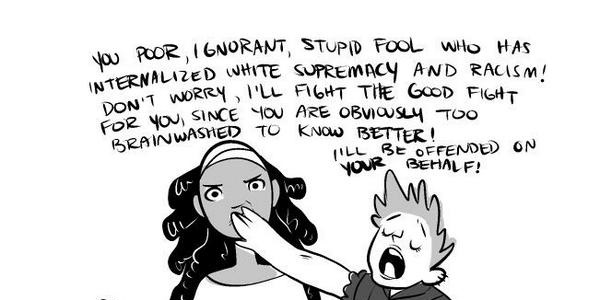
#GamerGate sparked the use of many other hashtags. One of the most interesting being #Notyourshield. It€™s genuinely pleasing to see so many people with different backgrounds and genders (including feminists and anti-feminists alike) unite under one goal: to not be used as scapegoats when responding to criticism. The fact that some anti-GGers have responded to these people by calling them €œsock puppets€ is frankly, disgraceful €“ and emphasises just how little voice these people have unless they agree with them. The claim that #GamerGate is just a collection of white, racist, misogynist, €œmanbabies€ (which takes the cake for most childish insult ever conceived) was quickly proven false €“ and yet some desperately cling to the this false narrative despite the diversity of the movement becoming more and more apparent. https://www.youtube.com/watch?v=SYqBdCmDR0M The tag is also a statement against journalists who think their voice speaks for them. In this tag, every individual€™s voice is heard €“ and is not utilised to push any agenda.

6. Blocking Someone On Twitter Doesn't Make Them Disappear

Chris Grant of Polygon created a block list that is targeted at individuals who supported #GamerGate, and proudly tweeted about it on the 3rd of September where he claims the list is €œ1500+ strong€ (in terms of how many people are blocked). Is this the kind of standard all gaming journalists should strive for? If someone disagrees with you or criticises you in any way they€™re not even important enough to acknowledge? If you think this blocklist is only for €œharassers€ (the possibility of legitimately harassing someone over Twitter is quite debatable to say the least) then it would be of interest to note the The Fine Young Capitalists were also on this block list, a charity group determined to get women into gaming, and have not engaged in any harassment. However, on September 7th, everyone was unblocked. Here€™s hoping for some engagement with criticism.

5. Attacking Your Fanbase Isn't The Way To Go
And no amount of back-peddling is going to make anyone forget that. Gamers are seemingly tired of being called €˜nerds€™ (Patricia Hernandez, Kotaku blogger), €˜Parasites€™ (Cameron Baker, game developer), and €˜dweebs€™ (John Thyer, game designer), by people who are supposed to be representative of them, or at least bigger than immature name-calling. Unfortunately, the gaming press handled this in the worst possible way. Very few attempts of discussion and understanding were made €“ instead what gamers were given was a pile of poorly written click-bait titles denouncing their very identity. Kotaku, Gamasutra, Destructoid, Rock Paper Shotgun, and more supposed gaming news sites participated in this desperate crusade to bury the issue, and in doing so, made it all the more apparent. Whoops.

4. The Streisand Effect Is A Thing

In a nutshell, the Streisand Effect is the phenomenon where the attempt to suppress and censor something inadvertently leads to it being publicised. The attempted denouncing of gamers aroused some very understandable criticism, especially since these articles came out from different sources over such a small space of time. This caused the GamerGate hashtag to spring from 0 tweets to nearly 41,000 in the space of five days (according to topsy.com). Suspicions only got worse as mass deletions of posts occurred over Reddit and other websites in relation to the then-called €˜Quinnspiracy€™. Doing this to prevent doxing is absolutely fine, but when users were banned and shadow-banned for simply discussing it, people began to feel uneasy.

3. "Aren't There Bigger Fish To Fry?" Is Not An Excuse

And it barely qualifies as a response to #GamerGate €“ yet this line of faulty logic is prominent on the Twitter side of the debate. Anyone who does use this reasoning should look up the fallacy of relative privation which is defined as when an individual brings up a bigger, yet unrelated issue in an attempt try to diffuse the other. Of course, it€™s entirely possible to be concerned about the integrity of gaming journalism, while also being aware of more pressing matters, so this argument didn€™t have much merit to start with €“ but some people still pretend that #GamerGate is the only thing on a pro-GamerGater's mind, this is usually followed by useless ad hominem and self-congratulatory tweets.

2. Take A Leaf Out Of The Fine Young Capitalists' Book

TFYC€™s level-headed reaction to this whole fiasco has been admirable. Their ability to recognise /v/ (and by extension, 4chan), and supporters of #GamerGate as a group of independently thinking individuals has earned them a lot of respect among gamers. For example, in a recent interview with AGPNation, TFYC explains that once they had recognised that €œ/v/€™s love for games transcended gender barriers€, /v/ asked and were given a referral link to their donation page. Over a few weeks $22,000 was donated by them. See what happens when you treat your demographic with a little respect? TFYC even rewarded /v/ by allowing them to design their own character for the game, now known as Vivian James.

1. #GamerGate Has Already Won And Is Winning Still

The amount of awareness generated regarding the credibility of mainstream gaming journalism and encouragement for independent journalists to arise is enough to call #GamerGate a success. Independent, diverse blogs and websites are emerging and being brought to light such as vidya.moe (still under construction) and gatheryourparty.com, each aiming to report about videogames while maintaining journalistic integrity. The Escapist published an apology along with a policy change on the 8th of September, stating €œOur editor-in-chief, Greg Tito, having reviewed the facts at hand, concluded we ourselves have been imperfect in maintaining journalistic standards.€ This turn of events further encouraged the #GamerGate campaign to continue, and The Escapist deserve to be commended for their self-reflection. Polygon has also lost an advertiser as #GamerGate advocates emailed them with their concerns. The most important thing to remember from all this is that gaming journalists need gamers, but gamers certainly don€™t need them.

Contributor
Contributor

A creative and professional writing student with a passion for quality games.