10 Reasons The Next Console Generation Is A Huge Disappoinment

Is there really that much in the box that's worth the term "next gen", or all that money?

The next (or now, current) generation of gaming began in November 2012 with the release of Nintendo's Wii U, though for most gamers it didn't properly kick off until the Microsoft's Xbox One and Sony's PlayStation 4 hit shelves in November of last year. In the build up to each release and ever since, consumers have had all three companies trying to woo them with an array of apparently innovative features and promising new video games. 6 months on from all three consoles being available, though, have the Big Three really delivered all that much? We all couldn't help but be excited to get our hands on a shiny new next-gen console, but once you've admired the new controller and got to grips with the sleek new UI, is there really that much in the box that's worth the term "next gen", or all that money? Consoles are traditionally slow to build a head of steam, as launch titles inevitably prove to be tech demos before all else, and it's often well over a year before any undeniable "killer apps" are released. That said, is that ever really acceptable? With the console war being more competitive than ever before, shouldn't Nintendo, Microsoft and Sony be vying for as much of our hard-earned cash as possible right out of the gate? It's been said that the war is an endurance race rather than a sprint, but 6 months in, it feels more like a crawl so far. Which next-gen console(s) do you own? What's your take on the state of affairs so far? Let us know in the comments!

10. Wii U's Wait For Greatness

The Wii U has been available for roughly 18 months now, and after the incredible success of the Wii (which has sold over 100 million units to date), expectations were high that Nintendo would again sweep the floor with Microsoft and Sony. However, sales have been slow (it's already been overtaken by the PS4, and the Xbox One is gaining on it), and this has in large part been attributed to the lack of exciting first-party titles on the console. After all, Nintendo lives and dies by their first-party line-up rather than multi-platform titles: the big sellers are always the Mario, Mario Kart, Super Smash Bros., Zelda games and so on, but where are they? We've had Mario in the form of the launch title New Super Mario Bros. U, and the well-reviewed Super Mario 3D World (which incredulously came out a whole year after the console released), but Mario Kart 8 isn't due out until the end of May, while the new Super Smash Bros. is penciled in for the end of the year, and nobody knows when the new Zelda game is coming out yet. We're finally getting the AAA titles trickling down now, but it's still a painstakingly long wait before Wii U owners will have a library of excellent, console-exclusive games. Short of a major shake-up at E3, there probably won't be much point buying one for another 6 months or so.

9. Indie Games Are Shaming AAA Titles

The new generation of gaming has continued to build upon the indie revolution of the past gen, where Xbox Live Arcade and PSN allowed small developers to self-publish games, and make them available to players digitally at an affordable price. This resulted in a number of immensely popular indie titles, including Braid, Limbo, Super Meat Boy, Trials, Super Stardust HD, and so on. The trend has continued in the new generation, with Sony especially catering to indie studios, what with the superb Resogun being offered as a free launch title for PS4 owners. These indie games typically aren't blessed with the budgets of major studio releases, but they're often far more enjoyable and charming: take the fantastically frustrating Trials Fusion released mid-April. It's easily more entertaining than pretty much any full-price game released on either the Xbox One or PS4 to date, and at such a small asking price of £15.99, is also considerably better value for money than the £49.99 RRP you'll pay for "proper" titles. It's pretty embarrassing that these indie titles are running away with the consoles so far, considering that most of said games could easily be played on a medium-grade PC, or worse still, a PS3 or Xbox 360. What, then, is the point of having this expensive piece of kit in the first place?

8. PS4's Long Waits For Vital Updates
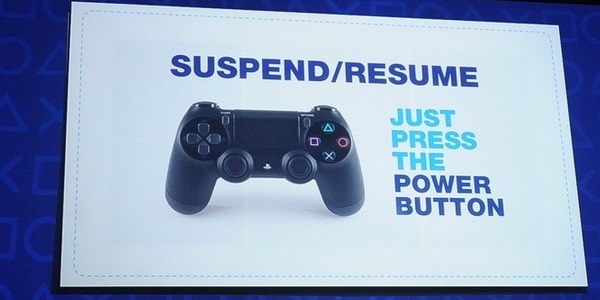
When Sony first unveiled the PS4, they announced a wealth of exciting features, such as the ability to suspend the console mid-game and resume it seamlessly, and to have a friend jump in to assist you during a tough part of a game. It was later announced that these features and many others would not be available on launch, but instead be patched in later on. It's almost 6 months later and we're still waiting for this, as well as many other much-requested features, like the ability to turn off the Dual Shock 4's light bar, MP3 support, better organisation and YouTube support for uploading videos. Some of these are pretty basic aspects of the console that people were expecting to be working by now: seriously, how long can it take to implement a menu option to disable the DS4 light bar? Some have grown impatient and done it themselves with the help of a screwdriver, but for the more cautious gamers, they really shouldn't have to wait this long for simple but much-needed features to be added.

7. Delayed Games

Delays in the gaming world are an unfortunate inevitability, and though it's incredibly frustrating, we would generally rather a game be perfected with no excuses than be released incomplete and glitchy, requiring a massive day one patch just to paper over all the cracks. That said, delays can really hamper the momentum of next-gen consoles in their opening months, and anyone looking to buy any of the three consoles was no doubt deeply disappointed that the hugely anticipated Watch Dogs was delayed from a launch title release for Xbox One and PS4 to late-May of this year. In addition to that, PS4 owners had to put up with the delays and lack of news regarding the exciting new racing game, Drive Club, which was originally touted as a launch title and ultimately ended up being delayed almost an entire year to October of this year. Then there's Tom Clancy's The Division, which has been rumoured to be delayed until 2015, though no official word has come out about this yet. To many gamers, Watch Dogs in particular was their most-anticipated next-gen release, and to snatch that away for such a long period of time forces gamers to try and be more enthusiastic about the titles that remain: even if they're good, they're not Watch Dogs.

6. Xbox One's Resolution Issues

So-called "Resolution-gate" has been a huge part of the console war moving forward, as it emerged prior to the Xbox One releasing that many of its top-tier games would be displayed in an upscaled 720p resolution rather than the higher-definition 1080p as they would on the PlayStation 4. This has instantly caused some PS4 fanboys to declare their platform the winner, as it's considered by many developers to be easier to code for, though at the end of the day, does a graphical difference that most untrained eyes can't notice really matter? Unless you're scrutinising the two side-by-side with a fine tooth comb, probably not, and the Xbox One generally renders games beautifully enough. That said, is it really fair that, in this day and age, the so-called "Age of HD", Microsoft have marketed a console that can't hack 1080p? Even if it's not that big a deal, it's still pretty disappointing.

5. Next-Gen Re-Releases

Enough has been said about the proliferation of HD remakes in recent years, whereby classic games have been re-released in "HD", and though often the results are startlingly impressive (take Shadow of the Colossus/Ico HD), they frequently feel unnecessary and lazily churned out to make a little extra money (e.g. Silent Hill HD Collection). This trend has continued onto the new generation of gaming, though has gone one step further: successful games from the end of the last generation, such as Tomb Raider and The Last of Us, are being re-released as "remastered" versions, in the hope of convincing consumers to double-dip for some shinier graphics and, if you're lucky, a few extra features. Sure, it's great for PS4 owners who didn't own a PS3 to finally be able to play The Last of Us, and Sony smartly haven't invested too much in these titles, but look at Nintendo, who have happily released Mass Effect 3, The Legend of Zelda: The Wind Waker and Batman: Arkham City with a slick new coat of paint during the first year of the console's release, while their first-party line-up continues to flounder around. These releases are fine if they're not a priority and the console has plenty of other games to keep gamers pacified (even if they're not amazing), but in the case of the Wii U, it's pretty depressing.

4. The Graphical Leap Is Good, Not Great

One of the more surprising aspects of the next-gen launch so far is how minimal the leap in graphics is compared to previous generations. The jump from, say, the PS1 to the PS2, or the Xbox to the Xbox 360 felt huge even out of the gate, whereas the same can't really be said here yet. Does Infamous: Second Son look great? Sure it does. Does Ryse: Son of Rome pop visually? Absolutely, and neither game could have been achieved on their prior consoles respectively, but the "wow" factor isn't quite there yet. Perhaps it's simply that games are becoming more realistic, and so it's expected that graphical advancement should eventually slow down as the nuances of real life becomes harder to replicate on-screen. While what we've seen so far looks good, we're still holding out for the games that really push the hardware, and one game that absolutely should do this is Metal Gear Solid V: The Phantom Pain when it eventually releases, probably next year, just as MGS4 did for the PS3.

3. Lack Of Backwards Compatibility

Here's one thing that Nintendo got right which its competitors didn't: the Wii U can play most Wii games with ease, while the Xbox One and the PS4 are not at all backwards compatible. To be fair to Microsoft and Sony, we were informed long ahead of the release of both consoles that this would be the case, though it's still a major bugbear for many gamers. Due to the complications involved with emulating games from previous consoles, Sony have instead opted for PlayStation Now, a subscription-based cloud gaming service, whereby players can stream classic games to their PS4, which while impressively structured, just doesn't seem very practical. More to the point, if you've got the game sitting on your shelf, you want to be able to play it a) without disconnecting your PS4 and hooking up your old console and b) without having to pay a monthly fee. It's not like gamers were surprised at the move, but it's a shame that loyal gamers aren't better rewarded: what about a system that allows gamers to register the serial number of their classic, physical game to redeem for free on PlayStation Now? A compromise like this would probably result in more subscriptions in the long run, but it likely won't come to pass.

2. An Unnecessary Focus On "Media"

Microsoft have particularly been focused on the idea of their Xbox One being as much a "media center" as it is a gaming console. While this is great in theory, it's hard to feel that enthusiastic about it when there are so many other features on both consoles which gamers have been asking for for months, and the fact that each has a pretty sparse gaming library so far. It's almost as if throwing Netflix, Sky Go and so on at these consoles is a way to give them greater perceived value, even if after 6 months you might still only own a couple of games. If, like this author, your console and PC are both connected through your TV, then these features garner even less interest, as you're already able to access Netflix and so on at the mere press of a remote control. Is it a nifty feature to have for some? Sure, but it's much more important for Microsoft and Sony in particular to keep their focus on what brought them to this dance in the first place: the gaming.

1. Xbox One's Forced Kinect

Among the many mistakes Microsoft made in marketing the Xbox One was making their motion control device, the Microsoft Kinect, a mandatory part of the purchase. Much was made of the fact that the Xbox One was more expensive than the PS4 (which no doubt helped the PS4 establish an early sales lead), and had Microsoft offered a Kinect-less model right out of the gate, the console would no doubt have sold somewhat better. For many serious gamers, the idea of being forced to buy a peripheral for which few serious games are actually made is quite off-putting, especially when said peripheral clearly costs a lot of money to produce, and just bumps up the cost of an already pricey bit of kit. Microsoft's UK marketing team have insisted that the Kinect is "an absolutely integral part of the Xbox One experience", again proving that they clearly don't know their audience. Gaming should be all about freedom and choice, and some people are happy playing their games and navigating menus with that plastic thing you hold in your hands...a controller, that's it. Did we miss any disappointing aspects of the next-gen launch so far? Or do you feel that Nintendo, Microsoft or Sony have actually nailed it? Let us know in the comments!

In this post: 
PS3 XBox One
 
Posted On: 
Contributor
Contributor

Stay at home dad who spends as much time teaching his kids the merits of Martin Scorsese as possible (against the missus' wishes). General video game, TV and film nut. Occasional sports fan. Full time loon.