10 Video Games That Killed Companies
When it wasn't just Lara Croft who got buried.

It’s sad to see a video game company die. The tragedy of companies such as Lucasarts and THQ being killed off is still talked about to this day, and their back catalogue of historical titles are still making a lot of money on the retro games market.
Poor monetary decisions, pressure from a horribly demanding industry or downright sabotage from parent companies can kill a company outright if they fail to keep up, and this is what commonly happens with video game companies.
However, sometimes a company dies an undignified death thanks to a single bad decision, and the game that caused their death lives on in infamy. It’s a rare occurrence, but it highlights the tightrope that companies have to walk in order to stay successful in such a demanding business.
These ten examples are some of the most interesting and insane. They mark the deaths of some of the most beloved companies with the one mistake that put them under, never to return to the industry they helped define.
10. BMX XXX - Acclaim

Acclaim wasn’t a company that was ‘acclaimed’ in any way form or manner.
Beginning in 1987 with the release of Tiger-Heli for the NES, Acclaim kept themselves just above water by releasing games that were just above acceptable.
Later in their life, however, Acclaim seemed to go mad with trying to stay in business. Their marketing became more and more ridiculous, to the point where it started to have a detrimental effect on the company.
This self-destruction reached fever pitch with the release of BMX XXX in 2002.
Dave Mirra’s Freestyle BMX was a series that was fairly popular, but when they pitched Mirra this softcore porn title he walked, leaving Acclaim to market it themselves. Nonetheless, Acclaim staked a lot on BMX XXX with a hefty marketing campaign, yet it was a huge flop mainly due to its adult themes and strip club footage that was far too extreme for a series that used to be family friendly.
Proving that sometimes sex doesn’t sell, it forced Acclaim into a downward spiral that they just couldn’t recover from, and they shut their doors in 2004 never to open again.
9. Uncle Henry's Playhouse - Trilobyte

Trilobyte were a PC development company best known for developing cult classic PC games The 7th Guest and its sequel, The 11th Hour. Whilst these games weren’t critically acclaimed or incredibly popular, they sold enough copies worldwide – 3.7 million in fact - to make them successful in the industry.
However, it seems that Trilobyte didn’t know what to do with this success. Whilst the obvious idea would have been to keep making games in the horror genre, in a bizarre twist they ditched horror adventure games and made Clandestiny, a child-friendly puzzle game that sold only 2500 copies worldwide.
It seemed that Trilobyte needed a killer app to save itself from failure before they became bankrupt. Instead, they made Uncle Henry’s Playhouse; a game that recycled existing puzzles from their three previous games.
This shell of a game erased them from the market. It sold 27 copies in the United States, and 127 copies elsewhere in the world, thus cementing Uncle Henry’s Playhouse as one of the least selling games ever made, and its death absolutely ruined them.
Trilobyte’s members split in 1996 and the companies they went on to work for were bought and liquidated in 1999.
8. God Hand - Clover Studio

Clover Studio
was created by a group of existing Capcom talent who decided to make themselves
a subsidiary of the larger company in order to give themselves greater creative
control over their projects.
This all began very well with the development and release of the critically acclaimed Viewtiful Joe 1 and 2, however Capcom were very critical of Clover and the games they made. Whilst Capcom was making a lot of money out of existing intellectual property, Clover Studios’ games were only making a fraction of the money that those big names were making.
This continued with Okami in 2006. Whilst the game was a major hit with fans and critics, leading to perfect scores from many review outlets at the time, it also received many awards at that years E3 and grossed 8 million dollars in sales, making it the 100th best selling game of that year.
Despite all this it failed to match up to Capcom’s extraordinarily high standards, and was deemed a failure by the company. Clover had one last chance to impress the executives with God Hand, but it still wasn’t enough. Capcom shut down Clover Studios in late 2006 and its founders unsurprisingly left the company.
7. Daikatana - Ion Storm Dallas

After the major success of Doom and Quake, there seemed to be a lot of tension between ID’s creative heads John Romero and John Carmack.
As a result, the team split and whilst Carmack went off to make Quake 2, Romero started up a new company called Ion Storm along with Tom Hall. The company was founded in Dallas, Texas in 1996, and swiftly afterwards a new branch opened in Austin, Texas in 1997 with help from Eidos studios.
Each company started working on different projects. The first game made in Dallas was was Dominion: Storm Over Gift 3, which is now largely forgotten, but Dallas’ second game – Daikatana – is wholly unforgettable. It’s the game that ruined John Romero’s reputation in the game industry by becoming a commercial and critical flop.
Ion Storm Dallas had to try and make up for the failure that Daikatana had brought, but Tom Hall's Anachronox was unable to bring Ion Storm Dallas out of the red.
The Dallas headquarters had to shut its doors in July 2001, and the Austin branch, who made the amazing Deus Ex in 2000, became the new headquarters, practically saving Ion Storm from destruction.
6. Kingdoms Of Amalur: Reckoning - 38 Studios

Inspired by the MMORPG games of the early and mid-2000s such as World Of Warcraft, Everquest and Runescape, Major League Baseball pitcher Curt Schilling decided to found his own video game company called 38 Studios with the intention to make games similar to the MMORPGs he loved.
38 Studios built up their company for 3 years, including the acquirement of THQ developer Big Huge Games in 2009, before announcing that there was any game in development.
In 2010, 38 Studios and Big Huge Games threw everything they had in the video game market by developing two games simultaneously, but only one would ever be released. Kingdom Of Amalur: Reckoning was a huge project for such a small company, and though it was positively received, the amount of money that went into it meant that it needed to sell over 3 million copies to break even, but it only sold 1.2 million.
However, this game was meant to be a precursor to an even bigger title, an MMORPG called Copernicus, but with the failure of Kingdoms Of Amalur Copernicus was scrapped and 38 Studios filed for bankruptcy.
5. Earth & Beyond - Westwood Studios
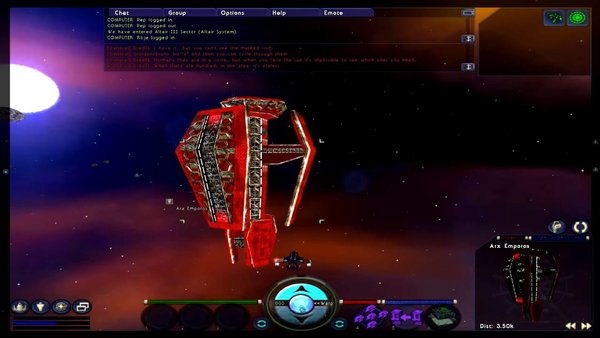
Westwood Studios are best known as the company behind such legendary games as Eye Of The Beholder, Dune, Lands Of Lore, and their most successful franchise Command & Conquer. Despite being merged into EA’s conglomerate in 1998, they still had a few gems up their sleeve with numerous Command & Conquer sequels, Emperor: Battle For Dune, and Pirates: The Legend Of Black Kat.
However,
this all ended when Westwood decided to dedicate everything they had into
making a sci-fi space exploration MMORPG called Earth & Beyond. Development
on the game started in 1997 under the name Project G, but by 2001, the team
behind it had created content for over 100 sectors of playable space.
In January 2003, the game was released to the public, albeit in limited quantities so as not to overload the servers. Regular story updates meant that there was always something new for players to do and the game was well received by critics.
However, EA weren’t happy with the initial sales figures despite Westwood doing
everything properly. One year later, in September 2004, EA shut down Earth
& Beyond’s servers and liquidated Westwood Studios.
4. Too Human - Silicon Knights

Canadian developer Silicon Knights may not have a plethora of games to their name, but they’ve developed some of the most iconic games of the retro era such as Blood Omen: Legacy Of Kain, Eternal Darkness: Sanity’s Requiem, and Metal Gear Solid: The Twin Snakes. In 2008 they partnered with Microsoft Game Studios in order to create their most ambitious game to date: Too Human.
Silicon Knights had kept Too Human in development hell for years. It started off as a planned ps1 game, then a GameCube game, but contractual constraints meant they had to work on other projects before they could finish it. Finally, Silicon Knights moved to Microsoft Studios who gave them the time and money needed to complete the project.
However, one single mistake completely ruined Silicon Knight’s reputation. Silicon Knights sued Epic Games in 2007 because of the Unreal Engine 3 and Epic’s support of the product whilst they developed Too Human, but Epic counter-sued as it turned out that the game was built using a stolen copy of the engine. Silicon Knights lost the lawsuit and unsold copies of the game were recalled and destroyed as a result, and they never recovered from the loss.
3. Hellgate: London - Flagship Studios
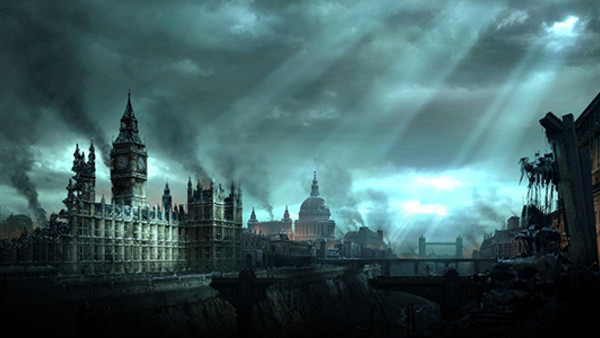
Flagship Studios was a small company created by ex-blizzard creatives who created the Diablo, Starcraft and Warcraft series of games. After working together since 1993 they resigned from Blizzard during the dispute with Vivendi in the early 2000s.
After leaving Blizzard, their first focus was on a dark fantasy action RPG with a title announcement via an exclusive interview with PC Gamer. The game was originally released in 2007 and, thanks to backing from Comerica Bank, regular updates and content were developed and released in coming years. However, Hellgate: London wasn’t very good. Critics were very lukewarm to the game at the time and many gamers were disappointed with it paled in comparison to the Diablo games. Players eventually dropped out of the game, unwilling to shell out a subscription service for such a bland experience from such prestigious game developers.
As a result, Flagship Studios had to file for bankruptcy in 2008 and all of its intellectual property was seized as collateral by Comerica Bank, including the next game that Flagship were working on at the time: Mythos. The game was turned over to Namco Bandai who kept the servers running until 2009 before taking them offline altogether.
2. Tomb Raider: Angel Of Darkness - Core Design

Core Design started their career making independent games for the Amiga computer system, but they never achieved fame until they made the original Tomb Raider in 1996. With its innovative level design, variety and a story drowning in ancient mythology, Tomb Raider was a hit with critics and players alike.
The immense success of the game was something that Core Design wasn’t prepared for. Thus, they decided to put all of their eggs in one basket and focus on creating sequel after sequel every year afterwards. They aimed to put out at least one Tomb Raider game a year in order to ensure their success in the market.
Whilst this worked for the ps1 market, Core Design had a huge problem on their hands when they decided to make a Tomb Raider game for the ps2. One year just wasn’t enough time, yet they stuck to the schedule anyway. The result was Tomb Raider: Angel Of Darkness, a game so poor and broken that Eidos, Core Design’s parent company, took away the licence and gave it to Crystal Dynamics instead. Core Design was lost without its staple franchise and their assets were sold to Rebellion Developments, ending them for good.
1. Fable 3 - Lionhead Studios
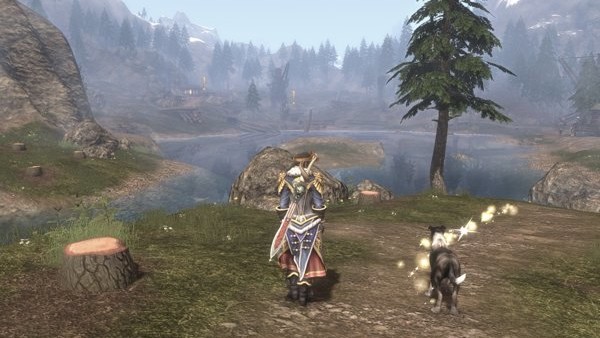
Peter Molyneux used to be one of the great auteurs of video game design with many successful franchises under his belt such. Thus, when Molyneux left EA to start his own company it seemed like a fantastic idea that would herald a host of amazing games for his fans. However, when he started to become a public figure thanks to his ventures with Lionhead games, people noticed a certain quirk: Molyneux began to lie about his games in order to hype them up for the market.
Whilst this didn’t really affect Lionhead’s first game, Black & White, Molyneux’s lies started to affect his flagship RPG series; Fable. People saw a few cracks in the first Fable game when it was released, but Fable 3 fared the worst. The game's over-ambitious production caused Lionhead to fall under.
Running out of budget because of Molyneux’s big ideas meant that Fable 3 was left unfinished. In the end, it was a major flop that seriously harmed the company. Molyneux left Lionhead in March 2012 to found 22 Cans, which also went under. Creatives tried to take over from Molyneux but the damage was done, and Lionhead studios closed on 7th March 2016.