11 Greatest RPGs Of The 2000s

Oblivion, Mass Effect, Fallout 3? It was one hell of a decade.
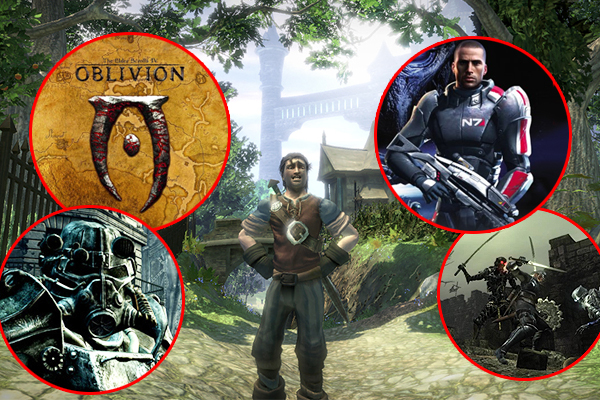
Before the turn of the millennium, 'RPG' was still a word mostly associated with geek-groups gathering around candlelit tables, a self-appointed Dungeon Master putting on a growly voice and evoking the world through the power of his speech alone. It was only after the turn of the millennium that the genre really started becoming a powerhouse in video games, with consoles and PCs suddenly having the technical capabilities to create convincing 3D fantasy worlds for us to escape to. The RPG was no longer thought of as tabletop Dungeons & Dragons, or a niche video game genre for super-geeks, but a genre that was taking its first steps to become a dominant force of the medium. In a way, you can't replace the magical feeling of taking your first steps in an RPG world in the early 2000s. The jump from 2D or rudimentary polygonal graphics to relatively realistic 3D worlds is among the greatest technological jumps ever made in games, and few modern RPGs can emulate that feeling of experiencing a rich 3D world filled with quests, lore and places to explore (though The Witcher 3 comes close). The 2000s were a monumental era for video game RPGs, marking the genre's meteoric rise to dominate the games industry, and laying the foundations for the legendary games in the genre that exist today.

11. Star Wars: Knights Of The Old Republic

When branching-narrative maestros and kings of dialogue-driven RPGs BioWare got to work on a game set in the Star Wars universe, it was a match made in heaven. It was the developer's first foray beyond high-fantasy RPGs, and there was no better way to do it than by setting it in a galaxy far, far away. The combat mechanics in KOTOR evolved the complex AD&D systems of the Baldur's Gate and Neverwinter Nights series, making them more accessible and less obviously 'D&Dish' - helping attract a wider audience of gamers. The dialogue and story were also phenomenal; the game managed steer clear of becoming a cheesy bit of Star Wars fan service, and actually offered up a unique and intriguing plot set in the Star Wars universe, but which could easily engage non-Star Wars fans, too. This was one of the first ever games in which your party companions had unique, well-developed personalities and would randomly engage each other in conversations, letting you respond in whatever way you deemed appropriate. Romance options were also introduced, and while you couldn't watch your heroes doing the dirty, this system would eventually inspire the all-out sextravaganzas of Mass Effect, Dragon Age and The Witcher.

10. The Elder Scrolls III: Morrowind

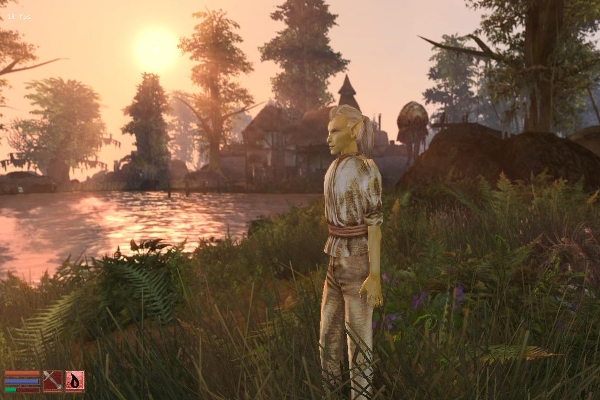
It's hard to recreate that overwhelming sense of freedom I felt when I'd finished registering my details at the immigration office in Morrowind's coastal town of Seyda Neen, then wandered out the door into the open world. "Is this really happening?" I thought. "I'm now free to wander off and do whatever the hell I want in this stunning open world?" The answer, of course, was a resounding 'yes', and to this day few games have topped that feeling. Morrowind was the first 3D RPG world that felt like a place with a life of its town. It was so detailed, so mysterious, and so incredibly immersive. This was back in the days before simplistic fast travel and in-game sat-navs telling you exactly how to get to your destination at all times, so there was even something magical about reading actual sign-posts at crossroads to know where to go. Sure, the combat system was a bit iffy and, being a Bethesda RPG, Morrowind had its fair share of glitches, but these were worthwhile trade-offs to be part of a game world that was one of the biggest technological jumps in the history of the medium.

9. Baldur's Gate II: Shadows Of Amn

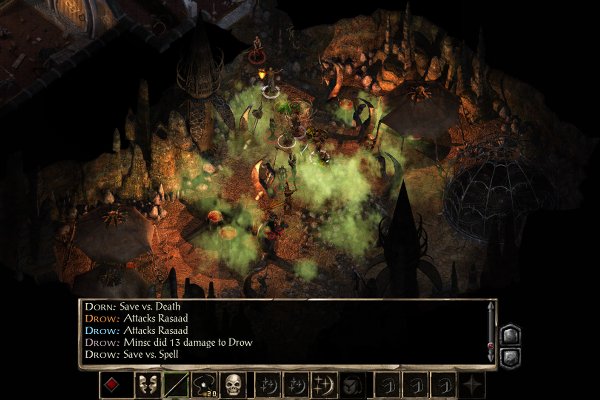
This was the final hurrah for the old style of video game RPGs, to the extent that most people would probably classify it as a 90s RPG that just happened to come out on the wrong side of the millennium. Made by Bioware, Shadows of Amn is the best title in one of the most important RPG series of all time, helping to transition the hitherto table-top genre to video games. Set in the D&D world of the Forgotten Realms, it followed many of the same rules as the board game, such as the AD&D combat system that was familiar to tabletop players, but inscrutable for video gamers. Those who took the time to learn Baldur's Gates tactics-heavy combat system would be rewarded however, with one of the greatest story-driven RPGs of all time. The game's pre-rendered visuals are timeless, as is the excellent script and rich, lore-filled world. While Shadows of Amn marked the end of an RPG era, the recently-released Enhanced Edition is a testament to its enduring popularity, and the recent resurgence in isometric RPGs (check out the brilliant Pillars of Eternity) shows that there will always a lot of love for this kind of RPG.

8. Diablo II

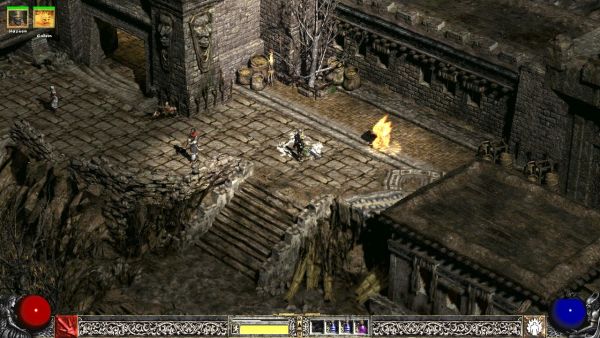
Another relic of a bygone era, Diablo II compelled gamers to keep point-and-clicking, hack-and-slashing for years after its release, only ever really fading into the background when its long-awaited successor launched in 2012. At the time, Diablo II stretched the definitions of what it meant to be an RPG. Until that point, the genre was associated with complex gameplay mechanics and rich dialogue systems, but Diablo II pared down on all that deep and meaningful pap, instead offering a violent, no-nonsense fantasy experience that helped popularise the term, action-RPG. This game pretty proved to the world that RPGs weren't just for tabletop RPG diehards, but could be played by anyone - and compulsively at that. The simple gameplay, combined with rich character development system and, of course, piles of awesome randomly-generated loot, made it one of the most addictive games of all time (not that you'd expect any less from the folks who went on to suck millions of souls into World of Warcraft just a few years later).

7. Fable

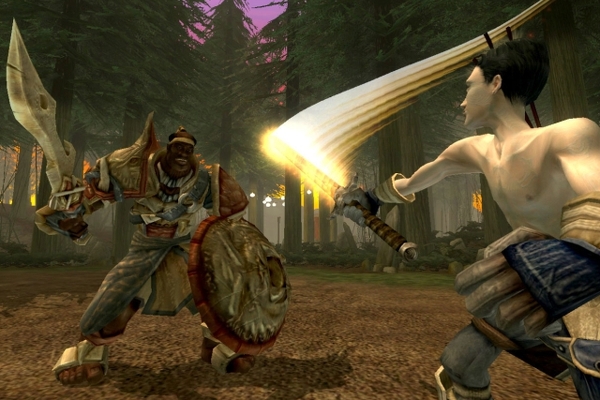
Remember the days when visionary game designer Peter Molyneux used to come good on his promises, and create games that lived up to their lofty ambitions? No? Well then please cast your mind back to the early Fable series. The original Fable was without doubt the prettiest RPG of its time, and one of the few games on the original Xbox that made people stand up and take notice of Microsoft's powerful but relatively obscure console. Fable's world was brimming with character like no world before it, and it was a joy to wander around the town hubs chatting to the eccentric NPCs and engaging in weird quests that didn't take themselves too seriously. Fable made some interesting innovations to existing RPG mechanics, allowing players to choose between carrying out quests in good or evil ways. Depending on how you went about these, as well as your behaviours towards innocent people and the law, your character's appearance would change to look appropriately more good or evil. Throw in the options to buy a home and get married, and you had a revolutionary RPG that was well ahead of its time.

6. Fable II

True to form, Molyneux hyped up the second Fable game so much that the gaming community was expecting (and parts of it secretly hoping, no doubt) that the series' Xbox 360 debut was going to be a disappointment. But those naysayers were to be disappointed themselves, because Fable II got everything right, building on many of the mechanics that made its predecessor such a charmer, while including all the glossiness that we were hoping for from an Xbox 360 game. The ever-important character development system remains among the greatest and most interesting ever, with factors such as moral alignment, attractiveness, and even jobs defining your character. It felt like every decision you made and every fight you engaged in had some kind of consequence - right down to what kind of food you ate to heal up, which affected your character's weight (because why wouldn't it?). Fable II was also one of the first 3D RPGs to feature comprehensive co-op gameplay, letting you play through the entire game with a buddy. Despite its many innovations, few of Fable II's ideas were implemented into subsequent games, which in a way has helped it remain one of the most unique RPGs of its time.

5. Fallout 3

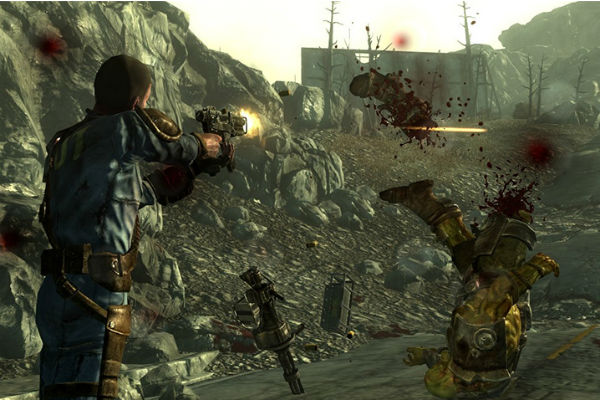
After the release of the hugely-anticipated Fallout 4, it's hard to imagine that just eight years ago it looked like all hope of resurrecting the post-apocalyptic franchise was lost. Thankfully, after several cancelled entries in the series, Elder Scrolls makers Bethesda swooped in to save the day. Fallout 3 adeptly held onto the lore, style and some of the much-loved mechanics of the original games (such as V.A.T.S), fusing them with first-person Gamebryo engine, first seen in the hit The Elder Scrolls IV: Oblivion. The moment the reviews came in for Fallout 3, you could almost hear the mass sigh of relief in the games community. The game was a hit, captivating players in the bleak post-apocalyptic DC Wasteland, which was filled with memorable quests (Power of the Atom, anyone?) and places to explore. The Fallout franchise was rejuvenated after years in the wilderness, and would go on to become one of the most revered series of recent generations. Sure, the game was filled with more bugs than a squatter's mattress, but its vast scope, accessible mechanics and loyalty to Fallout lore won over millions of fans. Fallout was back and - as we can see today - it was back to stay.

4. Dragon Age: Origins

With BioWare having just released the excellent Mass Effect, gamers who were more privy to swords and sorcery than they were to lasers and interstellar space travel began wondering if they'd see the legendary developer return to the high fantasy genre that brought them to fame. Thankfully, we didn't have to wait long before Dragon Age: Origins landed, becoming the worthy spiritual successor to the Baldur's Gate series and the high-fantasy answer to Mass Effect. The game thrived thanks to all the BioWare hallmarks - an excellent storyline, convincing character relationships, and some fantastic moral dilemmas in which the player's decisions would significantly affect the story. The sense of consequence to your actions built on that of Mass Effect, as your judgements could kill off important characters, impact key points in the story, and of course affect the game's conclusion. Origins was also seemingly the last BioWare game to feature a combat system that allowed the player to do some serious tactical tinkering - fine-tuning AI behaviours to make you a lethal heroic unit come battle time. It may not have been much of a looker, but Dragon Age: Origins is one of the great story-oriented RPGs of the noughties.

3. The Elder Scrolls IV: Oblivion

It wasn't easy deciding whether this or Morrowind felt like a more momentous game at the time of its release. Morrowind was among the first RPGs to create a truly immersive 3D world that you felt you could live in without feeling tied down to the main questline. Oblivion was all that stuff, but just visually stunning in a way that no RPG before it was. Much like Morrowind before it, Oblivion's greatness can be summarised in that first moment your character is truly free. In this case, it's emerging from the sewers onto the sun-kissed lake surrounding the Imperial City. Jeremy Soule's beautiful, twinkling score kicks in, and you butcher the nearest mud crab in celebration. You then choose a random direction to go in, and go off in search of adventure. Sure, the main quest is arguably the worst of the Elder Scrolls series, but you could go hundreds of hours without engaging in it, focusing instead on solo dungeon-crawling in search of loot, murdering innocent people and moving into their homes, or rising through the ranks of one of Cyrodiil's guilds. This was an open world of beauty and scale like nothing that came before, and its accessible, direct first-person combat system helped attract a new audience to the RPG genre.

2. Mass Effect

The beginning of the series that would grow in popularity to become one of the most loved RPG franchises of all time began life on the Xbox 360, before expanding to every game platform possible. It was the next-gen evolution of the system that BioWare started with Knights of the Old Republic, with a focus on dialogue, story and squad-based combat. The plot was phenomenal, the characters were the most believable that had yet existed in a game, and the romance scenes were, well, cringeworthy, but kudos to the devs for 'going there' and effectively kickstarting the idea of in-game relationships being taken seriously. Mass Effect told a story like no game before it, not just through well-written plot but by combining that with a plethora of lore and character backstories to make it the ultimate video-game sci-fi tale. It was a monumental game that eventually passed the torch onto its sequels and The Witcher 3 as a high watermark of video game storytelling.

1. Demon's Souls

Squeezing in right at the end of the decade, Demon's Souls shook up not only the RPG scene, but the entire video game industry. It went against the flow of games towards mollycoddling the player and holding their hand, and proved that there was huge, untapped demand among gamers for challenging, gruelling gameplay. Demon's Souls made the story secondary to gameplay, throwing you into the moribund kingdom of Boletaria - which you could traverse and explore while barely gaining an understanding of why you were there in the first place. The story is more ore less optional, working to the medium's strengths by letting players engage in it as much or as little as they want to. Choose to follow it however, and you get to experience one of the more haunting, idiosyncratic video game plots around. The great strength of Demon's Souls was, of course its combat - a fair but unforgiving system in which panic would get you killed, patience and timing were key, and death has weighty consequences. Each combat encounter survived felt like an achievement, and each boss encounter a full-on adrenaline rush that would leave you exhausted but incredibly satisfied afterwards (feel free to equate this game's effect on you to that of sex - it's that good). Demon's Souls is an RPG in so far as character development and equipment management are key, but crucially it's a game that wasn't afraid to push players to the limit. Its bravery paid off, making Demon's Souls one of the most important games of the last decade. What's the greatest RPG of the 2000s? Let us know in the comments!

In this post: 
Fable
 
Posted On: 
Contributor
Contributor

Gamer, Researcher of strange things. I'm a writer-editor hybrid whose writings on video games, technology and movies can be found across the internet. I've even ventured into the realm of current affairs on occasion but, unable to face reality, have retreated into expatiating on things on screens instead.