8 Reasons You Should Play Nioh Instead Of For Honor
Don't spend your cash on a mistake.
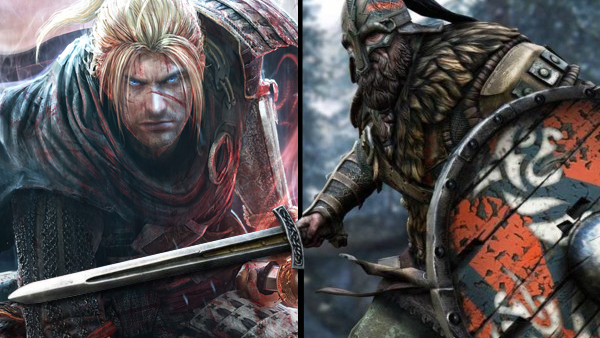
Thanks to releasing within mere weeks of one another - and both games being melee-focussed action titles - you could feasibly group Nioh and For Honor together on a store shelf.
Yes, For Honor's bread and butter is almost entirely in being a competitive online melee brawler and Nioh's is that of a Dark Souls-inspired hack n' slash, but look under the hood, and their quintessential appeal is the same: scratching the itch of methodical, meticulously balanced combat.
For Honor's duels are predicated on a small, three-segment icon that dictates which direction you'll attack or defend from, whereas Nioh's is far more in-line with standard action games, taking influence from Team Ninja's other efforts such as Ninja Gaiden, and of course, the Dark Souls series.
It's in playing them side by side though, where a real marked difference in quality comes through. Not knocking For Honor - there's a lot to like - but it doesn't hold a candle to Nioh. If you're eyeing up both titles with a full wallet of cash, there's only one way to go.
8. A Unique Loot System That Feels Rewarding
Ubisoft have clearly been playing Overwatch, as For Honor's loot system is both predicated on blind boxes to unlock the vast majority of your equipment, and has a salvage system in place to recycle any duplicates into in-game currency.
Side-stepping the morality of a developer not coding around duplicates in the first place - forcing the consumer to accept they'll just have to scrap and try again - the way loot is implemented in For Honor is as basic as it gets:
Complete matches, occasionally get a couple of items OR complete matches, accrue 'Steel', spend Steel on blind boxes, repeat.
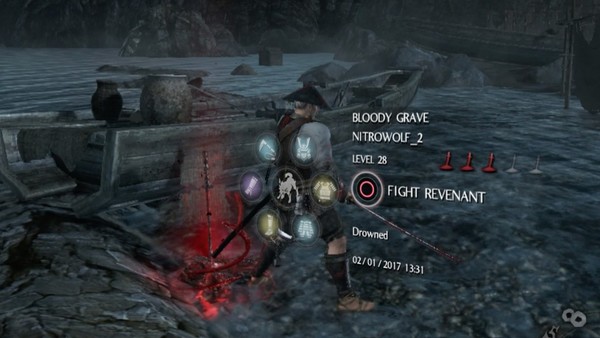
In Nioh, loot is handled entirely as a game mechanic. When you're out exploring the world, you'll come across areas where other players have died - marked by a sword sticking out the ground. Interacting with these markers will summon an A.I. 'Revenant' version of that player, complete with their own equipment.
Defeat the player/A.I., and you get to keep the loot. The higher level the person who died, the harder the battle, but the better the reward. Lastly, any duplicates are traded at save points for additional items, rather than just another roll of the dice.
Perfect.
7. Incredibly Responsive, In-Depth Combat

The battle wages on as to whether For Honor's deliberately hefty combat is a good or bad thing, but having played a good 20 hours of both titles, I'll confidently say Nioh's is by far the most accomplished.
There's just an immediacy to how you control Nioh's main-man William, that instantly - and I do mean instantly - feels more satisfying than the lumbering slabs of meat that populate For Honor's roster. The latter's system of matching icon segments to attack/defend, occasionally dodging and breaking through an opponent's defence with a simple button push has nothing on Nioh's three-stance-per-weapon setup.
Besides the fact that between wielding swords, axes, chain-whip blades, matchlock rifles and bows and arrows, there's far more variety to just how you attack your foes, Nioh backs this up with throwable shurikens, area-of-effect magic and meter-building specials.
For Honor hangs its hat on the nuances of everything that happens outside that basic three-segment setup, but that's also where the fundamentals of its approach end.
6. A Rewarding Single-Player Campaign

How For Honor's single player isn't getting more flak, I'll never know. I mean, not to outright hate on the thing, but let's call it for what it is: A glorified tutorial.
It's certainly a gorgeous-looking one, with a number of suitably epic showdowns happening atop cliffs, amidst torrential rainfall or whilst teetering on a breaking sheet of ice, but you can blow through the whole thing in around six hours, with many missions taking literally 10-15 minutes once you've got the basics down.
It's a series of "Go here, flick switch, fight guy/go here, activate two things, fight more guys". Yes, you get a boss character that'll attack you faster, but that's literally it. Sans the visuals, there's nothing to write home about.
As for Nioh, being its multiplayer is relegated to dynamic encounters, summons or invasions (when PvP gets added at a later date, anyway), the single player is the core appeal. Inspired by the real-world tale of William Adams, an Englishman who sailed to Japan and eventually became a samurai, Nioh's campaign is one of exploration across its demon-infested shores, before meeting a cast of OTT characters and enemies before bringing them all down, one mission at a time.
Depending on how much you fail, grind, practice or uncover every secret of the island, this could take you more than 70 hours - an immediate positive when contrasted to For Honor's effort, which you'll clock in one sitting.
5. It Never Feels Cheap Or Exploitative
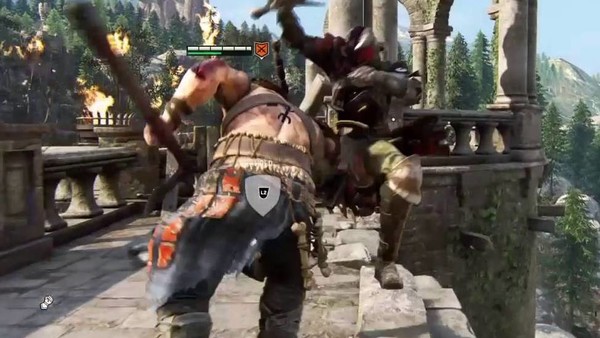
Already Ubisoft have come out and stated they'll be issuing some balance patches to just how overpowered the game's 'break-through-defence-and-then-throw' mechanic is, but it doesn't get around the fact that the way the game is built, encourages players to act in some incredibly cheap - or dishonourable - ways.
First off, levels are built with numerous pitfalls, environmental hazards and ledges to fall off at a second's notice. Fans will scream that 'all you need to do' is be mindful of where you stand, but 1. Throwing distance is a stat that can be increased for greater range, and 2. If another player is literally just waiting to guard break and throw you, they'll do it over and over until it happens.
Atop this, if your character staggers for any reason (say, being hit by a heavy attack) and they're anywhere near a ledge, it'll pull them into the 'falling off' animation, and that's instant game over, too. And don't even get me started on the idea of 'Unblockable' attacks used in combo chains, in a game that's predicated on balance.
As for Nioh, we know Team Ninja are adding a dedicated PvP mode at a later date (for free), but for now you have the summon-able versions of characters mentioned in the Loot point earlier. Tackling these guys always feels methodical and fair, and no matter how high-level they are, a good mix of dodging, counter-attacking and being mindful of your surroundings can ensure victory.
There are no one-button win options here, and that's a huge plus.
4. More In-Depth Character-Building & Weapon/Armour Upgrades
Once you've played a good few games of For Honor, you'll get a sense for how its progression and character-building goes. Which is to say, it's 90% cosmetic, with the occasional focus on new weapon or armour parts affecting modular components such as damage absorbed, how fast 'Revenge Mode' drains, throw range, etc.
All of these meters get discarded when taking part in a duel for the sake of fairness anyway, which highlights the wider sense of 'progression' between playing for 30 minutes or 30 hours: The look of your character.
Everything in For Honor feeds back into its loot system, which mostly serves to let you play dress-up with a number of costumes, paint patterns, head ornaments and armour styles. They're not all massively distinct, to be honest, but it does feel kinda cool making a fighter's look your own.
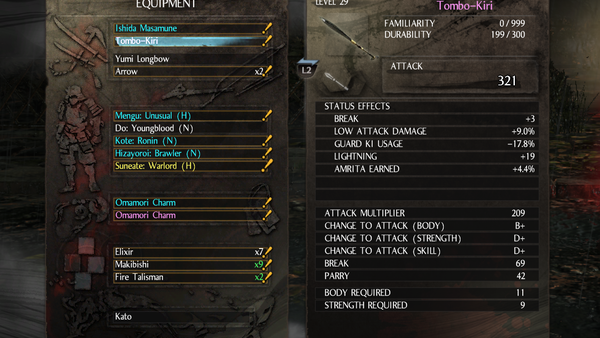
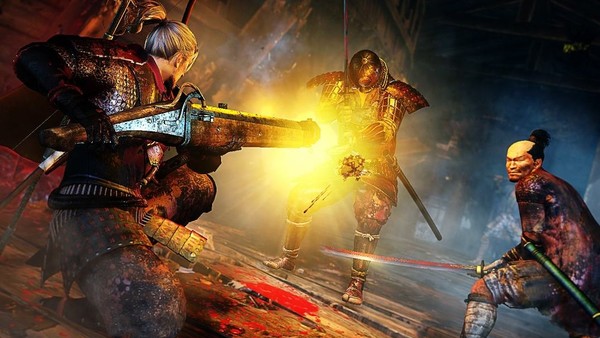
Switch to Nioh, and the range of playstyles, character customisation and upgrade paths are staggering. You've got everything from specialising in certain weapons to upgrading specific kill animations, how best to execute if you get behind someone, what move you can pull off when guarding, whether you want to focus on heavier weapons, ranged, up-close speed, and so on.
Armour especially has a never-ending supply of visual flourish, encompassing everything from traditional samurai shoulder pads to bandage-wrapped hands and a loose shirt n' pants combo. After 30 hours with Nioh, your character will look and act completely differently to when you began, whereas in For Honor, it'll be the exact same, albeit played more confidently, and with a nice sundial on their head.
3. Art Design Is F*cking Incredible
Ubisoft did a solid job with For Honor, taking some of the most well-worn archetypes in human history and putting their own spin on them, thanks to heavily customisable colour patterns, ornate armour shapes and landscapes peppered with pockets of primary colour.
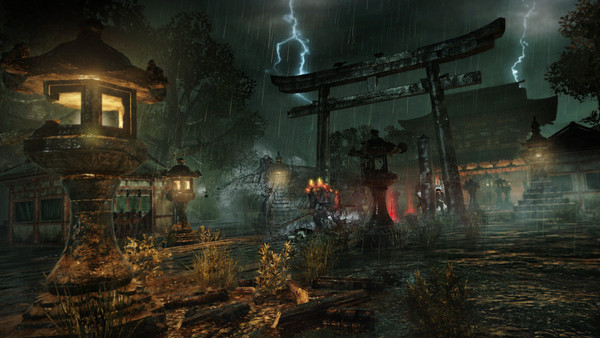
That said, there's a difference between art design, and art direction. In Nioh's case, the latter has gone down a far more Onimusha-esque route, revitalising the feudal lands of Japan as both a demon-infested hellscape, and a tribute to decades of eastern cinema.
Traditional eastern architecture still ensures a sense of world geography, but it's in the crumbling pagodas, the lightning-kissed temples and the occasional duel with an opponent in a windswept field of wheatgrass, that'll really take your breath away.
2. No Egregious Microtransactions Or Money-Grubbing

Despite Ubi ensuring that all gear is bound to your character level - meaning you can't 'pay to win' by purchasing anything outside your wheelhouse, there are still some very troubling elements that make just playing For Honor egregiously 'money-grubby'.
I've covered the notion of duplicates coming from blind boxes - something you literally shouldn't get if you've paid additional cash to unlock them - but there's also 'Champion Status'; a paid-for buff to your account that increases a number of things, including how much XP you gain from fights.
So, whilst you can't 'pay to win' in terms of direct weapon or armour items, you CAN put cash into XP bonuses, before filtering that back into the higher-tier items you want. You'll have to complete matches, sure, but the whole framework feels incredibly corporate, like all the worst components of a 'free to play' game attached to what should be a premium product.
By comparison, Nioh has none of these systems. Its DLC consists of either a series of gifts as thanks for playing the betas beforehand, and a handful of optional story packs that are either part of the Season Pass, or will be available separately anyway.
Mobile gaming payment methods have no place in full price retail games. None whatsoever.
1. WAY More Value For Money

Spend $60/£45 on For Honor, and you'll get an 18-mission single player campaign that lasts around 5-7 hours, but that repeats tutorial pop-ups, as it's pretty much a glorified warmup for multiplayer. You'll also get a handful of maps that frequently repeat, and a combat system that's admittedly brilliant at its core, yet needs to support a far larger multiplayer framework for extended play, and isn't fun enough to do so.
Spend the same on Nioh, and you've got a full, healthy campaign with replayable mission unlocks, scores of weapons and armour components to try, a character to build and make your own, a huge world to explore every nook and cranny of - and free PvP multiplayer coming in a later update.
If For Honor was cheaper, its story more fleshed out or the basic components of what make its combat more numerous, it would stand a chance against one of the industry's most proficient developers taking the last 10 years to perfect one HELL of a return to form.
As it stands, For Honor is good, drop-in, drop-out fun, but it's not worth the current asking price, nor does it stack up to Nioh, the latter being a far more accomplished game in every respect.
--
Have you picked either up? What did you think? Let us know in the comments!