The Rise And Fall Of Star Wars: Battlefront III
What Went Wrong?
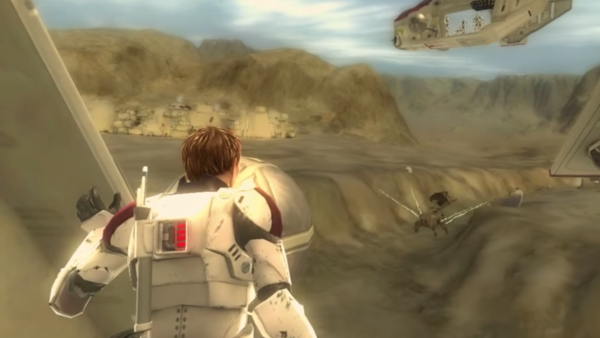
Although rumblings of a third entry in the main Battlefront series had persisted for some time, concrete evidence of the game's development didn't surface until 2008. LucasArts was, for lack of a better term, in turmoil, and employees who had only recently been given the sack took to the internet to divulge the studio's deepest, darkest secrets. Cancellations ran riot at their offices, with plans for a third Knights of the Old Republic game having been shelved in the earliest stages of pre-development, as well as sequels in the Jedi Knight and Republic Commando franchises.
It makes for traumatic reading for any Star Wars fan, but the game that sits atop LucasArts' graveyard is Free Radical's Battlefront III. Conceived in the aftermath of Battlefront II's wildly successful release, and in Pandemic's departure from the franchise, the third Battlefront game was meant to be bigger and bolder, utilising next-gen technology to realise concepts that would've been difficult, if not downright impossible to replicate on older hardware.
Those aforementioned space-to-ground transitions would be the title's biggest selling point, with players being given the option to hop in a starfighter whenever they wanted and, at the push of a button, launch into the atmosphere and take the fight to the nearest Star Destroyer. Thrown in with all of this was an ambitious campaign that would've built upon the foundations of Battlefront II's, taking a cinematic focus wherein a Nolan North-voiced protagonist (or impersonator, we can't quite tell the difference), called 'X-2', would partake in the Clone Wars all the way through to Order 66.
It looked impressive, but Free Radical's game was, for one reason or another, not meant to be. What reason that actually is depends on who you ask, with former LucasArts employees having previously maintained that the reason for the game's cancellation stemmed from Free Radical missing deadlines, and not - as Free Radical's developers claimed - that LucasArts were unwilling to market the game thoroughly due to budgetary concerns.
Irrespective of LucasArts' protestations, the publisher's internal turmoil has long been made public. Steve Ellis, the co-founder of Free Radical, even claimed that the game was completely finished by the time it was eventually cancelled, only having the QA phase to go through before going gold later down the line. It only makes the project's story all that more tragic, and while there are countless other titles that were lost to LucasArts' decline, Battlefront's would appear to be the one that hurts the most.