10 Big Questions Raised By England's World Cup Squad
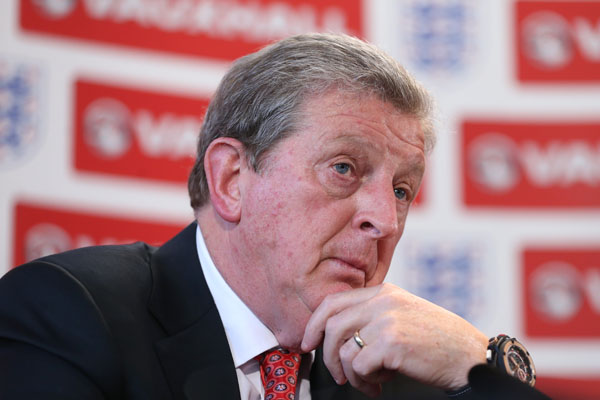
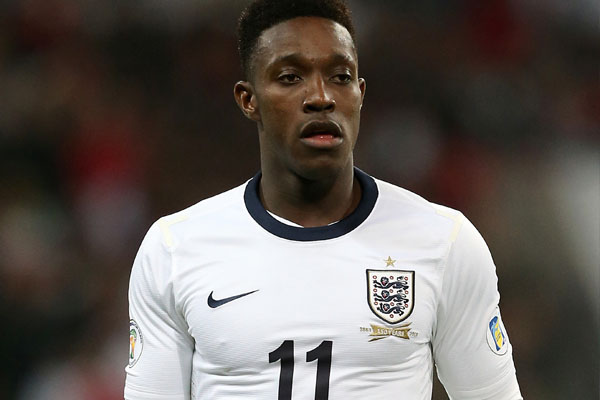
Roy Hodgson last week announced the England squad heading to Brazil next month to compete in the 2014 World Cup. His selections combined old hands such as Steven Gerrard, Frank Lampard and Wayne Rooney with a slew of inexperienced tyros like Everton's Ross Barkley and Southampton's Luke Shaw and Ross Barkley. While the bravery can't be denied, big questions remain over how well the chosen players will fit together as a team and whether now is the right time to be throwing youngsters into the mix. England face an uphill task in even getting out of the group stage once their tournament kicks off in the sweltering humidity of Manaus on June 14th. Their first opponents, Italy, must be considered strong contenders to reach the latter stages of the competition at least, while Uruguay's fearsome attack and Costa Rica's tight defensive unit will require very different strategies to overcome. Have England got the right men for the job, and does the manager have the tactical nous to use them correctly? Read on for the ten biggest questions raised by Hodgson's World Cup selection.

10. What Formation Will Hodgson Play?
Perhaps even more important than the players themselves is the shape Hodgson organises them into when they finally take to the field. The good news is that England have looked more tactically versatile since their rigid 4-4-2 was pinned back by Andrea Pirlo at Euro 2012. While England looked short of ideas in the early stages of the qualifying rounds, Hodgson gradually got his players more confident on the ball and able to adapt to the strengths and weaknesses of their opponents. Poland and Montenegro may be several steps behind the opponents lying in wait at the World Cup, but England needed to beat them to secure qualification and did so in relative comfort, which has not always been the case in big games. Subsequent friendly losses to Germany and Chile weren't encouraging, but both saw Hodgson experimenting with his side and hopefully, lessons have been learnt. Hodgson seems to have settled on swapping between a 4-2-3-1 and a 4-3-3 depending on the opponent. The 4-3-3 seems best suited to the players Hodgson has selected, with a trio of midfielders providing ample protection for the slightly weak back line - more on that in a moment - and allows Sterling and Sturridge to use their pace and trickery as inside forwards on the flanks and Rooney to collect the ball from deep and charge forwards into space with options on either side of him. The 4-2-3-1 is a more attacking option, though risks leaving the back four vulnerable given England's lack of natural pivot players. The tactic could be used effectively against more defensive opponents like Costa Rica, however, but would require a strong centre forward to disrupt their back line and allow the three players behind to exploit the gaps with runs from deep.

9. Are The Defenders A Good Fit For Each Other?
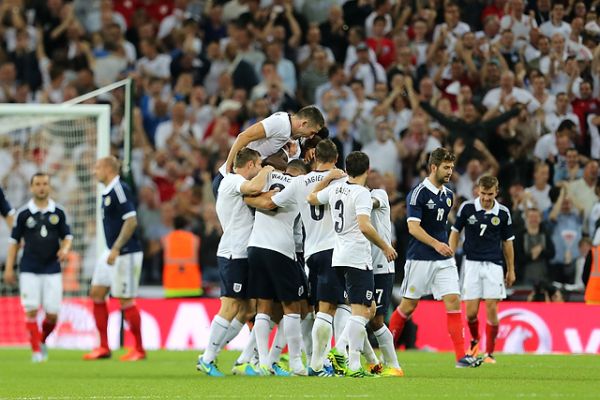
Perhaps the most worrisome part of Hodgson's squad selection is the lack of strength and depth in the defensive positions. With only one specialist right-back, and not an especially defence-minded one at that, and a total of seven choices instead of the expected eight (allowing two players for each position), England are looking distinctly frail in an area they have often relied upon to bail out their inconsistencies further up the field. On the plus side, Hodgson has a good record for instilling defensive discipline into his sides. On the downside, the options he has selected for this World Cup campaign not only look a little short in number and quality, but may not even be a particularly good fit for each other. Gary Cahill is undoubtedly the outstanding defensive player in the squad, having enjoyed a terrific campaign under the tutelage of José Mourinho at Chelsea. However, Hodgson may require him to adopt the role of leader and organiser, a role to which he is not ideally suited. At Chelsea, he relies on the security of John Terry behind him for the freedom to press a little further forward and turn interceptions into counter-attacks. When required to play the deeper role, he has suffered lapses of concentration when it comes to tracking runners. It's a role he can play but is not ideally suited to, and whether the similar Phil Jagielka can offer the security he needs to play his natural game remains to be seen. Neither will be helped by Glen Johnson and Leighton Baines' tendency to push forward at the first opportunity, and while one of the midfielders will surely drop deep to offer additional protection, Hodgson's first choice back four is looking more of a rag-tag assembly than cohesive unit. The back-up options aren't much more inspiring, with Smalling having endured a rough season at United - and never having looked particularly good at right-back, where he will be expected to fill in should Johnson pick up an injury - and Phil Jones yet to fully settle into his game. While a less talented defender than Jagielka, one has to wonder whether Joleon Lescott - who has played only eight fewer games this season than his Everton counterpart, with four of them in the Champions League - would have been a better fit as a covering partner for Cahill.

8. What Role Will Steven Gerrard Play?
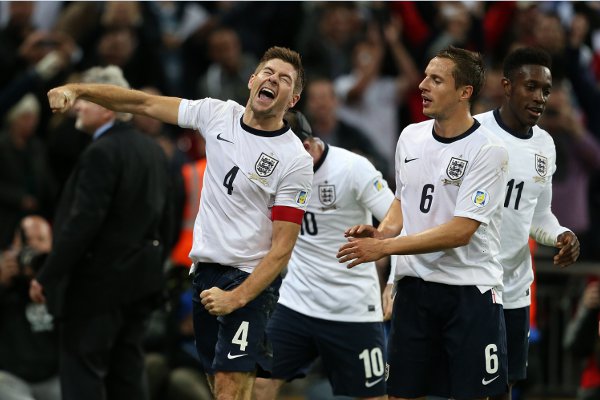
Perhaps the most important question surrounding England's World Cup campaign revolves around captain Steven Gerrard, whom it is safe to assume will be a guaranteed starter for any games he is fit for. Infamous slip against Chelsea aside, Gerrard enjoyed a revelatory season at Liverpool and was the driving force behind his team's unexpected challenge for the title. In theory this bodes well for England, except much depends on whether Roy Hodgson has been taking notes on the very specific, and different, way in which Liverpool manager Brendan Rodgers has been deploying his captain in order to get the most out of him in his twilight years. Gerrard has typically been fielded in an attacking role for England, driving the play forward with late runs towards the penalty area. It's a role which has generally suited him, despite his diminishing mobility in recent years. That's no surprise given he will be 34 by the time the World Cup gets underway, but expecting someone of his age to play such a high energy role for 90 minutes in the heat and humidity of Brazil seems a gamble unlikely to pay off. Instead, Hodgson would be wise to consider the deeper role Gerrard plays for Liverpool, providing a shield for the back four whilst orchestrating the play with his long range passing ability. Given there is no other viable option for the holding role in England's squad apart from Phil Jones, who is not a natural in the position, moving Gerrard further back could allow him to fulfil a similar role for England as Pirlo does for Italy, reducing the need for his ageing legs to do too much running whilst taking advantage of his excellent organisational ability and instinctive capacity for reading the game. Hodgson has shown himself to be a surprisingly adaptable tactician before and the manner in which he decides to deploy his captain at the World Cup could be a make-or-break call for England's chances.

7. Who Will Be Our Starting Midfielders?
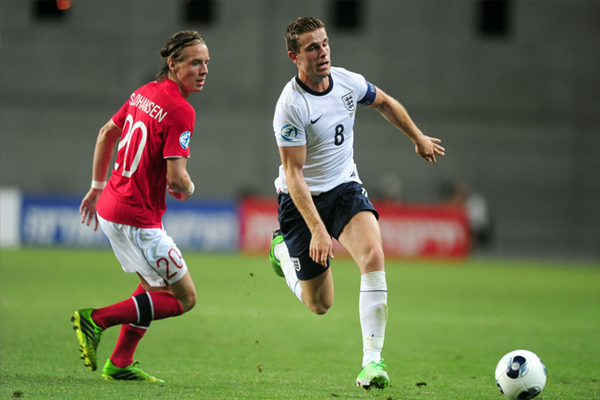
We can be sure that Gerrard is a guaranteed starter for England barring injury, but the identity of those who will be playing alongside him remains an unknown factor. In England's last competitive game, against Poland in October 2013, Gerrard played alongside Michael Carrick, who is not in Hodgson's first choice squad, and Andros Townsend, absent altogether. Subsequent friendlies against Denmark, Germany and Chile saw a variety of midfield combinations used as Hodgson took the opportunity to experiment. Let's assume Hodgson will play in the 4-2-3-1 or 4-3-3 formations previously mentioned, in which case there will be two further midfield slots to be filled. For the sake of optimism, let's assume Gerrard will adopt the deeper role he has been playing for Liverpool, meaning the other two midfielders will be slightly more forward-thinking. Jack Wilshere seems an extremely likely choice as Hodgson has spoken positively about him in the past as a key player for England. The remaining position will likely be contested by Alex Oxlade-Chamberlain or Jordan Henderson depending on whether Hodgson wishes to emphasize midfield solidity or offensive threat. Adam Lallana could be a wild card in the No.10 role of the 4-2-3-1, but will most likely join Frank Lampard and Ross Barkley on the bench. My problem here is with Wilshere, who is coming off a succession of injuries and has not played particularly well during his time on the field this season. The playing conditions in Brazil will require huge physical exertion and it remains to be seen whether Wilshere is up to it. Fielding an unfit player, no matter how talented, is always a major risk and Wilshere can appear fragile even when fully fit. There's no doubt as to his potential, but this may not be the right stage for him, especially when the indefatigable Jordan Henderson is in such a rich vein of form and has shown such a strong understanding with Gerrard.

6. Who Will Start Up Front?

It's a safe bet to say Rooney and Sturridge will play major roles in England's front line, although where they end up playing will very much depend on the formation. In a 4-2-3-1, Rooney could feature in the deeper central role while Sturridge leads the line, while in a 4-3-3 it's more likely that Sturridge will be pushed out wide while Rooney spearheads the attack. A 4-4-2 is also a possibility, with Sturridge and Rooney playing as a pair and supported by two wide players from midfield, with Sterling and Oxlade-Chamberlain most likely. This however seems risky as it would mean sacrificing midfield integrity when England's passing has never been especially consistent, allowing the possibility of being overwhelmed on counter-attacks through the centre. The third attacking position could go to Raheem Sterling, who plays in the same team as Gerrard and Sturridge and has seen a drastic improvement in form since the turn of the year. Hodgson could balk at his inexperience and lack of discipline though, favouring Danny Welbeck for his willingness to provide protection for Leighton Baines' overlapping runs. The problem is that Welbeck has struggled to get football even during a season where almost everyone at Man Utd underperformed, and he lacks the directness and speed that Sterling offers in abundance. As with so many other players, much will depend on how well Sterling takes to the conditions: he could easily exhaust himself unless he learns to temper his constant running. Nevertheless, whomever Hodgson selects will be an instructive indication of his approach to the competition.

5. Was It Wise To Leave Ashley Cole At Home?
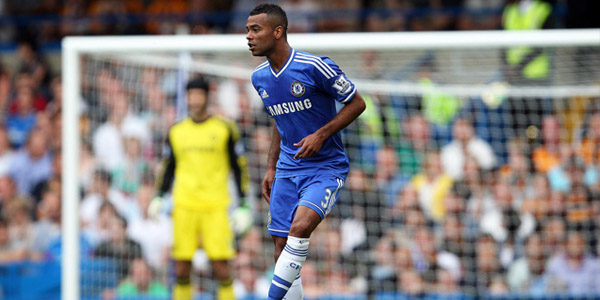
The biggest talking point since Hodgson announced his squad has been the selection of a number of young players ahead of established seniors. The most controversial example of this was the choice of 18-year old Southampton left back, Luke Shaw, ahead of veteran Ashley Cole, who immediately announced his international retirement on 107 caps. It was a bold move by Hodgson, but whether it was a wise one remains highly debatable. Cole may not have played too often for Chelsea this season, but got a couple of games in the final fixtures and showed himself to be in decent form. He may not be the player he once was, but is still defensively reliable even if his attacking abilities have waned. Luke Shaw is a player full of promise, but still unrefined in many aspects of his game and, like Baines, not always as dependable in his defensive work as he needs to be. He'll almost certainly be an outstanding player in the future, but isn't there yet and his lack of experience could be a major impediment if an injury to Baines means England need to rely on him, a teenager who has never experienced the pressure of football on anything bigger than the domestic stage. Throwing such a young man into the pressure cooker of the biggest competition in world football feels like a disaster waiting to happen. It's possible he could show his maturity and overcome the challenge with ease, but we've seen enough players collapse under the weight of expectation to know this could be a case of too much, too soon even for this most gifted youngster. Cole deserved one last chance at an international competition, even in a back-up role, and would offer a defensive alternative to Baines and the experience and cunning to handle world class opponents.

4. Will Hodgson Regret Not Blooding The Youngsters Earlier?
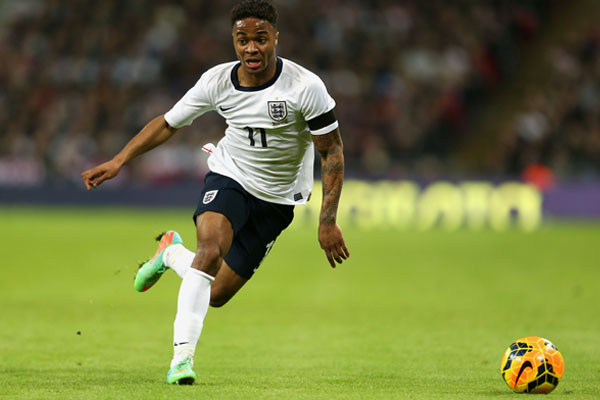
If Hodgson has known the majority of his England squad for as long as he says he has, it's strange how few of the young players selected were given the opportunity to get some international experience under their belts before being called up for a competition as important as the World Cup. Phil Jones, Luke Shaw, Jordan Henderson, Ross Barkley and Raheem Sterling have fewer than ten caps apiece - Sterling, Barkley and Shaw each have three or fewer - and even pivotal players like Daniel Sturridge, Alex Oxlade-Chamberlain and Jack Wilshere have only 10, 14 and 15 caps respectively. That inexperience could allow the players to go into the competition free from the burden of expectation which has weighed heavily on England's pitiful previous attempts at international silverware, but it seems strange that Hodgson would not have given them at least a few more opportunities to get acclimatised to the different style and pace of international football. Being picked ahead of senior players comes with its own set of responsibilities, especially when there have been few opportunties for the players to show they belong on this stage, so Hodgson could simply have replaced one set of pressures with another. This is likely to be a particularly intense tournament for the players, not only because of the weather but also how finely balanced the differences between the major sides are, making it unlikely that even the biggest teams will be taking a safety first approach. Experience and patience will count for a lot if the players find themselves tied at 0-0 in an important game with ten minutes to go: even the acclaimed young Germany team of the 2010 World Cup and Euro 2012 never made it past the semis.

3. And Will We Actually See Any Of Them?
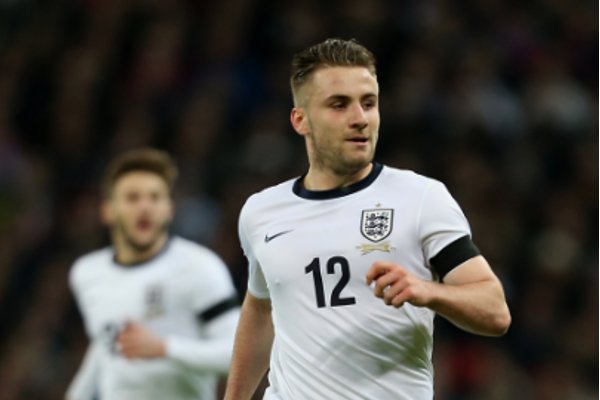
Of course, it's all very well picking so many youngsters, but it'd only bear an uncomfortable echo of Sven Goran Eriksson's selection of a 17-year old Theo Walcott in 2006 'for the experience' if none of them actually got any playing time. Hodgson has packed so many inexperienced players into his squad that he'd be hard-pressed to ignore all of them, but it will be interesting to see which ones are trusted with significant time on the field and which are merely offered token cameos from the bench. Of the players listed on the previous page, Raheem Sterling seems the most likely to get starts given his excellent form for Liverpool and existing partnership with Daniel Sturridge. Hodgson will want to take advantage of having two-thirds of the deadliest front line in the Premier League at his disposal, and while Sterling may not start every game, he's certainly a strong contender given how much he's improved over the preceding season. Adam Lallana's good form has also seen him gather a groundswell of support for a starting place, but seems much more likely to be an option from the bench. England has good depth in midfield and it's hard to imagine him pushing out the likes of Oxlade-Chamberlain or Rooney in the attacking central midfield role he's made his own at Southampton. Similarly, Luke Shaw seems almost certain to sit out most of this World Cup unless Leighton Baines is injured. He may get a game against Costa Rica if the team has already qualified and Baines needs a rest, but even then it seems unlikely. Ross Barkley's situation is the most difficult to ascertain, though I'd put him in a similar boat to Adam Lallana. His talent is obvious, but still raw and it'd be a risk to put him out from the start. Expect to see him off the bench whenever the team needs a more direct, physically imposing replacement for Jack Wilshere though.

2. Has Hodgson Picked The Right Seniors?
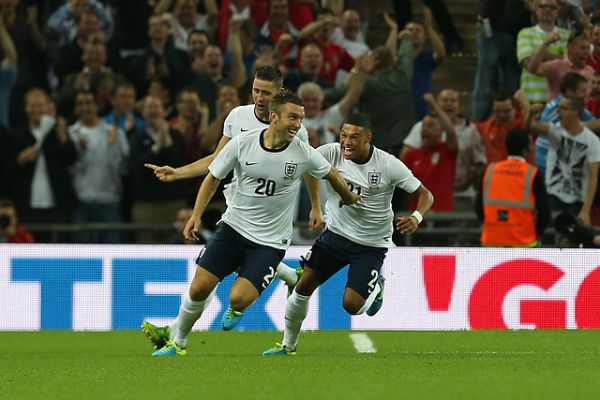
Hodgson's selection of a significant number of youngsters may have so far been the main talking points regarding the squad, but he's been wise enough to include a number of senior internationals to blend a little know-how in among the youthful enthusiasm. While it's fun to speculate on the pros and cons of the squad's younger players, it was no less important for Hodgson to choose the right older players to make their presence felt on the field in more than just experience. In that respect, Hodgson's selection is a little hit-and-miss. I've already explained why Ashley Cole deserved a seat on the plane ahead of Luke Shaw, but while it pains me as a Chelsea fan to say this, the selection of Frank Lampard is considerably more questionable. Lampard is among the best midfielders of his generation, but his recent form for Chelsea has seen a big drop from the season before. The precision passing and shooting which made him such an invaluable offensive asset have lost a few yards of precision and while he was never the quickest, those trademark runs forward have been getting fewer and further between of late. Perhaps the (remote) possibility of winning an international cup in what will surely be his last tournament will motivate him back to form, just as the possibility of becoming Chelsea's all-time top goalscorer did last season. Sending a 35-year old in mixed form to represent his country in the humidity of a Brazilian summer doesn't seem the best idea though, particularly when England already has a decent number of midfield options and his place could have helped pad out the slightly flimsy defensive line. Speaking of which, controversial though it may be, Hodgson should have been begging John Terry to return for one last shot at redemption. Not only has his form been phenomenal this season, but even without the captaincy, he'd be exactly the sort of organiser this England back line needs. His partnership with Cahill has proven near impregnable for Chelsea and he's played many times with Glen Johnson for club and country. Many would argue that he doesn't deserve a third chance, particularly regarding the nature of his most recent alleged offence, but his presence could have exponentially improved England's chances of getting through the group stage at least. On the plus side, Rickie Lambert looks a canny inclusion. His blunt-force strength on the ground and in the air could prove invaluable in disrupting sides like Costa Rica, who are almost certain to pack their defence and make it near impossible for anyone to run or play through them. He may not be glamourous, but is a great bullying centre forward with a good goalscoring pedigree at Premier League level and in his four international appearances to date. If Hodgson is brave enough to use him, he could be a valuable secret weapon for England to have up their sleeves.

1. Will Rooney Perform This Time?

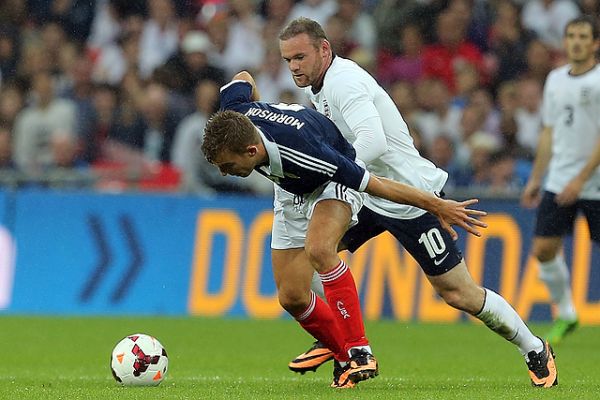
England's 5th highest all-time goalscorer will be carrying more pressure than any other player heading into this World Cup, and unfortunately he's got a history of going to pieces when all eyes are on him. His first international tournament, Euro 2004, was a rousing success and promised great things to come, with England losing much of their gusto and eventually being eliminated when he picked up an injury in the quarter-final against Portugal. Unfortunately, things haven't gone so well since then. His form in qualifiers has generally been good, but the competitions themselves have seen him fail time and time again to live up to his star billing. He was visibly short of match fitness when rushed into action in the 2006 World Cup, but that was no excuse for the stamp on Ricardo Carvalho which saw him sent off and England once again eliminated at the quarter final stage against Portugal. Despite being top scorer in the qualifying rounds for the 2010 World Cup, Rooney failed to get on the scoresheet in the tournament and England were eliminated 4-1 to Germany in the second round after a series of dismal performances, including draws against the USA and Algeria. He did score at Euro 2012, a match-winning goal in the final group game against Ukraine and a penalty in the deciding shootout vs Italy, but his overall performances were criticised by the media and his manager, Fabio Capello. So which Rooney will show up for World Cup 2014? Given his long-standing history of only performing in optimal conditions, the signs are not encouraging. He's had a decent year for Man Utd but not an outstanding one, scoring 19 goals in 40 appearances. His fitness remains a matter of some concern and he'll be joining the squad coming off yet another injury. If he can keep his cool in the Brazilian heat, he can probably bag a few goals. All my hopes are on Sturridge, though.

In this post: 
Roy Hodgson
 
Posted On: 
Contributor
Contributor

28-year old English writer with a borderline obsessive passion for films, videogames, Chelsea FC, incomprehensible words and indefensible puns. Follow me on Twitter if you like infrequent outbursts of absolute drivel.