10 Disturbing Doctor Who Implications You Totally Missed
We've got some VERY bad news about Rose and the Metacrisis Doctor...

In The Face of Evil, the Fourth Doctor was forced to reckon with the consequences of his actions on the planet of the Sevateem. It's a great Doctor Who story that introduced the idea that our hero doesn't always do their due diligence when they're saving the day.
We can see this in multiple Doctor Who episodes that contain dark implications about what the Doctor is doing, or how the situation emerged in the first place.
Later developments in Doctor Who canon also provide some pretty dark implications when rewatching old episodes. If Sutekh was clinging to the TARDIS for 50 years, then did he hold hands with Captain Jack during Utopia? And what happened when the TARDIS exploded in Frontios? Dog guts all over the place?
Dark implications can also come from the fact that Doctor Who is primarily aimed at a younger audience, meaning that writers have to pull back from explicitly mentioning certain plot points. For example, the moment we discover how abhorrent Roger ap Gwilliam is in 73 Yards, when it's heavily implied that Ruby's colleague has been sexually assaulted.
Doctor Who has so many of these dark moments hidden within, that the full horror can sometimes be easy to miss.
10. The Vashta Nerada Are Everywhere On Earth

The Vashta Nerada have made a big impression since their debut over 16 years ago.
They've appeared in audio dramas, video games, and comics in the years since Silence in the Library and Forest of the Dead aired, but they've never returned to the TV show itself – despite Steven Moffat having sneakily sown the seeds for a potential Doctor versus Vashta Nerada rematch.
While describing his hungry foe to Donna, the Tenth Doctor explains that the Vashta Nerada don't just exist in the Library – they also exist on Earth. He says:
"Where there's meat, there's Vashta Nerada. You can see them sometimes, if you look. The dust in sunbeams."
Cheers Doctor, that makes it much easier to sleep at night!
The dust in sunbeams containing Vashta Nerada is a terrifying concept that feels like prime sequel material. A dusty old house, with sunlight streaming through the gaps in the shutters to expose the carniverous creatures lying in wait. Pass through the wrong types of sunbeams and you'll have the flesh torn from your body. And then, when the lights are off, they seamlessly become the shadows and continue their hunt.
It's a chilling revelation that exposes how shockingly widespread the Vashta Nerada are on our home planet. Night or day, nobody is safe from the piranhas of the air!
9. Why The Doctor Has The Memory Worm

In The Snowmen, the Doctor and Strax try (and fail) to use a memory worm to erase Victorian Clara's memories of their encounter.
Over the years, many fans have noted how interesting it is that the Doctor owns this mind-wiping insect directly after he's just lost Amy and Rory. The Doctor's request for Strax to "get the worm" is evidence of its prior use, and it's clearly something that's been used often, as the Doctor and Strax approach the wiping of Clara's memories as a routine task.
It's possible that the memory worm is actually something from Madame Vastra's collection, used to hide her identity as a lizard woman from the dawn of time. After all, she's later revealed to be aware of Mr Sweet's rare species of red leech. However, the loss of Amy and Rory really hurts the Doctor, and it would be another four regenerations before he became aware of therapy as a viable option for his trauma.
So maybe he has used the memory worm before, to erase the painful memories of the friendships he's just lost, or to clear his mind during his saddest moments.
The Doctor has been in isolation for quite some time when we find him in The Snowmen, and we know what happens when the Doctor is alone. Maybe the memory worm is the reason he didn't go completely off the rails.
8. "There Was A Man There"

The Empty Child is brimming with creepiness and an overwhelming sense of dread. However, one of the most disturbing moments in the episode comes from what's left unsaid, rather than the "are you my Mummy?" catchphrase, or Doctor Constantine's bone-crunching transformation into a gas mask zombie.
The Ninth Doctor gatecrashing the dinner being hosted by Nancy is a fun scene for the most part, particularly the Doctor's gag about Marxism and West End musicals, but there's an incredibly dark moment embedded within.
When the Doctor asks why they all haven't been evacuated, a kid called Alf tells him that he had to leave his temporary home because "there was a man there." It's a very quick line and doesn't even appear to make much sense at face value, but when you stop and think about it, the unpleasant implication is that Alf was horribly mistreated or even abused by the man, which is why he fled his evacuee home.
Worse still, it's revealed that another kid called Ernie suffered something similar, which is why he now lives on the streets of London. It's a really dark moment that suggests a disturbing truth about Alf, Ernie, and some other evacuees – that sleeping rough during Nazi bombing raids is far safer than the very homes that were supposed to protect them.
7. The Zygon Invasion Keeps Happening

Everyone loves to cite the Twelfth Doctor's anti-war speech as both a standout moment of Peter Capaldi's time as the Doctor, and wise words by which we should all define our moral code.
And that's absolutely true, although it is slightly undercut by a line that everyone seems to forget, not least because it's cut from all the YouTube, TikTok, and Instagram clips.
Towards the end of the scene when Kate Stewart says that she won't forget the fact that the Osgood boxes are empty, the Doctor replies, "Well, you've said that the last 15 times".
The last 15 times!? How many times have the Zygons staged an uprising? How many times has the Doctor had to come back to Earth and make that speech? Why doesn't the Doctor see that his little Deal or No Deal setup isn't sustainable in the long term?
Or maybe this is the first time that the Zygons have rebelled against their new arrangement, and the Doctor and Osgood repeated this scenario in that room in the Black Archive until they got the desired result. But even if that was the case, it doesn't say much for the Doctor's ability to stop all-out war between the Zygons and humans if he only gets it right on his sixteenth go.
6. The Powell Estate During Rose's Missing Months

Aliens of London has a pig in a spacesuit and farting aliens, but it also has a pretty traumatic opening where the Ninth Doctor and Rose return to Earth one year too late.
Camille Coduri is brilliant at depicting Jackie's heartbreak and devastation, but it's the stuff implied in Mickey's scenes that are the most disturbing.
Mickey is taken in and questioned by the police five times for a crime he didn't commit. And then as if that weren't traumatic enough, we learn that Jackie had started a whispering campaign about him across the entire Powell Estate, spreading rumours that he was responsible for Rose's disappearance. Mickey refers to getting "stuff through my letterbox" which could be anything from hate mail, to dog mess, to petrol, to god knows what.
Aliens of London shows the Powell Estate to be quite a close-knit community, so you can only imagine how far some people in that community might go to hound out a suspected murderer. It's bleak stuff, and doesn't reflect well on Jackie in the slightest – although it's hard to say how you would feel or act in her situation.
It's amazing that Mickey even saves Jackie from the Slitheen police officer given all she put him through, but at least this meant he wasn't blamed for yet another missing Tyler.
5. Jamie's Fate After The War Games

The ending of the Second Doctor serial The War Games is really quite sad.
Companions Jamie and Zoe are returned to their places of origin having had all their adventures with the Doctor erased from their memories, but while Zoe just gets to go back to work on the Wheel, Jamie is sent back to the highlands of Scotland in the immediate aftermath of the Battle of Culloden.
The last time we see Jamie, he's charging towards a redcoat, brandishing his dagger and screaming a battle cry. Jamie chases the redcoat away... but for how long?
Life for the Highlanders was not a happy one, with soldiers being ordered to burn their houses and lay waste to the lands and property of the rebels. As a member of the rebellion, Jamie would likely have no home to go to, and if he'd been caught, he faced execution, exile, or conscription into the British army.
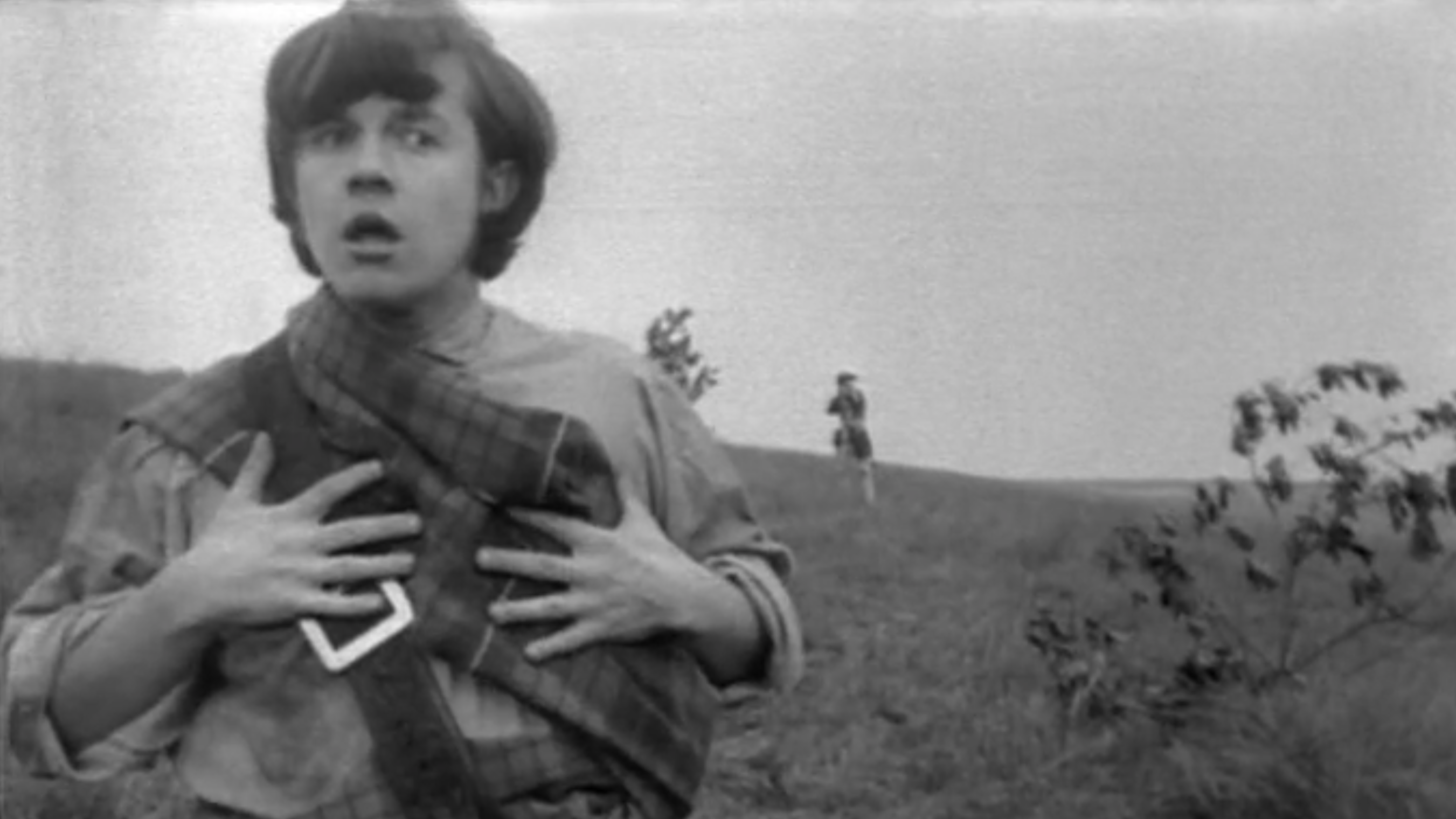
It's an incredibly bleak ending for such a beloved companion, something that's completely at odds with the smile and chuckle from the Second Doctor while he's viewing the footage of Jamie chasing the redcoat.
Thank god for Tales of the TARDIS at least confirming that Jamie survived and grew older, but who knows how many horrors he suffered along the way.
4. Humanity Would Be NOTHING Without The Silence

The Impossible Astronaut and Day of the Moon drops a pretty huge bombshell that, like the Silents themselves, is swiftly forgotten about. And no, we're not talking about the "kill on sight" order that everyone watching the Moon landing has implanted in their brains.
Before the Eleventh Doctor initiates his controversial cleanup plan, there are a few lines that reveal that humanity has been guided by the Silence from the very beginning. The Eleventh Doctor literally says just that, and refers to the creatures as "superparasites", while one of the Silents themselves reveals that they have been in control of planet Earth "since the wheel and the fire".
Forgetting how convoluted it is that humanity goes to the moon purely because the Silence needs a spacesuit for River Song to wear, the fact that these creatures have puppeteered the whole of human history from day one to 1969 says some rather depressing things about our sense of free will.
If everything that humanity achieved in the thousands of years before the Moon landing was entirely in service of the Silence, then have we ever actually achieved anything of our own? Is human history basically just The Truman Show? Is the Silence writing these very words, right now?
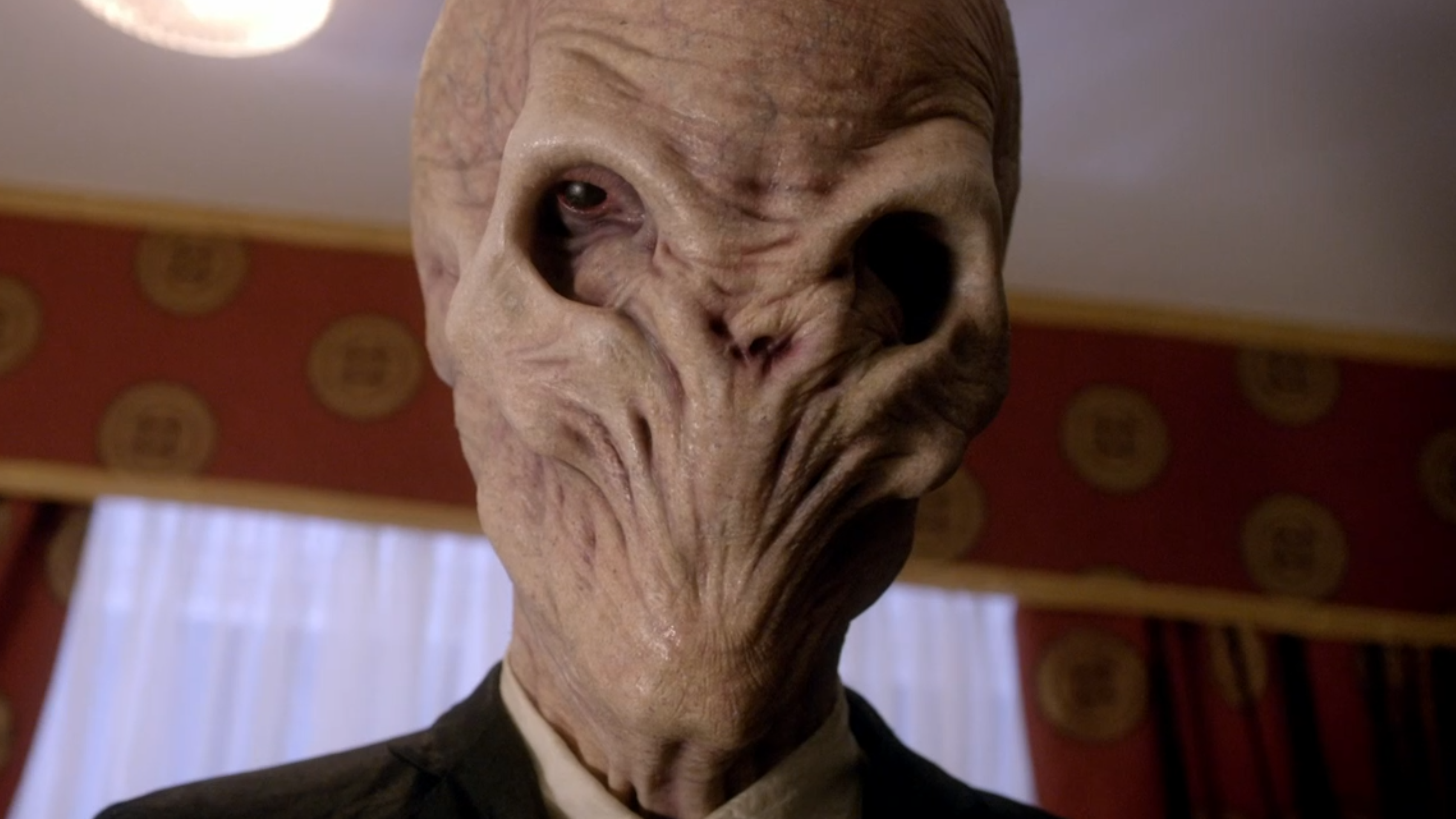
Wait, hang on a second, what happened? Are these... tally marks?
3. Sutekh Killed Rose And The Metacrisis Doctor

As Russell T Davies series finales go, Journey's End isn't nearly as controversial as Empire of Death. These two are connected though, with that most recent season finale having some pretty bleak implications for Rose, the Metacrisis Doctor, and everyone living in Pete's World.
Empire of Death establishes that because Sutekh hitched a lift on the Doctor's TARDIS way back when, he's able to spread his gift of death to everywhere and everywhen that they've visited together. And that doesn't just mean the prime Doctor Who universe, either.
The Doctor's TARDIS has visited Pete's World a few times, most recently at the close of Journey's End when the Tenth Doctor drops off Rose, Jackie, and the Metacrisis Doctor. Which means that Sutekh killed all of them too!
There's even a reused shot from Journey's End of the TARDIS on Bad Wolf Bay, visible on the Fifteenth Doctor's handheld monitor while Sutekh is bragging about all the Susan Triad minions he's deployed – proof that Pete's World was indeed affected by the Death Wave.
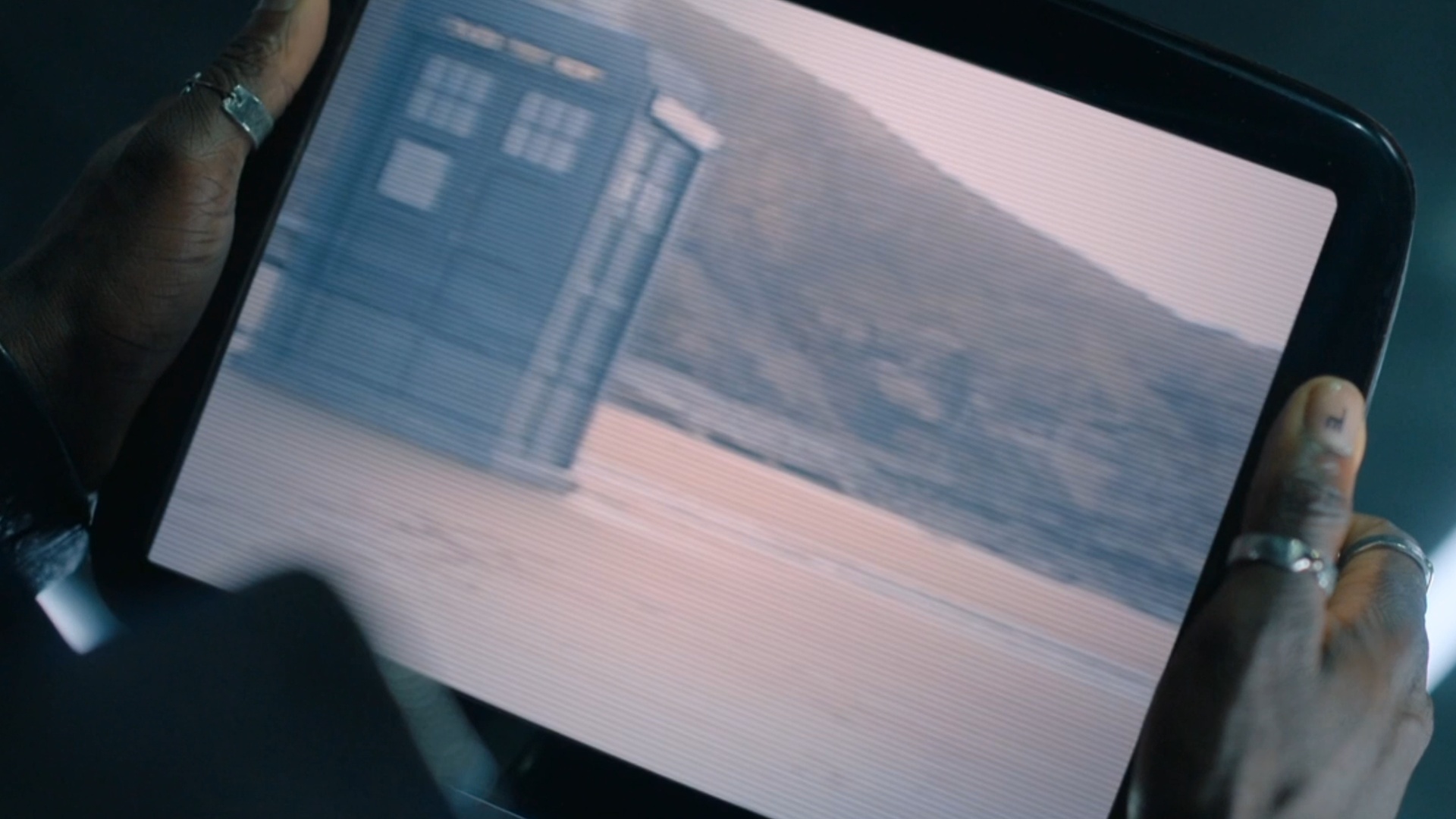
Of course, the damage would have been reset when Ncuti Gatwa took the dog for a walk, but it's still a pretty bleak fate for Rose and her extended family in the meantime.
That's Rose, the Metacrisis Doctor, Jackie, Pete, and their son all turned to dust, 19 years after they first won our hearts.
Wait a minute, 19 YEARS?! Talk about turning to dust.
2. Lucy Saxon's Black Eye

Harold and Lucy Saxon's marriage was always a bit messed up, but it clearly got way worse during Last of the Time Lords' year from hell.
It's easy to miss in some moments, but Lucy Saxon can be seen sporting a pretty nasty-looking black eye during the Series 3 finale, signalling that the Master isn't just a genocidal megalomaniac, he's also a domestic abuser.
The black eye is never mentioned in the script for obvious reasons (too brutal and too real for the kids at home), which is presumably why so many Doctor Who fans completely missed it. With Scissor Sisters dance routines, Dobby Doctors, and the big, bombastic nature of RTD's finales, it's easy to overlook something so subtly handled, but this does provide clear motive for Lucy's murder of the Master at the end of the episode.
This detail also makes The End of Time even more traumatic. A domestic abuse survivor, serving time for killing her abuser and finally reconciling her past and her pain, is forced to watch this monster come back to life. That sort of incredibly dark melodrama isn't out of place on BBC1 on Christmas Day – it's just usually found in EastEnders and not Doctor Who.
1. The Master's 20th Century Escapades

There are a couple of really dark implications in Chris Chibnall's surface-level breezy Series 12 opener Spyfall.
Real-world figure Noor Inayat Khan – the intelligence agent who aids the Doctor in defeating the Master – spent her final days in a concentration camp, adding a real gloominess to the moment where the Thirteenth Doctor wipes Noor's memory and sends her back to work fighting fascism.
On top of this, there's the Master's throwaway line about how tough it is to live through the 20th century, and that he's had to escape from some pretty grim places. This is after the Doctor abandons him to the Nazis by exposing him as a spy, implying that he became a prisoner of war and ended up in a concentration camp, which he then successfully escaped from.
Sure, this is the Master we're talking about. As we've already established in this list, he's the definition of a wrong 'un! But that's still a pretty bleak punishment for the Doctor to force upon her bestest frenemy.
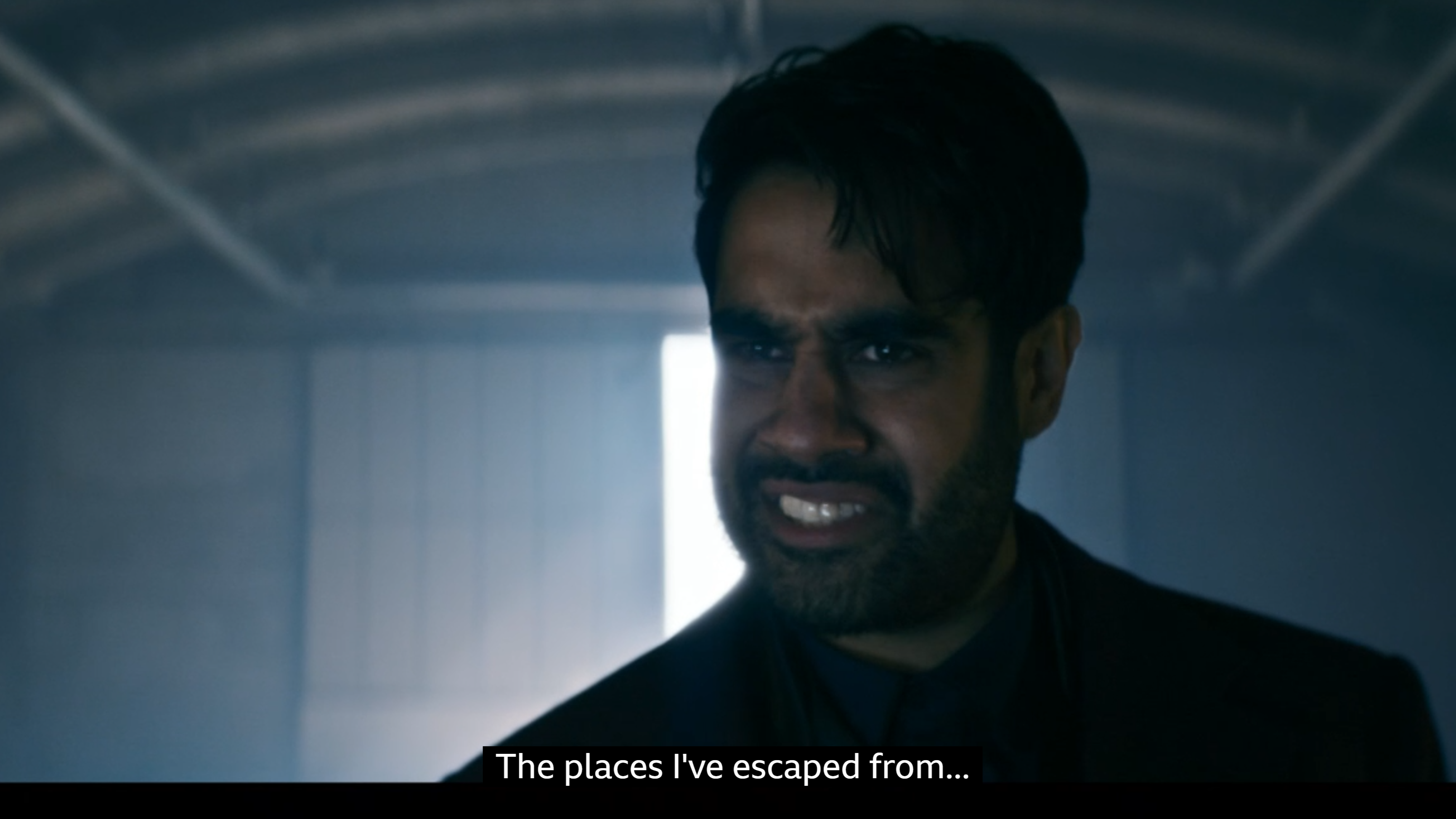
The Master could've ended up facing plenty of other difficult moments between 1943 and the present day too. The partition of India, the Korean and Vietnam wars, Chernobyl – not to mention that mad Christmas Day where everyone wore the face of his previous self!
Did the Spy Master briefly become the Saxon Master? I'm sure Big Finish is making a boxset about that as we speak.