Doctor Who: Every Doctor's BEST Episode
15 Doctors, nearly 900 Doctor Who episodes, and some very difficult choices.
How do you pick the best Doctor Who episode for each of the 15 Doctors?
Well, you don't, for a start, because you can only really judge 14 of them.
Paul McGann only has The TV Movie and Night of the Doctor for us to judge, and so it wouldn't feel fair to place either of those here -especially when we know how many far better examples of his portrayal of the Eighth Doctor are out there on audio. Therefore, we won't be including the Eighth Doctor here, nor will we include other one night only incarnations like The War or Fugitive incarnations.
Taking out the TV Movie still leaves us with nearly 900 episodes. Which of these best sum up a particular Doctor's era? Genesis of the Daleks is often near the top of overall rankings of "best" Doctor Who stories, but it doesn't feel exemplary episode of the Tom Baker era as a whole.
If we're to truly pick the best serial or single episode for each mainline Doctor, we have to focus on those stories that best encapsulate each incarnation, showcase the skills of the actor, and provide an exceptional example of the overall era.
No pressure then...
14. The First Doctor - The Aztecs

The Aztecs is an extraordinary bit of television, from its sumptuous costume design to its exploration of cultural intervention. It also just happens to contain William Hartnell's very best performance as Doctor Who. From his moral outrage at Barbara's plan to interfere in history to his bemusement at becoming engaged, Hartnell nails every ebb and flow of the First Doctor's arc.
The relationship between the Doctor and Barbara is the beating heart of Doctor Who in its early years, and William Hartnell and Jacqueline Hill are terrific here. The way that the Doctor tenderly suggests to Barbara that she's made a subtle difference by saving just one life is a touching moment that reveals to the audience that she's even changed the Doctor's mind when it comes to tampering with time.
It's not for nothing that over 40 years later, The Fires of Pompeii repeated many of the same beats with David Tennant and Catherine Tate!
13. The Second Doctor - The Evil of the Daleks

You can see Patrick Troughton working out what does and doesn't work throughout his first season as the Doctor. His experiments with hats, disguises, and performance styles eventually allow him to perfect the Second Doctor that we know and love. Evil of the Daleks is all the better for this, given that David Whitaker's script demands a Doctor who is every bit as multi-faceted as Patrick Troughton.
Evil of the Daleks allows Troughton to demonstrate multiple layers of the character across all seven episodes; reluctant hero, manipulative schemer and scientific genius.
Troughton balances the Doctor's scientific curiosity with a childlike glee and defines future portryals of the character as he does so. Evil of the Daleks is also an absolute corker of a story, taking us from 1960s London to Skaro, via Victorian Kent. It's the perfect distilation of what Doctor Who is.
12. The Third Doctor - Inferno

If there's a classic Doctor Who story that best sums up any incarnation of the character, it's Inferno. The Third Doctor tries desperately to save the parallel Earth from destruction, even though it's run by a nightmarish fascist regime. Decades later, Ncuti Gatwa's Fifteenth Doctor would do something very similar on the planet Finetime.
However, it's the perfect Third Doctor story because it defines that era purely by showing us what it isn't. The Doctor may feel constrained by his role with UNIT, but by interacting with the fascistic Brigade Leader, he understands that the Brigadier is definitely more of a friend than an enemy.
It's also the Pertwee era story that best taps into his skills as both comedian and actor. The Doctor's wry contempt for the Republican Security Force is delivered by a man who knows exactly how to deliver a punchline or a witty retort.
11. The Fourth Doctor - City of Death

Watching City of Death, it's tempting to believe that Tom Baker knew an ITV strike would make this the most watched Doctor Who story of all time - peaking with 16.1 million for part four. Baker is absolutely electric, perhaps powered by his burgeoning romance with Lalla Ward and a script by Douglas Adams and Graham Williams that practically fizzes with energy.
City of Death has an incredible plot - using time travel to mass produce Mona Lisas - that could easily have become a blockbuster movie. It's indicative of the ambition and high concept ideas that are emblematic of the Tom Baker era.
City of Death also epitomises everything that Tom Baker wanted to bring to Doctor Who - wit, humour, energy - and does so without sacrificing its supporting cast or the gravity of the drama.
It's perfectly balanced, just like a fine wine. Indeed, like wine or Paris in 1979, City of Death has a bouquet.
10. The Fifth Doctor - Caves of Androzani

Not unlike the harassed junior doctors or family patriarchs he'd play in later life, Peter Davison's Fifth Doctor was often a slightly out of his depth victim of circumstance. The Caves of Androzani is therefore the best episode of his era, because it places him the grimmest, most impossible situation imaginable.
This is no longer the Doctor who stood by and let the SIlurians and humans kill each other in Warriors of the Deep, this is a man who will go to hell and back to save a single life. Peter Davison is absolutely brilliant as a Doctor who quickly realises that his idealistic worldview is out of step with the grim realities of Androzani's corporate and military complexes.
Davison is a superb actor, who was sometimes wasted in the role of a thinly characterised Doctor. Thankfully, writer Robert Holmes finally gives him a chance to showcase the nuances of the character in a send-off that's often cited as the very best Doctor Who story.
9. The Sixth Doctor - Vengeance on Varos

The success of Caves of Androzani dictated the tone of the following season, giving rise to grimmer, more violent Doctor Who stories. One of those was Vengeance on Varos, but at least it was attempting to make a comment about violence on screen.
Varos is Colin Baker's finest hour as the Sixth Doctor, as he goes toe to tail with slimy capitalist Sil in his attempts to bring down the planet's corrupt regime. It's an episode that's not without its controversy - the acid bath, the fact that it revels in the very violence it's supposed to condemn - but it does give Colin Baker his best material.
The Sixth Doctor's moral outrage is always something to behold, and there's a lot to go round in a story that features corrupt officials, evil corporations, bizarre genetic experiments, hangings, and dehydrations.
You don't get that on Gogglebox. Thanks Sixie!
8. The Seventh Doctor - The Curse of Fenric

The Curse of Fenric is a hugely atmospheric story that takes in World War 2, biological weapons, impossible chess problems, and evil from the dawn of time. It's also the culmination of various threads that had been left dangling by script editor Andrew Cartmel and his writers from Dragonfire onward.
Overseeing it all is Sylvester McCoy's Seventh Doctor, who is at his most mercurial - striking the perfect balance between clown and chess master. He entertains a baby with birdsong while plotting a final showdown with an ancient evil, and it all flows naturally.
And then, at the very heart of it, is the Doctor and Ace's relationship being put to the ultimate test. It's heartbreaking to watch, all the more because of Sylvester McCoy and Sophie Aldred's very real friendship.
Both performers put in their finest performances to perform a multi-layered script, making Curse of Fenric the gold standard of Seventh Doctor stories.
7. The Ninth Doctor - Dalek

Christopher Eccleston made a name for himself appearing in landmark UK dramas like Cracker, Hillsborough and Our Friends in the North. There's a realism to all of those dramas that are light years away from the heightened reality of Doctor Who. It was therefore a huge surprise when he was cast as the Ninth Doctor in 2004.
And yet, he was fantastic. Eccleston was superb at hinting at the childlike wonder that was hidden behind the gruff exterior of a damaged veteran of the Time War.
It feels reductive, therefore, to single out Dalek as Eccleston's best episode, given that it showcases the intensity that he was known for, rather than his Doctorish qualities.
Dalek lets us in to another side of the Doctor, however, one that we very rarely see. We've seen the Doctor get angry before, but never like this. Eccleston was the perfect actor to tackle this kind of story, and he is utterly spellbinding throughout.
6. The Tenth Doctor - Human Nature/The Family of Blood

If there's a story that best sums up the Tenth Doctor's character, it's Human Nature/The Family of Blood, which is odd because he's hardly in it. Instead, he's replaced by John Smith, an everyday teacher who gets caught in the crossfire when a murderous alien family come looking for the Doctor.
David Tennant's Doctor always felt the most human, and so he was the perfect incarnation to realise Paul Cornell's acclaimed novel as a TV episode. His performance as John Smith is brilliant, celebrating everything that the Tenth Doctor is by showing everything he isn't - slighlty cruel, slightly cowardly.
It's a relief, therefore, when the Doctor returns in an impeccably played scene in which "John Smith" confronts the Family of Blood.
From falling in love to doling out harsh fairytale-like punishments, Human Nature/The Family of Blood perfectly encapsulates every aspect of the Tenth Doctor's character.
5. The Eleventh Doctor - The Pandorica Opens/The Big Bang

Matt Smith's first run is possibly the most consistent season of modern Doctor Who, and the finale is the era's best story. Epic in scope but intimate in execution, The Pandorica Opens/The Big Bang is so confident in its tying up of many of the season's dangling loose ends that you don't notice the very loose knots.
Key to that confidence is Matt Smith, who sells complex timey wimey nonsense as if it's the most normal thing in the world. Smith had hit the ground running as the Doctor, but he takes the character to another level in The Pandorica Opens/The Big Bang. His big Stonehenge speech is obviously the headline moment, but Smith's even stronger when he's desperately pleading with the alliance not to lock him inside the Pandorica.
And then The Big Bang gives us one of the most glorious resolutions of all time with Amy's "something old, something borrowed, something blue" speech.
Sublime.
4. The Twelfth Doctor - Heaven Sent

Tom Baker famously believed that he could carry an entire episode of Doctor Who by himself. But with all due respect to Tom Baker, Peter Capaldi is a much better actor than he is. And so, Peter Capaldi gets to do what Tom didn't - carry an episode of Doctor Who by himself. He even gets to directly address the camera, like Tom used to do!
Heaven Sent is almost entirely focused on Peter Capaldi, as the Twelfth Doctor investigates a mysterious castle while he deals with the loss of Clara and confronts his fears.
Moody, spooky, and tinged with melancholy, Heaven Sent is the sort of Doctor Who episode that Peter Capaldi's casting enabled. His skills as an actor elevated the show, and while attempts to play to his intensity as a performer didn't always land, Heaven Sent absolutely nails it.
Much like Caves of Androzani, you wouldn't want Doctor Who to be like this every week, but you're amazed that this show has something like Heaven Sent in its wheelhouse.
3. The Thirteenth Doctor - The Witchfinders
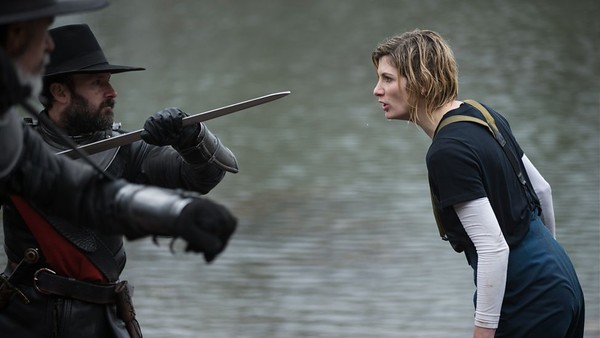
Jodie Whittaker's first series made a conscious effort to explore periods of history that the show had never gone to before. While Rosa and Demons of the Punjab are brilliant, they pale in comparison to The Witchfinders in terms of how they showcase the Thirteenth Doctor.
Originally pitched before Jodie Whittaker was cast, The Witchfinders explores just what it means for the Doctor to be a woman now. It's a story that tackles sexism and misogyny but with the lightness of touch you expect from Doctor Who. There are properly creepy monsters, and some laugh out loud moments courtesy of Alan Cumming and Tosin Cole's awkward partnership.
However, it's Jodie Whittaker who really shines, asserting herself as The Doctor in a world that treats intelligent women with suspicion and contempt. The scene where she emerges from the lake after being dunked is such a brilliant Doctorish moment.
2. The Fourteenth Doctor - Wild Blue Yonder

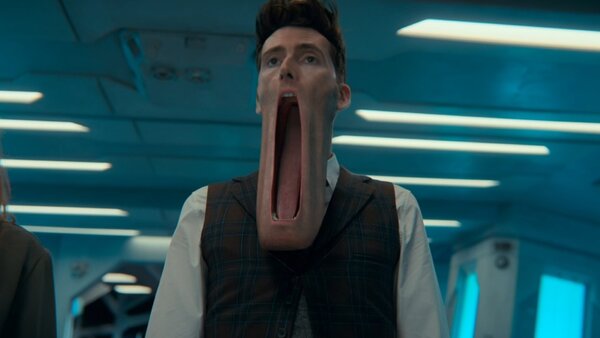
Of the three 60th anniversary specials, Wild Blue Yonder is the one that stands out as its own self-contained story. It also happens to be the best showcase for David Tennant as the older, wearier Fourteenth Doctor. He's incredible here, as the Doctor's scientific curiosity ends up being a hindrance as it also aids his terrifying doppelganger.
Tennant plays both versions of the Doctor brilliantly, with subtle differences and inflections that are heightened by the impressive visual effects. From the wrong arms to the writhing mash-up of Tennant and Tate, the effects are like nothing we've seen on Doctor Who up to that point. Tennant and Tate's chemistry is still incredible, too. The scenes in which the two friends get to catch up with other again anchor this high concept sci-fi story with genuine emotion.
It's such a treat to get more time with the Doctor and Donna, making Wild Blue Yonder the best gift from the 60th birthday celebrations.
1. The Fifteenth Doctor - The Story and the Engine
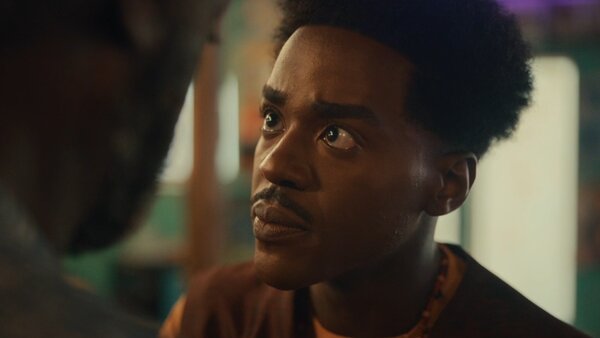
As Heaven Sent and The Witchfinders prove, there's something special about Doctor Who episodes that could only have been written for the incumbent incarnation. Ncuti Gatwa's version of this is Inua Ellams' brilliant The Story and the Engine.
Ncuti Gatwa is brilliant as the Doctor, relishing the chance to sink his teeth into a script that portrays the Doctor as a rounded individual rather than a two-dimensional hero. Whether he's laughing and joking with the locals in Lagos before rounding on an old friend who's betrayed him, Gatwa is the best version of his Doctor. The climactic scenes in which he quietly convinces the villainous Barber to abandon his plan has more power than any big important speech.
It's a story about stories, and Doctor Who in particular, proving that freshening up the line-up of lead actors and writers is what keeps this story neverending.