Doctor Who Review: Before The Flood – 6 Ways The Water Rises And Falls

“Before the Flood” is uneven at best but brilliant individual scenes make this episode well worth watching.
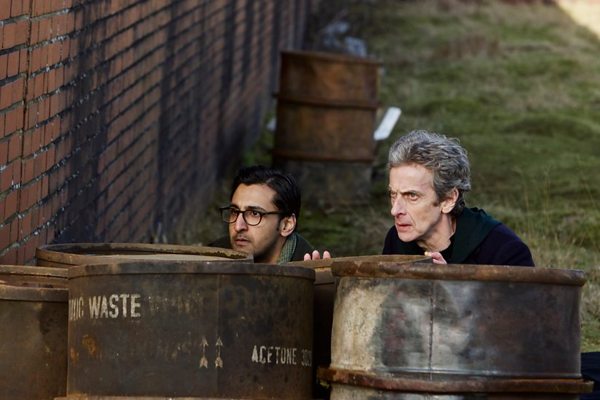
WARNING! SPOILERS: This post contains spoilers and speculation for the Doctor Who series nine episode €œBefore the Flood€. Writer Toby Whitehouse€™s follow up to €œUnder the Lake€ is a bit of an enigma. On the surface it purports to be an old fashioned adventure featuring the Doctor squaring off with a man in a monster suit. But something sly and subversive is taking place between the lines of this thoughtful script. Underneath all the waving of hands and running around there€™s a subtle running commentary on issues of mortality and grief and the consequences of dealing with the reality of our short lives or choosing to deny that death waits for all of us. Unfortunately €œBefore the Flood€ lacks the dramatic tension that made €œUnder the Lake€ so much fun to watch. The Fisher King comes across as more a convenient invention to tie up loose ends than a true figure of horror. The character is simply not strong or interesting enough and the interaction between it and the Doctor falls flat. €œBefore the Flood€ is uneven at best but while it is not entirely successful as a whole there are brilliant individual scenes that make this episode well worth watching. Let€™s talk about how €œBefore the Flood€ rides the waves and then crashes into the surf.

6. The Bootstrap Paradox

It€™s not easy to write a script based around a confusing concept but there are better ways to handle it than tacking on a prolog. While the Doctor€™s monologue about Beethoven is entertaining and educational it doesn€™t fit in with the rest of the story. It€™s also not necessary. There are ways to seed this information into the script so that the audience catches on. The opening sequence felt heavy handed and condescending as if the writer had no faith in the audience€™s ability to understand what was happening. Awkward handling aside, the idea of the bootstrap paradox is a fascinating thing to explore. It€™s appeared in Doctor Who before, most notably in the series three episode €œBlink€ and the series eight episode €œListen€. The concept of a causal loop, where future knowledge creates a past which in turn defines the future is perfect story fodder for a show that is based on the theory of non-linear time.

5. The Ripple Effect

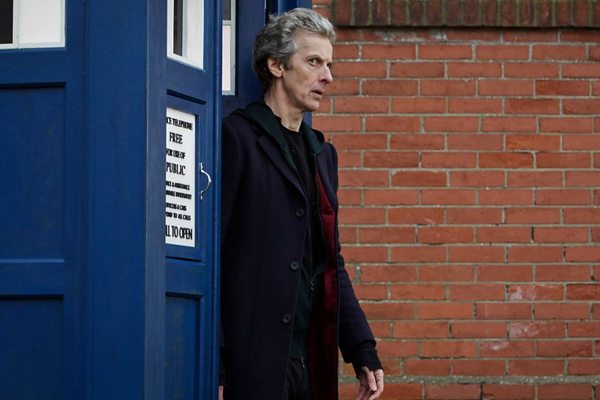
The reason the Doctor does not normally try to go back in time to prevent disasters is apparently because those kinds of changes would send shockwaves throughout the universe. You can€™t alter one thing without it having a domino effect on everything else that happens. The TARDIS knows this and acts to prevent the Doctor from making that mistake. The Doctor knows this also but he€™s willing to break the rules in order to save his friend. Once again we have allusions to €œThe Waters of Mars€ episode and the Time Lord victorious. You might have the power to play god but that doesn€™t mean you should. Time has a way of righting itself when anyone attempts to muck about with it. The Doctor acknowledges this by explaining if you lose someone and go back in time to prevent that all you end up with is conversations with a ghost. Bennett€™s accusations against the Doctor for allowing O€™Donnell to die in order to test a theory echo back to last series€™ €œMummy On The Orient Express€. The Doctor is willing to sacrifice lives in order to solve the problem but he isn€™t so sanguine when the consequences hit closer to home.

4. The Monster Suit

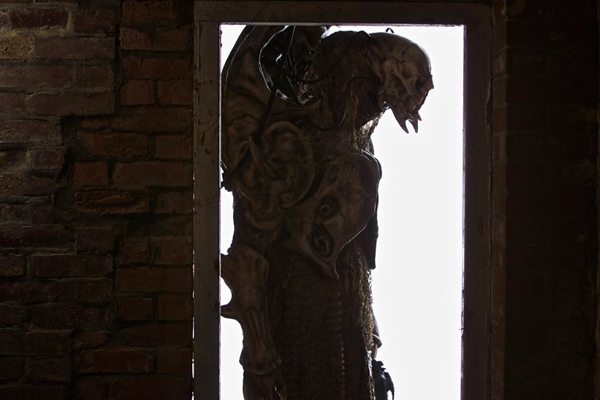
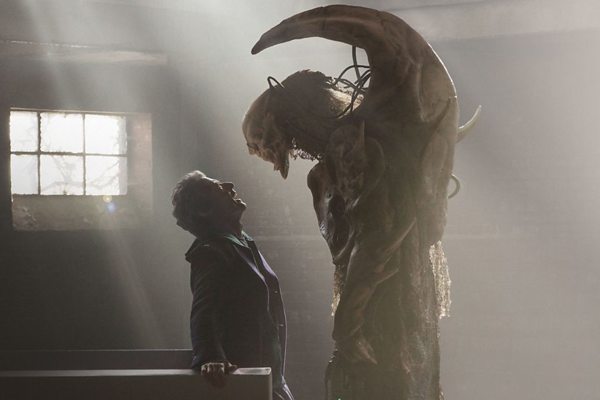
The Fisher King is a well-known figure from Arthurian legend. There are many variations to the story but essentially he is one of the last kings in charge of guarding the holy grail. Drawing on this well established folklore would do so much to alleviate the problems with this character. There is no depth or richness to his villainy as he merely serves as an artificial construct to tie the plot together. There was, however, one intriguing part to his interaction with the Doctor and that is the fact he knew about Time Lords and their part in the Time War. We even hear them derided as €œcowardly vain curators€ in a nice callback to the fiftieth anniversary special. Was this a bit of foreshadowing? Will we be exploring how the Time Lords moved from stagnant bureaucracy to active war? Perhaps we might find out that it was not the fascism of the Daleks that started the trouble but the arrogance of the Time Lords.

3. Going Through The Motions

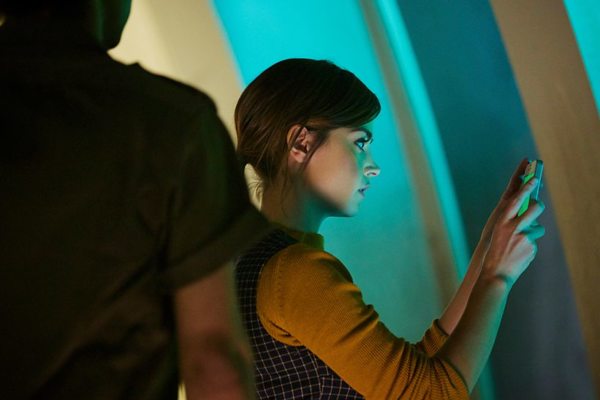
Grief is not something we often experience in Doctor Who though there is much cause for it. Clara, however, is turning out to be a character that is defined by her grief and her inability to come to terms with it. She understands what Bennett is feeling after the loss of O€™Donnell and encourages him to continue on with his life but her delivery of these platitudes feels rote and insincere. It€™s like she€™s reading off the cards she gave the Doctor. She knows this is what she should say in this situation but she€™s not feeling it. Does Clara blame the Doctor for Danny€™s death? It€™s interesting that when she is afraid the Doctor is going to die she rails against him not out of concern for his welfare but more out of her own sense of entitlement. She has stuck with the Doctor even in the face of a grievous loss and he owes her. This sentiment might also come out of her sense of guilt at lying to Danny about the level of her involvement with the Doctor.

2. Bad Vibrations

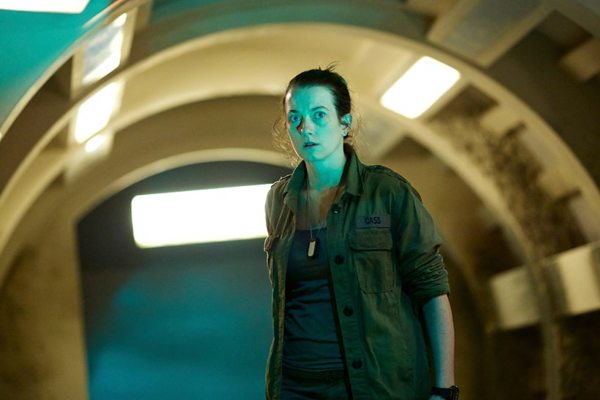
The most beautiful sequence in €œBefore the Flood€ is the quietest one. Cass is deaf and cannot hear the monster behind her dragging the ax. When the soundtrack goes silent every time the camera focuses on Cass€™ face we feel complicit in her fear. But Cass is far from a coward or an idiot. She€™s learned how to adapt in a world without sound and to trust her instincts. She does not hesitate upon feeling the vibrations beneath her feet but turns immediately and barrels her way through the ghost before it has a chance to react. Cass gets her happy ending only because Lunn finally learns not to hold back. This episode is not about monsters it€™s about time and how fleeting human lives are. Lunn seizes the day but Clara never did. She used her relationship with the Doctor as an excuse not to get closer to Danny. Her choice to time travel however is not the problem but rather her dishonesty. She could have shared her life on the TARDIS with Danny. Certainly she could have talked the Doctor into taking him with them but she didn€™t want to. She selfishly wanted to keep everything for herself and I have a feeling she€™s well on her way to losing it all.

1. The Failed Companion

Could Clara€™s journey be that of the failed companion? We€™ve established that an encounter with the Doctor changes a person but that doesn€™t mean it€™s always for the better. In the series eight episode €œInto the Dalek€ Clara calls herself the Doctor€™s carer. He replies €œYeah, my carer. She cares so I don€™t have to.€ But does she care anymore? Every time we see Clara this series she€™s a little bit harder, a little more willing to use other people to achieve her own ends no matter the consequences to their safety. When Cass calls her on this Clara declares €œI€™ve learned from the Doctor how to get done what need to be done.€ Contrast this with Amy from the series seven episode €œA Town Called Mercy€, also written by Toby Whithouse. When the Doctor picks up the gun and decides to become judge, jury and executioner Amy is the voice of reason and compassion. She is the one who brings the Doctor back from the slippery slope of self righteousness. I don€™t believe Clara would have stopped him. She may even have leveled the gun herself. We pick and choose what we take from the lessons we are taught. Amy ended her life as an artist but Clara is well on the way to becoming a general. O€™Donnell references a Minister of War in her conversation with the Doctor, might that turn out to be Clara? While €œBefore the Flood€ is not as solid as the previous three episodes it is filled with intriguing themes and thoughtful commentary. Other than the Fisher King, the characters are well written and well played. The death of O€™Donnell was heart breaking especially since it occurred so soon after her giddy reaction to traveling in the TARDIS. Bennett€™s quiet fury at the Doctor is realistic and thought provoking. Purposeful and character-driven, series nine is a strong one so far and I continue to look forward to what we will see in the future.

Contributor
Contributor

Mary Ogle is the author and illustrator of “Orangeroof Zoo” a whimsical tale of magical realism told through the pages of a coloring book for adults. Working as a professional artist in the digital medium, Mary’s commissions have included everything from fine art to fan art, book cover design, illustration and book layout. Find more of Mary’s work at www.maryogle.com. Mary currently finds inspiration in the Ojai Valley, residing in a snug little cottage with a recalcitrant cat.