15 Exact Moments Wrestlers Died Inside
These guys aren't hungry. Take the food off their table, what do they care?

In both WWE and AEW and everywhere else, actually, you will invariably hear what has become a terrible wrestling cliché.
The professional wrestler of 2025 is very "hungry". They want more opportunities. They're great, and they're determined, but the fans haven't seen them at their best. This phrase is thrown around by the more under-utilised members of the roster, which is ironic; if they're so ravenous, they should make use of the catering facilities nearby which they are stationed on a weekly basis.
This idea, of a frenzied, undying passion for the business, has in fact taken over as the dominant narrative device in mainstream wrestling. It's a monumental shift away from the old carnies selling tickets based on fictionalised hatred. They didn't care about the art - they just wanted to make money - and this approach was arguably better.
In WWE, a stable is led by Seth Rollins and Paul Heyman. Since at time of writing they are yet to be given an official name, let's go with the commonly used 'Seth Riders'. Seth turned heel at WrestleMania 41 because he can't sanction the idea of a volatile disruptor (CM Punk) quitting again, leaving WWE in crisis. Nor can Seth bear the thought of a part-time star (Roman Reigns) waltzing in and out as he pleases. Seth is so passionate about the industry that his cause is to stabilise it. How is making wrestling dependable in any way an interesting story?!
It's not much better over in AEW, with this constant talk of restoring the feeling and saving it from the Death Riders.
Passion this, save that. Everybody cares too much - but not this lot. They couldn't give a damn!
15. Drew McIntyre Sings When He's Losing
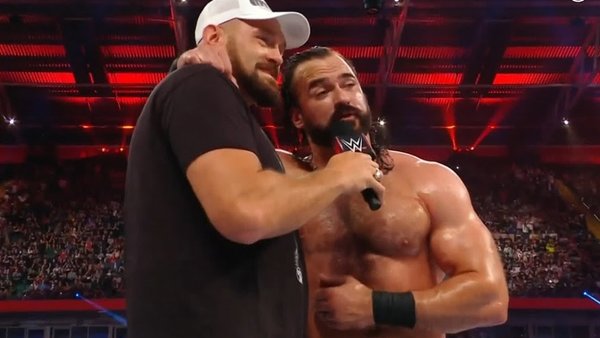
Drew McIntyre might have thought he was going to win at the inaugural WWE Clash At The Castle Premium Live Event.
He was two countries away from where he was born, but it was close enough to Scotland that he might have entertained the thought of a feel-good Universal title win. As much as the actual site of Roman's eventual failure seemed obvious - was it ever happening anywhere other than WrestleMania? - it didn't quite feel that way. In the first sign of a true resurgence, Paul Levesque handled the build brilliantly. The main event of what was also a big stadium show was effectively promoted as the biggest match of McIntyre's career. This was the first masterstroke of Levesque's main roster booker run - and perhaps he needed to deliver a happy ending to allow WWE to further distance itself from Vince McMahon's antagonistic, joyless approach.
This didn't happen, but WWE did a stellar job of convincing you that it might - particularly since they played an abbreviated version of heavily-requested fan favourite 'Broken Dreams' ahead of Drew's real entrance. At the finish of a super-dramatic and elegantly simple, assured main event, Solo Sikoa, revealing himself as the newest member of the Bloodline, screwed Drew out of the belt.
It wasn't all bad for Drew McIntyre. He got the chance to stand next to an actual winner, Tyson Fury, and perform karaoke with him. This was a less than ideal reminder of Vince's "babyfaces love to have fun out there" directive - not that Drew looked like he was having much fun at all.
He sang an Oasis tune, but he looked more in the mood for Sparklehorse.
14. EC3's Fate Is Sealed
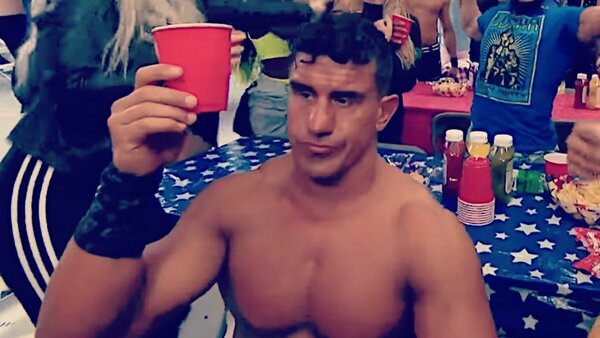
EC3 was one of those ultra-rare cases in the late 2010s, in that he was more likely to succeed on the main roster than NXT.
He debuted when Triple H's easy shortcut era had exposed itself. Triple H would sign a name creating buzz elsewhere, and simply flatter them with decent booking. This, one of the most basic creative practises imaginable, was a massively novelty for a few years because Vince McMahon had wilfully ignored it. By the time EC3 arrived, getting over was a bit more complicated. Fans were accustomed to the shock jump to WWE, and EC3 didn't fit in. He was good on the mic, but stiff and basic in the ring - very far removed from the TakeOver super-worker that had also become normalised.
One of the only wrestlers to stink the gaff out on a Saturday night - his Brooklyn 4 effort against the Velveteen Dream was interminable - EC3 was better suited to the long talking segments and broader in-ring storytelling of Monday Night Raw.
Or at least, he would have been, had he been allowed to talk. "Promoted" to the main roster in early 2019, his presentation was bizarre even by the standards of that absolute mess of a year. He was a guy who could only cut promos that didn't talk. What?
That's like taking Jerry Lawler's punch off him.
EC3 spent much of the year looking utterly dejected, aside from a weird one week deal where Michael Cole described him as a "lethal dose of toxic masculinity". Otherwise, EC3's character was "perennially miserable guy who knows his career is over" - as best captured when he was the only not enjoying the party in June.
13. Kaitlyn Knows It Sucked

NXT was positively awful at its absolute worst, but enough about Adam Cole and Johnny Gargano's Three Stages of Hell match; this entry will instead focus on the all-women's season of NXT during its early phase as a glorified game show.
God, this was ugly. Michael Cole and his various commentary cohorts would basically spend the entire hour giggling, being snarky, amusing themselves, and generally taking the piss out of the women for daring to improve at their craft. This was quite possibly the least effective attempt at promotion ever. But it wasn't an attempt at promotion. It was banter for the boy's club masquerading as a web series.
The first two seasons were hardly Bruno Sammartino Vs. Larry Zbysko. Cole et al. clearly delighted in mocking the "rookies" who were sent out there to drown to see if they could somehow still afloat. But the misogyny rife in the third season was horrendous. At least Cole thought the male rookies were merely bad; he could scarcely believe that the women were even trying to wrestle. CM Punk, incidentally, was his guest once. He might have genuinely changed, but he didn't come off as supporter of women's wrestling when he did an ironic Jim Ross voice to mock "the damndest spear I ever seen".
In the most infamous match of the season, during which Cole was so sure it was going to be worthless that he took a phone call during it, Kaitlyn lost to Maxine. It was botched beyond belief because neither wrestler had any business being in the ring. Kaitlyn knew it.
Seeing her roll her eyes in embarrassment as soon as the bell sounded was real bleak.
12. Steve Austin Knows It's Over
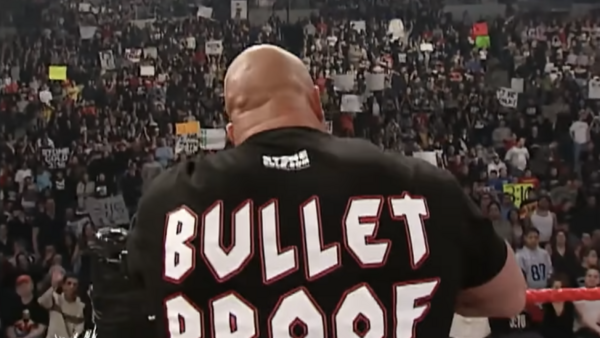
What you might not remember about the otherwise seminal The Rock Vs. Steve Austin feud is that the last chapter wasn't amazing.
It is primarily remembered for the 'Rock Concert' segment. It was as great as you remember; genuinely witty and performed by a master crowd manipulator, the Rock glowed with megastar charisma throughout. He'd never been better on the mic or as a presence, and the fans genuinely resented him for it. He was at his very best on an individual basis. WWE, in parallel, was in significant creative decline - and Rock was leaving you all behind, and almost deliriously happy to see you go.
Everything else was a tinny recording of the Greatest Hits. Austin's big return to the arena at the end of the show was more contrived and less spectacular than it was a few short years prior.
The match at WrestleMania XIX was best described as "worthy" and "admirable" as opposed to something truly great. That might be because a completely thrashed and recently hospitalised Steve Austin could barely get through it; the Rock spent almost the entire match clowning and stooging like he was on the last night of an exhausting European tour.
Even before that infamous hospital trip, Austin seemed to know he was done, if you re-watch his big Raw return carefully enough. At times, he turns his back on the hard camera and slumps over the ropes, as if he is literally unable to face the music. He repeats certain phrases from his famed King Of The Ring promo, but taking his own advice in the 2001 Jim Ross sit-down, he takes the bass out of his voice.
11. The Rock Gets Gotten-To

The Rock is a very strange guy.
He was one of the few wrestlers of his day who expressed little interest in making his opponents look weak. Steve Austin had that in him - he didn't take Triple H too seriously in 1999 - and the glorified kicked cat that is Paul Levesque spent the next couple of decades following that example. Trips was so paranoid it's a wonder his little throne wasn't made of tinfoil. The Undertaker was a nightmare for this sort of thing, too. Re-watch his match against Kurt Angle at Fully Loaded 2000. 'Taker might as well be in there with Just Joe. Rock, however, was almost sporting about this sort of thing. Perhaps he felt he had sufficiently ridiculed his opponents on the microphone. So when did he turn into such a defensive, insecure freak? Was it Hollywood?
He was drafted back in when WWE wanted him to endorse Roman Reigns at the 2015 Royal Rumble. WWE expected the top babyface to get jeered mercilessly (which was somewhat of a clue that Roman Reigns should not have been the top babyface).
Astonishingly, this masterplan did not work. It didn't matter that Roman was cousins and pals with the Rock. If wrestling fans cared about who the performers are friends with, they'd literally all be cancelled!
Look at Rock's face in this "exclusive" backstage promo, man (pictured). He is raging with Godlike hubris about the crowd's ungrateful reaction. He had blessed them with his presence, and they turned on him.
10. Braden Walker Has Made A Terrible Mistake

In the 2000s, WWE was at its dirt-worst. There was no boom period in sight for WWE's monopoly. The lack of competition fostered a punishing, stale product. Triple H headlined more pay-per-views than any other wrestler. It was dystopian.
WWE is hardly Jim Crockett Promotions in 2025, but back then, the reviled "ex-soap opera writers" were pitching the worst material imaginable so that they could go about their day without Vince McMahon abusing them. The writers knew the game: Vince was amused by awful comedy, and he didn't much care for talents who had made their name elsewhere.
Write unfunny stuff to appease him, don't endorse no outsiders, and cash the cheque.
Braden Walker - a TNA standout with an unremarkable look as Chris Harris - was thus doomed. Why he was hired in the first place, God only knows. But he was. He played a man who told jokes without a shred of comedic timing. Walker died inside and out the second he sauntered up to Armando Estrada and said "Knock knock."
"Who's there?" Estrada replied.
"Braden Walker. And I'm gonna knock your brains out," Walker said, visibly seething at the state of his life. This is a man who knew his fate so precisely that he even made his entrance with his hands on his hips, showing ruthless passive aggression.
The Braden Walker era lasted all of a month, and all but killed his career - but it's not as if he'd have fared much better if he was brought in under his TNA persona. If somebody were cutting a promo back at him, they'd say "Wildcat?
More like, Tame mouse!"
Because WWE's scripting was terrible.
9. Bayley Stans The Wrong Company

The Vince McMahon brain decay era had a way of defeating its talent offscreen while they went 50/50 on it.
In a peak of this development, the system battered the spirit of Bayley in 2017, and it was particularly depressing. An undying spirit is what got Bayley so over two years prior.
Bayley was booked to lose to Alexa Bliss in a Kendo Stick On A Pole match at Extreme Rules. This was a disaster in which the Bayley character, a WWE super-fan, would not use a weapon to win. She wanted to win the right way, or something. The same wrestler who delivered brutal vengeance to Sasha Banks in NXT. Some super-fan, eh?
Did she not watch any Hell In A Cell, Steel Cage, Ladder, TLC, Tables, Street Fight, Last Man Standing, I Quit, No Disqualification, Boiler Room Brawl, Strap, Biker Chain, Falls Count Anywhere, First Blood, Bar Room Brawl, Parking Lot Brawl, Dumpster, or Punjabi Prison matches?
Bayley simply had to know that she'd have to use a weapon eventually, but she didn't, thus depicting her as a wallflower unworthy of your support. She explained her actions in a storyline interview with Corey Graves shortly afterwards, but she didn't seem to be acting. She was asked in reality to justify atrocious booking, and you could see the dread and total lack of confidence surface, morphing into a browbeaten facial expression.
She said a lot, in a struggle of a promo, but all those words amounted to "The hell do you want me to say?"
8. Simon Gotch's Dark Flashbacks

Simon Gotch hates Enzo Amore.
He buried him into the core of the earth in a 2018 RF Video shoot interview, claiming that Enzo Amore, a "f*cking abortion," was so incompetent at and ignorant of wrestling that he once broke his leg trying to counter a wrist lock. Enzo apparently thought that Kalisto was Manny Fernandez. Gotch was scathing in his assessment of his former NXT colleague. Why did Gotch reserve such vitriol for Enzo? By all accounts the man was unbearably irritating - but Gotch looked in that shoot interview like he wanted to beat the dude to within an inch of his life. How you doin', Simon? Seriously mate: are you OK?
The answer may have revealed itself when Enzo responded to the shoot with one of his own, for Title Match Wrestling, a year later.
The "story" - as a narrator, Enzo is about as trustworthy as Triple H in a press conference - goes that Enzo once buried Gotch in promo class so brutally that Gotch never recovered. Per Enzo - again, possibly not even true - Gotch was wearing his throwback André The Giant-style singlet. Enzo, spotting an errant nipple, preyed on it.
"Simon Gotch has got a pair of tiddies like a 65 year-old woman, howyadoin'?" he apparently said - to a huge pop. "Kid died in his mind right there," Enzo claims.
Enzo also claims that an offended Gotch instinctively adjusted his gear to pop his nipple back under the strap. "Double pop," Enzo exclaimed with glee.
7. Hulk Hogan Pouts At Losing Match He NEVER Wrestled

To confirm that Hulk Hogan exists in a fantasy world, he got himself all worked up over some fantasy booking at the 2006 WWE Hall of Fame.
Steve Austin inducted Bret Hart into that year's class. As he was introduced by host Jerry Lawler, the fans in attendance buzzed at the rare sight of Austin and Hulk Hogan - there to induct his good friend Mean Gene Okerlund - sharing the same stage. They erupted in chants of "Austin/Hogan!" in an apparent attempt to will a dream match into existence. It was 2006. Under the golden wrestling rule, it was astonishing that Austin hadn't already broken his retirement.
Austin, playing along, said "It's funny: I was going through my bag in the back, and I found a can of whoop ass and it had Hulk Hogan's name on it."
The crowd popped. This was just Austin doing his job, interacting with the audience. He wasn't the General Manager of The Minds Of Fans. He had no power to make the match or anything - but looking at Hogan's mug, Austin had made himself the babyface in it. Hogan could not have looked more pissed off.
Hogan had a face like a slapped a*se all night long, which he might have enjoyed, were it Brooke's, and were it slathered in tanning lotion. But it was his own, and he was absolutely pig sick at the thought of anybody else enjoying the spotlight for once.
Hogan is the type of man to tut when somebody compliments his wife's wedding dress.
6. Bret Hart Doesn't Want To Go

At Survivor Series 1997, Bret Hart, screwed out of the WWF Title on his way out of a company that his brilliance saved from financial damnation, wrote the letters 'WCW' in the air. Meant as a defiant gesture, he looked defeated. There was no real conviction behind his body language.
He visibly did not want to go, and the reason why revealed itself immediately.
Hart debuted at Starrcade '97. He had questioned whether WCW would know how to book a wrestler of his standing, and Eric Bischoff answered that question quite literally by presenting him as a special guest referee. Contractually, Hart wasn't able to immediately wrestle for WCW - but Bischoff could have orchestrated a sense of ceremony and buzz around his arrival. Bischoff was quite good at that - Sting's rafters-lurking Crow character was all about anticipation - but he wanted to rush it.
Bret was Sting's buddy - a supporting member of the cast from day one. WCW booked WWF loyalist Bret Hart like a WCW fan when the nWo was way cooler. Figure that out.
Hart's WCW run was doomed well before Eric Bischoff wasn't inaccurate in pointing out that Hart, in the ultimate irony, had lost his smile. Hart was always a stoic character, but he didn't smile once in WCW. He barely even emoted.
He didn't belong in WCW, but really, he didn't belong in 1998 generally. He just wanted to tell old-fashioned stories and pay them off with a cracking wrestling match. Sadly, by that point, he was the only one.
5. Paul Heyman Is A Method Actor

At the finish of December To Dismember's Extreme Elimination Chamber match, Paul Heyman's man didn't win. WWE developmental graduate Bobby Lashley last defeated WCW and WWE stalwart (and Heyman-backed) Big Show for the ECW Heavyweight Championship.
To sell this, Heyman stood ringside and covered his face with his hand in dejection. He was, at the very least, method acting. His man had not won - and that's because his man, the guy around whom Heyman wanted to rebuild, was CM Punk.
The disaster of a show was the culmination of a dismal reboot. The ECW brand had mutated into just another WWE property, and while it was insane to expect something resembling the old days - Francine once wore a t-shirt emblazoned with the slogan 'Francine 4:69 says I just licked your ass!' - it might have continued in the same, idiosyncratic spirit - if not tone. CM Punk worked an unusual style to a phenomenal standard that the old Philly faithful would have loved. Punk was an ECW wrestler. Different. Coarse. Futuristic, but with a keen grasp of the fundamentals.
ECW didn't continue like that; it was a WWE brand, only with lame weapons sellotaped to it, soundtracked by slightly heavier butt rock than normal. Paul Heyman was a heel, for Christ's sakes, because it was WWE and he was an authority figure. This was the man revered by the fans and the locker room as a damn cult leader.
After a backstage fight with Vince, Heyman didn't even make it to the next TV taping.
4. Gail Kim Dies With A Smile

Gail Kim was a tremendously accomplished talent years ahead of the North American in-ring standard.
If you've ever seen a video of her early training days, you might even call her a prodigy. She had such incredible speed, agility, and poise, but it never looked too smooth nor too coordinated. There was a snap, aggression and fire to everything she did. She was also, as she'd later be marketed when pioneering a new chapter of professional wrestling, a knockout.
Vince McMahon wouldn't sign her, initially, because he wasn't convinced men would masturbate over an Asian woman. Jim Ross had to tell him that there was a rather large market for that very purpose. Being racist and sexist at the same time: that's Vince!
This outrageous anecdote makes sense, when one revisits her WWE career. Gail Kim was quickly relegated before embarking on a TNA arc in which she set women's wrestling ablaze in the US. She returned to WWE, but they still didn't really care. They didn't care about good women's wrestlers. They were more concerned about the bladder capacity of their male fans, which is why so many "Divas" matches took place before the main event.
Kim responded to her booking in kind. On the August 1, 2011 RAW, she participated in a battle royal from which Maryse was originally scheduled to eliminate her. When it was discovered that Maryse was injured, it was left up to Kim.
She took the apathetic message literally by eliminating herself. Her passion may have died, but she was ecstatic to be out of there, all the same.
3. Dean Ambrose Plays Jon Moxley In WWE

The Dean Ambrose Chronicle was a fascinating watch when it first aired in 2018: a gripping blend of the work and the shoot documenting a complex and fascinating man that stood in astonishing contrast to the cartoon he played on television.
It's even more fascinating now.
It's a WWE Network documentary that sought to capture Dean Ambrose's return to WWE - but really, it's about Jon Moxley's exit. It's fascinating even in the cold open.
It captures Moxley, pissed off at the process of the documentary itself, accusing the team behind it of trying to dictate his narrative. "I'm not gonna manufacture some answer for you. Go find somebody else, and go give him a script," Moxley says. The very first minute is loaded in damning subtext as Moxley, bustling with the furious energy he would later apply to his awesome NJPW and AEW runs, projects everything simmering within him onto the crew as they capture him grappling. That's what he wants to focus on: the actual sensation of telling a story on the mat. But he senses that's not what's going to happen. Even Mox won't expect to be made to wear a gas mask, but he expects something close to it.
"I just want it to be over. I just wanna get back to being in the ring, get back to doing what I'm doing."
The documentary is weird. Seemingly, it's meant to "chronicle" Ambrose as he agonises over the decision to betray his Shield stablemates. Instead, it captures Mox in a state of work dread - the late Sunday evening lurch in the gut.
2. CM Punk Can't Hold It In

The 'Championship Ascension Ceremony' of December 9, 2013, was a stark illustration of the attitude that eventually threatened WWE's monopoly by the decade's end.
Held in front of various former Champions to promote John Cena and Randy Orton's World Title unification match at TLC - including CM Punk - the fans in attendance didn't care about this Raw segment at all. This was was priceless in its dissonance. WWE talked up the ancient rivalry as if it were the most special thread in their grand narrative tapestry.
The fans cared only about Daniel Bryan. Profoundly uninterested in Orton's trademark droning, the crowd sent WWE a message by unleashing "Yes!" chants at Bryan's mere introduction. WWE was eventually harangued into listening, but they did not listen hard enough; in 2025, the company is still counter-programming AEW when AEW didn't even need to exist. All WWE had to do was give the existing base something they very clearly wanted and repeatedly stated.
A flustered Triple H, and this was great, banged on about a "an epic moment in time, a game-changing moment in time," and he was right - but that moment in time had nothing to do with Cena Vs. Orton. Before he was absolutely humiliated, Stephanie McMahon introduced her husband as at "the pinnacle" of the "greats" assembled in that ring.
CM Punk - who couldn't even be bothered to style his hair at this point, he was that checked out - descended, visibly, into a broken headspace. At first, he seemed incredulous. Then he burst into a giggle fit. His laughter was even delirious, so laughable was the idea that Triple H was the most important champion in WWE history.
1. Hangman Page Tells A Story

"Fans don't have the patience for long-term storytelling." This is a major misconception about AEW.
Lastly, a kayfabe diversion that illustrates the power of AEW's deft long-term storytelling - the first layer of a very dense, nuanced and rewarding character arc.
At All Out 2019, Hangman Page lost the opportunity to become the inaugural AEW World Champion. On the subsequent Being The Elite, as captured above, he was despondent. The Young Bucks tried to console him. He received it as an obligation on their part, something they felt they had to say to ease the tension. This was the first exploration of AEW's "wins and losses matter" framework, and it has rarely been bettered on actual television.
Page tried to play the role of top breakout babyface on Dynamite, but he failed. He lost a trilogy to PAC. (The first match underwhelmed, but the second two were great). Page, struggling, still held potential as a top star, and to realise it, he left the Elite.
The grand emotional heft of the story was that Page is Elite - but he never felt like it. This story, a resonant take on the 21st century mental health crisis, was fantastic. From a nuts-and-bolts booking perspective, this lack of confidence gave Page an "out" when he lost, allowing Tony Khan to prolong the most moving title chase in years. Emotionally, it was even better: the people recognised themselves in Hangman, whose dorky but endearing adventure with the Dark Order was crucial. It wasn't too heavy. The story didn't portray Page as a morose loser.
The best story arc in modern wrestling? What beats it?