40 Greatest Stories Wrestling Ever Told
30. Raven Turns The Sandman’s Family Against Him (ECW, 1996-1997)
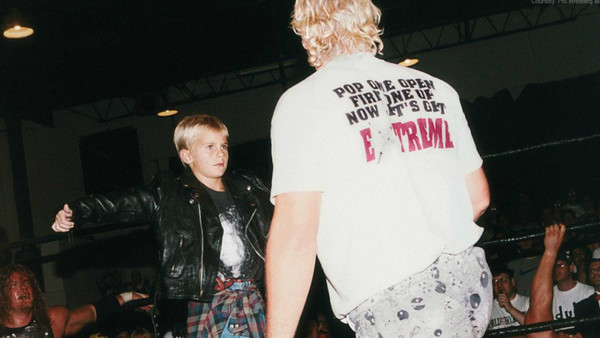
In retrospect, maybe going with a crucifixion spot wasn't Paul Heyman's most tasteful decision in 1996. It soured Kurt Angle on doing business with the original ECW, but reshaped wrestling history by setting wheels in motion for his eventual WWF berth. Meanwhile, in the land of extreme, Raven and The Sandman waged a war that enveloped family.
Raven polluted the minds of Sandman's wife Lori and his young son Tyler, so much so that the latter became an early adopter of the sort of mind control Raven exercised over his Flock in WCW. Back then, it was Stevie Richards and The Blue Meanie who had been corrupted by everyone's favourite wrestling Kurt Cobain.
Sandman had actually been at loggerheads with the grunge narcissist since 1995, but their feud peaked heading into the following 2 years. 1996's developments, including Tyler emotionally hugging his father after seemingly snapping out of whatever mental vice Raven had on him, left The Sandman ripe for a caning by his arch nemesis. It was all super-dramatic stuff, and it had ECW's audience in a chokehold.
There was a myth, often perpetuated by Eric Bischoff and some on the WWF side, that Heyman's outfit was all garbage wrestling and highlight packages set to music from Pantera, Rob Zombie etc. Nonsense. ECW told world class stories at times, and Raven vs. Sandman's family was definitely one of them.
A barbed wire-laden bout at Holiday Hell in late-'96 meant everything to those crammed inside the sweaty ECW Arena in Philly. Starrcade? Pah! In Your House: It's Time? Ha! Holiday Hell was the wrestling show of the month for those lunatics lured in by a compelling drama.
29. Steen & Generico “Fight Forever” (ROH/PWG/WWE, 2009-Present)
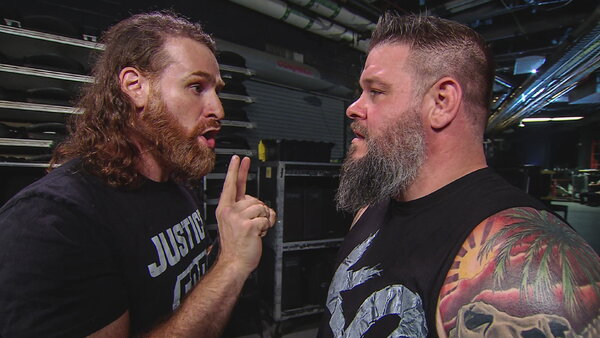
Who knew that Kevin Steen and El Generico literally meant they'd "fight forever" when that phrasing was first thrown around as they clashed in Ring Of Honor and PWG? Since then, both have blossomed into Kevin Owens and Sami Zayn, and they're surely on a pending list for WWE Hall Of Fame status somewhere on Triple H's office laptop.
Once both retire, they should go into the HOF together. Their feud is one that wrestling fans seemingly never get tired of, and they've consistently found new wrinkles to explore no matter how many times they're programmed as either partners or mortal enemies. That, dear readers, must make KO and Sami a dream to work with.
They're natural storytellers, and they work whether they're wrestling with or against one another. It honestly doesn't matter. Kev's return from a serious neck injury at SummerSlam 2026 fed neatly into the latest chapter of strife between these real-life best friends, and absolutely nobody was mad at it.
Steen's attack on Generico at ROH Final Battle '09 tumbled into a series of matches that summed up everything right about pro wrestling from the first collision. Their Honor dealings ended in 2012, then things continued on WWE's NXT show a few years later. Since then, the paying public has swallowed countless altercations and moments as WWE's creative team uses "Fight Forever" as an occasional panic button.
As they should, by the way. You've got to give the people what they want, after all. The ups and downs between these men, and how they've managed to bridge logic gaps throughout, should be studied.
28. Hiroshi Tanahashi Fends Off Kazuchika Okada (NJPW, 2012-2026)
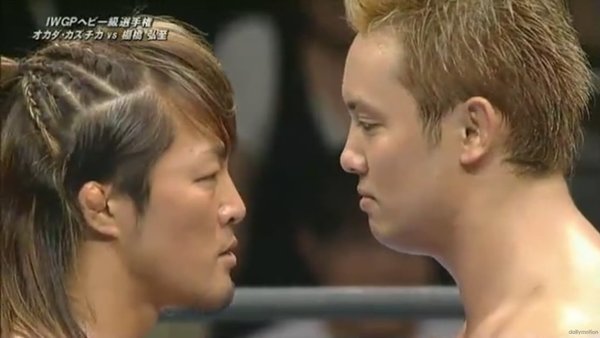
'The Ace' and 'The Rainmaker'. 'The Rainmaker' and 'The Ace'. Hiroshi Tanahashi and Kazuchika Okada will forever be tied to one another as wrestling soulmates. New Japan's audience sat stunned as Okada beat Tanahashi to win the IWGP World Title at The New Beginning in February 2012. Hardcores couldn't quite believe that someone who'd been so nondescript in TNA had returned home to ascend the throne.
There were real worries that NJPW chiefs were making a mistake. That makes for ridiculous reading nowadays, because Okada went on to become just the tonic New Japan and puroresu generally needed. He was the right choice to supplant Hiroshi, but that wasn't evident to everyone back in Feb 2012.
In time, Kazuchika managed to convince everybody watching the product that he was the future and Tanahashi was definitely the past. Behind the scenes, Hiroshi continued working a gruelling schedule whilst simultaneously putting building blocks in place for Okada to rule as the beating heart of New Japan.
It was all handled marvellously.
Back to back high quality efforts at both Wrestle Kingdom 9 and 10 respectively in 2015 and 2016 showed the way. Years later, once Hiroshi was ready to call it a career, Okada returned to New Japan from AEW and challenged his old rival to one more match at Wrestle Kingdom 20.
In 33 wonderful minutes, both used their bodies to tell a story spanning decades. It ushered tradition and groundbreaking style under one umbrella as the pair put a bow on Tanahashi's in-ring exploits in the best way possible.
27. Larry Zbyszko Is Sick Of Sammartino’s Shadow (WWF, 1980)
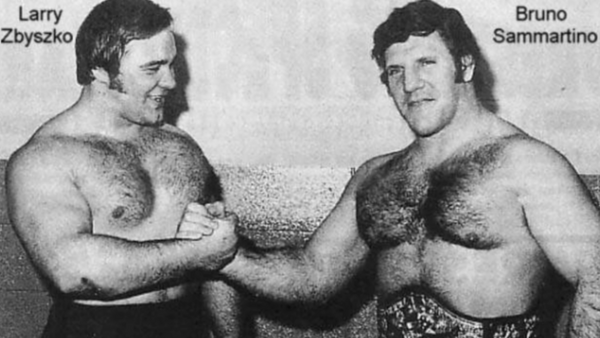
Larry Zbyszko probably needed to be shepherded to safety following a match vs. Bruno Sammartino on 22 January 1980. The pair had been fast friends and developed a mentor (Bruno) coaching student (Larry) relationship, but Zbyszko's frustrations over an inability to break free from Sammartino's shadow caused him to meltdown.
People were steaming mad at Larry for attacking Bruno with a chair and bloodying their hero up. How could he?! Especially after Sammartino had graciously agreed to take Zbyszko under his wing and turn him into the WWF's next true great. There was nuclear heat on Larry, and he must've been secretly loving every second of it.
Things boiled over towards a steel cage grudge match between the former running buddies in August. That event, affectionally titled 'Showdown At Shea', saw Sammartino score the win to gain some measure of revenge on Larry for his treachery. However, Bruno notably didn't pin Zbyszko on that occasion, which meant the heel still maintained some bragging rights in promos.
Boy, did Larry ever promo. He proved himself to be a fine talker. WCW fans who only saw Zbyszko as a colour commentator didn't know the half of it. He had plenty to say about Bruno, and about who his old mentor really was away from the bright lights and screaming fans.
No-one bought it, but that was hardly the point to Larry. He lived in 'Larry Land', and really should've become one of the federation's top stars for years to come after the Sammartino feud. Sadly, that wasn't the case, but Zbyszko did etch his name into the history books by turning on a 'Living Legend'.
26. Batista Breaks Out From Evolution (WWE, 2005)

The journey Batista took from Evolution heavy to standalone World Heavyweight Championship threat was worthy of a standing ovation. He helped oust Randy Orton from the faction under orders from Triple H and Ric Flair, but subtly began to express disgust at the way his so-called superiors treated everyone else around them.
Spotting this, Hunter started to regard Dave as a looming threat to his status on top. In a bid to suffocate Batista's rise, he suggested that 'The Animal' elect not to compete in the 2005 Royal Rumble match. After all, he didn't want the more important cogs in the Evolution machine to view him as "selfish".
Batista ignored his leader and won the 30-man match, then handpicked Trips as the champion he'd challenge at WrestleMania 21. A fascinating "thumbs down" moment on TV fed into a powerbomb spot that brilliantly hyped the title match to come on the grand stage. Batista was growing in popularity before that, but now he was on the right path towards a top babyface role that seemed one million miles away from the largely mute 'scary heel enforcer' he'd played in Evolution.
Hunter was visibly determined to make the man, so he put Dave over at 'Mania and in subsequent rematches at Bashlash and inside Hell In A Cell at Vengeance over the summer. That trio of wins, combined with the clever character arc Batista worked on TV, told a gripping story of someone becoming too hot for Triple H and Flair to handle.
This is how you make a star.
25. DDP = People’s Champion (WCW, 1997-1999)

There's a bizarre misconception about WCW that refuses to go away. According to some (WWE revisionists, mainly), the promotion exclusively profiteered from hard work Vince McMahon had done when building stars like Hulk Hogan, Randy Savage, Kevin Nash, Scott Hall and others. Was that WWF lore important to ideas like the nWo? Undoubtedly. Did WCW create their own stars too?
You bet they did.
Bill Goldberg, Sting and Booker T all proved to be shining examples of what was possible in WCW when the place was ticking, but arguably no 'rags to riches' story topped that of Diamond Dallas Page. He trained harder than anyone to go from cigar-chomping 1980s-style gimmicky manager to man of the people pro wrestler in the 1990s, and he did it all without the machine ever really getting behind him Goldberg streak style.
DDP grafted his way from the outhouse to the penthouse the old fashioned way. He scratched, he clawed and he fostered a relationship with fans who could see that this wrestling wannabe was someone to pay attention to. Then, Savage helped Page earn his stripes with one of 1997's best rivalries. Their match at Spring Stampede that year put DDP on the map.
2 years later at the same event, Page was winning the World Title in a Fatal-4-Way next to Hogan, Flair and Sting. His old pal 'Macho Man' was there as special guest referee, and he had to be proud of how far Dallas had come. That motormouthed manager wearing 100 gimmicks had done good - he'd become the 'People's Champ' long before The Rock was calling himself that.
24. Raven & Tommy Dreamer Despise One Another (ECW, 1995-1997)
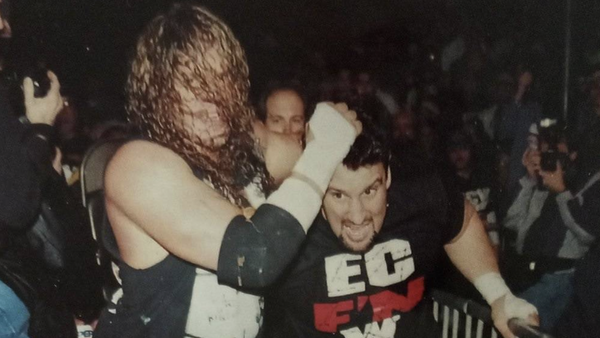
Remember a creaking argument that the original ECW was best-consumed in highlight package form or via weapons-heavy brawls? Yeah, about that. Raven and Tommy Dreamer proved that Paul Heyman, at heart, was a storyteller with a vision (not Bron Breakker, Bronson Reed, Austin Theory, Maxxine Dupri and Logan Paul).
From 1995 onwards, Raven claimed that Tommy had ridiculed him at a summer camp when they were kids. Stick with it, because that sophomoric story had more legs than those unfamiliar with ECW lore might think. Dreamer had been the popular, ultra-athletic jock, whereas Raven was an outcast who didn't fit in socially and grew to resent Tommy for it.
Splice in Beulah McGullicutty, the source of affection and simmering hatred between both boys-turned-men, and you had all the ingredients to make this an all-timer. For years, Dreamer and Raven fought like they were trying to kill one another, but they'd also develop an uneasy bond and become tag-team partners later on in ECW's shelf life too. That unexpected bit of twin character development kept everyone watching on their toes, and it was also 100% authentic Heyman twisting and weaving.
He found fun ways to keep people invested, and to explain the biggest story beats.
Things culminated at Wrestlepalooza 1997 when Tommy finally pinned Raven for the first time in a 'Loser Leaves ECW' match. Afterwards, a bitter Raven (who was leaving for WCW) watched Dreamer take a kicking from Sabu, Rob Van Dam and Jerry Lawler without stepping in to help. That genius decision kept things going even in his absence.
23. Hangman Page’s Elite Self-Doubt/Redemption (AEW, 2019-2021)

One of the finest long-term strategies Tony Khan deployed on an unsuspecting AEW audience occurred during the promotion's early years between 2019-2021. Hangman Page, who was part of The Elite and seemed to have the world at his feet alongside the likes of Kenny Omega and The Young Bucks, suffered from imposter syndrome. It hit him hard.
Retreating, and wondering if he had the skills or star power everyone suddenly said he did, Hangman began drinking heavily and masking his insecurities with laddish behaviour and more socialising in one month than many do in a full calendar year. He'd even wonder aloud if he was the right man for the job after becoming number one contender to the AEW World Title.
It was a gripping deep dive on the human psyche - the kind that pro wrestling rarely handles sensitively. Thankfully, on this occasion, AEW definitely did. They had producers, staff and other wrestlers alike play up to Page's socialising and "Cowboy S***" ways, but something had to give. He was going to have to step inside the ring and confront his inner demons one day, and everyone knew that'd be against a top tier worker like Omega.
Cue Full Gear 2021 and the end of the line.
Hangman beat Omega to win AEW's biggest prize, and it seemed like a giant weight had been lifted from his shoulders. All of the anxiety he'd suffered through washed away as Page began to grow in confidence and resonate with the fanbase. It was awesome stuff.
22. Dusty Rhodes & Ric Flair Are Opposites (NWA, 1984-1988)
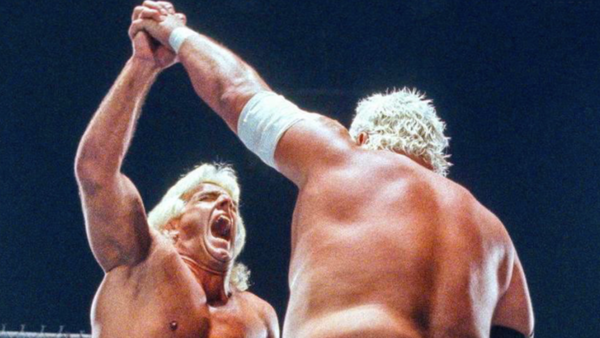
Behind the curtain, Ric Flair and Dusty Rhodes fostered mutual admiration, but both admitted over the years that they were also fuelled by a burning competitiveness that saw them try to outdo one another with fancy clothes, watches, other trinkets, flashy cars etc. That bled over in front of the cameras, albeit with less of the flash and flaunting from ye olde 'American Dream'.
On screen, Dusty's role was one of the everyman. He'd "dined with kings and queens, and he'd slept in alleys and dined on pork and beans". Conversely, you wouldn't find the jet setting 'Nature Boy' doing the latter. He was a high-roller, one happy to brag about $15,000 suits, crocodile/snake skin shoes and watches that cost more than the downpayment on your average family home.
Flair was an intolerable braggart, but he could back it up between the ropes. Rhodes was everyone's best friend, and he could go when the brights lights were on and the bell sounded too. They were natural opponents, and both lit up major NWA cards like Starrcade for years whilst fighting to become World Champion.
A timeless "hard times" promo heading into Starrcade 1985 has been one of wrestling's go to speeches ever since it happened, and with good reason. Dusty vs. Flair ushered in WarGames, helped develop The Four Horsemen, and it gave the NWA a dazzling counter to all of the WWF razzmatazz featuring Hulk Hogan, WrestleMania and more.
That should never be forgotten. It was a story anyone could identify with regardless of their social standing.
21. CM Punk Has Your Attention Now (WWE, 2011)

Some will be rolling their eyes a little at this entry whilst saying things like: 'Yes, but then they ruined it by drafting in Kevin Nash and making the story more about him vs. Triple H than CM Punk'. That's fair, and yet there's always going to be something so vital and inspiring about Punk's "pipebomb promo" from the summer of 2011.
You just didn't see stories play out like this on WWE television at the time. They'd become a saccharine PG product with easy-to-predict tropes performed by walking toy lines like John Cena. Being fair to Cena, he was only excelling in the role that was built for him; and that he was asked to do.
Punk, however, wasn't the kind to go along with corporate shilling. On the surface, at least. Wait, what? It's true. Deep down, CM Punk wanted to be on the lunchboxes, production trucks and in the WrestleMania main events. He said so himself during that aforementioned promo. That's a key part of the story that so many miss out when looking back on his 2011, bizarrely.
This ex-ROH rebel was salty because he wanted everything that Cena, Batista, Brock Lesnar and Randy Orton had been handed on a silver platter before him. By the time he won the WWE Title and blew Vince McMahon a kiss before walking out of Money In The Bank with his head held high, the world was on tenterhooks waiting to find out what'd happen next.
WWE fudged the next chapter of the story, but that shouldn't stop gushing praise for Punk's performances as he single-handedly reshaped what was expected from top storylines.