9 Times ECW Was Better Than Literally EVERYTHING
It wasn't always sunny in Philadelphia, but these moments were some of the hottest in history
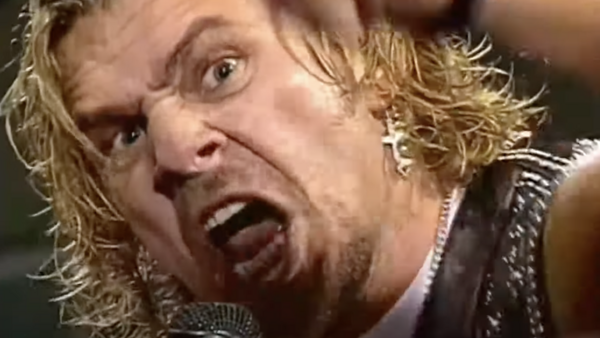
Time has been cruel and kind to ECW.
Not cruel in the way Paul Heyman was cruel to keep so many wrestlers hanging by a thread financially as he gradually backed away from the promotion and ultimately into a job with WWE in 2001, or kind in the way Chris Candido when he allowed Paul Heyman to max out his cards on business expenses on the promise of repayments, but in the way that time inevitably rose-tints the lenses as much as it fogs them over.
2005 was the perfect period for ECW nostalgia to peak. It was only four years removed from the company's demise, and only a decade on from its critical peak. Within subcultures such as pro wrestling, the edgelord mentality of the Attitude Era fanbase was still the one most catered to by WWE, TNA, ROH and anywhere else trying to make a crust in the North American scene, so nothing had really aged out of itself.
But it would.
On its worst days, Extreme Championship Wrestling was a promotion too dysfunctional to be a business, a business too dysfunctional to be a promotion, and a hive of dangerous and unregulated backstage misbehaviour that shortened the lives and careers of many that went through it. On its best, it pioneered multiple futuristic styles and stars, dragged mainstream wrestling kicking and screaming into bold new philosophic frontiers, and offered countless playbooks and performers for the majors to steal at will.
There's a reason the initials mean so much to so many...
9. Nobody Sees It Coming
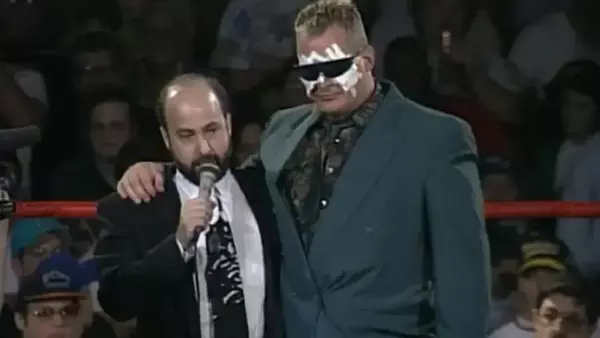
Emerging from a spot itself that summed up just how creatively far apart ECW was from the majors by 1994, Tommy Dreamer believing he'd blinded The Sandman after knocking a lit cigarette into his eye during an I Quit match was perfect down to the last brutal detail.
The pair were engaged in a bitter rivalry that appeared to come to a screeching halt when the incident occurred. Babyface Dreamer showed contrition for his actions, was shunned by the locker room and was ready to end and/or dedicate his own career to Sandman in the aftermath, particularly when the real life Jim Fullington, suit-and-all, turned back up out of hiding with bandages over his eyes and ECW gaffer Tod Gordon on his arm. Dreamer had even battered longstanding Sandman rival Tommy Cairo on behalf of his former enemy, so dedicated as he was to honouring his word.
It was all a ruse. Drawing Dreamer out and using Woman as a distraction, Sandman brutally caned Tommy, having used him for the Cairo dispute. ECW was ostensibly home to the most plugged-in wrestling audiences in the world, but none of them saw this coming.
This sort of secrecy and storyline preservation is rarer still in the post-kayfabe age.
MJF nobly attempted something similar in 2022 when, after calling Tony Khan "a f*cking mark" live on television, he went completely off the grid. His subsequent return - and the significance of it - ultimately generated the polar opposite reaction to this one, thanks to CM Punk forgetting about the work when it came time to air his shoot grievances at the post-All Out press conference.
8. Brian Pillman Arrives
Brian Pillman was the most talked about man in smart mark circles at the turn of 1996, and though the community was way, way smaller than it would be in the years to come, there had never been a better time to have your finger on that particular pulse.
Or, in this case, piss in that particular ring.
Having spent months working on a 'Loose Cannon' character (that, per testimonials, wasn't too far away from the real man himself at the time) on WCW television, the more informed corners of the fabase were buzzing for his next move after reports of a massive backstage blow-up with Eric Bischoff following an on-screen worked shoot with Kevin Sullivan at SuperBrawl VI. That move was an explosive unannounced appearance at CyberSlam '96.
Immediately received as a cult hero due to how he'd ostensibly stuck it to the big leagues, Pillman arrived full of rage over how he'd been handled in WCW, calling Bischoff "a piece of f*cking sh*t" in a line that was catnip to the ECW Arena faithfuls. This was top babyface stuff from the territory's new top star, but Pillman was about to reveal how he was only in Philadelphia for a good time rather than a long one.
Flipping the script, he turned on the audience, comparing 'Easy E' to all the "smart marks" in the building. As the audience could barely believe what they were hearing, Pillman ramped up the gears to define the term "mark" in increasingly grisly ways before unzipping his jeans so he could "piss in this hellhole".
Tod Gordon, Paul Heyman and Shane Douglas hit the ring to have him removed by security, while a whisper of "he's shooting" could be heard over the house mic. Midway through being carted out, he violently assaulted a planted fan to conclude an all-time angle.
It was all part of him dominating the discourse en route to a WWE deal he inked in June, though the promo was the peak of his time as the industry's most talked-about star. A car accident in April was career-altering, and expedited problems with substances that ultimately contributed to his tragic passing 18 months later.
7. The Sandman Returns From WCW
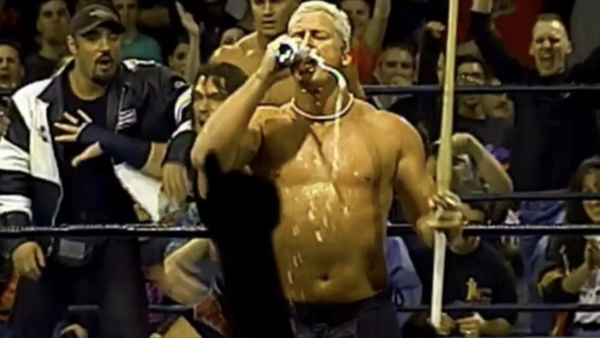
Back where he belonged but having never looked better for the time he spent where he didn't, The Sandman's 1999 return to ECW found the Philadelphia organisation long, long past its creative peak and in dire need of a reminder of the good old days. An extreme icon that just happened to be in Nitro shape was exactly that.
His partly-polished reinvention as "Hardcore Hak" was unexpectedly half-decent in contrast to some of the lesser runs for the likes of Stevie Richards and Mikey Whipwreck during their time in Atlanta, and with the "You Sold Out" chants getting quieter the more it became apparent how little ECW could afford to pay its wrestlers, there was little in the way of a backlash when - a month removed from a cost-cutting WCW release - he returned home to help fellow originals Tommy Dreamer and Raven fend off vicious new heels Justin Credible, Lance Storm and Rhino.
It looked, for a night, as if happy days were here again for a company that was running low concepts and cash thanks to the excesses of both majors in the Monday Night Wars, and - thanks to the gift of a great fancam - exists today as an even more authentic version of his spellbinding One Night Stand 2005 arrival.
6. Dreamer Beats Raven...And All Hell Breaks Loose
The rivalry between Tommy Dreamer and Raven was rightfully held up in its own time as an example of something wrestling should have done a lot more of during its headiest decade. A premise that was rooted in one of the industry's core tenets (babyface can't beat heel) and given modern tones (heel and babyface went to school together, experienced different lives, switched dynamics by the time they made it to wrestling, cult hero fights cult leader), it carried midcards and main events with ease whilst getting countless characters over as heels and babyfaces depending on which sides they took in the turf war.
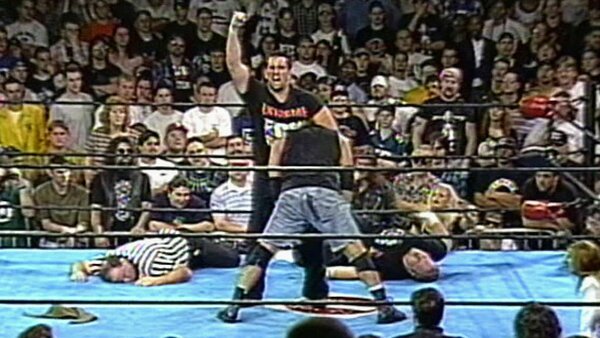
It came to a glorious end at Wrestlepalooza '97, as Raven prepared to leave for WCW and Dreamer finally got his win. And Dreamer got all of 40 seconds to bask in the glory. The lights went off and came back on to reveal Bill Alfonso with Rob Van Dam in a Monday Night Raw shirt. He drilled Dreamer with a Van Daminator, but the valiant babyface fought back all the same, only for the lights to do their usual trick and this time reveal Sabu, who put the odds back in the heels' favour.
Spurred on by fighting for ECW against the evil WWE machine, Dreamer still fought back, this time drilling both with a double DDT. The final trick of the lights revealed Jerry Lawer, the company's most vocal critic over on Monday Nights and a nuclear heat magnet in the building. ECW babyfaces flooded the ring but the heels took them all out with chairs, while Lawler cut scathing promos on everybody in sight, including a choice "This bingo hall should have been built out of toilet paper because there's nothing in it other that sh*t!" retort to their disdain. After The Gangstas and The Sandman tried in vain, Taz was cast as the hero to finally send the heels packing, with Dreamer and the rest left for dead.
Raven may as well have been gone years by the time the angle concluded, with all the vindication of the victory already ripped from perennial loser Dreamer's hands. The ultimate heartbreak - a man left beaten down and unable to savour his moment after years of chasing it.
While Dreamer Vs Raven was all about constant battles in 1995 and 1996, an equally enormous rivalry took place at the same time using the polar opposite device. But former partners Taz and Sabu went that time without even touching...
5. Taz Turns Heel

The inciting incident for what ultimately became arguably ECW's most captivating programme during its creative zenith, Taz' heel turn at November To Remember 1995 was perfect in that it was unthinkable...until you thought about it.
Months earlier, his team with Sabu had been derailed by the 'suicidal, homicidal, genocidal' star electing to take a booking in Japan rather than a planned three way dance in April with The Public Enemy, Chris Benoit and Dean Makenko. Taz drafted in Rick Steiner that night, but Sabu's exit was the headline story anyway, with Paul Heyman taking the ring earlier in the night to confirm that he was gone for good thanks to the transgression.
Flash forward seven months, and he was going back on his words on the same night an injured Taz was forced into taking referee duties due to a serious neck injury suffered in the summer. Sabu was home for the fans, per Heyman, and was victorious over Hack Meyers in a statement win. By then though, the world - and the mood - had changed.
Livid with the company's decision to forgive and forget and none too pleased with the fans seemingly giving more of a toss about all of this than they ever did him when he was in the hospital, the miserable Brooklyn native aligned with the despised rule-enforcing referee Bill Alfonso, aiding him to a victory over Tod Gordon in what was supposed to be Alfonso's overdue comeuppance. Taz lived for anger, angering the locals, and the vengeance he promised on Sabu, so long as the silent maniac answered his challenge.
The long road to national pay-per-view had begun...
4. Lights Off. Lights On. Taz & Sabu
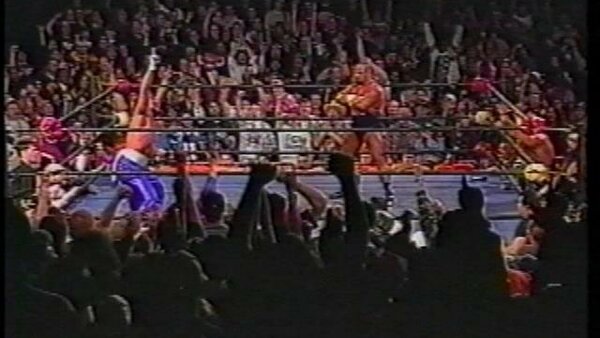
In the aftermath of the November To Remember 1995 heel turn, Taz' year was spent continuing an aggressive rebrand from his Tasmaniac persona that had started shortly before his neck injury.
The suplexes of his animalistic era remained but they informed part of a deadly proto-MMA arsenal that included devastating strikes and submissions for the wrestlers as they lay decimated from brutal throws. He fought and defeated everybody that stood in his path of rage, each time ending the display by laying out a challenge to Sabu that went unanswered. The lack of response only made matters worse for everybody else in ECW, with the next opponent suffering more than the last before the cycle repeated. All until November To Remember 1996 - one year later - when the ECW Arena's lights came back on to reveal a confrontation that felt far longer than 12 months in the making.
The two circled to the soundtrack of one of the loudest sustained pops in wrestling history, before the the blasted lights went off again. Everybody wanted to see it but Paul Heyman knew just how valuable that desire was - this was going to be the biggest attraction at Barely Legal, the March 1997 debut on pay-per-view that, for a while, looked to be the vehicle that would legitimise and monetise Extreme Championship Wrestling more effectively than any point in its short history.
3. Taz Vs Mike Awesome Vs Masato Tanaka (Anarchy Rulz '99)

The dirty little secret about Extreme Championship Wrestling is that with every passing year, less and less matches hold up to rewatch, even with the best will in the world and trying to view them in intended context.
All work ages to an extent, but much of ECW's lauded violence grows quaint or disposable, the innovative technical, areal and lucha work gets diffused by the unreasonable "you f*cked up" response to inevitable botches, and the understandable Paul Heyman obsession with repackaging misfit toys often serves only to remind the viewer why they were misfit toys in the first place.
This, thankfully, is not the case with the utterly sublime Three Way Dance for the ECW World Heavyweight Championship at Anarchy Rulz '99. Going in as Champion and facing a torrent of abuse following the news that he was set to leave for WWE, Taz might have been in a difficult position, but Awesome, Tanaka and the booking solved the problem before it could even really become one. The 'Human Suplex Machine' was soundly beaten by the two in a sprint start, resulting in the guarantee of a new Champion, and a careful walking of the work/shoot tightrope to give Taz his flowers from the fans and the roster before he departed.
What remained was arguably even better, Yet one more match between two of the best rivals in the history of the company, monsters incapable of having a bad match, and now for all the marbles. They now had the space to destroy each other for the richest prize, all within the confines and context of a tear-soaked goodbye.
2. The First Time You Saw Sabu...

...because there's a decent chance that was in Extreme Championship Wrestling.
When Terry Brunk passed away in 2025, a lot of tributes followed down the same path - the moment fans caught glimpse of Sabu via grainy video or still image, they could scarcely believe they were looking at a pro wrestler, or pro wrestling. From being carted, Hannibal Lecter-esque, to the ring strapped down and gagged for the health and safety of himself and others, to crashing through tables with or without opponents on them, to gluing his violent gashes back together midway through a barbed wire massacre, there was no version of 1990s Sabu that wasn't designed to shock, intrigue and amaze.
It's not as though the matches were really about psychology during his best years, but his contests were so deranged and edgy in tone that derivatives like "spotfest" and "plunder war" came to be the psychology. He was insane, he was going to use the lack of rules and boundaries to his advantage, and if he saw weapons or situational props on his travels, you were getting battered with or because of them.
He was nicknamed 'suicidal, homicidal, genocidal' in a bit of good-for-the-time promotional bluster, but it transpired to be not the least bit hyperbolic. "The Feeling" is thrown around now as a shorthand for a specific emotional bond to something in wrestling, but Sabu in ECW was it before we had the language to fully articulate the fact.
1. Shane Douglas Throws Down The NWA Championship

The moment that started a movement, crystallised an idea and - within the context of the time - transformed an industry, Shane Douglas hurling the NWA World Heavyweight Title to the ECW canvas in 1994 broke the ground that suddenly opened up below his feet.
The long story short is that Douglas won the NWA tournament hosted by Eastern Championship Wrestling, then disregarded the most historic title in the game to put over his localised gold as the new ECW World Heavyweight Championship. It was scandalous to be so disrespectful to the past, but Douglas' acerbic words weren't remotely wrong - the game had changed and both American majors neither needed nor wanted the NWA affiliation in the way they had prior. The subsequently-renamed Extreme Championship Wrestling was able to benefit from heaping dirt on an organisation and its traditions that had died, RIP, seven years earlier.
The worked shockwaves were believable and effective. Rebellion and change were concepts still lightyears away from both WWE and WCW in 1994, and suddenly - with the spotlights never shining brighter - there was a promotion that promised to offer both.
(You can still watch some of ECW's best bits on Netflix internationally and/or enjoy a host of other benefits from having NordVPN with 76% off and three months for free when you sign up here)