How Good Was Hulk Hogan Actually?
How does Hulk Hogan's immortal legacy stack up next to other WWE greats?
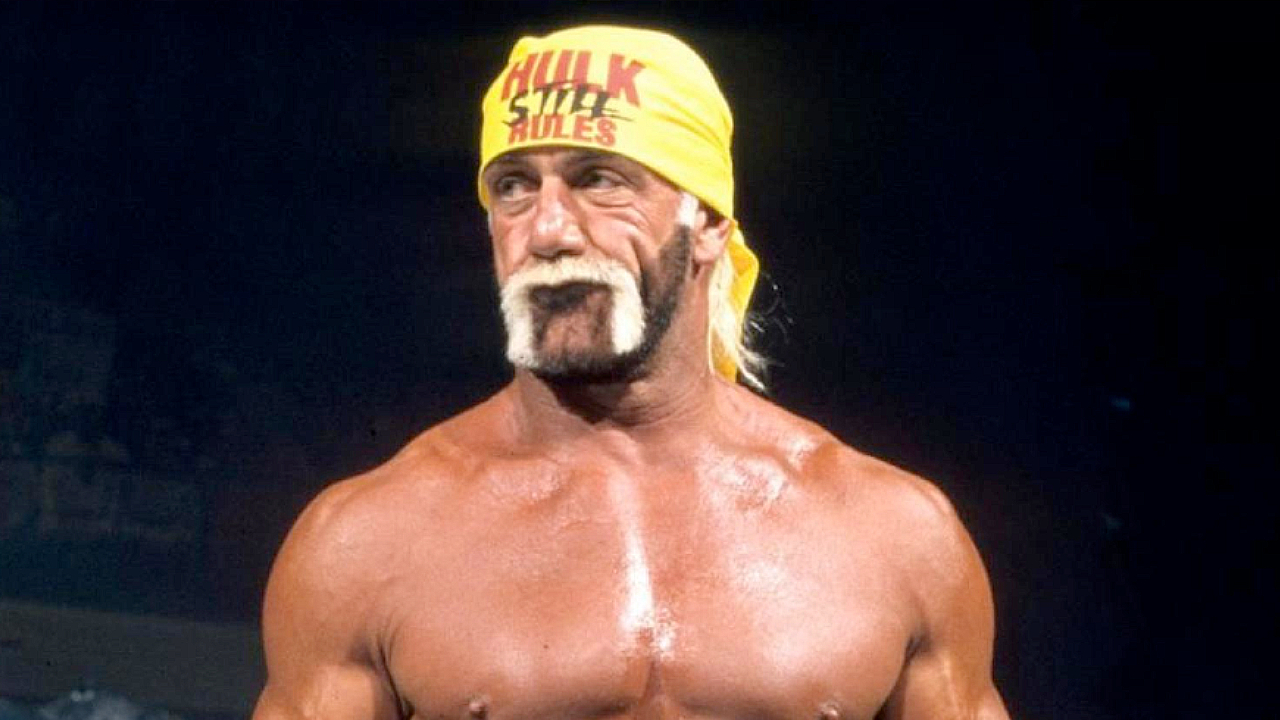
Hulk Hogan leaves behind a legacy that is complicated, to put it mildly. Arguably the biggest star that wrestling has ever produced (for at least one WWE generation and possibly more), he defines the art that we all love. For many other lifelong fans, he is the definition of overrated, and his controversies away from the ring are the moments that truly summarise who he is and what he stands for.
This feature delves into his years as a red and yellow-clad babyface. It leaves aside his Hollywood heel turn and TNA years, as there'd simply be too much ground to cover when it comes to a man who spent the majority of his life in the wrestling business. Oh yes, this is purely about the shirt ripping, heel conquering, leg dropping WWE and WCW reigns of Hulkamania.
So strap in, 'Maniacs', for you're about to behold the single most polarizing and contradictory legacy in the history of professional wrestling. For every treasured moment, there just might be an argument that what you're looking at is fool's gold. Haters and 'Hulkamaniacs', whatcha gonna do when the consequences of your actions run wild on you?!
Get Nord VPN with 77% off, 4 months extra free AND an Amazon gift card today! https://go.nordvpn.net/aff_c?offer_id=564&aff_id=3013&url_id=33286source=WCYT
10. Presence/Looks/Presentation
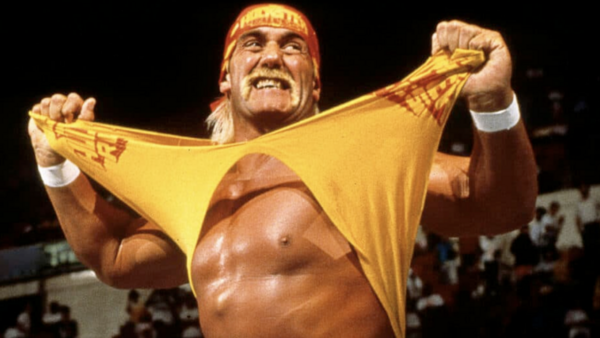
It’s not hyperbolic to say that Hulk has the most iconic look in wrestling history. The red and yellow attire, the Hulkamania logo, the 'Fu Manchu' blonde facial hair, the skullet - literally everything about Hogan’s classic babyface look is so instantly recognizable that people will still be wearing it as a Halloween costume in the 2080s.
As for presence, Hogan was wrestling in the 1980s. There has never been a bigger babyface in the history of the business than Hulk across that decade. In many ways, the Hulkster was bigger than WWE itself. To rubber stamp that, think of this: Only WrestleMania IV wasn’t centred around Hogan in the first 9 outings for wrestling’s Super Bowl.
At a time when Reagan’s America was pushing hard for a return to “traditional values”, Hogan was the perfect embodiment of that era. Encouraging kids to say their prayers and take their vitamins whilst clutching the cross on his chain, he was built to stand next to Stallone or Schwarzenegger and body slam bad guys. The 24-inch pythons, ripping his t-shirt, his post-match poses that every fan can do in perfect sequential order, and the hand-twirling, building shaking, cup to the ear that made people lose their minds. It’s all literally perfect.
In the same way that Rocky had ‘Eye Of The Tiger’, Rick Derringer’s unforgettable ‘Real American’ is the perfect song for Hogan’s heroic escapades. Again, it is one of the most iconic wrestling theme songs of all time. His WCW theme, ‘American Made’ (with Hogan himself allegedly laying down the song’s bass guitar), also captured the perfect vibe for Hulk's over-the-top heroism.
Even the concept of Hulkamania and calling fans Hulkamaniacs is marketing used across fandoms to this day. Lady Gaga and Taylor Swift have Little Monsters and Swifties. Your sports team will have a name for you as a fanbase that follows the same Hulkamania branding concept. Trekkies, the Beyhive, Deadheads, Beliebers. The list is endless.
Wrestling has never had a brand identity as strong as those employed to fuel the Hulk Hogan machine. There was literally no hole in the presentation Vince McMahon built around Hulk (until he undid it all himself later in life).
10/10
9. Promos
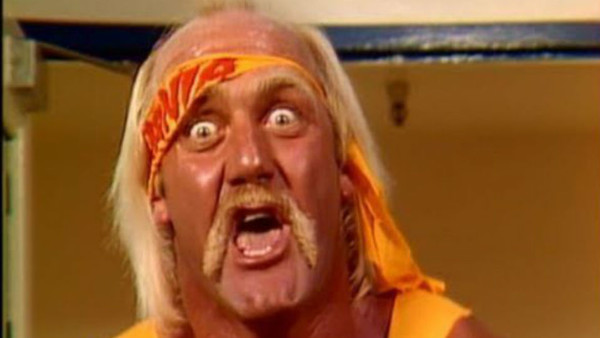
Wrestlers have catchphrases that define who they are, and that again feels like the house that the Hulkster built. “Whatcha gonna do when Hulkamania runs wild on you?!” feels like the prototype for “...and that’s the bottom line cause Stone Cold said so”, “If you smell what The Rock is cooking”, and virtually every other wrestling catchphrase that comes to mind. For balance, Ric Flair had a bunch of these instantly quotable mantras too, but Hogan’s permeated pop culture far more than Flair’s.
Standing next to 'Mean' Gene Okerlund and foaming at the mouth, Hogan’s brand of “put your hand in mine and let’s achieve the impossible together” is supremely infectious. His use of “brother”, “dude”, and “Jack” is so famous that it transcends wrestling itself. For the gold standard of Hogan promos, check out the “seek and destroy” promo on the run-up to facing Andre The Giant at 'Mania III. It’s a masterclass of making the audience believe that Hogan was capable of conjuring miracles in the palm of his hand. When Hulk would tell you that “Hulkamania is the strongest force in the universe”, his conviction was enough to persuade the world that he was right.
Even when wrestling transitioned from 'straight to camera' promos to delivering them in the ring and going mic-to-mic with his opposition, Hulk Hogan had the rarest ability to connect with crowds. We’re concentrating on the red and yellow here, but the segment where Hogan goes toe-to-toe with The Rock in Chicago ahead of their WrestleMania X8 match is unreal. Even Hogan following “What?” chants with “...cha gonna do” was superb.
He found a new lane of comedy when he donned a patriotic Lucha mask and ridiculously used all of his regular lines whilst trying to convince the world he wasn’t "Mr. America" on SmackDown in 2003.
What’s bizarre is that Hulk rarely changed tactics at all with his promos, and yet it always worked. Crowds were as into Hogan’s promos in the 2000s as they were in the 1980s...despite him doing and saying the exact same things.
As time rolls on and his schtick feels increasingly dated, it really feels like you had to be there in the moment to feel the power of his promos, but Hogan’s mic rarely met a crowd it didn’t pop.
8.5/10
8. In-Ring Ability

Hogan’s formulaic matches would almost always go like this: He looks around at the crowd cartoonishly while circling the ring with his opponent. A test of strength occurs in which Hulk sells the might of the man he’s facing/about to pulverise. Then, he takes a beating for 5 or 6 minutes before 'Hulking Up'. Hogan shakes his head like a man possessed whilst no-selling punch after punch, before pointing at his adversary and wagging his finger at him. Hulkster lands some big right hands, whips his opponent to the rope, he puts his size 17 boot into their face, then hits the leg drop for the 1-2-3 and sends the crowd home happy, brother.
Like a lot of Hulk’s work, Hogan’s matches follow a formula that worked and stuck to it. You’d think that there would be some variation when he had over 20 years in wrestling’s main event scene, but his work in the ring was limited in the extreme.
This isn’t to be (too) reductive. It's worth mentioning that Hogan was revered in New Japan around the time he hit the WWF scene hard, working matches with Dusty Rhodes, Stan Hansen, and defeating Antonio Inoki in the final of the 1983 IWGP League to win the vacant IWGP Championship. Hogan’s formula was successful globally and even conquered lands where wrestling is a sacred art.
The next section reveals that there is a massive asterisk that comes with all of this success in the ring, but how effective it was in front of crowds through the 80s, 90s, and even into the 2000s cannot be entirely dismissed.
5/10
7. Time's Test

Time has not been kind to Hulkamania in an avalanche of ways.
Looking back at Hogan’s matches now is a slog. The Intercontinental division during his best years featured the likes of Rick Rude, Mr. Perfect and Bret Hart putting on classics that bang to this day. Watch the main event work of Cody Rhodes, MJF and Roman Reigns, and there is a chasm between them and the Hulkster on his best day. His main event peers Ric Flair, Sting and Randy Savage put on bouts that hold up a million times better than the sluggish and predictable stuff peddled by Hogan.
Then there’s everything that happened behind the curtain, and this is where time really caught up to Hogan. Hulk is as well known for his sly backstage politics as he is for anything he achieved in the ring, and his continual refusal to lose cleanly (or at all!) has aged terribly.
At a time when corners of the internet think Cody or Becky Lynch are booked too strongly, Hulk Hogan’s period of dominance would have made these critics bleed from their eyes. Roman had the longest WWE Title reign of the modern era, but his wins were laced with shenanigans. Hogan’s babyface run with the title from 1984-1988 was 1,474 days of all-American, white meat, babyface victories. Today’s fans would have HATED it.
In WCW, it was even worse. He walked in and won the company's heavyweight title from Ric Flair in his first match at Bash At The Beach 1994. Hogan swept WCW’s biggest monster, Vader, all the way through 1995, including a farcical no-sell of his earth-shattering Vader Bomb. Randy Savage and Hogan took on 8 men (including Flair, Lex Luger, Meng, and Arn Anderson) who were literally called 'The Alliance to End Hulkamania' and still won.
Time’s test on Hulk Hogan also has to acknowledge his controversies. Hogan was caught using racial slurs on a private videotape in 2015 that defines his legacy as much as anything he achieved in the wrestling business.
He refused to ever atone for these actions; Shelton Benjamin suggested his “apology” to the WWE locker room warned them not to get caught rather than showing remorse for his reprehensible words. This understandably soured his relationship with fans to the extreme. After this disgrace, like so many others, Hogan then attempted to keep his fame by aligning with political parties that only alienated fans further.
His last appearance in WWE before his death involved being booed out of the building for the world to see on the company’s Netflix debut. His passing should have seen one of the biggest outpourings of emotion and respect in wrestling history, considering he did more for the business than anyone (with the possible exception of Vince McMahon). Instead, he died marred in controversy, with fans split on how to consider his legacy within the global industry he helped create.
3.5/10
6. Cultural Significance
There's a serious argument to be made that without Hulk, wrestling as we know it would not exist. Vince McMahon took the WWE national, betraying the gentlemen’s agreements of the territories, but he needed a superstar to turn it into the global juggernaut that it became. It’s an accepted fact that Hogan was the secret sauce that took pro wrestling into the mainstream and kept it there.
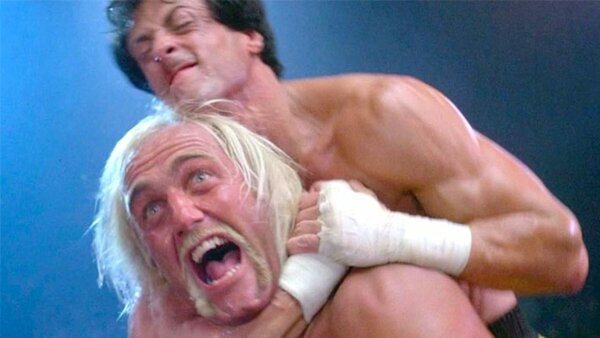
To give Hulkster himself some credit in this equation, he had a vision to make himself something larger than his contemporaries, and he stuck to that vision. Verne Gagne fired Hogan from the AWA when he insisted on taking the role of Thunder Lips in Rocky III. Playing a heel wrestler in a charity fight with Rocky, Hogan knew this would shoot him further into the public consciousness, but he had to defy wrestling’s unwritten rules about breaking kayfabe to do it.
Hulk's projects outside of wrestling in later years were laughably bad and failed to capitalise on his wrestling fame. From movies like Suburban Commando and Mr. Nanny to his TV dud, Thunder In Paradise and the Hogan Knows Best reality show, The Hulkster could never translate his all-conquering dominance in the ring into any other area of pop culture.
The Rock conquered Hollywood to become the most culturally significant star to ever branch out from the biz, but Hogan became a global pop culture icon exclusively due to his work in the ring. Even his rubbish movies and TV shows couldn’t dilute his place in pop culture or his importance to the wrestling business.
9/10
5. Rivalries

The Hulkster had superb rivalries during all 3 of his stints in WWE. If Hogan could be relied on for anything, it’s that he’s in the business of making himself the star of the show. His politicking may have plagued many rivalries over the years, but when he and McMahon were on the same page, they created feuds that printed money for them both.
Andre The Giant is perhaps the most high-profile opponent that Hulk faced in the 1980s, but it’s with Randy Savage that he told the decade’s best story. The Mega Powers team of Hogan and 'Macho Man' dominated the WWE landscape after Savage captured the title at WrestleMania IV, but things would eventually turn sour due to Savage’s jealousy over his so-called friend's actions towards Miss. Elizabeth. It made for a timeless story of love and betrayal that ended in their match at 'Mania V.
The Ultimate Warrior was the only superstar to compete with Hogan’s level of popularity during his most successful years, and their promos against one another on the road to Mania VI were electric. The match may not be an in-ring classic, but the 'Showcase Of The Immortals' has rarely had a main event that felt as significant as 'The Ultimate Challenge'.
His over-the-top patriotism against Sgt. Slaughter leading into 'Mania VII struggled to sell tickets and PPVs, and his final hurrah with Yokozuna was a flat farewell, but Hogan’s rivalries with Roddy Piper, Ted Dibiase and an underrated run with Earthquake all helped ensure that Hulkamania ran wild throughout the 80s and early 90s.
However, the streets will never forgive Vince for not moving the heavens to book Hogan and Ric Flair at the peak of their powers for WrestleMania VIII. Flair and Hogan feuded in WCW, but the moment had passed for this rivalry. The red and yellow era for Ted Turner had little in the way of significant rivalries, due to the Hulkster constantly crushing his rivals, and it took turning him to the dark side for Hogan to rule again.
Hogan’s second run as a lead babyface in the WWE across 2002 and 2003 is too often overlooked. Hollywood Hogan and The Rock’s magic on the road to WrestleMania X8 (and at the event itself) are well documented, but when they switched roles for No Way Out 2003, they had another great build and match; Rock was on the run of a lifetime as a heel, playing up his movie star lifestyle. He spat in babyface Hulk's face in the build to this bout, and mocked him mercilessly to great effect.
Even with Hogan’s limited ring skills deteriorating, his ability to get people behind him was impenetrable during his 'Mania XIX feud with McMahon. Drawing on their history, Vince would chastise Hulk for his part in the steroid trials of the early 90s, for signing with WCW, and he claimed that Hulkamania would never have happened if it weren’t for him. Hogan insisted the people built his legacy, and their street fight (including a wonderful cameo from Roddy Piper) is far, far better than it had any right to be.
The best feud for Hogan’s many haters came in his final WWE run, when Shawn Michaels produced some of the best heel work of his whole career to tear the Hulkster to shreds in 2005. The two WWE legends would team together for a week or two, with Shawn joining Hogan for hugs, celebrations, and his traditional series of post-match flexing. When HBK hit Hogan with a superkick during his routine after a tag team victory over Kurt Angle and Carlito on Raw, nobody saw it coming.
Michaels was part of the generation that was treated as Hogan’s supporting cast when he was making his name in The Rockers and as a solo act, and the animosity and disdain that he showed for Hulk in the weeks running up to SummerSlam felt real. This boiled over into their match, which saw Shawn over-sell all of Hogan’s offence to make an absolute mockery of the Hulkster’s power. It is a matter of taste as to whether you loved HBK's antics or loathed them, but the pair’s month-long feud is as good as anything during Hogan’s glory period.
8/10
4. Moments

Hogan’s wrestling career is filled with moments that are a vital part of wrestling folklore. Every wrestler who signs for WWE is hell-bent on having a WrestleMania moment. The very concept of that comes from Hulk body slamming Andre in front of screaming fans at the Pontiac Silverdome in 1987. It is WWE’s everlasting David and Goliath moment.
Hulkster also played his part in establishing WrestleMania as a spectacle in its first edition. Hogan wrote the book on 'Mania’s obsession with mainstream celebrities by teaming with Mr. T to face Roddy Piper and Paul Orndorff, and his constant presence on MTV and talk shows established it as the WWF's flagship event.
For those slightly younger, Hogan and Warrior collapsing in a heap after their double-clothesline at WrestleMania VI is another classic moment for the ages.
Hogan’s lineage on the grand stage continued at WrestleMania X8 as he began the night working his villainous Hollywood character, but the audience refused to play ball. Hulk had to go full red and yellow in the match, and when he started 'Hulking Up' The Rock could do nothing but panic with every futile punch he landed. It got one of the hottest crowd reactions in wrestling history, which really does show how Hogan could create emotion in a way so few have ever achieved.
It often gets overlooked, but watch any of the episodes of Raw and SmackDown in the weeks after 'Mania X8 - every arena gave a thunderous standing ovation, and people refused to let Hogan speak for 5-10 mins at a time. You would think this would become tedious, but the outpouring of love for the Hulkster coming home to the house he built (after nearly ending WWE during the 'Monday Night Wars'!), was superb stuff.
8/10
3. Range

Hogan’s success is even more astonishing when you consider he had all the range of South Park’s Timmy character.
During their feud, Shawn Michaels once waited for Hogan to finish rolling out his litany of catchphrases before scowling at him and mouthing the words, “Same old stuff”. He was 100% right. Every one of us right now could deliver a note-perfect Hulk Hogan promo on command, because they’re so formulaic. His matches are virtually all the same too; only the opponents and the audience’s reaction to him changed from WrestleMania I to the day he hung up his boots.
Even John Cena, the man who is easiest to compare to Hogan, had some range. His ‘5 Moves Of Doom” look like prime Kenny Omega next to Hulkster's body slam, big boot and leg drop combo. Cena also lost cleanly on occasion, and his mic work had more to it than some catchphrases or making fans feel part of a movement.
There was a bit more range to be found in Hulk's heel work, but this feature is about examining his red and yellow days. As a babyface, Hogan’s success is undeniable, but there’s also no escaping that he was a largely one-dimensional act.
2.5/10
2. Drawing Power

Hulk Hogan is arguably the biggest box office attraction in wrestling history. WWE likes to say that about Roman Reigns because of inflation and the arsenal of ways TKO has found to extract money from fans and corporate sponsors, but for getting people to part with their hard-earned cash to come to venues and buy events on PPV?
Hogan is hard to beat.
The key argument against Reigns is that WWE now books events based on every match having its own unique story and part to play in the show’s success. WWE sells itself as a sports team in 2026, but for much of the 1980s, WrestleMania was 'The Hulk Hogan Show. The sad truth is that, whilst 'Mania III’s match between Randy Savage and Ricky Steamboat is a bout from the gods, Hogan slamming Andre is what drew the big bucks.
WWE’s 'New Generation' struggled to replicate wrestling’s success after Hogan’s golden era, and it was Hulk turning heel in WCW that started pro wrestling’s next boom period with the 'Monday Night Wars'. That's how box office he was. Hogan’s biggest WWE PPV buy rate was at 'Mania X8 (880,000 buys), and 'Mania 3 drew 78,000 fans, which stood as a WrestleMania attendance record for nearly 30 years.
WWE had greater success in PPV buys without Hogan, but there’s a real “chicken and egg” argument to be had that there may not have been a PPV model for Vince McMahon to sell without the weight of Hulk star appeal in the first place.
8/10
1. Conclusion
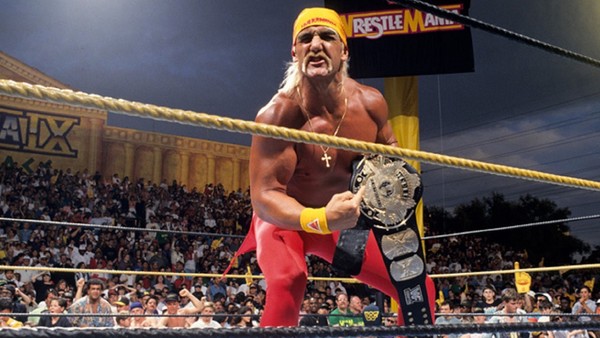
As discussed at length here, Hogan’s legacy is one of the most complicated and confusing in the history of wrestling.
His charismatic personality, zeitgeist-capturing heroics, iconic look, and unforgettable catchphrases form the nucleus of what we still judge babyface superstars on. Conversely, he is also used as a punchline by fans and the industry alike, as the Hulk-coded line of “that doesn’t work for me, brother” is wrestling jargon for sleazy backstage politicking. His greed and stroke with McMahon meant that he didn't even let Bret Hart have the opportunity to carry the torch for the next generation by hijacking the main event of WrestleMania IX in nauseating fashion.
The contradictions continue, as Hogan’s matches are flabby and bloated, but he is also responsible for a string of the greatest moments in wrestling history. His promos are predictable, but he has a greater list of feuds, catchphrases, and storylines than 85% of main event talent to ever do it.
These juxtapositions are best summarised by how one of the most aspirational heroes of the 1980s became a real-life villain by the end of his life. Hulk Hogan made his fame and fortune by portraying a hero whom children could look up to, whilst going on to say abhorrent and racist things when he didn’t think the cameras were rolling.
Hogan could have attempted to make amends for this by serving his time out of the limelight and apologizing for his behavior. Instead of being the 'Real American' who fought for the rights of every man, he chose to stand with political figures who profit from dividing us like never before.
This disappointing final period of his life makes it much harder to look past how poorly his matches and promos have aged. Nobody can dilute Hulk contribution to wrestling or his star power, but very few are willing to acknowledge those things in the wake of his public disgrace.
The evidence stacked against Terry Bollea makes Hulk Hogan look like a cynical construct that conned us all into thinking he was better than he was by being something that...he wasn’t.
7.5/10