The Rise & Fall Of TNA | Wrestling Timelines
7. November 11, 2016 | Double Cross The Vacant And The Bored

And you thought the storylines were too complicated.
The incoherent dreck that is TNA’s fiction is the work of Aesop compared to the offscreen events of the Billy Corgan era, which draws to a close in November 2016. What follows is an attempt to simplify the saga.
In April 2015, the Smashing Pumpkins songwriter joins TNA in the capacity of Senior Producer of Creative and Talent Development. The lifelong wrestling fan describes it as a dream come true; to borrow an ominous turn of phrase from TNA’s delightfully over-the-top voiceover guy, that dream soon becomes a nightmare.
Panda Energy divests itself from TNA in April 2016, leaving Dixie as its full owner and financier. She is not a self-made tycoon, so she’s short of money, and TNA faces complete financial peril. Corgan funds various TV tapings and makes a play to purchase the company outright when he only agrees to a third loan if, in the event that the company becomes insolvent, he gains control of it.
Things go so wrong that Corgan sues TNA in the same month, August 2016, that he becomes its company President. And, when he is President, he claims he has no authority to get anything done. Even by TNA standards, this is farcical. A new word needs to be coined to capture just how awe-inspiringly daft this is.
He sues under the belief that TNA had obscured from him the extent of its debt. A Nashville judge rules that TNA is only obligated to pay back the loan with interest.
Meanwhile, TNA signs a deal with the lowly Pop TV in November 2015. The era of the rights fee is over; TNA is forced into a situation wherein the ad revenue is shared and next-to-no revenue is generated at a time when the promotion is very, very late with various payments. TNA is so late, in fact, that by October 2016, the promotion receives a tax lien from the state of Tennessee resulting from unpaid bills.
What’s strange about all this is that, in 2016, TNA for the very first time actually carves out something of an identity for itself across the spring and summer when Matt Hardy becomes ‘Broken’. His preposterous English accent, supernatural gimmick and cinematic matches allow TNA a way back into the elusive conversation. The act is a divisive sensation that briefly becomes the talk of the industry. TNA cannot capitalise; the promotion is in systemic disarray, and Hardy’s success persuades WWE into picking Matt and Jeff back up in time for WrestleMania 33 on April 2, 2017.
6. January 4, 2017 | The Night They Drove Dixie Down

January 4, 2017 is the date on which Kenny Omega loses to IWGP Heavyweight champion Kazuchika Okada - briefly a caricature on a TNA excursion - at NJPW Wrestle Kingdom 11. The match is awarded ****** by Dave Meltzer. It’s an instantly seminal piece of business, considered by many to be the athletic and dramatic pinnacle of the sport. Omega becomes the biggest star outside of WWE across 46 minutes, and he does it by losing cleanly in a match so monumentally great that it changes the world. The result, finish, and tone is antithetical to TNA’s approach.
There is in fact a way of competing with WWE; as it turns out, it’s by doing everything Vince Russo, Carter’s career-long obsession, said that you shouldn’t. It is incredibly poetic, then, that January 4, 2017 is also the date on which Dixie Carter resigns as TNA chairwoman upon the 85% share purchase of TNA by Anthem Sports and Entertainment.
Anthem had been circling for a while, as TNA circled the drain, and the deal is now complete. TNA as you know it is dead.
5. March 2, 2017 | TNA Is No More, Impact Is Too Late

As successful and wildly acclaimed as WrestleMania 17 was, the WWF Attitude Era peaked in 2000. The trend was not built to last. Shock value wears off, definitionally, because the audience becomes desensitised to it.
A full 17 years after 2000, TNA finally realises that its crude pun of a promotion name is wildly out-of-date and not particularly appealing to sponsors. The company officially renames itself ‘Impact Wrestling’, and, on March 2, films the first set of tapings under the new banner. This is actually clever, for them. ‘Impact’ is immediately recognisable as a hard-hitting description of a wrestling product, and is strong in terms of brand identity, since the TV show is (somehow) well over a decade old. It’s synonymous and punchy. It’s also far too late.
TNA has spent the vast majority of its existence taking the piss out of its hardcore base and frightening away curious viewers with countless awful headline moments. The first thing most fans learn about TNA is that TNA can’t stop tripping itself up. There is nowhere near enough space, even in a dissertation-length deep-dive, to cover every punchline that has deepened the TNA: avoid at all costs stigma. There’s no space here to delve into the time the Impact Zone caught fire as a result of a pyro mishap at Hard Justice 2006; the time Dusty Rhodes sarcastically suggested that every PPV match should be held inside a steel cage, which an enthusiastic Dixie Carter took seriously and created the Lockdown pay-per-view; the time Samoa Joe was kidnapped by ninjas with no explanation nor pay-off; the time…
Like rays of sun piercing a fraying, mildewed roof, some good stuff still gets through in 2017. Lashley’s World title run revives his career; his matches are fun and refreshing hoss fights, his cool presence and massive frame a reminder of why many fans got into wrestling in the first place. Eli Drake, the future LA Knight, is a stupidly entertaining blowhard drenched in charisma. Impact Wrestling actually does what it set out to achieve all along: the promotion out-does WWE with a joyously soap opera storyline. This culminates in an incredible wedding segment, during which Braxton Sutter finally decides to dump Laurel Van Ness and declare his love for Allie.
Big, broad matches. Excellent talkers. Crazy storylines. This stuff would have played so well in 2000. It would have played equally as well in 2023. In 2017, though, trends shift towards incredible in-ring action.
By 2017, NXT has firmly established itself as the WWE brand that it is cool to like. The TakeOver specials are revered for lengthy, back-and-forth matches and the revival of stunning tag team action. And, in yet another LOLTNA moment, its tenuous grasp on the #2 U.S. promotion spot is seized by a Japanese company. New Japan Pro Wrestling has spent the last five years as the favoured promotion of discerning tastemakers. Hiroshi Tanahashi’s stunning babyface artistry; Kazuchika Okada’s slow-burn epics; Tetuya Naito’s disruptive cool factor; Kenny Omega’s terrifying mastery of danger and drama: NJPW is cool, and it’s expanding stateside. Being The Elite and its irreverent takedown of WWE is more popular than Impact doing WWE-style storylines really quite well.
Beyond the creative woes, Impact Wrestling can change its name, but it can’t help itself. Old faces return and leave in acrimonious circumstances, as is tradition, but this time, it’s Jeff Jarrett, not Russo, whose doomed attempt to merge his tinpot Global Force Wrestling outfit with Impact becomes another distracting, litigious mess.
4. December 5, 2017 | The Scott D’Amore Era Begins
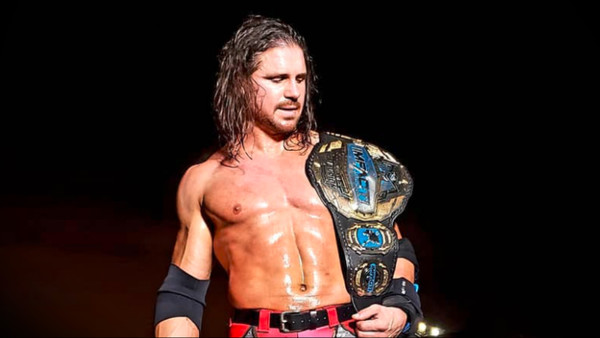
A period of relative organisational stability begins when Scott D’Amore and Don Callis take over management and creative. John Gaburick, who was handed the thankless task of booking a mess of a company that nobody cared about for a few years, is out.
Controversy and carny goings-on remain magnetised to Impact Wrestling; at Bound For Glory 2018, Austin Aries torches his reputation by no-selling Johnny Impact’s Starship Pain finisher in the main event. Impact wins the belt, but nobody cares; Austin’s immediate walk-out and visible F-U to management overshadows a decent to very good show.
Even under new ownership, management, TV station, and creative, Impact is still TNA. Anything good is invariably followed by something bad. The 2018 Latin American Xchange Vs. OGz feud is genuinely excellent, but many people only hear about this without checking it out for themselves because this is Impact Wrestling. How good can it be?
By early 2018, driven by Cody Rhodes, the Young Bucks, and the Bullet Club Elite civil war, Ring Of Honor is handily defeating Impact at the live gate. Turns out, worshipping WWE is not the way to go. As BTE demonstrates, the exact opposite is true.
3. December 21, 2018 | Cold Pursuit
A meagre 140,000 is the best number that Impact can muster on Pop TV, but the move to a new station, Pursuit, is not great news.
Pursuit is available in even fewer homes (30M), and is an outdoors and hunting channel that nobody with a tentative interest would even begin to think would air pro wrestling, if they were bored enough to trawl through the upper reaches of the TV listings to begin with. This seems inexplicable, and mostly is, but the deal is made because A) Impact was rejected by an assortment of networks and B) Pursuit is partially owned by Anthem. This, obviously, rules out anything remotely orbiting a rights fee.
Impact is just waiting around to die at this point, sustained, barely, by its international distribution. It’s grim. There is no place for it. There’s a fiercely dedicated sect of wrestling fans out there who treat the latest burial of a supernatural wrestler in WWE as a national tragedy, but the reception of the Impact ‘Undead Realm’ material suggests that they are a vocal minority, and that Hardy's personality, not the elastic reality, drove the success of the Broken gimmick.
If there was even a remote opportunity to tempt back fans disillusioned with WWE and Vince McMahon’s WCW 2000-level creative, well, tough: the heavily rumoured All Elite Wrestling league, powered by the hottest fleet of free agents in history and a genuine movement supported by the success of BTE and the independent All In pay-per-view, is days away from being announced to the world.
2. September 22, 2019 | AXS Few Areas

With AEW Dynamite just under a fortnight away from changing the wrestling landscape over on TNT, Impact announces yet another TV deal of its own. The promotion will soon air on AXS TV. AXS TV is owned by Impact’s owners Anthem Entertainment. The press release is hilarious, in that Anthem Chief Corporate Officer Ed Nordholm writes “AXS TV’s audience perfectly aligns with our passionate Impact Wrestling fan base”. Isn’t that convenient!
This deal again offers no new incoming funds, and Impact’s attempts to monetise its programming through Twitch streams don’t work, either.
The song remains the same; there are no stars, the storylines are better than Russo’s, but nothing makes an impression, and Impact’s continued existence is quite inexplicable.
1. December 2, 2020 - Present | Life Support And The Fall & Rise

Impact Wrestling, in yet another brutal joke, presents closed-set tapings during the COVID-19 pandemic without looking, sounding nor feeling drastically different. It feels like it has been shot on the moon for years. The ailing outfit receives promotional support from the most unlikely of sources in December 2020: AEW.
On December 2, 2020, Kenny Omega captures the AEW World title from Jon Moxley with the help of Impact’s Don Callis, his close real-life friend, at the Winter Is Coming TV special. In a wild cliffhanger, Omega says that he’ll see everybody on the next episode of Impact, thus sparking a working relationship. At Rebellion, in a main event opposite Rich Swann, Omega sets an Anthem-era PPV buy number that, per Dave Meltzer, drew nine times as many buys as the prior year’s Bound For Glory.
The relationship fizzles by the end of the year. It was Omega’s idea, but he’s physically thrashed, and the inter-promotional stuff while novel does not work without tribal live fans in attendance. Nobody can boo him for taking their promotion hostage.
While AEW crushes Match of the Year charts in 2022 as the new destination for seminal in-ring action, Impact quietly enjoys a very good if understandably overlooked year, in the ring, anyway, highlighted by Josh Alexander against company stalwart Alex Shelley at Emergence. Impact has no unique identity nor selling point, and the good stuff is much of a muchness in a landscape long-defined by strong in-ring, but promotion loyalists are rewarded.
In October 2023, Impact Wrestling announces that the promotion will revert to the TNA name. It’s a publicity stunt, but it’s not unsuccessful. Conversations start to happen. This month coincides with a totally unexpected and extravagantly great three-match run from Will Ospreay, the consensus best wrestler alive. His match against modern Impact great Speedball Mike Bailey at Bound For Glory on October 21 is particularly outstanding. Nobody sees this coming, since Ospreay is soon to be a free agent and has his pick of WWE or AEW. It happens because TNA in its prime was bigger in England than anywhere else. The Essex-born Ospreay grew up a massive TNA fan, and wants to check Impact off his pro wrestling bucket list.
Brand nostalgia and the best wrestler in the world are no match for TNA’s genetic incompetence, however, and on February 7, 2024, it is announced that D’Amore has been fired. This seems odd. D’Amore is very well-liked, ushered in an era that if nothing else was not embarrassing, and, faced with two major cable rivals in WWE and AEW, drew its best live attendance in eight years at Hard To Kill on January 13. That show also generated the best PPV buy number in a decade. In the February 12, 2024 issue of the Observer, Meltzer touches on the industry-wide rumour: the very wealthy D’Amore had made a play to purchase TNA outright after clashing with Anthem over the budget. D’Amore is too ambitious for Anthem, it would seem, and thus the impasse is broken. He’s gone. Still, TNA is back, and it’s just like old times! This is not a good thing.
On March 3, 2025, PW Insider’s Mike Johnson reports that Delirious - the booker perceived to have brought the ROH boom to an end with his drastically overlong matches and general dithering on when to push new acts - has taken TNA creative over from de facto booker Ariel Schnerer. Delirious drags TNA back to the days of scathing reviews, and the timing is very TNA, because, after some curious crossover appearances here and there, the company strikes up a formal working partnership with WWE on January 16, 2025. Much like with Vince Russo in 2006, TNA makes a risible change in creative at the crest of a massive opportunity.
The motive behind the WWE/TNA deal cannot be accurately deduced, but the cynical take amongst insiders is that the market leader wishes to artificially inflate TNA’s popularity; that way, TNA, over which WWE exercises a degree of control, can supplant AEW as the #2 promotion stateside. This narrative is furthered by multiple members of the pro wrestling media, at least one of which holds an intense dislike for Tony Khan’s promotion. The AMC deal is announced on December 2, 2025 by President Carlos Silva.
This works, to an extent, in that TNA’s deal with prestige station AMC - which doubles TNA’s potential viewership and per Dave Meltzer’s December 8 estimate garners TNA around $10M per year in rights fees - seems unlikely to happen without the big-time association.
It also doesn’t work, because the Delirious-booked January AMC debut is a laughing stock. Viewership is less than impressive over subsequent weeks, dropping to a 0.03 in the 18-49 demo by April 23. In parallel, AEW, elevated by a well-booked World title picture and the drawing power of a reenergised MJF, enjoys a surge in popularity, drawing its best ratings and live attendances in years. This is about the opposite of TNA becoming the #2 promotion.