10 Batman Questions That Always Confused You
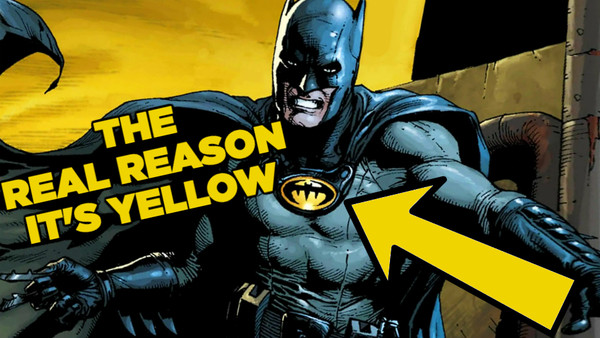
So... what is ACTUALLY the point of the yellow symbol?
Batman is DC Comics' most beloved and famous superhero, but not everyone knows him as well as they think. There are a buttload of misconceptions surrounding the Dark Knight, but then there are also things that can be slightly confusing, stemming from the character's depiction, his look, or even the objects he keeps in the Batcave.
Naturally, this has led to fans posing all sorts of questions regarding the character. Some are easier to answer, others... not so much, but they are all answerable.
It doesn't take the World's Greatest Detective to separate truth from fiction (or true fiction from... whatever), but it's understandable as to why these questions have accompanied Bruce for so long, especially as some were only addressed briefly in a given story, or were explained in a somewhat forgotten comic.
Unsurprisingly, "where does he get those wonderful toys?" isn't one.
Either way, it's time to explain some of the more confusing peculiarities regarding the Caped Crusader, from the intricacies of his suit, his secret home, to why he does what he does in the first place.
10. Why Does Batman Have A T-Rex And Coin In The Batcave?

There are actually two kinds of questions here; the first has an obvious answer in that there's a canonical explanation for why Batman keeps trinkets of his various encounters - most hailing from Dick Sprang's classic Batman stories - but the second, i.e. the 'how' the Dark Knight managed to get these souvenirs into the Batcave, is a tad more confusing.
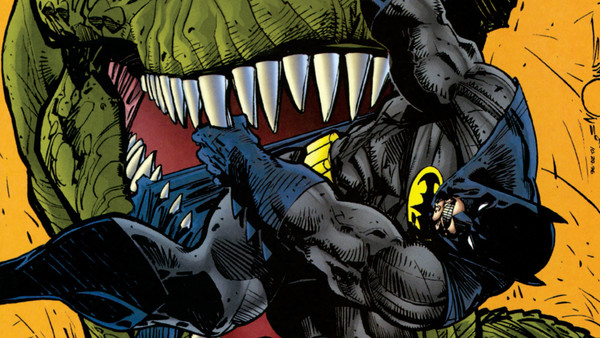
For almost as long as there has been a Batcave Batman has kept souvenirs of his exploits in it. The T-Rex and the Penny in particular are the standout attractions, and they both - unsurprisingly - originate from some of Bruce Wayne's earliest adventures as the Dark Knight.
Of course, with this being DC, there have been multiple interpretations of the same origin, which we're thankfully able to split up into pre and post-Crisis continuity. The New 52 and DC Rebirth muddy the waters further, but we'll just go with the most recent versions as the canonical explanations to why - and how - Bruce came into possession of his iconic souvenirs.
First the T-Rex. The origin for how Batman acquired the robotic dino came in Batman Chronicles #8, where it's revealed that Bruce took it from a theme park ran by an old friend of the Waynes. A business partner uses it for evil, and once a slightly melancholic Batman rains on his parade, dejected at the unending nature of his war against crime, Alfred suggests that he keeps trophies in the cave to remind him of his successes. So he does.
Now for the penny. Given there's only one Batman villain who incorporates a coin into his gimmick, it's obvious that Two-Face has something to do with it, right?
Only he didn't... because it's actually the Penny Plunderer responsible for this contraption. The New 52 is the most recent story to provide an explanation for the souvenir, so it's the one we'll go with.
Back in Zero Year, a young Batman goes up against the Riddler. The penny is an outdoor piece of art that Lucius Fox uses to bounce signals past Riddler's jammers, and then both presumably decided to move the contraption to the Batcave.
9. What's The Point Of The Yellow Symbol?

Ignoring for a second that the yellow symbol is better than just the black one (well... it is), those who take umbrage with Batman's brighter insignia tend to claim that it's antithetical to the character's general aesthetic. The Dark Knight only uses black - or sometimes very, very dark grey. The yellow just shouldn't be there.
Except, they're wrong. The aesthetic qualities are purely subjective of course, but there's a practical reason for why Batman has that bright chest symbol, and it's to do with the armour of the Batsuit itself.
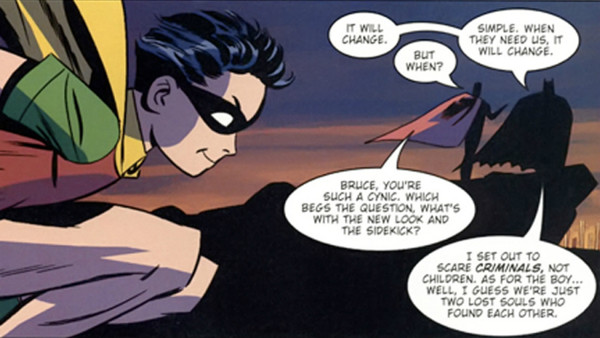
The initial cause behind Bruce adopting the yellow symbol - as explained in the late Darwyn Cooke's impeccable DC: The New Frontier - was down to him not wanting to scare children. It's a separate Earth, but it serves as a fantastic explanation for why the Dark Knight became brighter in the transition from the Golden Age to the Silver Age.
Practically speaking, the yellow symbol also has value. It effectively acts like a big shiny bullseye, drawing fire to the most heavily armoured part of Bruce's costume. So there you have it, the yellow symbol rocks, and there are actual reasons for why it's a necessary component of the Batsuit.
8. Why Doesn't Bruce Wayne Fight Crime In A Different Way?

Batman isn't a perfect creation. Bruce Wayne himself is a billionaire who considers himself above the rules, and his predilection to beating the snot out of villains at the first opportunity rather than pre-empt crime at the source could be considered flawed, to say the least.
Only, the conception of Batman as a selfish vigilante who only goes out and attacks criminals and just... stops, is actually incorrect. The problem is that it's not nearly communicated frequently enough in different media.
Bruce Wayne's mantra is plain and simple: he suits up as Batman to ensure what happened to him at a young age shouldn't happen to anyone else. He engages in philanthropy, and has even been known to volunteer to help Gotham's poor while in various disguises. Far be it from Bruce to have nothing but contempt for the inmates of Arkham Asylum, he's also overseen the rehabilitation of several of his adversaries personally, contributing vast sums of money to prevent crime, rather than stopping it as a Bat-themed judge and jury.
Ultimately, it's down to writers as to what kind of Batman readers get. He could be brutal, dogmatic and ruthless, or conflicted and multifaceted.
Either way, Gotham needs Batman. It's possible his presence has inspired the nightmares that plague the city, but who else has the resources to protect Gothamites?
7. What Is - And Isn't - Considered Continuity?

Continuity is one of the biggest and most confusing aspects of comic book universes. For starters there's decades of the stuff, and when you factor in reboots, retcons and relaunches, it can prove to be quite a challenge to place when certain stories take place, or even what previous comics have played a part in the build-up.
Both DC and Marvel are guilty of this, but the Distinguished Competition have definitely struggled with it more. Starting with Crisis on Infinite Earths, the publisher has rebooted, retconned or relaunched its line of comics more times than Batman's had sidekicks, but here's how things stand currently.
First off, there are two principle continuities - pre and post-Crisis. Pre-Crisis encompasses everything before 1985, while Post-Crisis encompasses everything that follows. The reboot enabled writers to retell Batman's origins, with Year One and The Long Halloween depicting the Dark Knight's formative years, but this is where things get even weirder.

The DCU experienced several more Crises in the years following Infinite Earths, but it wasn't until 2011 that DC wiped everything from the drawing board. It was meant to be a clean break, but they picked and chose what was and wasn't continuity; stories like The Killing Joke, Batman Reborn and Batman Inc. stayed, but the timeline was way more condensed. The previously mentioned Year One and Long Halloween, meanwhile, seemed to disappear with the advent of Zero Year.
And then came DC Rebirth, which is a higgildy-piggildy mesh between the Post-Crisis DCU (bear with) and the New 52. Confusing? Absolutely, but continuity these days - at least for DC - tends to be more of a tonal thing than anything else. It's not necessarily even quantifiable anymore.
6. Why Was He Okay With Jason Todd Using Guns?

Moving swiftly on to stuff that is slightly less confusing (slightly), we now come to Red Hood. The title was first used by Joker - supposedly - in the accident that led to his permanent scarring at Ace Chemicals. Today, however, it is the second Robin - Jason Todd - who goes by the mantle.
Wherever you side on the "should Jason Todd have returned" debate, one quandary that few writers have failed to really address has been how Jason's current association with the Bat-Family contradicts Batman's one rule. Todd is an anti-hero who uses firearms, and unless your only experience of Batman has come at the expense of 2016's Batman v Superman, you'll know that the Caped Crusader considers guns a big no no.
And yet, in recent years, Jason has been free to wear his symbol and regularly interacts with the Dark Knight and his allies. What gives?
The answer - sadly - isn't all that satisfying. It seems as though Bruce just tolerated his behaviour on the condition Jason didn't kill, but at no point does he decry his former ward for using firearms while brandishing the Bat-symbol. It's only in the most recent volume of Red Hood and the Outlaws that the pair once again come to blows, with Batman kicking him out of the Bat-Family for good after Jason tried to assassinate the Penguin.
As for why he was okay with him using firearms up until that point? That's anyone's guess.
5. Why Is The Joker So Different Each Time?

Comic book characters are interpreted and reinterpreted in different ways all the time. It's partially why Batman is such a divisive character, as he's different things to different people. Naturally, this principle also applies to his villains, but none more so than the Clown Prince of Crime himself, Joker.
If you hadn't noticed already, there are a lot of different versions of the Joker. In some incarnations he's a clowning pranksters, others a sadistic serial killer, and in some a figure who couldn't bear the thought of killing Batman. It's part and parcel of the character, but one that was explained by Grant Morrison back during his stint on Batman in the late noughties.
During his series, Morrison opined that the Joker isn't insane, but rather "super-sane," able to reinvent his personality at the flick of a switch. It explained how the character kept on changing, and provided a canonical precedent for future writers to experiment with drastically different versions of the character.
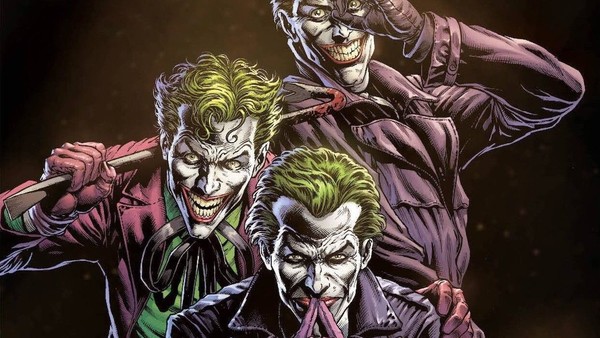
Now, though, a different explanation has come around, courtesy of Geoff Johns. He gave the Dark Knight access to Metron's chair - a source of limitless knowledge - and revealed that there have been three Jokers all along. Three princes, three tricksters - three distinct eras of the same character.
Johns promises to elaborate this theory further later in the year with Three Jokers, but for now, the reason for how Joker keeps surviving and changing is down to the fact there've been at least three of them.
4. Why Did He Pick Azrael As His Replacement In Knightfall?

The nineties were a tepid time for the comics industry, but one character who managed to weather the storm (mostly) was Batman. Knightfall's Azrael may have boasted all the hallmarks of a rote nineties design, but he ended the decade as an integral and beloved Batman character, thanks largely to the event where he became Batman.
Everyone knows the story by now. Bruce Wayne over-stretches himself trying to quell a breakout from Arkham Asylum, pushes away his allies, and has his back broken in two by Bane. Bruce, now recovering, decides that Gotham still needs a Batman, and instructs Jean Paul Valley to take up the mantle while he recovers.
Valley proceeds to be an even more radical Dark Knight than Bruce could have imagined, outfitting himself in a new outfit and brutalising criminals left and right. It forces Bruce to return to Gotham to fight for the right to be Batman all over again, which he does.
But why Valley? Why, when faced with better options in Dick Grayson and even other DC heroes, did Bruce opt for a character who had only been around for just over a year?
The answer is somewhat tragic. Bruce knew that Dick was desperate to escape his shadow and assumed he'd balk at the prospect of being Batman, while Tim himself was too young. Valley, although a volatile option, was the only one he felt capable of shouldering the burden. A prime example of how Bruce isolating himself is never a good thing.
3. Is Bruce Wayne Just A Mask?
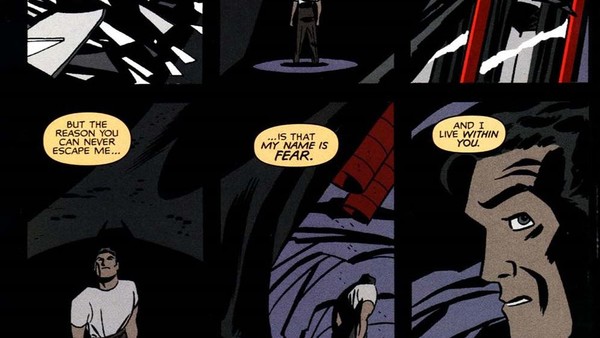
No. Well, the answer is a little more complicated than that, but the reality is that Bruce Wayne and Batman are two sides of the same coin, and none is more dominant than the other.
There's been a tendency in some depictions of the character to deem Bruce the mask and Batman the real man underneath. To make that judgement, however, would be a fundamental mistake to make.
Bruce Wayne and Batman are one and the same - you can't separate one from the other. This isn't to get confused with Bruce Wayne's public persona either, which he uses as a means of deflecting suspicion from his nightly activities. Just because he projects a fake image to the public doesn't mean he's consumed with darkness, as was illustrated perfectly in another Darwyn Cooke novel, Batman: Ego.
Bruce is a father, friend and ally to many. He's also extremely compassionate, and while that element is sometimes lost when he suits up, it's never a case that one side of the character represents his 'real' self.
2. For A Man Who Works Alone, Why Does He Have So Many Allies?

Batman has always been considered a bit of a loner. Even after boasting one of the most iconic partnerships in all of comics, most tend to see the Dark Knight as Gotham City's lone wolf; he doesn't play well with others, even on the Justice League, and bats away help at the first opportunity. Or so it would seem.
Yes, the World's Greatest Detective may cut an isolated figure on and off the page, but it's sort of an open secret that he enjoys company. His book was the first to coin a family title in DC's books, and in every decade since he first appeared, he's had a Robin, a Butler and a Batgirl by his side.
Would an actual loner keep such company? No, they wouldn't, and that's why the perception of Batman as an angsty loner is more a nonsensical cliche than it is a genuine character trait. Countless stories have seen the character push his allies away, only for the same message to prevail each time - Batman needs a family, more than he perhaps realises.
At the end of the day, the Dark Knight doesn't get along with everyone. But the idea that he's a loner is rubbished as soon as you see just how many allies he has.
1. Can He Really Beat Everyone With Enough 'Prep Time?'

If you've been on the internet for about the last decade, you'll no doubt be privy to the plethora of 'versus' scenarios played out online that see Batman as an invulnerable master tactician. Is he smart? Absolutely. Is he one of the more formidable combatants in the DC Universe? Also yes, but the idea he can beat even the strongest figures with enough 'prep time' is a myth, one extrapolated from the character's exploits in Frank Miller's The Dark Knight Returns and Mark Waid's Justice League: Tower of Babel.
The former story, set in a dystopian alternate future, sees Bruce Wayne go toe-to-toe with Superman with the use of a mechanised suit. He's able to take on the Man of Steel thanks to the assistance of Green Arrow, who fires kryptonite right at Kal El, enabling the Dark Knight to lay the smackdown temporarily.
It's important to remember though that Bruce doesn't actually win this fight - not that the purpose was to even defeat Superman in the first place.
Either way, it's part of what's informed the idea that Batman can defeat anyone as long as he's given enough time to prepare for the battle. Tower of Babel saw the Caped Crusader's strategies against the Justice League exploited by Ra's al Ghul, but his allies weren't permanently defeated, but instead briefly incapacitated.
Everyone can pretty much agree that Batman's appeal lies in his vulnerability. He's just a man, which is why it's so confusing that fans are so eager to anoint the character DC's most invincible hero.
Watch Next
DC Quiz: How Well Do You ACTUALLY Know Batman?
