10 Ways Video Games Blew Your Mind (Without You Even Realising)
Celebrating the little things.

An absolutely insane amount of effort goes into developing a video game. From character animation, to environment design, to AI programming, there seems to be no end to the work involved.
However, it's the finer details which truly add to a player's immersion in the virtual world they're exploring. We've touched upon these easy-to-miss details before, such as Arthur Morgan's ear cartilage in Red Dead Redemption II or the racial bias of Mafia III's cops.
But what about the instances where these details are on full display, yet how they work remains a mystery?
When entire systems, engines and programming languages have been implemented - or even invented - to improve our gaming experience, without anyone ever drawing attention to them? These miracles of programming, never truly intended to be front and centre, are sadly, and frequently, overlooked.
So let's pay tribute to the wizards working behind the scenes to improve our games without shouting it from the rooftops. Some things might not seem all that incredible at face value, but trust us - they're worth highlighting.
10. Groundbreaking Water Effects - Halo 3

Convincing simulation of water has always posed a challenge to game developers, and its execution is something of a badge of honour. While most devs settled on flat planes with animated textures for many years, it was Bungie's work on Halo 3 that raised the bar.
Rather than flat planes, which looked fine from higher angles but less impressive when closer to eye level, Bungie implemented a new system where the water was composed from a mesh which would realistically ripple and distort.
Said mesh was also heavily customisable, and could be edited to accurately reflect the body of water depicted - from babbling brooks to endless oceans. On top of that, these meshes could also have parameters "painted" onto them, in order to simulate effects such as the change in the water's resistance when it hit an obstacle such as a rock jutting above its surface.
The engineer who designed Halo 3's water system was so impressed by what Bungie was doing, that during development they created a new and improved version in order to give the environment artists even more freedom.
Just about any video game water we have seen since can be traced back to Halo 3.
9. Only What You Can See Is Rendered - Horizon Zero Dawn

Horizon Zero Dawn is a stunningly beautiful open world title, and remains one of the most visually impressive games on the PS4. This is even more impressive given that developers Guerrilla Games are known primarily for the Killzone series - linear first person shooters with very little in terms of open world features. So how, I hear you ask, have they managed to achieve an open world with such lavish detail that doesn't run with the frame rate of a slide show?
Guerrilla Games used a system which allows the game to render only what the player can see, effectively unloading everything off to the side of, or behind, the character's field of view.
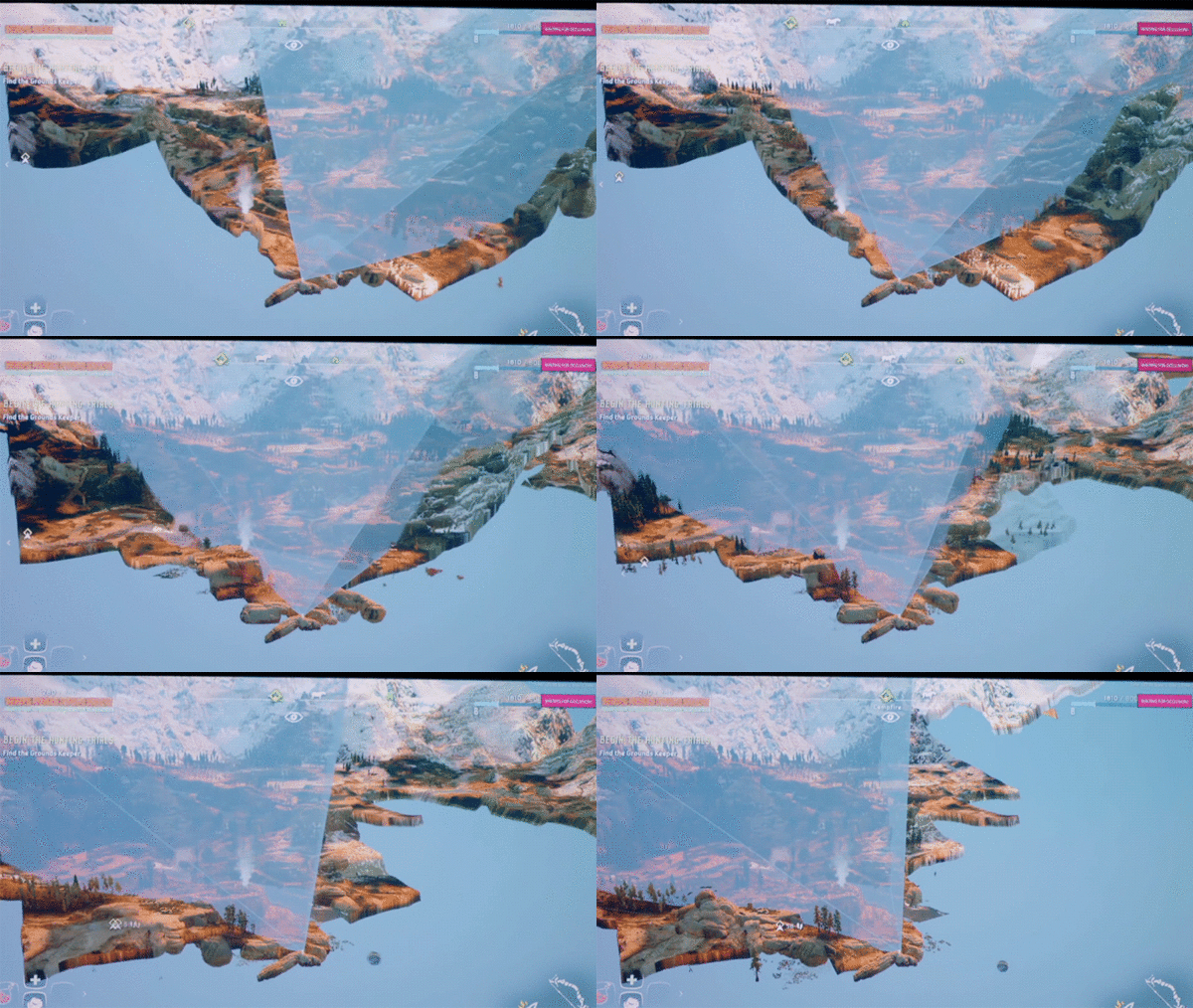
This, along with a great deal more trickery such as switching out distant objects with 2D images, allows for the creation of a beautiful playable environment with significantly less processor load.
With massive, sumptuous, open world games being the norm in AAA development, techniques such as these have become commonplace, but Guerrilla giving us a window into these tricks just makes us appreciate their craft even more.
8. Amazing Physics Set-Pieces - Uncharted 2 & 3

The Uncharted series is no stranger to spectacle - in fact, its success hinges heavily on its huge Hollywood style set-pieces.
Probably the most impressive example of this is Uncharted 2's 13th Chapter, Locomotion, which sees Drake traversing a freight train whilst under heavy fire, beginning in the jungle and seamlessly transitioning to perilous mountain cliffsides. However, as impressive as this set-piece is to the player, its execution behind the scenes is absolutely incredible.
Unlike video game train sequences that had come before this, Naughty Dog created two huge looping tracks. The train, itself a series of moving physics objects, hurtles along the first loop until the player reaches a suspiciously high-sided train car.
A cutscene triggers, obscuring the view of the map switching out for another, in which the train enters a tunnel. Again, another cutscene masks a further map change, transitioning to the second looping track on the side of a mountain, making up the final stages of the level. A masterstroke of both level design and programming.
Similarly, Uncharted 3 has a section set on a sinking cruise ship. The ship itself is one gigantic physics object driven by a dynamic water system, once again presenting the player with genuine motion rather than an illusion.
7. Extreme Dynamic Weather - Driveclub

Driveclub was a divisive game on launch, with ire directed at its unfair opponent AI and a struggling online component, but one thing critics could firmly agree on was its stellar visual presentation. A year after its release, a dynamic weather patch pushed this even further.
A cut above even the most visually impressive racing games before it, a huge amount of effort was poured into Driveclub's extreme weather conditions, the like of which had never been seen before. Raindrops, rather than simply being thin semi-transparent lines, are millions of individual droplet particles each directly affected by the game's physics and lighting engine, and post-processing such as motion blur.
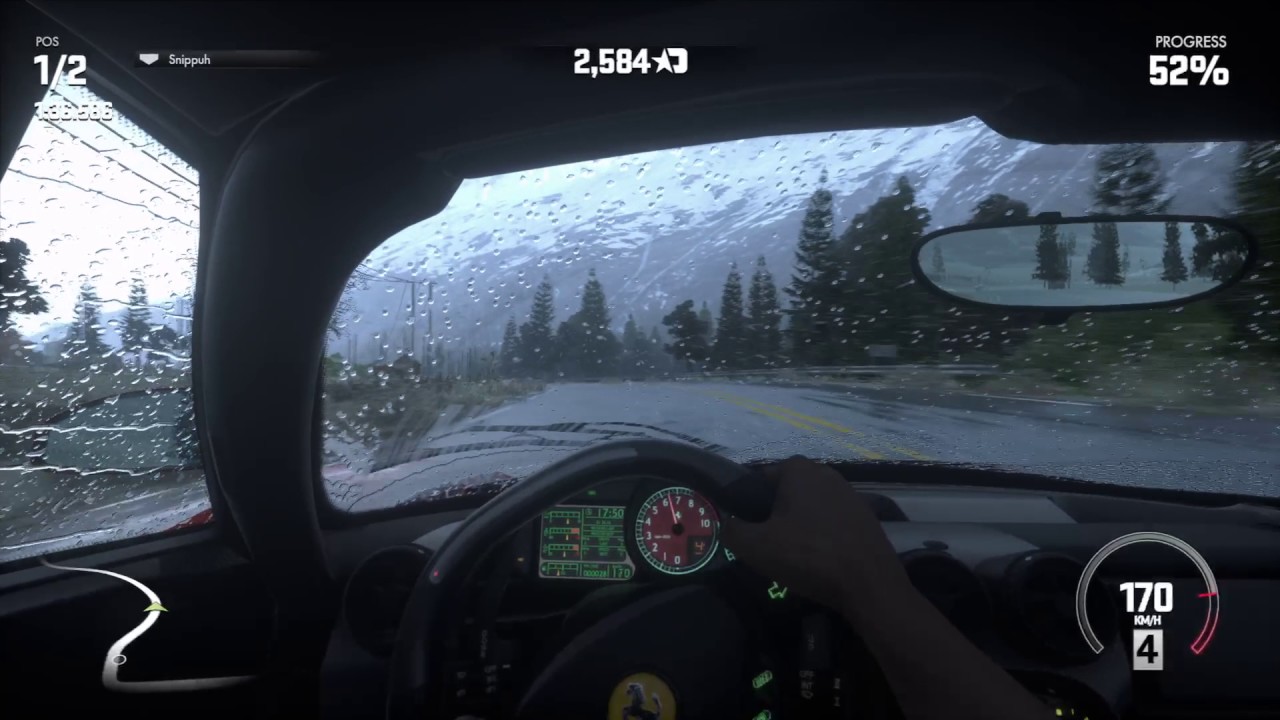
The resulting droplets which then rest on your car's windshield and bonnet are similarly dynamic. Instead of pre-baked animated textures, the droplets react to the vehicle's velocity and direction in real time, streaming down the windshield whilst static but causing realistic streaks when in motion. The windscreen wipers even then leave realistic streaks and pools when activated.
The snow effects take this further, and when driving in a blizzard at night, the combination of near-total darkness and a blinding onslaught of snow particles reduced visibility to just about zero.
Whether that's a good thing or not is down to the player.
6. Geo-Mod 2.0 Technology - Red Faction: Guerrilla

The Red Faction series was never particularly strong in the story department - thankfully, that's not what we play Red Faction for. We of course, play Red Faction for the opportunity to use whatever we have to hand to level the very environments in front of us.
Never was this more perfectly implemented than in 2009's Red Faction Guerrilla, the third instalment in the franchise. While the Geo-Mod engine was much-touted in the first 2 entries (and sadly downplayed in Red Faction II), it wasn't until the introduction of Geo-Mod 2.0 in Guerrilla that environmental destruction achieved its full potential.
Beyond simply blowing ever-expanding holes in the environment and its structures, Geo-Mod 2.0 had its world constructed from weighted ragdoll physics models, all linked to a stress-based collapse model. Attack the bottom of a building with your massively overpowered hammer, smashing away its lowermost components and eventually it would lose structural integrity, finally collapsing into rubble and kicking up an almighty dust cloud.
Unfortunately the game's sequel, Red Faction: Armageddon, dropped the sandbox elements of its predecessor and returned to a level-based structure, which limited the destructive potential massively. Environmental destruction in gaming has not since featured as heavily as it did in Guerrilla.
We can only dream of its resurgence.
5. Logan's Insanely Detailed Healing - X-Men Origins: Wolverine

Wolverine has survived a hell of a lot. Across his comic and film career, he's been nuked, eaten by cannibals, reduced to a single cell and even crushed under a steamroller - only to regenerate in agonising, gruesome detail.
In gaming, for the most part, his signature healing ability hasn't been given its due - mostly tossed out entirely because, you know, not being able to die is a fairly game-breaking advantage. One exception is 2009's X-Men Origins: Wolverine, a loose adaptation of Logan's pathetic first solo outing. Along with some seriously graphic, visceral dismemberment, Wolverine's healing factor is on full display here - and it's grisly and very impressive.
The reason for how good Logan's healing abilities look might not immediately be noticed if you're not looking closely, and are just enjoying ambushing mercenaries and chopping their arms and legs off.
However, if you do make the effort to take a massive amount of damage and then pause to examine just what's going on as Wolverine heals, you'll be blown away. To achieve the effect, developers Raven Software actually modelled a full skeleton, musculature and skin model for Wolverine, and they can all be seen regenerating in real time.
Insanely cool, and the only game to do Wolverine's healing factor right.
4. First Shots From Enemies Always Miss - Bioshock

Bioshock is littered with incredible design, and has inspired countless games which came after it. There's no shortage of retro-futurist sci-fi action games available these days, and it's Ken Levine's undersea shooter which arguably started the trend.
One lovely, lovely little detail however is one that no one would have known had Levine not revealed it on Twitter back in 2017. You know that feeling when you walk into a new area only for a gunshot to crack and a bullet to whizz past your ear, giving you just enough time to snap round and locate your aggressor and engage in another pulse-pounding firefight?
It turns out that the first shot from a leadhead splicer is programmed to miss every single time. This pulls double duty in that it gives the player that adrenaline high present in a cinematic shootout but also because it stops you from ever being blindsided by an enemy you couldn't possibly have known was present.
There are many other features present in the game which balance it nicely, such as enemy AI slowing down when behind the player and a brief period of invulnerability before a killing blow, but it has to be those near-misses that take the prize.
3. Nuclear Disarmament - Metal Gear Solid V: The Phantom Pain

Now for a video game easter egg that serves as a damning indictment of human nature. The Metal Gear Solid series has always had a strong anti-nuke message running parallel to its silly factions and women getting their bums out, but there's something especially depressing about MGS V's "Nuclear Disarmament" event.
When kitting out Mother Base with all manner of defences and helicopter paint jobs, another check mark on the list is to create a nuke (as a deterrent for other players, obviously).
Kojima, however, hid a cutscene in the game which was intended to trigger only if every single player in the world disarmed their nukes and disposed them, resulting in a literal worldwide nuclear disarmament. Early in 2018, the cutscene triggered - but unfortunately, this turned out to have been a bug caused most likely by a stack overflow.
The criteria for how to properly achieve Nuclear Disarmament has since been revealed by Konami. Whilst it hasn't yet happened, there are players worldwide working together to achieve the result.
If it were ever to happen, it would surely be a major - and poignant - milestone in gaming.
2. Improvising Cutscenes - Uncharted (And Other Naughty Dog Titles)

Naughty Dog's Uncharted series (and, of course, The Last Of Us) are very highly regarded when it comes to their writing and characterisation, but there is much more to this than just a good script for the actors to read from. Over time there have been various reveals of just how much improvisation was involved in bringing these characters to life.
In a 2011 interview promoting the release of Uncharted 3, Neil Druckmann revealed that a lot of scenes were created with improvisation in mind, writing just a few core lines and outlining the flow of the scene. The actors were then encouraged to improvise around this outline in order to give the dialogue more spontaneity.
According to Druckmann, many of the wittiest lines came from the actors rather than the writers.
Adding to this, after gameplay sequences are programmed and captured, they would then be handed to testers who would feed back on where they felt on-screen characters should react to certain events or parts of the environment.
The actors would then be brought back in to add these environment-specific lines and actions. It's details like this that bring Naughty Dog's games to life in such a unique way.
1. The A.I. Director - Left 4 Dead

Remember the distant utopia of 2008? Remember playing Left 4 Dead split screen on a tiny telly and being blown away not only by the sheer amount of zombies on screen but also by how much replay value there was in just those 4 short campaigns? Well, that's because Valve put a massive amount of effort into a radical new AI system which has barely been matched to this day.
Beyond the AI of the zombie hordes and special monsters is the unseen and ominously titled "AI Director", a dynamic system that alters the game's pacing, difficulty and atmosphere on the fly.
Depending on players' statuses and skills during the playthrough, the director controls when and where hordes will spawn and how frequently players encounter pickups such as ammo and health, creating a different experience every time the game is played.
Left 4 Dead 2 introduced The AI Director 2.0, which expanded on this massively. The director was now able to alter the layout of levels to avoid the player simply rushing to the end, and would reward players with better items should they take more difficult routes.
It seems that every now and then when the stars align and Valve actually release a game, it'll be vastly ahead of the curve.