14 Key Details About The Class Action Lawsuit Against UFC
Get the rundown here about the biggest legal action ever bought against the UFC!
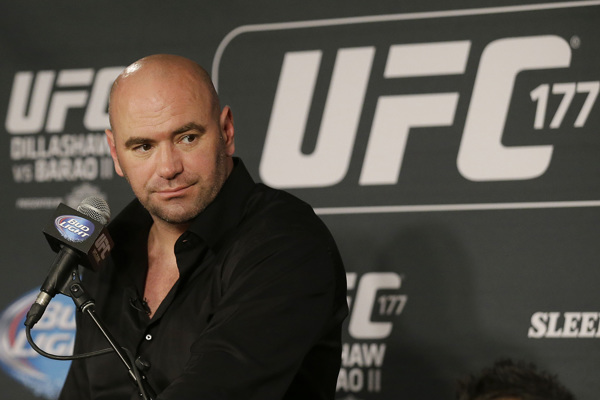
14. The Fighters Named With The Suit Are...
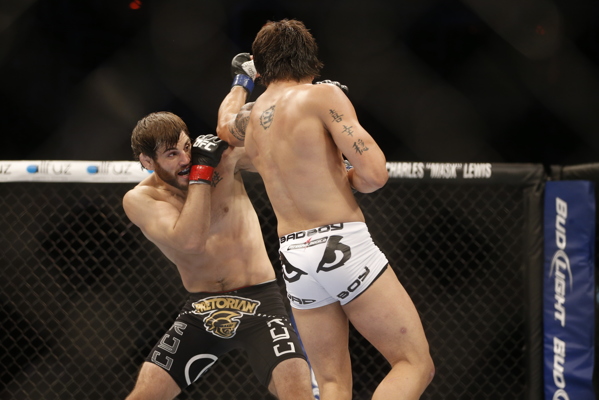
The UFC further continuing their stranglehold over the fighters. Why? They dont have enough money to actually pay their athletes above welfare wages? Will the money trickle down? Has it so far? How many checks have the random fighters gotten from official UFC sponsors? None? No Harley Davidson checks? No checks from the supplement sponsors? But Nate, NBA players dont get to put random sponsors on their team jerseys. Good point. But its that of a child. Please shut up and be quiet. NBA players CAN and DO make shoe deals The NBA tried to squash that, fining Michael Jordan every time he wore his Nikes. Nike paid the fines. Why didnt Jordan get cut from the Bulls? Because hed go to the Lakers and make just as much money. Hard to do when youre working for a monopoly. (Fortunately some organizations are flourishing off UFCs bad business ideals.)It is well worth reading Quarry's full statement on the matter. Fitch, meanwhile, is a former UFC title contender who lost to Georges St. Pierre for the welterweight belt a few years back. His style was well known to be a cure for insomnia, and he was making mid-to-high money by UFC standards, so he was cut from the company. According to Dana White, Fitch made about $300,000 discretionary bonuses during his UFC run, but Fitch broke those numbers down in a video he posted to Youtube, saying he was actually paid $1,022,000 in total for 18 fights:
Sounds like a lot of money, but lets look at that a little bit closer. Out of the 18 fights in that fight purse, I paid 20 percent of that to management and the gym. So if you take that number, divide it by seven-and-a-half years, I was making roughly $176,000 a year before management and gym fees.That's also before tax. And remember, this is a guy who was in the top ten of his division, who had challenged for a title. When Fitch was released Dana White claimed it was because he was on the "downside of his career" - but it created a stink in the hardcore MMA fan community. Even if you don't like his style, Fitch is a good fighter. He went and signed with the WSOF, and challenged for their welterweight title over the weekend, losing to Rousimar Phalares. That loss brought him to 2-2 since his UFC release. There's at least one other big wrinkle with Jon Fitch in this lawsuit, but that will be covered later. Which leaves us with Cung Le, the sole "active" fighter involved in the suit. Front Row Brian, a noted insider who posts on Twitter, claimed that there would be three fighters involved in the suit well in advance of the press conference, and that one would be "semi-active" - well, seems he was right. Le has just one fight since 2012 and that was a devastating loss to Michael Bisping in August that came with a bungled drug test in which he was possibly painted as a cheat without cause. His drug test, handled by the UFC via a lab they hired as there was no athletic commission where the fight was held, came back positive for high levels of HGH - a naturally occurring substance in the body that increases during intense physical activity. You know, like a fight, or intense training for a fight. The lab did not perform the tests required to discover if the HGH was naturally occurring or not, and not only that, they did not keep a "B" sample of Le's blood/urine, meaning no second test could be performed. Le was, understandably, extremely upset at the incident. He was initially suspended, though that was lifted. He sought out a public apology, though none was forthcoming, at least not to the extent he was looking for. Is his inclusion here sour grapes? Le was paid extremely well for a non-title contender in the UFC, at UFC 139 alone picking up $420,000 (including a Fight of the Night bonus).
13. Who Joined Them
https://www.youtube.com/watch?v=V765YNQqqe4 Class Action lawsuits can have additional plaintiffs join in. At Tuesday's press conference, former UFC fighter Carlos Newton joined Le, Fitch, and Quarry to offer support, though he was not (at least at the time) named as a plaintiff. Newton is a former UFC welterweight champion who retired in 2010. However, his last fight in the UFC came much earlier, at UFC 46 in 2004. Zuffa (the UFC's current owners) purchased the UFC in 2001 for $2 million from SEG, so Newton did fight during the Zuffa era. Will other fighters jump on the suit? That remains to be seen. The men behind it say they have received tremendous support in private, but many fighters are likely worried about being blacklisted by the UFC if they publicly voice support for an action against the company, which is in part what this suit is all about, when you really look at it.12. The Law Firms Involved
The Joseph Saveri Law Firm, Cohen Milstein Sellers & Toll, and Berger & Montague. These are the three firms representing fighters in this action. Now, three names probably doesn't tell you all that much, however, here are some key points: Joseph Saveri Law Firm took on Apple in an anti-trust suit over an agreement it had with other tech companies not to cold-call one another's developers. Apple moved for a $324 million settlement in the case, but the presiding judge found the evidence so compelling that she nixed the settlement and ordered the case to continue. Cohen Milstein Sellers & Toll has taken on drug makers for flooding America with Opioids (pain killers), and recently launched a class action against Dreamworks, Disney, and Sony over wage-fixing and anti-poaching deals between studios. Berger & Montague have spearheaded actions against rental car companies such as Enterprise, securities companies, Revlon, and others. In short, these firms have experience, and pretty much specialize in anti-trust and class action suits. With three firms involved, there will be a large amount of legal resources backing this case.11. The UFC's Response

The UFC is aware of the action filed today but has not been served, nor has it had the opportunity to review the document. The UFC will vigorously defend itself and its business practices.Behind closed doors, however, things are likely playing out a bit differently. Rumours that can be sourced to an exchange between Front Row Brian and other twitter accounts seem to suggest that Zuffa has been prepared for legal action for a while, and that Dana White himself could be taking a large amount of the heat as the public face of the company, despite the fact that he owns a minority share of the company. The business practices of the UFC have often been questioned over the years, including 2011/2012, when the government ran an anti-trust investigation on the business. That investigation was closed, but civil suits tend to have a lower burden of proof.
10. The Suit Alleges That Fighter's Identities Were Exploited/Expropriated
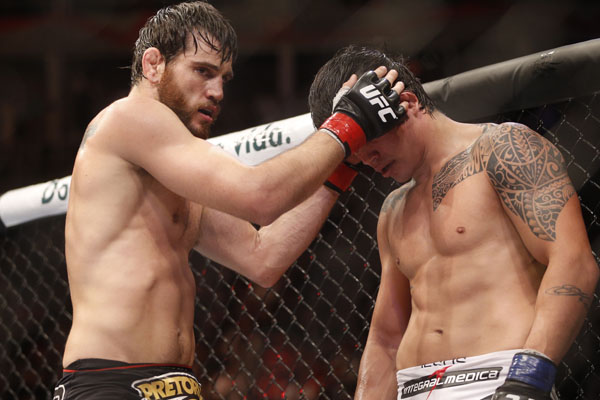
Fitchs Identity was expropriated and his compensation for appearing in UFC Licensed Merchandise and UFC Promotional Materials was artificially suppressed due to the scheme alleged herein. Fitch was and continues to be injured as a result of the Defendants unlawful conduct.What exactly does that mean? Fitch appeared in three UFC games during his time with the company, but back in 2008, he was allegedly dropped from the company for refusing to sign over a lifetime right to his name and likeness for use in video games to the UFC. Said Fitch at the time
Working for free and selling our rights away for lifetime, thats a little different. We tried to negotiate five- or 10-year deals with them, but it wasnt good enough. It was all or nothing. He wanted our lifetime. He wanted our souls forever He wanted us to sign merchandising agreement, and it was not a very good agreement. There was not really a reason for us to sign it. The first thing they brought to us was for us to sign all of our rights away for everything forever. It was for very small compensation, and there was no compensation for family members if we were to die. We could die and they could make memorial figurines and stuff and make thousands, millions of dollars, and our families wouldnt see a penny of it. The way they bring the contracts and stuff to us, I dont know, its just not how business is done.Cutting a fighter for not signing that deal is not going to help the UFC's case.
9. The Suit Alleges That The UFC Prevented Venues From Working With Competing MMA Promotions
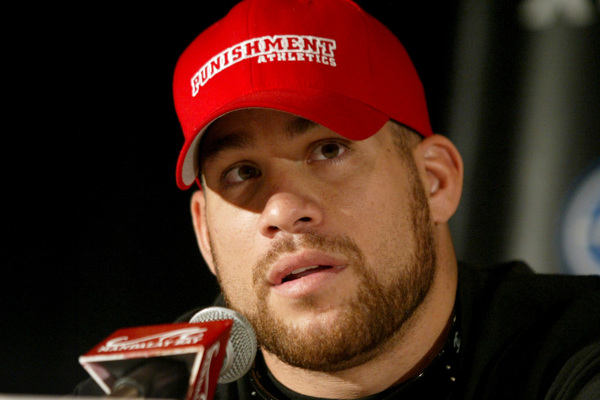
The UFC said no. They tried to get to the Pond, and the UFC didn't let it happen. They wanted to do it at the Pond and the UFC said no.The Pond refers to Anaheim's Honda Center, and the event in question was Bellator 131, where Ortiz would go on to defeat Stephan Bonnar in the main event. Interestingly, at the time, the UFC did not issue a denial, but simply declined to comment on Ortiz's statement.
8. The UFC Allegedly Refused To Work With Sponsors Who Worked With Rival Promotions
...throughout most of the Class Period, the UFC refused to contract withany sponsor who agreed to work with an actual or potential rival MMA Promotion company or Fighter under contract with another MMA Promoter, whether an actual or potential rival, and prohibited these sponsors from appearing on UFC Fighters during UFC events.In recent times, this may have become less of an issue, hence the wording "throughout most of the Class Period" (period covered by the suit). Of late, you could see Dynamic Fastener's name, for example, on the shorts of both Bellator and UFC fighters. That's not to say the UFC didn't play hardball in the past. Then you have the Reebok deal, which has cut out sponsors altogether. That's going to add a huge twist to the case.
7. The UFC Allegedly Blocked Sponsorship Deals For Fighters - Then Made The Deals For Themselves
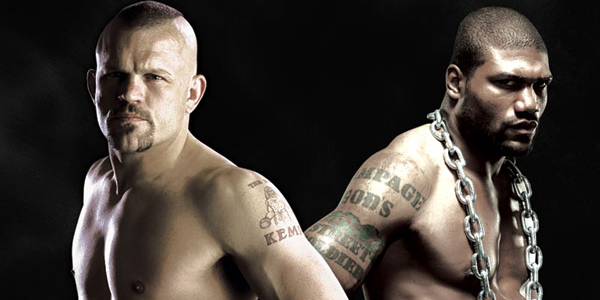
The UFCs scheme also enables the UFC to unjustifiably obtain lucrative exclusive event sponsorship deals for itself. Consider just two examples involving Quinton Jackson (Jackson). Jackson negotiated a deal with a company called Round 5 to develop an action figure based upon his Rampage persona. The UFC blocked the deal, and subsequently entered into its own deal with Round 5 for the production of UFC action fgures, a line that included Jacksons likeness. Likewise, Jackson negotiated a deal with Reebok for sponsorship, which had not been approved by the UFC, and the UFC used its dominance to block Jacksons proposed sponsorship deal with Reebok in order to subsequently obtain a deal for itself.That seems a lot like directly stealing from fighters, so it will be interesting to see the defense they offer. Jackson very publicly complained about the Reebok deal being blocked prior to his exit from the UFC.
6. The UFC Allegedly Punished Fighters Who Stood Up For Their Rights Or Looked To Go Elsewhere
The UFC negotiated a deal with THQ, Inc. for the development of a UFC video game. Zuffa required its athletes, for no compensation, to assign exclusively and in perpetuity their likeness rights for video game use. Fighters who wished to negotiate this request were terminated,including Plaintiff Jon Fitch. White also publicly threatened all MMA Fighters, even those not under contract with Zuffa with a permanent ban from competing in the UFC if the Fighter chose to sign with EA Sports.We covered that in brief earlier, but there's more.
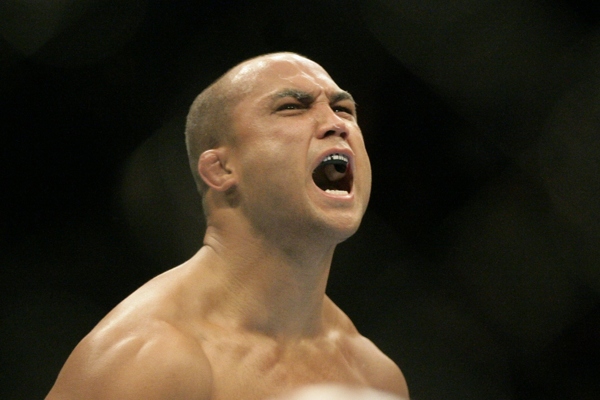
Following his victory over Matt Hughes in a welterweight title bout that had been promoted by the UFC, UFC Fighter B.J. Penn informed the UFC that he planned to sign with an actual or potential rival promotion company for a much higher payday than UFC was then offering. In response, the UFCs Dana White called Penn and threatened that the UFC would ban Penn from fighting for the UFC forever if Penn worked with another promoter. White told Penn that Penn was f***ing done! Youll never ght in the UFC again! Youre finished. Youre scorched earth, motherf***er. Scorched earth. Dont call me crying saying you want to come back because your f***ing done! White also threatened to remove or blur Penns face from UFC videos and promotions and said he would remove his bout with Hughes from the UFCs DVD library so that Penn would be forgotten.In short, the UFC used bully tactics, and in some cases possibly illegal tactics, to hold on to fighters as well as to get the deals they wanted.
5. UFC Contracts Are An Issue
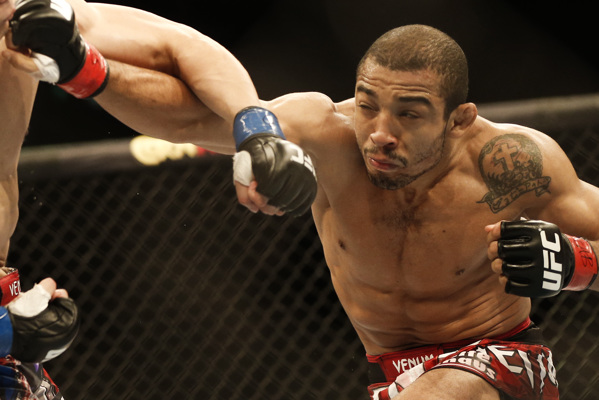
The Champions Clause, which allows the UFC to extend a UFC Fighters contract for as long as the athlete is a champion in his or her weight class, preventing the Fighter from financially benefiting from his or her championship status by soliciting competing bids from other MMA Promotions even after the end of his or her original UFC contract term. This clause specifically blocks actual or potential rival promotions from having access to Elite Professional MMA Fighters, which are needed for a would be rival promotion event to be commercially successful. This clause also denies UFC Fighters free agencydespite their being independent contractorsthereby retaining the Fighters services for the UFC effectively indefinitely.They have a point. In the NHL, you can win a Stanley Cup one year, and if your contract is up, you're a free agent, and you can certainly sign elsewhere. There's no requirement to come back and play for the same team again to defend the cup. Don't like the team sports analogy? Well, look at boxing. You can be stripped of a title for not defending it, but you're not tied to any one promoter or organization. Then there's the matching clauses - as noted, the UFC has worked to sign away the likeness of fighter's for life. When the UFC reserves the right to match any competing offer when a fighter's contract is up, what seems to often be missed is that the UFC will still own the fighter's identity, at least to the extent that they can continue to use it in video games and such, meaning the company making the competing offer will be less motivated to make it a high one, since they're losing out on part of the package, so to speak. Another interesting tidbit:
As the UFC gained and then maintained market and monopsony power through this anticompetitive scheme, including by eliminating actual or potential rivals, in or about January 2014, it added provisionssuch as, e.g ., the unilateral demotion in pay provision which resets a Fighters pay to lower purse levels if a given UFC Fighter loses a bout, and additional restrictions on sponsorship rightsthat further enhanced the UFCs control over its Fighters.In essence, starting early this year, the UFC worked into its contracts the clause that, if a fighter loses, his base pay drops (conversely, it is known to rise with wins). The suit also mentioned, as an example of such threats being carried out, that Randy Couture was at one point airbrushed out of company materials.
4. The Suit Doesn't See Pro Wrestling, Bellator, Or Anything Else As Competition To The UFC
3. Dana White's Ego And Attitude Provided Ample Ammunition For The Lawsuit
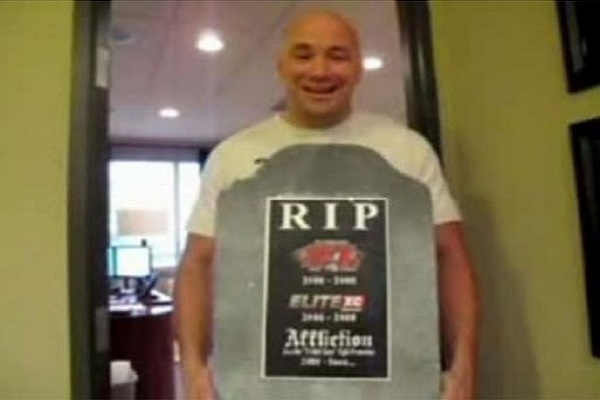
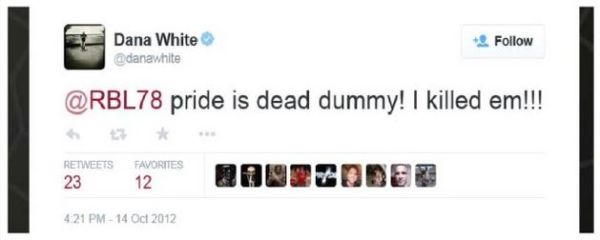
There was a time when it was neck and neck. That time is over. There were times when we were in dog fights,but everybody needs to just concede and realize were the NFL. Period. End of story.White's analogy in that last quote is problematic in the context of this case, because unlike in the NFL, fighters in the UFC don't have teams actively competing for their services. You take the contract the UFC offers you, or you don't fight for the world's biggest MMA promotion. It's why Ben Askren is making "okay" money in ONE FC. Maybe his most damning statement came in 2010, as according to the suit, White stated:
There is no competition . Were the NFL. You dont see people looking at the NFL and going, Yeah, but hes not the best player in the world because theres a guy playing for the Canadian Football League or the Arena League over here. Were the NFL. There is no other guy.White will no doubt claim he was talking up his promotion, something promoter's do - so it will come down to whether the company's actions behind the scenes match its words, or whether it was in fact all bluster.
2. The Fighter's Portion Of The Pot Is Small - And That's The Biggest Issue
UFC Fighters are paid approximately 10 17% of total UFC revenues generated from bouts.That's as a whole. In comparison, the suit alleges,
103. Athletes in sports such as boxing and the Big 4, i.e ., football, baseball, basketball and hockey in the United States, generally earn more than 50% of league revenue, a significantly higher percentage of revenues than those paid to UFC Fighters.104.Boxers Floyd Mayweather and Manny Pacquiao take the number one and two spots, respectively, on the Forbes 100 highest paid athletes list, earning upwards of $40 million in guaranteed purse for a single bout, before inclusion of PPV profits. Mayweathers compensation has reportedly topped $90 million for a single bout for an event that draws comparable PPV purchase rates to high profile UFC events.Now, there are about 500 fighters in the UFC. The majority of them are not making huge money, so this is the point that is really going to be the big issue for them. Smaller names don't get big sponsorship deals, and video games barely care if they exist - that's for the top ten, top fifteen guys. Guys who are 2-2 and unranked? What matters to them is, why aren't fighters getting a bigger cut of revenue? And is the UFC illegally manipulating the market by stifling competition in order to keep the fighter's cut low?
1. There Are Flaws
Through the scheme alleged herein, the UFC locked up: (i) all or virtually all Elite Professional MMA Fighters with substantial national or regional notoriety; (ii) the vast majority of major sponsors; and (iii) key physical and television venues.Without access to, or the ability to compete for access to, the Elite Professional MMA Fighters, would be UFC rivals cannot hope to attract enough viewers (either live or via Internet, television or Pay Per View broadcast) to make their promotions significantly profitable. Without access to key sponsors,venues, or major television distribution outlets, would be rivals cannot put together sufficiently attractive events either to attract Elite Professional MMA Fighters to work with them or to gain the kind of audience that could challenge the UFCs dominance.The problem here is that Bellator ran one of the most highly rated MMA events on cable television in all of 2014, and had a highly successful Pay Per View as well. ONE FC is the dominant company in Asia, although this class action only covers North America and therefore ignores them entirely (although it does reference former Bellator and current ONE FC welterweight champion Ben Askren). Bellator also pays pretty well at times. The suit also brings up the issue of co-promotion, stating that the UFC has refused to co-promote fights in the past (this is definitely true, for example, in the case of all-time heavyweight great Fedor Emelianenko, whose management company, M-1, wanted to co-promote a fight with the UFC). However, the issue of co-promoting may not be one that can be forced on a promotion, as companies still need to be able to operate independently. However, some of the allegations do appear to have merit - the sponsorship tax, blocking other promotions from using venues, etc. - and hopefully, regardless of the outcome of the suit, it creates a better working environment for fighters in the future.