The Cricket World Cup's 10 Biggest Controversies

You're not going to believe what went on at the 2003 tournament...

The 2015 Cricket World Cup is already in full-swing. The World Cup is cricket's showpiece, a chance for legends of the game to write their names into the annals of history. From Clive Lloyd to Ricky Ponting, many great captains have lifted this much sought after trophy. While primarily being a stage for the sport€™s heavyweights and star names to lock horns, the tournament also gives a chance for cricket€™s lesser nations to rub shoulders with their Test playing counterparts. The current tournament will see such unusual clashes as Australia versus Scotland and South Africa versus United Arab Emirates. In the past, fixtures of this ilk have produced massive upsets and fairytale results. Who can forget Ireland€™s defeat of England in Bangalore back in 2011? While the tournament has produced a whole host of awe inspiring moments and performances such as Shoaib Akhtar€™s 100mph ball versus England in 2003, Gary Kirsten€™s 188 not out versus United Arab Emirates in 1996 and India€™s massive 413/5 at the expense of Bermuda in 2007, the tournament has also had its fair share of controversial moments. Here is a look at ten of the biggest controversies/shocking moments to rock the tournament since its inception in 1975.

10. South Africa Need 22 Off One Ball - Australia, New Zealand 1992
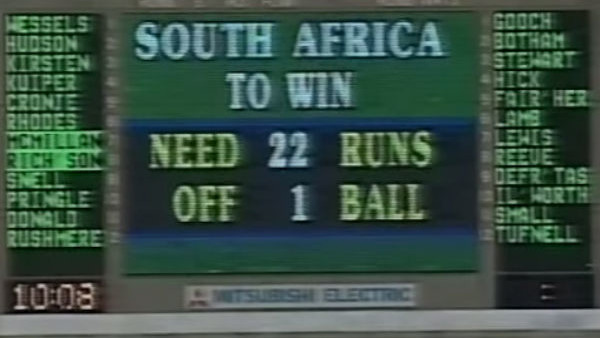
A promising World Cup debut ended in farcical disappointment for South Africa after a rain delay scuppered their chances of a semi-final victory over England in Sydney. Requiring an arguably achievable 22 runs to win from 13 balls before the rain came, in the days before Duckworth-Lewis, the ICC€™s scoring system left South Africa requiring 22 runs to win from a solitary delivery. Chris Lewis apologetically bowled the final ball of the game which Brian McMillan clipped to midwicket for a single leaving the South Africans furious and both England and the ICC rightfully red-faced.

9. Sri Lanka Forfeit - Pakistan, Sri Lanka, India 1996
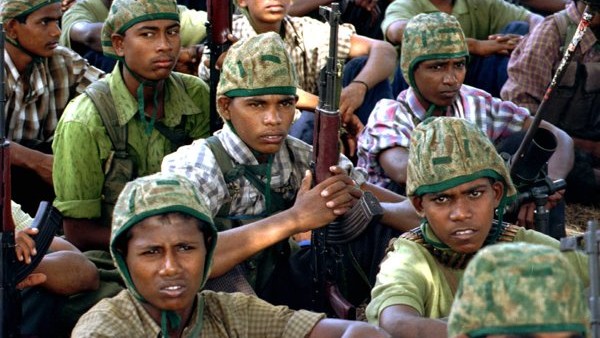
Controversy hit the 1996 tournament before a game had even been played as Australia and the West Indies refused to send their teams to Sri Lanka. After the Central Bank bombing carried out by the militant group the Tamil Tigers earlier in the year, concerns with security caused the teams to pull out of their fixtures with Sri Lanka due to fears about the safety of their players. The points were duly awarded to the Sri Lankans who went on to top the group and ultimately defeat Australia by seven wickets in the final in Lahore. Legendary opening batsman Sanath Jayasuriya was named player of the tournament for his all-round performances.

8. €˜That€™ Run Out - England, Wales, Scotland, Ireland, Netherlands 1999
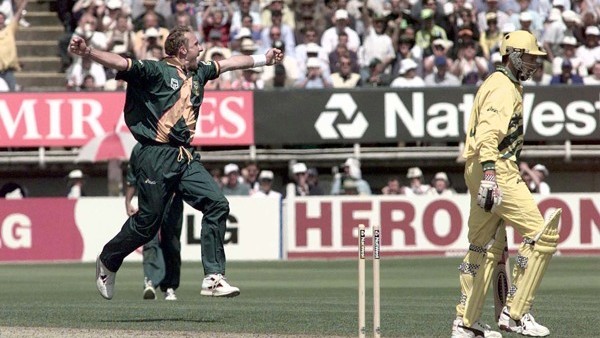
Above we see Allan Donald celebrating one of a whole host of wickets he took at the 1999 tournament, but not everything went the South African legend's way.

This was possibly (and unfortunately) one of the most defining moments in the history of South African cricket.

In a hotly contested semi-final versus Australia that included a Shaun Pollock 5-for and Shane Warne bowling the ball of the tournament to Herschelle Gibbs, the game had gone down to the wire.

With one wicket in hand, South Africa needed just one run from the final four balls to book a place in a World Cup Final.

However, overawed by the occasion, tailender Donald fell to a needless run-out and brought about the infamous €˜chokers€™ tag that still plagues South African cricket to this day.

The match was tied and Australia went through to the final due to finishing higher on the Super Sixes table and the rest is history.


7. Shane Warne€™s Drugs Ban - South Africa, Kenya, Zimbabwe 2003
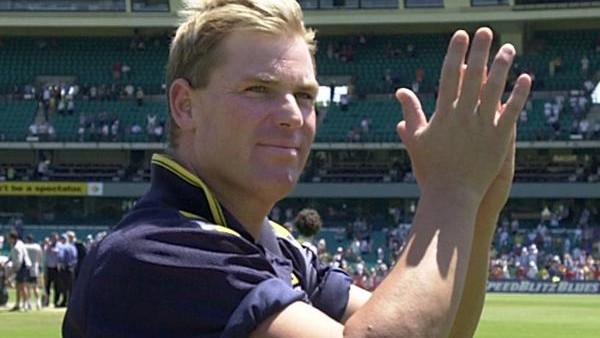
A man not shy of making headlines for the wrong reasons, Shane Warne found himself in the media spotlight again ahead of Australia€™s 2003 World Cup defence after failing a drugs test for a banned diuretic. The king of spin tested positive for hydrochlorothiazide and amiloride which as well as diuretics for temporary weight loss also act as masking agents for performance-enhancing drugs. Warne was reportedly €œshocked€ and €œdevastated€ at the news and strongly stated: €œI have never taken performance-enhancing drugs, and I do not condone their use.€ Despite this blow, Australia did not let it faze them and went on to retain their World Cup crown unbeaten with Warne€™s understudy Brad Hogg doing more than a capable job of filling the great man€™s boots.

6. England Boycott Zimbabwe - South Africa, Kenya, Zimbabwe 2003
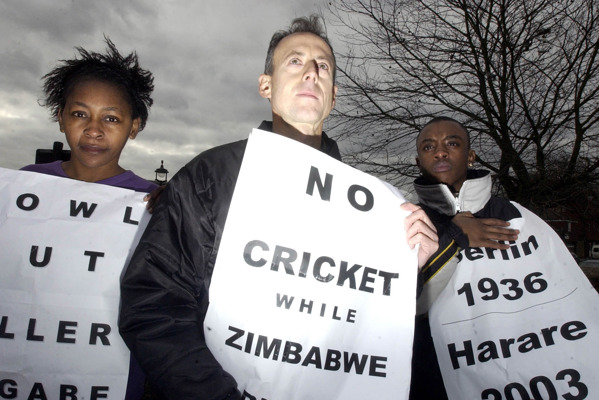
Concerns with security and political unease under the Mugabe regime saw England opt out of their group stages match with Zimbabwe in Harare. Co-hosting the tournament with South Africa, the African nations played their matches in their respective home countries; this resulted in a similar boycott by New Zealand ahead of a match versus Kenya. ECB CEO at the time, Tim Lamb, said:
"The ECB stance is, was and always has been that the safety and security of its players and officials is its primary concern. And the ECB feels the players would be in danger if compelled to play. Secondly the state of civil disorder in Zimbabwe dictates that the game should be relocated."
The game was never rearranged and Zimbabwe were awarded the points which ultimately resulted in them advancing to the Super Sixes stage of the tournament at the expense of England.

5. Flower & Olonga€™s Protest - South Africa, Keyna, Zimbabwe 2003
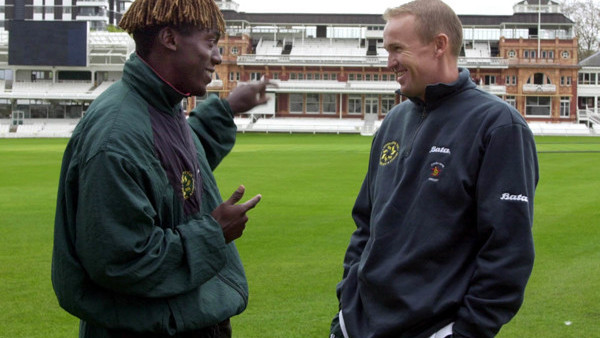
In an act of tremendous courage and bravery, Zimbabwe cricketers Andy Flower and Henry Olonga denounced the €œdeath of democracy€ in their home country. In a stunt to show their opposition to President Robert Mugabe€™s regime, Flower and Olonga took to the field in black armbands in Zimbabwe€™s opening World Cup match with Namibia. Many were moved and inspired by Flower€™s and Olonga€™s actions while others thought bringing politics onto the field would bring the game into disrepute. On approaching Olonga to join his protest Flower said:
"I thought Henry might grab the concept and have the courage of his convictions to take a stand. I also thought the fact that it would be one white Zimbabwean and one black one operating together gave the message the most eloquent balance."
The two were exiled from their home country and went on to continue their lives and careers overseas.

4. The Death Of Bob Woolmer - West Indies 2007
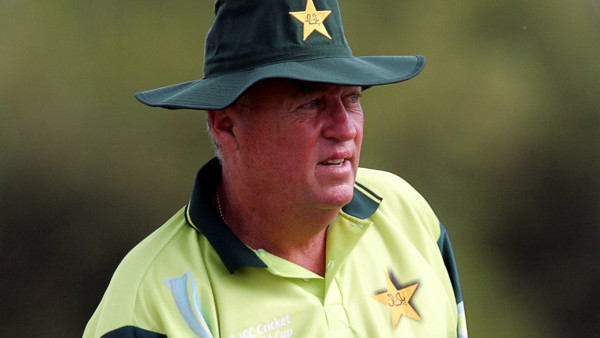
Pakistan coach Bob Woolmer was tragically found dead in his hotel room just one day after his side had crashed out of the 2007 World Cup. An embarrassing (yet fitting) defeat to minnows Ireland on St Patrick €™s Day followed an opening day defeat to the tournament hosts and resulted in Pakistan€™s campaign being pretty much over before it had really started. On the morning of Sunday, March 18, Woolmer€™s body was found on the bathroom floor of his Jamaica hotel room. Early rumours suggested Woolmer had died due to a heart-attack. Others suggested suicide. It was later announced that Jamaican police would be opening a murder case before it was revealed that there was insufficient evidence of either death by force or natural causes.

3. 'Fredalo' - West Indies 2007

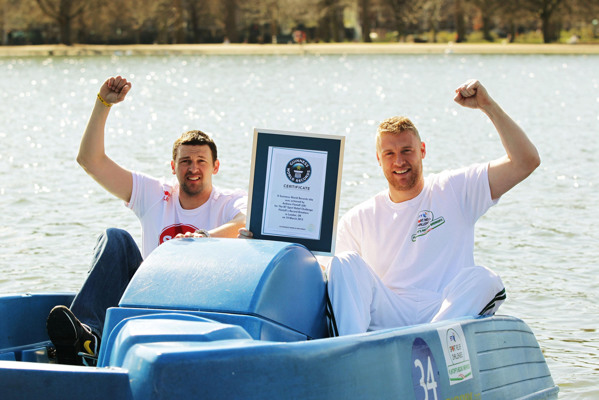
After his 2005 Ashes celebrations, it is well documented that in his younger days Andrew Flintoff enjoyed the odd drink. After a boozy night in St Lucia with teammates Paul Nixon, Ian Bell, James Anderson, Liam Plunkett and Jon Lewis, Flintoff was stripped of the England vice-captaincy after having to be saved from the water after coming into difficulties while riding a commandeered pedalo. Far from impressed with the whole debacle, captain Michael Vaughan said:
"That incident changed the whole atmosphere in the camp. We went into the New Zealand game with a really good attitude but we didn't play well and after 'Fredalo' we just started taking it all too seriously. That might sound silly but everyone was too tense and desperate. There was no escape - and even on the field you have to be pretty free, especially in one-day cricket."

2. Dwayne Bravo & Kieron Pollard Omissions - Australia & New Zealand 2015
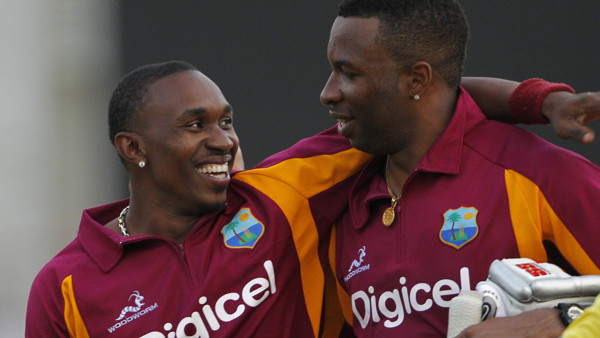
A team sadly in decline, the West Indies selectors did themselves no favours in the build up to the current World Cup by omitting two of world cricket's most prominent all-rounders from their squad. As a result of this decision, Chairman of Selectors Clive Lloyd has come under fire from the media and players alike. One high profile critic was none other than Chris Gayle who classed the Bravo and Pollard omissions as €œridiculous€ and €œvictimisation€ while also claiming to be €œhurt€ by the decision. In reply to these comments Lloyd said: €œI don€™t know why he should be hurt. You can€™t please everybody when you choose teams, you have to play with the team and what is given.€ With the West Indies' campaign already underway, Lloyd's decision still looks to be the wrong one after his side crashed to defeat at the hands of the Irish in Neslon, New Zealand. A Lendl Simmons century wasn't enough for the men from the Caribbean as impressive knocks from Ed Joyce, Paul Stirling and Niall O'Brien saw the Irishmen home with more than four overs to spare.

1. Umpiring Error - Australia & New Zealand 2015

A recent one. James Taylor is on 98 not out. He is the only English batsman who seems to have turned up to England's opening match with the Aussies at the MCG. Josh Hazelwood fires in a full ball at Taylor's pads. The Aussies appeal for LBW while Taylor and James Anderson attempt to scramble through for a leg-bye. Aleem Dar gives Taylor out. The diminutive Englishman asks for a review. Meanwhile, almost as a formality, Glenn Maxwell has thrown the stumps down at the non-striker's end in an attempt to run out Anderson. With Taylor already given out, the ball is surely dead. On review Taylor is rightfully given not out. However, the third umpire has deemed Anderson as run out. Taylor is stranded on 98, two short of his maiden ODI ton; and wrongly so. An ICC statement revealed: "Article 3.6a of Appendix 6 of the Decision Review System Playing Conditions states that the ball should have been deemed dead when the batsman (James Taylor) was given out LBW. No further runs or dismissals were possible.The PCT spoke to the England team management and acknowledges that the game ended incorrectly and that an error was made."

In this post: 
Cricket
 
Posted On: 
Contributor
Contributor

Yorkshireman. Freelance writer. Sports Journalism graduate. Sport and comedy enthusiast. Cricket tea connoisseur. Former Mackem. Former Melburnian.