World Cup 2014: 5 Things You Need To Know About Next Summer's Tournament
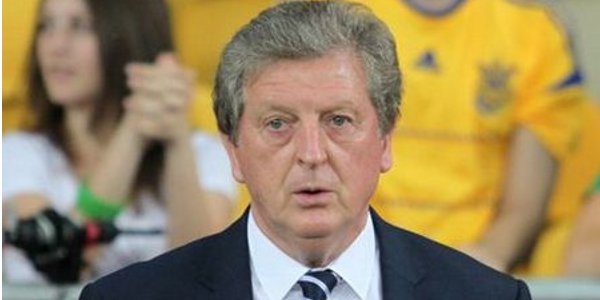
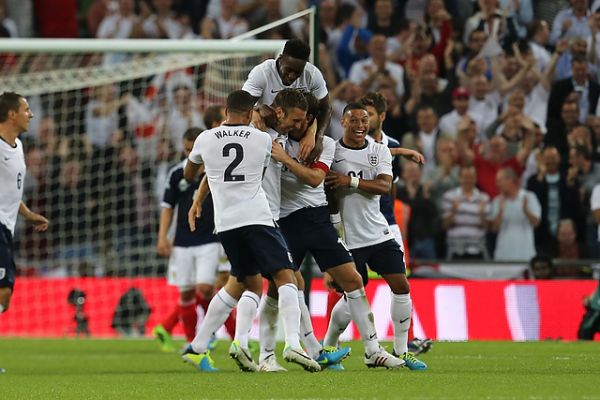
 As Steven Gerrard's acrobatic goal nestled into the bottom corner of Wojciech Szczsny's net last night, England manager Roy Hodgson's face spoke a thousand words. We've done it, we've qualified for the World Cup. It wasn't always easy going. Four dismal draws against Ukraine (twice) Montenegro and Poland didn't help. In fact, it was typical England to take it right down to the wire of the final round of qualifiers, and even more typical of them to leave it until two minutes from time to confirm qualification. With Ukraine thumping San Marino, as we all knew they would, at various stages it looked as though Roy Hodgson's men might succumb to the pitfalls of November's unpredictable play-offs. But, having happily avoided all that thanks largely to Wayne Rooney and Gerrard, we can now begin planning for Brazil in 2014. The carnival of the occasion will be electric, and a once-in-a-lifetime experience for many. Not in 63 years have Brazil hosted a World Cup, with a then-three-year-old Hodgson too young to remember the occasion of 1950. There's little questioning the 2014 World Cup will be a momentous event, and with less than eight months to go until football returns to its "spiritual home", here, we round up 5 Things You Need To Know About Next Summer's Tournament.
5. When's The Group Stage Draw?
4. Who Else Have Qualified?
Belgium, Germany, Italy, Netherlands and Switzerland were among the first European countries to qualify for next summer's World Cup, while England, Spain, Russia and Bosnia-Hercegovina joined them on Tuesday. The final four places will be decided by November's play-off matches. Argentina, Colombia, Ecuador and Chile are the South American teams to get through, while Australia, Iran, Japan and South Korea have qualified from Asia. Costa Rica, United States and Honduras have qualified from North and Central America and the Caribbean federation. Perhaps the more intriguing question is who hasn't qualified. Luis Suarez's Uruguay haven't yet secured their place next summer, and must defeat Jordan in a play-off. Meanwhile, Portugal could only finish as runners up in their group, as did France and Sweden, all of which will join Uruguay in the play-offs. There could be a few notable absentees on that flight to Brazil...3. When Does The Action Begin?
2. What Are The Time Zones?
 Due to the fact the UK is four hours ahead of Brazil, there's going to be late nights on the horizon for many England fans next summer. Fan's schedules will be further complicated by the fact Brazil has three different time zones. After the Brazilians get the tournament underway with their opening game, there will be a 10-day interval of three games a day, kicking off at 17:00 BST, 20:00 BST and 23:00 BST. The second-round matches take place at 17:00 and 21:00 BST, the quarter-finals at 17:00 and 21:00 BST, the semi-finals at 21:00 BST and the final at 20:00 BST That's not quite as disruptive as the schedules fans had to endure in 2002 when the World Cup was hosted in Japan/South Korea, and most will be more than willing to burn the midnight oil to watch a festival of football.
1. What Kind Of Tournament Can We Expect?
 The 2014 World Cup will be a momentous and historic occasion for Brazil, who will be hosting the competition for only the first time since 1950. This is also the first World Cup to take place in South America since Argentina hosted in 1978, and the first time the tournament has been hosted outside Europe consecutively following the 2010 South Africa competition. Clearly Brazil will have home advantage and will be favourites to lift the famous trophy, having not lost a competitive game on home soil since 1975. Fans should expect a carnival-like atmosphere at grounds, and a very colourful occasion. Supporters should also expect every stadium to be brimming to capacity. This year's Confederations Cup, seen as a dress rehearsal for the World Cup, enjoyed ticket sales of 800,000. On the field, goal-line technology will be used for the first ever time in a major tournament, meaning there will thankfully be no repeat of Frank Lampard's "ghost goal" last time round. However, conspiracy theorists can get their sharpened pencils out because German-based manufacturer GoalControl have been chosen to provide the data. What are you looking forward to the most about next summer's World Cup? What are England's chances? Let us know in the comment section, below.