Doctor Who Review: Kill The Moon - 10 Ways The Doctor Upped The Ante

How Clara was asked to grow up.
WARNING! SPOILERS: This post contains spoilers and speculation for the Doctor Who series eight episode €œKill The Moon€. The Doctor whisks his companions away on grand adventures. Yet experience is a harsh teacher. Innocence is lost forever the moment we realize right answers don€™t always exist. A fully realized life is lived in the spaces in between the good and the bad. We are forced to make choices with little or no information and rely on our own sense of ethics to influence our decisions. Sometimes we are wrong. Even if everything turns out OK we are apt, like Clara, to lash out in adrenaline-fueled panic and disbelief. The Doctor in €œKill The Moon€ is an uncompromising one. Is the experience of traveling with the Doctor worth the risk? What is the Doctor for? Is he nothing more than a tour guide taking the kids on a field trip? Or is he a catalyst, the thing that sparks an evolutionary change? Is the teacher responsible for the pain the student experiences when their world view is shifted? €œKill the Moon€ wraps a ridiculous and a sometimes questionably executed story around some harsh truths. Let€™s examine how Clara was asked to grow up.

10. Look Up
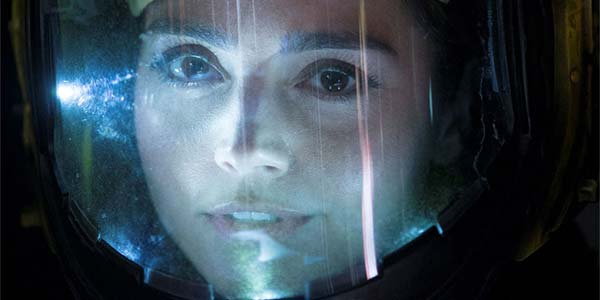
Clara is as much a product of her own upbringing and prejudices as anyone. In €œKill the Moon€ her faith in her own perceptions is shaken and she must accept that things are not always as they appear. It€™s not only her view of the moon that changed, however, but also how she sees the Doctor. As her hero worship fades she starts to realize the Doctor is a more complicated and ambiguous figure than she initially realized. This both angers and terrifies her. The premise of this episode is complete nonsense though to be fair some of that may have more to do with production decisions than what was written in the script. There€™s nothing wrong with an absurdist approach but without any logical thought behind the visual choices the story begins to falls apart. Why were creatures likened to bacteria portrayed as spiders? Why would they spin webs when there was no prey to catch? Why did a being that lives in space look like a dragon? It might make more sense if the creatures portrayed weren€™t so literal.

9. Step Up

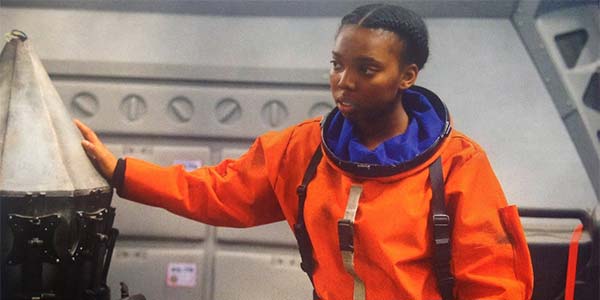
Growing up isn€™t easy. This whole story is a timeline of personal evolution €“ the moon creature is the baby, Courtney the child, Clara the adolescent and the Doctor the adult. While Clara struggles to accept adult responsibility, Courtney takes her first steps towards independence. She falters as all young people do, alternately blustering ahead and creeping back only to step forward once more. She is testing the waters, deciding who to look up to and learning to trust herself. The moon creature signifies transformation. It springs forth from its protective shell, leaving behind its old world view for something new. Birth is a messy process. There is no growth without pain. The moon creature is unaware of the chaos it is causing, it is the innocent here. Clara must make the final decision whether this new life survives even in the face of the earth€™s condemnation and she is not happy about it. She isn€™t sure she€™s ready to be the adult. Yet the Doctor€™s faith in her does not waver.

8. Every Which Way But Up

As absurd as it appears on the surface, the idea of the moon as host to a living creature is an intriguing one. The symbiotic relationship between moon and Earth parallels that of parent and child. As kids we orbit our caretakers, residing within their gravity until we mature and break free. Clara is like the little bird that refuses to leave the nest. The Doctor is pushing her out while she kicks and screams. This may have something to do with the loss of her mother at a young age. She clings to her paternal figure, in this case the Doctor, afraid to let go. Yet she does accept the challenge in the end even if reluctantly. She makes the hard decision and she does so without withdrawing and hiding from her emotions. It€™s better for her to rail at the Doctor than to keep her fear, anger and feelings of betrayal bottled up inside. She also never forgets that Courtney€™s there and does not shirk her duty as caretaker of a vulnerable child.

7. Stand Up

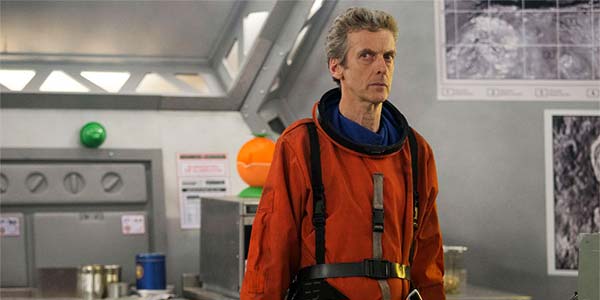
Why is Clara angry at the Doctor? Is it because he left her on her own to make a life-altering decision? Or is it because she knows there is no winner in this situation and she lashes out at the most convenient target to assuage her feelings of helplessness? The dynamic between Clara and the Doctor has changed this series. He morphed from partner in crime to mentor and every acolyte would like to believe their teacher infallible. One of the hardest things to accept is that no one has all the answers. Even if the Doctor did know how things would turn out does that mean he should tell everyone around him what to do? We learn from our mistakes but only if we€™re allowed to make them. Clara wanted the Doctor to make the choice for her but she didn€™t understand what she was giving up.

6. Give Up

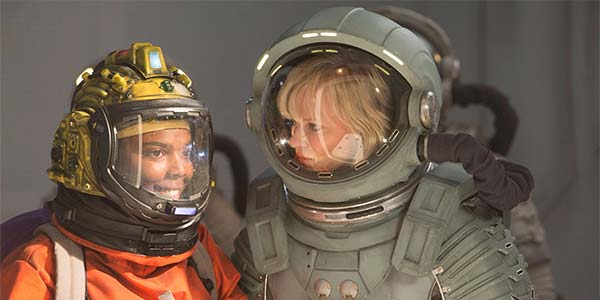
Once Clara realizes that in order to continue her journey with the Doctor she€™ll have to accept responsibility for her actions she runs away. This is a normal reaction. It€™s a shock to find out that we live in a complicated and unknowable place. Courtney ran away also after encountering risk and death inside the moon base and that€™s OK. Learning to be brave isn€™t a straight path. We dip our toes in and out of the water many times before we jump. The important thing is that when it counted Courtney came back. Her compassion overcame her fear. Danny to his credit does not try to manipulate Clara into giving up the Doctor even though this would be a perfect opportunity. He sympathizes with her and implies he found himself in a similar situation in the past but he doesn€™t coerce her into making a hasty decision. He points out that she is emotionally invested in the Doctor even though admitting that may weaken his own relationship with her.

5. Wake Up

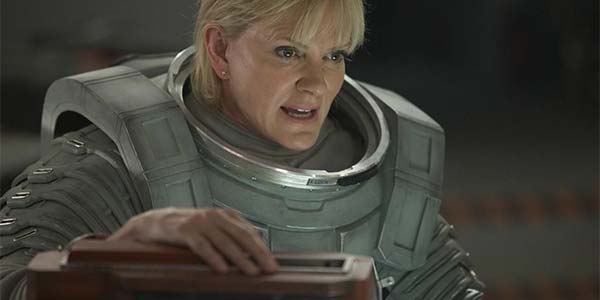
Astronaut Captain Lundvik is the voice of self-interest. She is governed by her fear of the unknown, refusing to acknowledge any other possibility than the rigid course she initially embarked upon. She is the €œsoldier€ in this week€™s episode, the implacable force who cannot deviate from her programming. She is willing to sacrifice herself but does so out of a misguided need for martyrdom rather than any true nobility. It€™s interesting to contrast this story with €œThe Waters of Mars€, a similar base-under-siege script from series four. In that episode Captain Adelaide Brooke commits suicide in order to preserve a timeline that pushes humankind forward into space. Here, Captain Lundvik almost derails that chance by refusing to acknowledge the worth of another being€™s life as equal to our own. Lundvik must break free from her selfishness before she can see the potential of another path.

4. Get Up

Courtney€™s adventurous spirit takes a beating in the first half of €œKill The Moon€. When things get real she is overwhelmed and runs for safety. She is, of course, a child and Clara takes the Doctor to task for not understanding this. He is a danger to his companions there€™s no getting around that. But as he points out there is danger in crossing the road. Curiosity is one of humanity€™s greatest strengths but it cannot be satisfied without risk. There is no guarantee any of us will wake up tomorrow. What we choose to do with the time we have is the important thing. Is it better to die at thirty after having seen the wonders of the universe or at hundred never having been farther than our own backyards? As Courtney laments, once one has picked the apple it€™s impossible to put it back on the tree.

3. Back Up

Perhaps what disturbs Clara more is not the Doctor€™s actions but his cavalier attitude. He is dismissive of the concerns of those less knowledgeable than he is and patronizing when objections are given voice. It€™s understandable that Clara is confused as he simultaneously pushes her to grow up while treating her like a little girl. He€™s not patient. He is, however, there when you really need him. This Doctor is a realist. If there€™s no way to save someone he doesn€™t bother trying. That doesn€™t mean that he won€™t attempt to keep everyone alive but he accepts that death is a part of life and it€™s going to happen no matter what he does. The Doctor has never abandoned Clara though he has no qualms with waiting until the last minute to show up. Clara€™s faith in the Doctor wavered but he was steadfast in his belief she would do the right thing.

2. Sum Up

€œKill the Moon€ was a sometimes infuriating dichotomy between silly and sublime. The emotional upheaval resonated while the story sank beneath the weight of dodgy production choices. Still, absurdity is a useful tool and perhaps the ridiculous plot and incongruous monsters helped to keep the focus on the difficult discussion taking place. Certainly the tension maintained an air of reality even if the setting did not. One of the strengths of series eight is that the Doctor doesn€™t get away with much. The characters of Clara, Danny and Courtney are all strong enough to call him on his crap. No matter how unbelievable the plot the characterization is spot on. These are well-rounded, realistic individuals with strengths and flaws. They are not cardboard or caricature. We revel in their triumphs, cringe at their disappointments and empathize with their fears.

1. End Up

Where do Clara and the Doctor go from here? They are at the part in their relationship where personality traits glossed over in the initial excitement of first meeting are taking on a sharper focus. The honeymoon is over. This is a good thing because a friendship built on idealism cannot last. You can€™t get close to a person until you begin to see them for who they really are. The Doctor and Clara need to work together as a team and their preconceptions are getting in the way. It€™s time they learn to speak to and not at each other. Peter Capaldi is a fantastic Doctor. He is the trickster personified €“ a being created to foment chaos in service of moving things forward. He walks a fine line but rarely makes a misstep, tempering his sarcasm with an underlying vulnerability. €œKill the Moon€ had its flaws but it moved the Doctor€™s story forward in some very intriguing ways.

Contributor
Contributor

Mary Ogle is the author and illustrator of “Orangeroof Zoo” a whimsical tale of magical realism told through the pages of a coloring book for adults. Working as a professional artist in the digital medium, Mary’s commissions have included everything from fine art to fan art, book cover design, illustration and book layout. Find more of Mary’s work at www.maryogle.com. Mary currently finds inspiration in the Ojai Valley, residing in a snug little cottage with a recalcitrant cat.