The Punisher: 10 Ways It Saves Netflix's Marvel Universe
A strong return for Marvel on Netflix.

Almost a year in the making, Marvel's The Punisher doesn't just mark Frank Castle's solo series debut, but a return to form for Marvel on Netflix too.
It's so salient, so authentic, that, despite a rocky beginning and middle, it stakes a claim for being one of the very best comic book adaptations of the last decade. It's certainly the best Frank Castle's ever gotten, with Jon Bernthal again turning in a magnetic performance as the marine turned vigilante, but it's not just him that makes the show so special. Most of the cast excel in their roles, and with a truly compelling narrative to boast as well, it's clear that Steve Lightfoot has done for Frank what he did for Hannibal in 2013.
It's just that good.
And while yes, Marvel haven't had the best of years on the streaming service, they've managed to end 2017 with a veritable bang, delivered in a black and white motif that, contrary to popular belief, in no way emulates the show's frank and honest commentary on war, violence, and the character's at times controversial status in popular culture. It has something to say, and while Punisher fans will of course have the most take away from the series, there's nothing stopping the rest of the Marvel faithful from getting invested.
His return's been long overdue, but welcome back, Frank.
10. We Have A Compelling Lead Again

Jon Bernthal's Punisher was the standout performance of Daredevil Season 2, so having the character in his own series was always going to fly, particularly if it followed up on the beats Daredevil did that year.
But Bernthal's return to the role means so much more than just another series of stellar television. Netflix's Marvel troubles have been well documented in 2017, stemming from the poorly misjudged Iron Fist, which featured a less than convincing Finn Jones in the lead role, and The Defenders too, which bungled its exciting premise with a crescendo of comic clichés, despite the presence of three exciting leads in Daredevil, Jessica Jones and Luke Cage.
Point being: Netflix have lacked a truly compelling protagonist this year. The Punisher makes great strides to rectify this mistake though, with Bernthal again turning in a powerhouse performance as Frank Castle. He embodies the spirit of the character in a way no other actor has managed, and while Frank continues to cut a divisive figure both on the page and off it, there's no denying that he's a damn sight more interesting than Rand ever was.
From the very start, it's clear that Bernthal just straight up gets the character, conveying Castle's tragedy internally and externally, through quiet, more contemplative moments on set, as well as those scenes of pure rage. You won't find a performance quite like it.
9. The Supporting Cast Are Perfect

While Bernthal undoubtedly steals the show as Punisher, one of the series' most pleasant surprises comes in the form of its supporting cast, who are all pretty much flawless.
Ebon Moss-Bachrach's Micro is a definite standout, with the actor bringing life to a role that had, until this point at least, been starved of the attention it sorely required. He's very convincing, and his relationship with Frank is one of the best the MCU's ever seen, second only to the dynamic Castle and Daredevil shared in the Man Without Fear's second Netflix series.
But while Micro excels throughout the series, it is Amber Rose Revah's Dinah Madani that stands out as one of its best and brightest characters. A veteran turned Homeland Security agent, Madani is the heart and soul of the series, fighting to expose a conspiracy no one wanted to acknowledge, and doing it all in the face of some pretty horrendous circumstances.
She's just a brilliant character, and one who's also deserving of a key role in the inevitable second season.
8. The (Eventual) Villain Is Brilliant

Although Paul Schulze's William Rawlins never really reached top gear by the time The Punisher reached its finale, its other villain, Billy Russo, most certainly did.
Played with appropriate nastiness by the infallible Ben Barnes, the decision to make Russo a former comrade of Castle's and not, as it was in the comics, the son of a mob boss, was a smart move on the showrunners' behalf. It adds a whole other edge to their relationship, and by the time Russo's deception is revealed, you feel just as let down as Frank does.
Barnes totally nails the part as the handsome yet totally despicable villain, and with the character having evolved into Jigsaw in the finale, thanks to Frank's handy fairground facial reconstruction, it's clear that he's destined for bigger things.
Jigsaw is commonly seen as Frank's big bad - the Kingpin to his Daredevil, if you will. It's an aspect of the character's history that Barnes will be all too aware of, and with the chance to take things even further next time around, it's an opportunity he's bound to relish. Roll on season 2.
7. The Mid-Season Lull Is Less Noticeable

As is the case with all Netflix shows, The Punisher experiences a mid-season lull. For all its merits, it's just as true that it could've been condensed into a slick, enjoyable and riveting eight episode run. Something would have to give, obviously, but we would've been left with a more cohesive season of TV as a result.
That said, The Punisher's mid-season crisis isn't half as bad as other Netflix Originals have been. That might be down to the fact it's slow to get going, as opposed to those other series that largely managed to hit the ground running right from the off, but even its padding feels less intrusive than said programs.
There's substance to it, and while the mystery does take a brief hit (particularly around episode six), it's not particularly disengaging.
Sure, it's padding, but - as far as padding does go - it's good. You'd rather the show continued with the conspiracy and the wider mystery at hand, but if we are going to have superfluous mid-season fluff, it helps for it to be good.
6. The Final Third Is Phenomenal
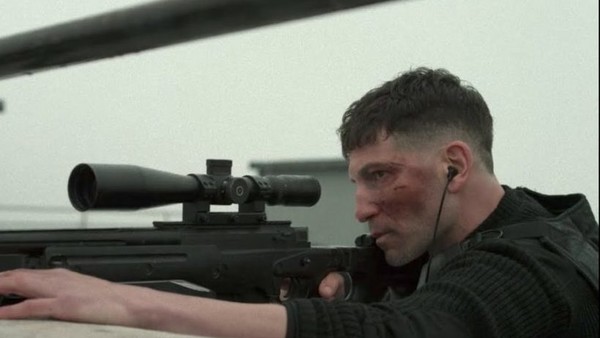
As good as the padding is, nothing comes close to The Punisher's closing act, which takes everything fascinating about Frank Castle, Billy Russo and the conspiracy at hand and places it all inside this big, giant pressure cooker. When it erupts, we're treated to a bonafide bonanza of bullets, badness, torture and sniper-fire that pretty much gifts us the defining image of Frank Castle this generation, saying plenty and promising even more by the time the guns are holstered in episode thirteen.
It takes a while for things to come together, but when it does, The Punisher treats viewers to a bloody spectacle that excites as much as it provokes. Bernthal takes his portrayal of Frank up a whole other level altogether, staring Hell in the face and emerging for the better with his revenge - and future - readily assured. Micro gets the ending we all hoped he would, and Barnes' Russo takes on a whole new life as an out and out villain, a fact that's best exemplified in a rooftop exchange where he confronts Curtis in an attempt to discern Frank's whereabouts.
It's such a tense moment, with the only safety net between Curt and Russo coming down to Frank's marksmanship and a few well placed 7.62s. The fact that this then directly fed into the fairground sequence is even better though, with Frank and Billy's battle to the death ending in a way that ties things back to the comics, sets up another season of TV, and provides a fitting conclusion to the show's phenomenal third act.
Plus, we find out Madani makes it out alive, which is a great bonus too.
5. It Isn't Clichéd
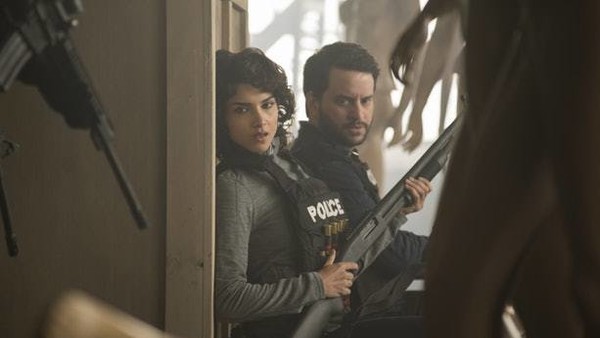
While Marvel's Netflix properties have largely managed to evade Game of Thrones syndrome since 2015, it's equally true that the Defenders wasn't so lucky. Included in that series were two deaths that, for the most part, were only added for the sake of shock value. Things had seemingly gotten too safe.
And yet the Punisher, for all its guts, gore and violence, doesn't make the same mistake. There are deaths aplenty (a given, considering the subject matter), but when someone did depart, it wasn't orchestrated as a means of simply keeping the audience on their toes - it fit a purpose.
It's not as though the show was short on targets either - anyone of Micro, Madani or Curt could've been killed at some point - it's just that it understood that their deaths would do little other than shock the viewer into submission. Also true is the fact that the series devised a whole bunch of means of provoking viewers when needed (living up to Marvel's Netflix reputation), particularly in its handling of the conspiracy storyline and those other moments of carnage.
It's just nice to see the show get past the chlichés of the medium and do its own thing, Thrones be damned.
4. There's Something To Get Excited About
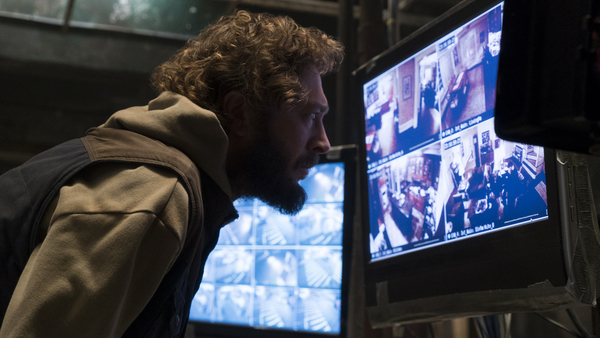
Although you'd be hard-pressed to find a Marvel fan who isn't excited for the next season of Jessica Jones or Daredevil, it's just as true that the buzz surrounding Marvel's Netflix properties has waned in recent months.
This can be attributed, largely, to both Iron Fist and The Defenders, but there's also the fact that the second half of Daredevil Season 2 wasn't overwhelmingly embraced by viewers, with the same case applying to Luke Cage as well. The Punisher suffers no such lull, thankfully, in part because it was slow to open and brilliant in its end, but still, it doesn't adhere to the DNA of those other Netflix shows.
Further to that is fan anticipation of the yet-to-be confirmed second season of The Punisher, which promises to place Russo in a central role (as the disfigured Jigsaw from the comics), further build upon the many Easter Eggs and references the first season made to classic Punisher staples, like the Gnuccis and the Battle Van, and crystallise Steve Lightfoot's hope to see both Kathryn O'Brien and Barracuda somewhere further down the line.
At the very least, there's no denying that another season of The Punisher sounds infinitely more appealing than another Iron Fist.
3. It Replicates The Character's Best Stories
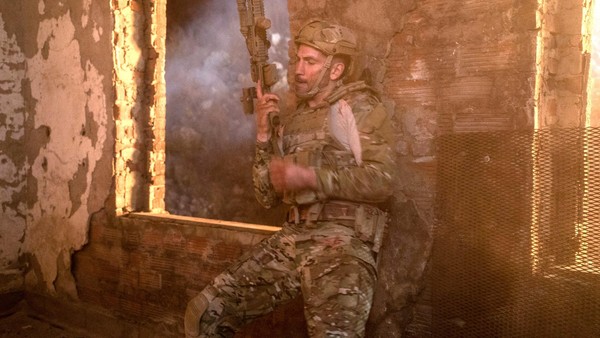
Despite being one of Marvel's most popular characters, Frank Castle hasn't always had an easy time of things in the comics, certainly not until Garth Ennis took on the character in 2000 under the then burgeoning 'Marvel Knights' banner.
Ennis would then shift the darkly comedic tone the series found in that banner, and relaunched the character as a part of Marvel's 'MAX' imprint along with the late, great, Steve Dillon. The series was seminal in so many ways, and resonated on account of its expert handling of historical concepts, events and of course the character of Frank Castle himself. It's largely rooted in reality, and it is to this series that Netflix's latest Marvel offering owes its existence.
The show pays direct homage to both Punisher: Born and Valley Forge, Valley Forge throughout, with Frank's Afghan assault in episode three in particular following the same beats of the former's 2003 storyline. It's brilliant to see, especially since the opening volley from Daredevil Season 2 also took note of Ennis' contributions to the Marvel mythos. That's not all though - there are other elements of Frank's history that the show addresses, particularly in the series of 1987 and its subsequent spin-offs War Zone and War Journal.
It gives fans a good idea of what the character's all about off the page, and considering how difficult it actually is to get into the medium, that's no small feat.
2. A Distinct Lack Of Ninjas
Say what you will about Daredevil, Iron Fist or The Defenders, but there's no denying that The Hand - everyone's favourite evil ninja cult - were beginning to grate.
They're fine in Daredevil's world, certainly so, considering their significance in the character's lore, but by the time Netflix's Avengers equivalent rolled around, people were fairly fed up. Fortunately for us, the Punisher has no business fighting ninjas, so it was back to basics for Frank's return to the small screen (which is a welcome relief, it must be said).
It would be remarkably puerile to argue that literally all of Netflix's problems these last few years have been Hand-related (Iron Fist would've undoubtedly blown irrespective of any ninja influence), but they were over-saturating the Marvel landscape by the time The Defenders dropped in August. The fact that they're not here now, then, adds another neat bonus to The Punisher's ever-expanding list of wins.
Things are in the Ennis mould this time around; villains are real world operatives, crawling out of real world institutions and concocting plots that, for the most part, are grounded in historical precedent. It might be a superhero show in a basic sense, but it's clever for playing to the strengths of Castle's bibliography and not - as some had feared - following in the footsteps of Marvel's most recent productions.
1. It Has Something To Say

Although criticism levied at The Punisher has varied greatly, consensus has seemingly taken aim at the show's attempts to broach the US gun debate. While that particular element of the series isn't handled all that well, with two caricatures representing either side of the aisle, it is the series' other statements that bear the most salience, particularly in relation to war, violence and the systemic mistreatment of veterans.
The Punisher has a massive history of being misinterpreted, misappropriated, and just downright misunderstood since his original introduction in 1974, and it's to the show's credit that it actually approaches this subject head on with the character of Lewis Wilson. Wilson, a marine veteran, returns to the US with PTSD and is subsequently perturbed by the societal disregard with which the government - and indeed the public - have seemingly treated himself and his fellow comrades.
This then leads Lewis, caught up in the midst of a mental breakdown and a profound sense of alienation, to terrorism. He uses Frank as his moral compass throughout his murder spree and proclaims him to be a hero of the people, yet anyone who knows the character would know that he wouldn't abide by these acts, a fact that's conveyed wonderfully when Castle himself calls Lewis a coward when things are at their abject worst.
Lewis Wilson is, without doubt, the most important character in The Punisher, and while the show may fluff its lines when it comes to gun control (a fact made worse by its fetishisation of firearms in the first episode), its comments on the military grant it a salience that few other Marvel properties have been able to match.
Do you think Punisher saves Marvel on Netflix? Let us know in the comments below!