8 Amazing Wrestlers That Flopped In WWE's Attitude Era
WWE 'Attitude' wasn't always kind to these previously-celebrated workers.
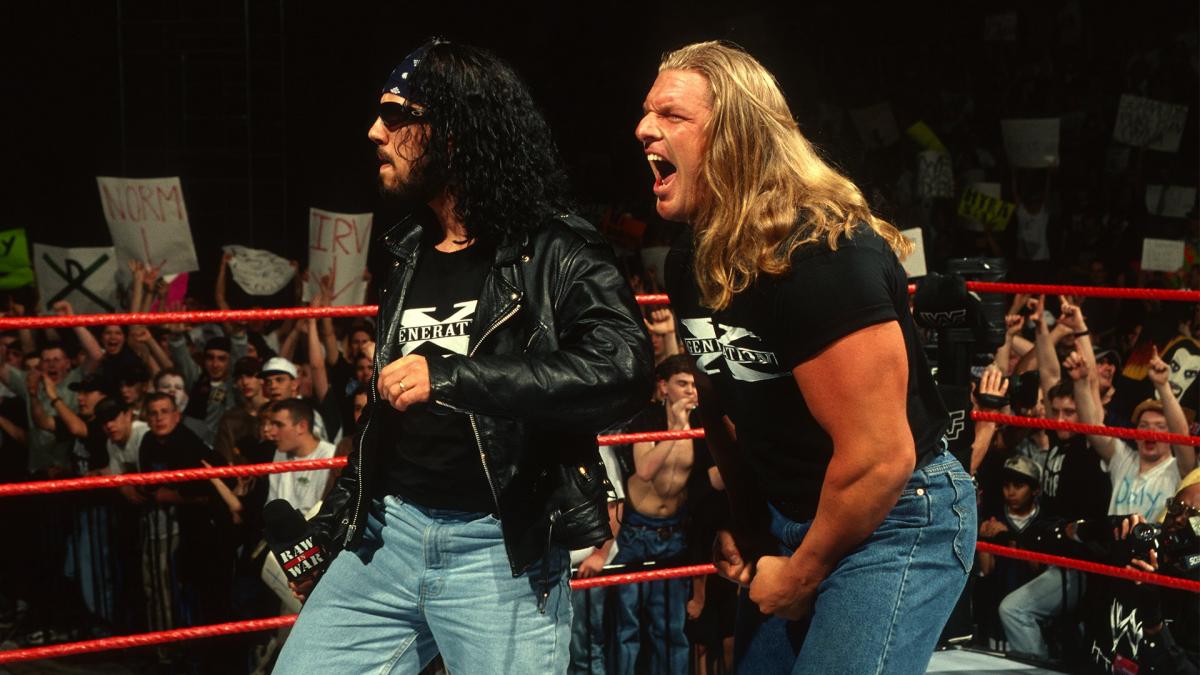
The 'Attitude Era' created more legendary superstars than just about any other period in wrestling history. The roster was filled to the brim with A-list talent, but not everyone managed to find their fame and fortune during WWE's most notorious era. In fact, some of the best wrestlers and personalities failed in a big way.
Some of these unfortunate superstars had already found success in WWE, but just failed to fit the mold as part of the company's bold new direction. Others were heralded in rival companies, but failed to adjust to Vince McMahon's creative whims. Whatever the reason, these amazing wrestlers found themselves circling the drain of hopelessness throughout one of wrestling's biggest ever booms.
From being knocked out in front of the world to ending up in a commentary booth, the 'Attitude Era' managed to chew up and spit out wrestlers who were brilliant in their own right but simply didn't thrive in the-then WWF during the late 90s and early 2000s. Whether or not these wrestling greats would work in another time or under a less bonkers head of creative is an argument for another day.
Ready...set...'Attitude'!
8. Tazz

Taz's reign of terror in ECW was one of the greatest runs of the 1990s. His immense power, intense promos, and killer catchphrases, coupled with his Rey Mysterio-esque low centre of gravity, made him arguably the greatest heavyweight champion in extreme history. Signing with WWE during the last period of the 'Attitude Era' and being rebranded as Tazz, expectations were justifiably high for the 'Human Suplex Machine'.
Things started in the greatest way possible, with the fed's new star debuting at the Royal Rumble 2000 and snapping the undefeated streak of Olympic gold medalist (and future Hall Of Famer) Kurt Angle in just over 3 minutes. By the end of February, the man who went to war with the hardest men in ECW and held their world title for 252 days was being beaten by Crash Holly for the Hardcore Championship. By February 2001, he was a full-time commentator on SmackDown.
The records show that Tazz won the Hardcore belt 3 times, but these reigns lasted a matter of minutes as part of the championship's 24/7 gimmick. His only other run with a WWE title came when he held the tag straps with ECW compatriot Spike Dudley. That is so much less than a worker of his talent and reputation deserved.
Tazz had the skillset to be a major player in the 'Attitude Era'. He's a great personality and wrestling is a far more enjoyable place with his presence on commentary, but his time on WWE's main roster was a major disappointment after his superb work in Paul Heyman's land of extreme.
7. The British Bulldog
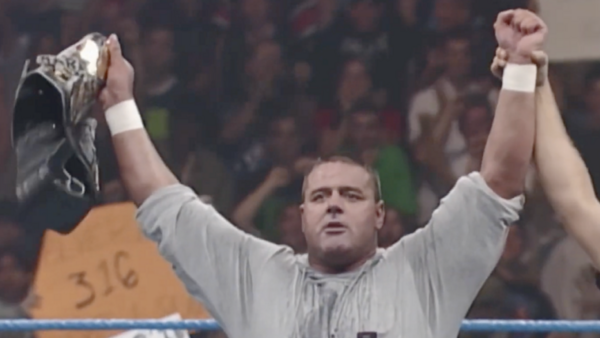
As well as being a point of national pride for UK wrestling fans, The British Bulldog Davey Boy Smith was also a major player in the Intercontinental Title scene in the early-to-mid-90s. His SummerSlam 1992 championship win over Bret Hart is written into wrestling folklore forever, and the match against Shawn Michaels that ended his reign with the belt is an underrated banger too.
Davey's struggles outside of the ring are well-documented, but his return to WWE during 'Attitude' to (theoretically) reignite some Hart Foundation-inspired goodness should have been a triumph. Instead, he stripped away his iconic braids and Union Jack tights, replacing them with jeans and short hair that had him looking like the most generic create-a-wrestler possible. His new theme music also replaced his extreme Britishness with a bland, personality-devoid rock track.
He won the European Championship twice (because he's from there, you see) and bumbled around the hardcore division, but never recaptured the form that made him one of the most recognisable personalities in WWE just a few years prior. If you erased him from the 'Attitude Era' entirely, then you'd see his contributions were so nondescript that nobody would notice.
6. 'Real Man's Man' Steven Regal

There's some creative license being used here, as William Regal is one of the best comedic presences of the 'Attitude' days and was always an absolute general in the ring. Whether as a bumbling Commissioner in promos or as an in-ring performer, Regal shone brightly, but things weren't always so great for 'Lord Regal'.
If you've never searched YouTube for the 'Real Man's Man' Steven Regal's tron, you are really missing out. Not only will you be greeted by his baritone-sung theme music about how manly a man this manly man's man is, but you'll also see Regal being portrayed exploring the great outdoors in a variety of ridiculous and comedic ways.
He'd also come to the ring in a Big Bird-yellow hard hat, cut-off flannel shirt and jorts to show off his OTT masculinity.
The vignettes of Regal chopping wood and working a forklift truck were amusing, and his promos were charming, but the gimmick was pure Vince McMahon lunacy. Regal suffered from issues away from the ring at this time - however, he would come into his own in later years. Nevertheless, the 'Real Man's Man' character is at least notable for being one of the most bizarre gimmicks of such a celebrated era.
5. Flash Funk
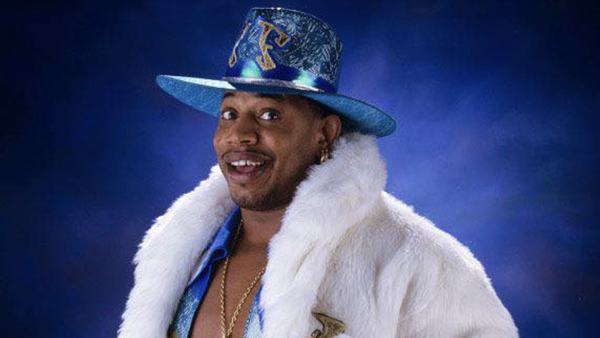
Given how great the original ECW was, it was understandable that WWE took many of the outlaw promotion's best talent throughout the 'Attitude Era'. One of the first to make that jump was 2 Cold Scorpio. Scorpio was a high-flying innovator whose in-ring acrobatics were way ahead of their time. He's greatly overlooked when it comes to how influential he was, and his run as Flash Funk in WWE is a major reason why that's the case.
In ECW, 2 Cold was one of the first true greats of the company. His presentation was cool (cold even), and Paul Heyman knew how to present him in an edgy and credible way that fit perfectly alongside rap music and black culture in the early 90s. This worked like a charm, and Scorpio was rewarded with four reigns holding the TV Championship, where he put on clinics with the likes of Dean Malenko and 'The Franchise' Shane Douglas.
WWE was transitioning out of the 'New Generation' by 1996, but not fast enough for Scorpio. Rebranded as Flash Funk, he felt like a novelty act at the start of the fledgling 'Attitude' boom.
Colourful and flamboyant, Flash was an inferior version of Scorpio. Rocking a dated Huggy Bear-style pimp look, backing dancers that were the 90s equivalent of the Funkadactyls, and having Vince McMahon on commentary yelling about "getting jiggy", this was about as far away from the 'Gin N' Juice' feel that Scorpio had popularised in Philadelphia as possible.
4. Dan Severn

Ken Shamrock's name is enough to bring a tear to any 'Attitude' fan's eye. The 'World's Most Dangerous Man' made a smooth transition from the then-taboo world of the Ultimate Fighting Championship to the WWE, and that was back when the UFC felt like a dangerous landscape of cavalier hard men that should've been illegal in as many US states as it was legal.
Having struck gold with Shamrock, WWE also brought in the UFC's Dan Severn. Whilst Shamrock committed to pro wrestling full time, Severn became the first man to compete in the UFC and WWE at the same time. That went along with his distinction of being the first man to hold the NWA Championship and UFC gold simultaneously. He came to the ring with so many belts at one point in time that he felt like the prototype for belt collector era Kenny Omega or Mercedes Mone!
Shamrock's maniacal temper tantrums and twisted personality felt right at home in WWE, but Severn's joyless demeanour left audiences cold. Much like Tank Abbot years later in WCW, Severn just felt like a bland MMA guy in a colourful pro wrestler's world. No, it was nothing close to a Cain Velasquez situation, as Severn could certainly go in the ring, but he was as dry as unbuttered toast during one of the most personality-fuelled periods in WWE history, and fans picked up on that.
3. K-Kwik

R-Truth is a future Hall Of Famer who has serviced wrestling comedy in ways that'll go down as the stuff of legend. The story of how Road Dogg brought him into WWE (then how Truth would find himself and the character that brought him to the world's attention) is known far and wide, but it's missing a vital chapter.
Truth first appeared on WWE TV at the end of the 'Attitude Era' as K-Kwik. In eerily similar fashion to Flash Funk, Vince McMahon had an idea of how Kwik could fit into the WWE landscape, and it involved rapping...because of course it did. His debut involved breaking up a match between Road Dogg and William Regal to encourage the DX man to "forget about strappin' and get to rappin'", which they then did to a Limp Bizkit-style song called 'Gettin' Rowdy'.
"Hollerin sufferin' succotash, I ain't fearin' nobody", and all that.
Considering the range Truth has shown in his signature role and as Ron Killings, K-Kwik was a cliched character that did nothing to show his ability to connect with the crowd. He made his debut in November 2000 and was released in April 2001, meaning his first run with the company lasted less than 6 months. Not quite the fairytale story they tried selling on the second season of WWE Unreal on Netflix, is it?!
2. X-Pac

One of the more controversial picks here, but X-Pac had a longer period of bad booking and negative crowd reactions than he did thrilling audiences when he returned to WWE. As Syxx, he was one of the first people to join the nWo over in WCW beyond the original trio of members, and his defection back to the WWF in March 1998 to join D-Generation X was a big deal as the tide of the 'Monday Night Wars' was turning back in favour of the McMahon family.
His initial run in DX was enjoyable, but then he began a feud with Kane that killed the momentum of both and seemed to go on for an eternity. Kane began losing to a guy who was half his size, and was no longer seen as a killer as a result. Meanwhile, X-Pac began to generate "X-Pac heat", a term that has followed him around ever since and is based on him being booed wherever he went in the early 2000s.
Things got worse from there. He formed his X-Factor stable with Justin Credible and Albert. The group always just felt like a bunch of dudes thrown together because creative had nothing of note for them, and their entrance theme was a crime towards anyone with ears.
Credible left the group to join the Alliance as the 'Invasion' angle began, leaving X-Pac and Albert to fester in the lower card of the 'Attitude' pack. X-Pac is still a vital part of DX due to his iconic look and work in the stable, but much of his run straight after that was less than stellar.
1. 'Dr. Death' Steve Williams

'Dr. Death' Steve Williams was brought into WWE by Jim Ross, and there were talks of an immediate huge push for the former WCW and All Japan hard man. What looked to be a dream new beginning for Williams quickly turned into a nightmare - one of Vince Russo's worst-ever ideas took out Death's potential in one fell swoop.
The 'Brawl For All' was a shoot-fighting tournament designed to get people talking. Mixing boxing, MMA, and pro wrestling, WWE stars would come to the ring wearing boxing gloves and literally shoot fight their opponents inside WWE rings. 'Dr Death' had a well-earned reputation for being one of the toughest guys in the pro wrestling world, but this perception came crashing down on the 27 July 1998 episode of Raw.
In the tournament's second round, New Midnight Express member Bart Gunn ('Bodacious' as he was) ripped Williams' quad in a takedown and then knocked him out in front of the world.
Prior to this tournament, 'Dr. Death' was due to be booked as one of the 'Attitude Era's' biggest monsters, and a feud with Steve Austin was even pitched behind the scenes by JR. After this disastrous knockout and hamstring tear put him on the shelf for months, and with his image as a beast in tatters, Williams was now a dead man walking.
They attempted to get him over with Ross as his manager in feuds with Bob Holly and Tiger Ali Singh, but he was let go by WWE in March 1999. Yes, less than a full year after signing with them.
What other amazing workers flopped hard during WWE's cherished 'Attitude Era'? For more wrestling, check out One Moment WWE Wants You To Forget From Every Year (1985 to 2026) and WWE 2K26: 15 CAWs You Must Download Immediately!