8 Most Powerful Backstage Politicians In Wrestling History
1 - Triple H
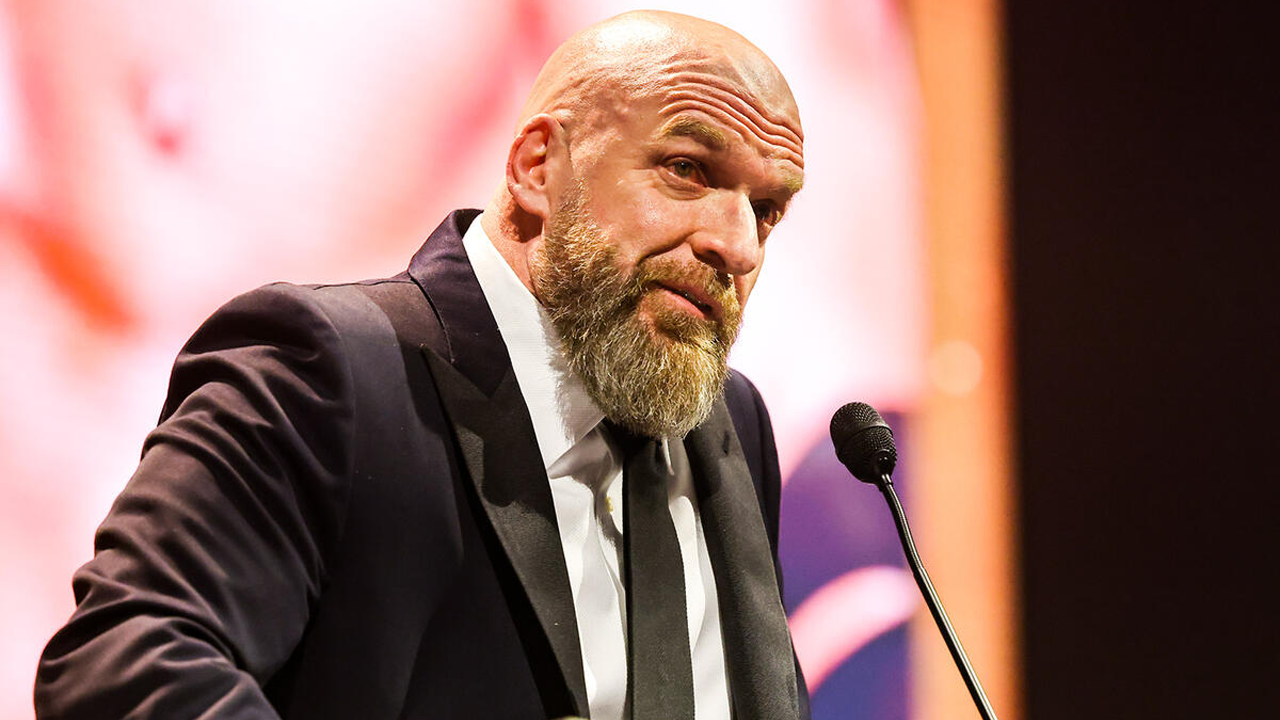
The most ruthless and successful politician in pro wrestling history, Triple H, if you believe the story in Matthew Randazzo V’s ‘Ring of Hell’, signalled his intentions to eventually take over WWE on his very first day.
Triple H, insofar as the creative goes at least, took over WWE in 2022.
His decades-long campaign was ballsy, you have to give him that, since the extent to which he was boring, barely-over wrestler can never be overstated. As early as mid-to-late 1997, Triple H, emboldened by his friendship with Shawn Michaels - who at least had the talent to justify his demands - started making moves.
He was clever about it, pacing his ascent with far more care and thought than he laid out his interminable WrestleMania matches. He started by chiding Bret Hart’s professionalism (!), when the Hitman (as was expected) arrived late to a house show in early 1997. By the end of the year, Triple H - who was only just getting somewhat over with a key pass from Cactus Jack - pitched the Montreal Screwjob.
When he started dating Stephanie McMahon, and magically drifting into production meetings, that’s when his true rise - and perhaps coincidentally, WWE’s creative decline - began. In late 2000, Triple H allegedly used his influence to kill off the love triangle story between himself, Steph, and Kurt Angle. Why would Steph choose Angle, when she’s already banging such a hot stud?
And why wouldn’t Triple H later reign with the World Heavyweight title throughout the early-to-mid 2000s? He was the modern-day Ric Flair!
Triple H was halfway subtle about it, on occasion. As an example, he lost a trilogy 2-1 to Brock Lesnar across 2012 and 2013. You can’t strictly say that he didn’t put Lesnar over, but Triple H got the win at WrestleMania. Which event does WWE put over, above all else, as the most significant and memorable occasion in the entire industry, the event that truly counts?
The answer to that is: not Extreme Rules.
There’s also his match structures to consider here. His politicking was sometimes subliminal, sometimes bold-faced. At Night of Champions 2011, Triple H defeated CM Punk, with the excessive interference scanning as an excuse - but Triple H, the heel, actually scored a visual pin. That’s a spot designed to protect a babyface, who should have won fairly, before the heel cheats to win. It wasn’t on September 18. When he took a pin from Jeff Hardy, he shrugged towards the hard camera, as if to say “Hey, it happens. Even I get beat, guys - even by much smaller wrestlers, like Jeff here!”
There was always something with Triple H in a losing effort. Only on very rare occasions did it feel 100% definitive. He played several tricks, some barely noticeable, to position himself strongly. Some were despicably noticeable; taking 23 seconds to pin Booker T at WrestleMania 19 remains the most egregious use of power in in-ring history.
Mostly, Triple H was as subtle as his dumbass sledgehammer. On occasion, during the 2000s, he seemed to flaunt his power because he could, using his vast influence to annihilate both members of a tag team at once. His influence even spanned the breadth of the multimedia landscape; it was instructed to the video game press in 2008 not to show Triple H’s avatar “in a defenceless or vulnerable position”.
As a corporate executive, Triple H was diamond-sharp, too. Remember that speech to the Undertaker, ahead of WrestleMania 27, when he said they had to wrestle one another because neither man “had any challenges left in the back”?
That was more likely than not a scathing indictment of the developmental system as overseen by John Laurinaitis. Guess who seized control of the programme that very year?
Triple H, now that he’s the king, is also very insistent on telling you who’s the king, portraying himself as the great auteur of this WWE “cinema” era.