9 Times WWE Turned Treasure Into TRASH
The WWE fumbles that took some of wrestling's best moments and reduced them to creative rubble
In 2019, All Elite Wrestling launched and WWE's monopoly was gone.
It had been 18 years since Vince McMahon had opened up a Monday Night Raw talking about how the fate of WCW - and with it, the rest of mainstream wrestling - was in hands, and in that time he'd let that control slip through his fingers with a run of miserable, complacent and idiotic years as a market leader a long, long way away from being the "Recognised Symbol Of Excellence In Sports Entertainment" or whatever branding they chose in the moment.
Treasure into trash became habitual. So habitual that trash into treasure became the new norm - there were more terrible ideas that wrestlers worked hard to elevate than there were good ones lost to bad booking. Neither are ideal, but the latter is at least the right way around. Wrestlers were sent out there to die on the vine, all at the whims of a blithering disconnected billionaire loser who'd lost touch with reality much earlier than was probably apparent.
The evidence was there, week after week, and it wasn't half frustrating. An open world playground that centrally exists to mimic the highs and lows of legitimate sport. There should be no better stage with which to entertain, and yet...
(Join WhatCulture Wrestling+ on YouTube for exclusive behind-the-scenes content, membership badges, emojis, and much, much more).
9. The Shield

The Shield were legitimately awesome, and it's just a pity Roman Reigns and Seth Rollins think that as much as any fans that got to live through them at their best.
As a genuine trio in an era where...nothing was particularly genuine-feeling, Reigns, Rollins and Dean Ambrose carved a path for themselves as difference-makers in a difficult time. That they stuck together and fought for one another behind the scenes as much as they did between the ropes, and never was that clearer than when they split up and had to fend for themselves.
For years following Rollins' 2014 storyline dissolution of the group, all three experienced mixed fortunes as singles stars, falling afoul of Vince McMahon's booking peccadilloes as much as anybody else that had the misfortune of putting a run together during the consensus worst of times.
If in doubt, promotion and performers went back to what worked, and results, predictably, were mixed. The good (Rollins and Ambrose finally making peace in 2017 over a period of months rather than hours) tended to overwrite the bad (Ambrose rigging Rollins' Money In The Bank briefcase with goo), and genuine credit with the audience went a long way when the company needed a quick win.
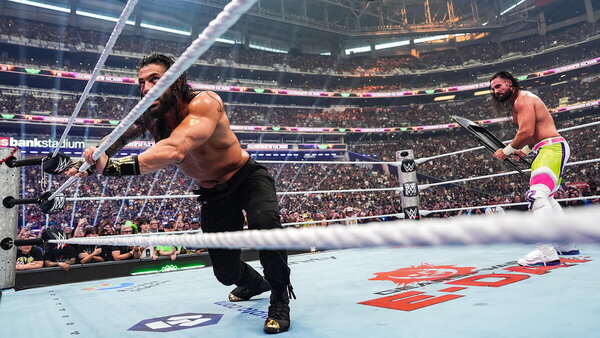
The patience for their lore was pushed to breaking point en route to a SummerSlam 2026 match that attempted to peddle the idea that Seth and Roman hadn't battled all that much, and when they had, 'The Architect' consistently had the measure of 'The Tribal Chief'. Both these things were patently and provably false, but it didn't stop the pair over-egging their parts to an excruciating degree at the 'Biggest Party Of The Summer'. Over-wrought and over-blown, the match stunk - though that's inevitable when people spend 33 minutes smelling their own farts.
8. The One Great Nexus Night

There's no one set way to build a star in wrestling, but WWE stumbled upon a potentially great way to magic eight of them out of relative obscurity in 2010.
A disaster of the company's own making, the first season of gameshow-era NXT made fools of the Florida Championship Wrestling graduates to such an extent that even winner Wade Barrett hadn't really managed to escape some form of live arena embarrassment along the way. Looking at how the rest of his year turned out after one incredible night, maybe it was adequate prep after all.
The premise, though rooted in some warped reality, was sound enough. Furious with the very system that had made a mockery of their dreams en route to the main roster, the entire slate of wrestlers pooled their resources to take WWE down from the very top. They targeted John Cena as a statement beatdown, battered everybody that tried to help or even just appeared to be in the wrong place at the wrong time, and even destroyed the ring and ringside area as if they were to trying to tear down the place that had done the same to them.
The attack was brutal enough that Daniel Bryan temporarily lost his job over it, but seven-strong was still strong enough, and their path of rage led to a SummerSlam showdown with a Cena-led WWE crew. That match is only remembered for two things, and if the most prominent one was how awesome Bret Hart's punches still were, this entry wouldn't be in this list.
Barrett and the boys were so handily beaten in the closing stretch that the whole idea might as well have been flushed there and then. Attempts in the story by The Nexus to force Cena to join the group were scripted and performed with a half-heartedness that bordered on contempt, and perpetually resulted in 'The Champ' looking smarter and tougher than all seven of them combined.
Eventually, Wade was turfed in favour of new leader CM Punk, but the 'New' take on things was a copy of a copy in terms of Punk playing cult leader, and the whole thing permanently hit the skids when 'The Voice Of The Voiceless' decided to drop a Pipe Bomb almost a year to the day after Nexus' original attack.
7. The New Day's Heel Turn

If the WWE creative boom really is permanently in the rear view mirror as of writing in 2026, it's reasonable to suggest that Kofi Kingston and Xavier Woods' heel turn on Big E was the era's last great moment.
A shocking, devastating and transgressive piece of television, the decision made by Kingston and Woods to clamp their best friend as an act of spite rather than love was bold in its execution and ambition. Within weeks - and that timeframe is criminal enough - only the former was true.
The wrestlers had performed their roles impeccably; the goosebumps raise just thinking of the face Woods pulls as he collects his patronised thoughts and loads them like a bullet into a gun pointed at his disbelieving and bewildered brother. The heartbreak that Kofi - always the mellowest of the trio - doubling down feels no less unthinkable. But these are split seconds preserved in amber, not iconic clips that kickstart the second life of an all-time WWE act.
Some backstage segments in the weeks that followed correctly positioned them as locker room pariahs, and there were some half-decent appearances in front of live crowds to soak up the boos, but the failure to exploit the heat at its absolute hottest foreshadowed the dropping of the ball.
The pair won their thirteenth (and as of writing, final) tag gold in the company at WrestleMania 41 in a drab match with The War Raiders, and in old money WWE, that would have marked the start of their run proper. Instead, it was a listless peak that played out to a silent stadium just four months after they'd created an earthquake that should have pulled the place apart.
When Grayson Waller turned up in NXT and cut a worked shoot promo about how the main roster had let him down, he referenced his time with the two as the waste it was. Golden tickets such as that one had rusted, as had Kingston and Woods' desire to remain with the company when offered paltry new deals. AEW awaited, with Triple H left to accept their departure as a symbol as one of his biggest ever fumbles.
6. WWE SmackDown's Isle of Misfit Toys Era

The "Land Of Opportunity" was ultimately only ever a marketing slogan that inevitably couldn't be true forever, but for the first few months of SmackDown Live on Tuesday nights in 2016, a little bit of magic came the way of the blue brand.
A revived Brand Split seemed to reinvigorate both shows at the time, but with SmackDown needing to actually become relevant again as a bankable television property, promotion and performers alike seemed keen to make the best of the unlikely situation. The main event scene featured new WWE Champion Dean Ambrose, his upcoming SummerSlam challenger Dolph Ziggler and and wrestling icon and relative WWE newcomer AJ Styles. Becky Lynch was The Horsewoman tasked with leading the women's division, but she kept good company with the returning Nikki Bella and Mickie James, NXT arrivals Alexa Bliss and Carmella and main roster regulars Naomi and Natalya.
Even tag wrestling experienced two brief peaks - one with the unlikely duo of Rhyno and Heath Slater becoming adored fan favourites and Champions, and also when Fandango and Tyler Breeze made their "Fashion File" segments the weekly highlight of the show. A division that boasted American Alpha and a heel-turned Usos looked built to last too. Recap chat about the show became cult stuff; Renee Young and Daniel Bryan's Talking Smack was a joy to behold itself.
So much of this temporary boom is forgotten because of the scale of the bust. After strong stuff at the top of the card between Ambrose, John Cena and eventual Champion Styles, the belt slipped first into a free-falling rivalry between Randy Orton and Bray Wyatt, before disastrously landing in the hands of Jinder Mahal.
Nothing spoke to "opportunity" quite like it, and Mahal gleefully answered when it knocked, but it came to represent the end of the good times. Match quality went off a cliff and the storylines and pushes that once gave the show so much promise evaporated in favour of nonsensical plots and - in Mahal's case specifically - reductive and low-rent slop.
5. The Radicalz

The idea that there was still any kind of wrestling war going on by the start of the year 2000 was generous to World Championship Wrestling, and The Radicalz appearing on the front row of Monday Night Raw as if from nowhere was yet another signifier of how the times had changed faster than anybody might have realised.
Chris Benoit, Eddie Guerrero, Perry Saturn and Dean Malenko's decisions leave Atlanta for the 'Land Of The Giants' wasn't one they could take lightly, but as WWE surged further towards mainstream enormity, the potential spike in midcard quality the four offered was electrifying. 1999 had already seen the debut of Kurt Angle and the arrival of Chris Jericho, so four more ready-made and well-established names to pad out that upper midcard underneath The Rock, Mick Foley, Triple H and - whenever he was ready to return - Stone Cold Steve Austin looked like yet more can't-miss recruitment.
Unfortunately for rapidly-branded Radicalz, they found themselves with clipped wings less than a week into the job,
On the SmackDown following their Raw debut all four took on members of D-Generation-X to earn them contracts in the storylines. They were swept aside by the familiar faces; X-Pac bested Malenko, Saturn and Guerrero lost to The New Age Outlaws and Chris Benoit was narrowly defeated Chris Benoit. There was an equally reductive undercurrent too - the bad night at the office resulted in them having to kowtow to 'The Game' in order to get jobs.
Night One - Megastars. Night Two - Literal losers. Night Three- Goon Squad.
4. R-Truth's Release & Return

In June 2025, some surprising-if-not-all-that-shocking news dropped that company stalwart R-Truth's contract wasn't renewed by WWE.
This triggered one of the more unlikely chains of events this decade, and in doing so revealed familiar old failings at the heart of a brand new and changed regime.
Awash with understandable sentiment, WWE fans were unrelenting in their support for a man that had been a fixture on WWE television for almost two decades straight, with his initial run kicking off all the way back in the year 2000. His comedy was uniquely invaluable to the organisation at various points, particularly during long spells where it did the opposite of "putting smiles on faces". Truth managed it at a remarkable rate in the bad times, and he'd gotten even better in the good.
In 2024, his interactions with The Judgment Day brought about some of the best work in the ever-changing stable's history, and even managed to win tag gold at WrestleMania XL alongside The Miz following his formal separation from the group. Through all the change and tumult, R-Truth was a constant, and an unbelievably solid one at that. His own announcement that he was getting the boot was thus amongst the most shocking stories of the year.
It very quickly became untenable. In the face of a deluge of protests, WWE changed tact and brought him back during John Cena and Logan Paul's tag battle with Cody Rhodes and Jey Uso at Money In The Bank mere weeks removed from the original news. He ran in during this main event, cut his hair and announced himself as Ron Killings on the subsequent Raw, and seemed legitimately reborn as a character going forward. But Triple H didn't see it that way.
Theories that all this could result in an out-of-nowhere main event push for Truth were kicked into touch within a matter of weeks. The real name stuff was the first to go, quickly followed by his presence virtually anywhere on screen. From there, he went back to chucking his phone in a toaster and all the usual dross, before literally acting as if it had all been one big dream when Cena retreated to the status quo too.
Speaking of which...
3. John Cena's Heel Turn
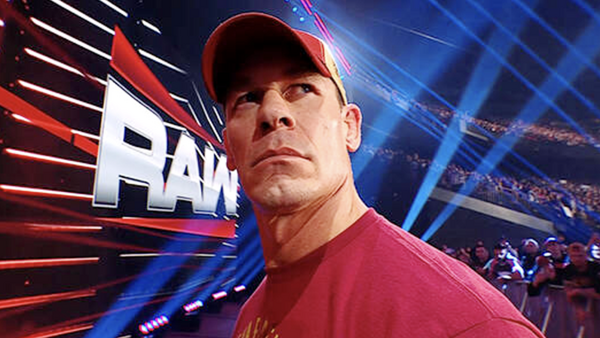
Or should that be "John Cena's Heel Turns", based on how many different ways WWE attempted to frame his big decision in the aftermath of Elimination Chamber 2025?
There had been a feeling right around the Netflix debut of Monday Night Raw in January that the creative boom was about to go off the rails, but Cena's genuinely mind-blowing heel switch after turning heel on Cody Rhodes was a swing so massive that it couldn't really miss.
Until it did, over and over again.
Either in solo missives (to hot but increasingly confused) crowds or in back-and-forths with Cody Rhodes, 'Big Match John' couldn't get a feel for the best version of his villainous self, so just tried on some different ones as if they were themed hat/shirt combos from the merch stand.
He spoke first of an "abusive relationship" with the audience and his desire to break up with crowds. He tried a bit of meta stuff along the way, noting "I am not a babyface. I am not a heel. I'm a human being". He threatened to "ruin wrestling" and bury it forever by becoming Champion, only to deny being a burial artist the very next week and rebuff such accusations by defiantly stating that "I don't bury talent, I am talent".
All of this failed to acknowledge why he'd sold his soul to The Rock to facilitate the turn itself (a dropped thread when it became increasingly clear Dwayne Johnson wanted little-to-nothing to do with the whole thing and had no intention of showing up to WrestleMania), and didn't even make use of a proto-turn from the man himself following the Royal Rumble when he defiantly said that; "What is best for business, is that I main event WrestleMania...I am going to the Elimination Chamber to win, and I'm going to main event my final appearance in WrestleMania and win a seventeenth Championship. Because that's what's best for business."
Anything would have been better or at least more interesting than what actually played out, with the shape-shifting culminating in a literal overnight babyface turn between his SummerSlam main event rematch with Rhodes and the go-home SmackDown that snapped Cena out of his alternate timeline heel adolescence.
2. Any WCW Integration

After a wrestling war that defined a decade, most people assumed that WWF Vs WCW was the one unicorn of a storyline too perfect-by-default to fail, under any circumstances.
Most people were wrong.
It was the sort of thing that was probably always going to be harder to pull off in practice than in endless fantasy booking threads dating back to the earliest days of the Internet Wrestling Community, but when the Invasion pay-per-view alone drew a record-setting buyrate for a B-show, the proof existed that audience desire to even know how it might work was something not to be squandered.
Squander it they did though, and in the 25+ years since the rotten experience of watching WWE midcarders battle "Alliance" heels multiple times a night, there's been much written about exactly how it all went so wrong. Timing, even more so than the incompetence, arrogance, and frugality of the situation, might have worked against it for the off.
Having purchased the company for a meagre $2.5 million (rising to approximately $4.3 million with eventual additional costs) in 2001, Vince McMahon couldn't get the brand a television deal, nor did he wish to spend more money on the biggest Time Warner contracts lest he upset his existing WWE pay structure. The WCW lower card were the best of what remained of a dead brand, failed when called upon to be seen as real threats, and were subsequently given creative even worse than the business-killing dreck they'd endured on the average edition of Nitro.
By the summer, virtually the entire crop of doomed geeks spent their nights avoiding beatings from their boss Stone Cold Steve Austin, in segments that felt as much about the real Vince get his frustrations out on a concept he'd always liked much less than the average fan. Within years of folding it all up, he'd brought in Hulk Hogan, Kevin Nash, Scott Hall, Bill Goldberg, Scott Steiner and others, but by then, the concept of forming a genuine challenger brand from within the WWE system was deemed long dead.
Until a decade and a half later, when Triple H took a different tact...
1. The NXT Class Of 2015

In 2014, NXT was blossoming as a secret walled garden within a WWE ecosystem that otherwise just drew derision from the lifers that had stuck around.
As he shifted out of his gear and into his suit, Triple H very wisely surveyed the smartest way to rise up the ranks underneath Vince McMahon, and quickly realised that there was no praise or credit waiting for him on the main roster. To that end, he took hold of a broken developmental system, reshaped it from within the new Performance Center facility, and produced a magic hour of weekly television that mirrored a version of the product so many disillusioned millennials and beyond had grown up watching.
Right as Ring Of Honor, Impact Wrestling and the rest of the chasing pack were struggling to maintain a foothold in the mid-2010s, NXT slid into the spot, took half of the talent from both and used some WWE production polish to provide a slick "alternative" that was in fact as part of the system as any standard Raw or SmackDown.
The magic was best reflected through the babyface rises of Bayley and Sami Zayn, through the matches featuring any and every combination of the Four Horsewomen, and the rebirth of tag wrestling in general thanks to The Revival, Enzo & Cass and American Alpha. The magic may as well have been just that - a trick - by the time all of the above came up to the main roster, they were picked apart by terrible booking, loveless agenting and all the other cold realities of a product booked by Vince McMahon.