One MIND-BLOWING Secret From Every Year Of WCW History
Sex, botches, and the Fonz. Ayyyyy!
You might only be aware of the history of WCW through the revisionist lens of WWE.
History is written by the victors, and what you might not know, since WWE did not tell you this one million times on every other DVD or Network documentary, is that WWE kicked WCW’s little scrawny yokel ass to kingdom come. The potted history of WCW written by WWE is as follows:
That capitalist pig Ted Turner bought the organisation in 1988. It was rubbish. Remember Robocop? The Black Scorpion? The Shockmaster? WCW was a laughing stock, and when somebody saw it in the showers, it didn’t even have any pubes. Then, and this would have never happened in the WWF, WCW stole Hulk Hogan. Then they stole Macho Man Randy Savage. Then they stole Scott Hall and Kevin Nash. Those thieving bastards didn’t have an original bone in their bodies, and they proved it when they signed Scarface (erm, Razor Ramon).
Then, Eric Bischoff decided to rip off ECW and New Japan Pro Wrestling. His little Cruiserweights were a nice wee novelty and this New World Order thing was admittedly quite cool at first, but when they added Horace Hogan and the Disciple in week three, it all went to sh*t. They gave Sting the Undertaker’s gimmick and couldn’t make him into the top guy. They gave Goldberg Stone Cold Steve Austin’s gimmick and couldn’t make him into the top guy.
D-Generation X invaded Nitro on a tank, and they got so scared that it snapped their lucky streak of 83 wins. Then, wouldn’t you just know it, they stole from us AGAIN when they hired Vince Russo. The problem is, they didn’t realise that there was a genius in the WWF called Vince… Vince McMahon. Russo had ideas, yes, but they were filtered through and fine-tuned to perfection by the symbol of the mightiness of our industry.
The sad thing is that WWE is not exactly wrong. Hypocritical and almost completely unwilling to give credit to the many successes, yes, but not wrong. LOLWCW truly did earn the nickname…
14. 1988 | An Early Marketing Device Exposed An Accepted Narrative
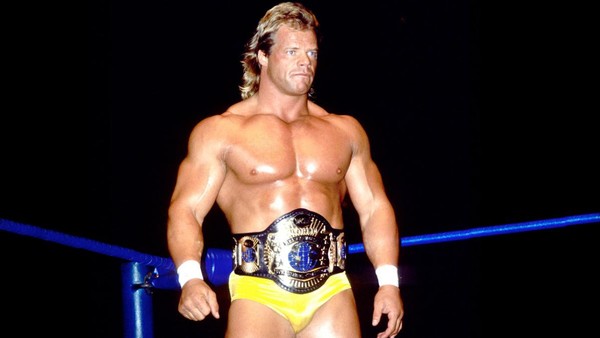
The prime years of Jim Crockett Promotions were sold on grit, soul, and authenticity.
In his famous 1985 ‘Hard Times’ promo - which has taken on a life of its own in retrospect, and was actually typical of Dusty Rhodes' prolifically incredible talking game - the great man took aim at Ric Flair. Dusty was the working class avatar for the Crockett fandom, Flair his rich, high-falutin nemesis. Dusty ran down Flair by saying he put “hard times” down on Dusty and his family, but Flair wouldn’t know anything about it. Dusty said he didn’t look like the athlete of the day - “my belly’s just a little big, my heinie’s just a little big, but brother, I’m bad, and they know I’m bad.”
Rhodes, bluntly, was a big fat dude who could kick ass. Flair was technically more skilled, and boasted the better physique, but his belly was just a little yellow; even though he was technically very skilled, he was a coward deep down. Flair talked a good game - the best game, you could easily argue - but he was a braggart who rubbed your nose in his luxury lifestyle and his supposedly legendary prowess in the bedroom. In short, while Flair was a love-to-hate figure and the original cool heel, in the fictional universe of Jim Crockett Promotions, being handsome and sexy was a heel trait.
The WWF was different. Their top guy, Hulk Hogan, without portraying a sex symbol per se, was an uber-muscled hero. Nobody in the audience could ever dream of looking like him. He was resented for that (and his hokey act) when making the shocking jump to WCW in 1994. The idea is that Hogan betrayed the DNA of WCW and its precursor. He did not belong. The WCW fans had grown to earnestly love Flair in the meantime, and were savvy enough to recognise that Hogan was intent on lowering his value and reshaping the promotion in his fake, cartoonish image. Hogan, to them, was a body guy and nothing more. Crockett was for real men! Except, no it wasn’t, because what’s interesting about this perception is that, ahead of the WCW rebrand, JCP distanced itself from its rough and rugged philosophy.
Per the forensic sleuthing of journalist David Bixenspan, JCP in 1988 had a presence at a National Association of Television Program Executives (NATPE) convention. In a bid to draw interest from TV stations, photos of Lex Luger were published in trade ads boasting of JCP’s impressive audience of “young women”. JCP did the “sex sells” thing well before its identity was sullied by diet WWF B.S.