How The Disney-Fox Merger Will Impact Marvel Comics
According to one of its most famous creators.
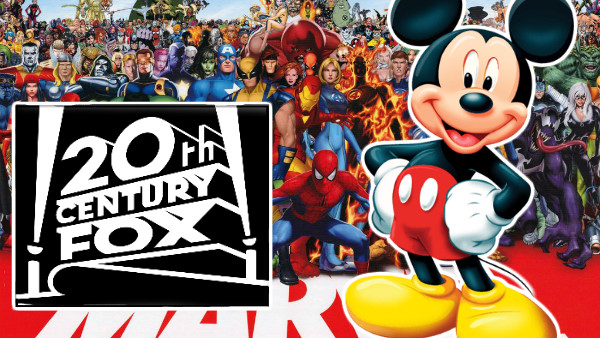
Although Marvel Studios and Marvel Comics are technically two separate entities, to say that the reach of the Marvel Cinematic Universe hasn't influenced the comics would be remarkably disingenuous.
Readers will be all too familiar of occasions where the MCU has changed a certain character, origin or otherwise, but they'll also be aware of how the lack of MCU films (or, to be exact, a certain kind of MCU film) has impacted the medium - and it all has to do with the Disney-Fox merger.
By now, the story behind Disney's monolithic takeover will be all too familiar. In the nineties, in an effort to save their company from bankruptcy, Marvel parted with the on-screen rights to several key intellectual properties; Spider-Man went to Sony, New Line Cinema got Blade, and Fox gained control of both the X-Men and the Fantastic Four. For a while, this was fine; the comics continued as per, but as Marvel began to compete in that medium with the MCU, things took a different turn. Suddenly, the Fantastic Four were kicked out of the Marvel Universe, and the X-Men line of comics - once the jewel in the crown of the House of Ideas - gradually declined in terms of prominence.

For many, the reason behind it was obvious. Marvel had supposedly issued an edict that forbade the Fantastic Four from appearing in Marvel's Comics as a response to Fox's ownership of their on-screen rights (it's no coincidence they've reemerged just as Disney's takeover was approved), and according to artist Rob Liefeld, that looks to have been the case all along.
Addressing a panel at Wizard World Comic Con (and relayed via MovieWeb), Liefeld claimed that Marvel had been dialling down the X-Men some two decades, and that it's only recently that the mutants are being given further support from the company itself:
"Here's the deal. Since the X-Men movies came out and Disney didn't have them, I don't know if you've ever paid attention, but Marvel kind of turned the volume down on the X-Men for almost 20 years. Now that they have them more, what was told to me was, 'Oh yeah. Our budgets on the X-Men books are back up to what they used to be because now we own them all.'"
So, as the months progress, fans should expect to see a bigger focus on the X-books. Given the success of Tom Taylor's comics - particularly Wolverine and X-Men Red - that sounds very exciting indeed.