10 Arsenal Players Who Weren't Worth The Hassle
Sometimes you just gotta say enough is enough.
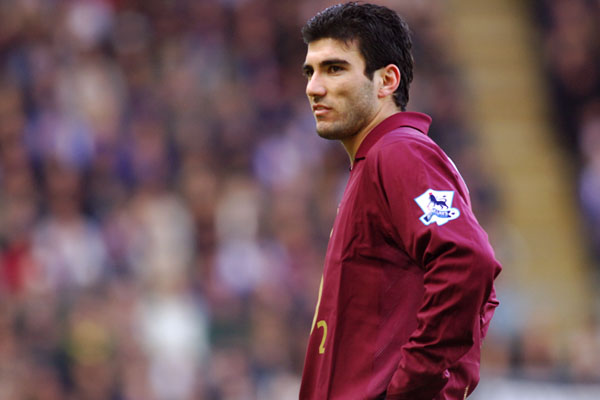
To the naked eye, footballers are the competitive and passionate elements of a football club embodied in human form. Willing to lay their body on the line for the cause that means so much to thousands of supporters, they are the ones that can make dreams become a reality. At the other end of the spectrum, footballers are often perceived as monsters behind closed doors formed by the snarling beast that is the over-exposing media, and the fame and riches that accompany it. Salary demands, contractual disputes, and dressing-room bust-ups there have been examples throughout the footballing world of these athletes getting a bit too big for their boots.
Arsenal is no different. While it has borne some truly magnificent professionals, such as the likes of Dennis Bergkamp and Thierry Henry, there have been those who have caused Arsene Wenger nothing but a continuous string of head-aches. There have been an array of players who have served only to add more grey hairs to his scalp, whether through their questionable attitude, or simply their inability to repay a hefty price tag.
With protracted transfer sagas and expensive acquisitions comes increased pressure for these players to pay dividends, and when they dont, worry lines will surely start to break out onto the managers increasingly exasperated forehead.
Take a look at ten players we feel Arsenal could have done without, whether due to their baggage, injury problems or otherwise.
10. William Gallas
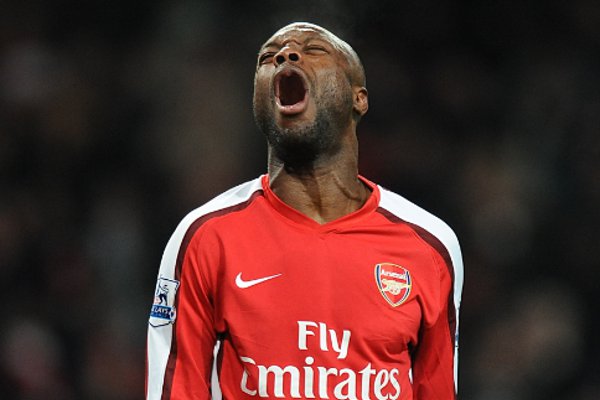
William Gallas' mainstay at the club is a quagmire, and a topic of hot debate for sure. Arriving as part of the deal that took Ashley Cole to Chelsea in 2006, the French defender performed admirably for Arsenal. He was the club captain, and was a leader. Tough and commanding at the back, and dangerous in the opposing box, Gallas proved to be a top signing for Arsenal. Then what on earth is he doing on this list? The answer is quite simple - his attitude is one of the main reasons why Arsenal were not crowned Premier League champions in 2008.
The decision to award the Frenchman with the captains armband within a year of his arrival was a controversial move, with Gilberto Silva having been widely tipped to receive it following the departure of Thierry Henry. To his credit, Gallas led by example, and the Gunners were cruising to the league title until February, when it all went up in flames.
There is one sight which most Arsenal supporters will associate with their former captain. On 23 February 2008, the Frenchman was solemnly slumped on the St. Andrews turf, having surrendered a precious three points with a last-minute penalty concession against Birmingham City. Their world had been rocked by the horrific injury sustained by Croatian striker Eduardo, and were clearly unable to see out the game. Forgetting his responsibilities as captain of the club, Gallas had to be restrained as he appeared to confront the crowd following James McFaddens last-gasp penalty.
Despite musings that Wenger would strip him of the armband, Gallas kept the armband until November, when he was stripped of it following an interview, in which he disclosed disruptive tensions within the squad. He was subsequently dropped, fined two weeks wages and was forced to pass the armband onto Spaniard Cesc Fabregas.
Destroying any semblance of credibility he may have had at the Emirates, he sold his soul to the devil, penning a contract at bitter cross-city rivals Tottenham Hotspur. A fine defender he may have been, but an unsavoury character in many Gunner supporters eyes.
9. Samir Nasri
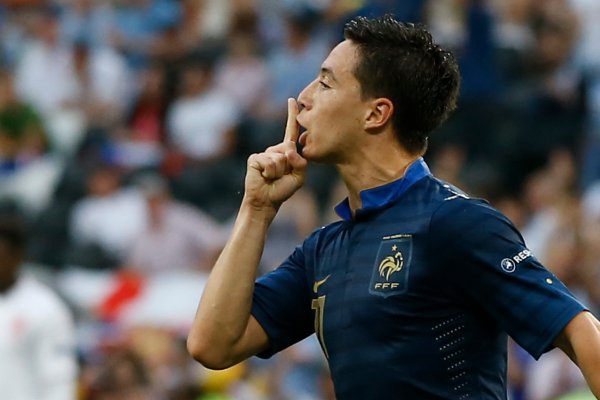
It hurts when a manager gets burnt by a player, when he has tracked him for so long. To discover him at such a young age, to keep tabs on his talent over the coming years, before having him wrestled from your grip by the riches of a sugar-daddy club within a couple of years, is a bitter pill to swallow.
For Arsene Wenger, his pursuit of the one dubbed the next Zidane began ten years ago at a UEFA European u-17 Championship. Four years later, and the player had matured into the confident playmaker Wenger hoped he would. Before the beginning of Euro 2008, a transfer wrangle between Marseille and Arsenal commenced, before a £12 million deal was struck.
On a playing level, Nasri must surely be heralded as an unbridled success. Despite his injury problems, he still managed to average around 30 games a season, and scored 18 league goals over the course of three seasons.
The reason he is treated with such disdain in North London, however, is the manner by his exit. Arsenal supporters have grown accustomed to a brigade of Gunners leaving for the wealth of Manchester City, but in the summer of 2011, Nasri unashamedly flaunted himself to both Mancunian clubs whilst still under contract.
Banished from the international scene, Nasri has earned the reputation as a trouble-maker, and for Wenger, he will surely learn his lessons from placing his long-term trust in the likes of certain individuals who will only quit the Emirates after three barren seasons.
8. Eduardo
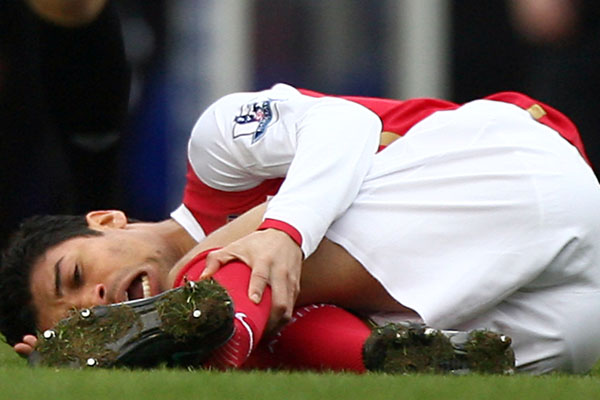
Possibly the cruellest addition to the list, is the Croatian hot-shot who suffered that horrific leg break at St. Andrews in February 2008. So harrowing and traumatic were the images of his smashed tibia, it completely derailed the Gunners season, as their form alarmingly nosedived. When he was eventually sold to Shaktar Donetsk in 2010, it was reminiscent of everybodys favourite racehorse being shot in the head. Sad and poignant as it was for the fan favourite, deep down everybody knew that he had never quite recaptured the magical touch he had possessed pre-injury.
It took 12 months for Eduardo to return to action following that eye-watering leg break, and scored two goals as he was eased back into the fray. While the Croatian had attracted sympathy nationwide during his slow recovery, he was suddenly a villain in the eyes of the media, castigated for a perceived dive in a Champions League qualifier against Celtic.
Eduardo scored 12 goals in 31 appearances in his debut season, which wasnt bad considering it was cut short in February. Sadly, his final season at Arsenal showed just how much of an impact career-threatening leg injuries can have, as he mustered just six in 32 appearances. It was a paltry return for a player they had invested £7.5 million in just three years previously.
What would his fate have been were it not for that ghastly break in 2008? Could he have prospered in Thierry Henrys absence, and struck up a rapport with the on-form Emmanuel Adebayor? We will never know just how well Eduardo could have performed in a Gunners shirt, and we can only lament that dark afternoon in Birmingham, when Martin Taylor clumsily lunged over the ball. What is certain, however, is that Eduardo should count himself fortunate that he was even able to walk again, let alone continue to have a top-flight professional footballing career.
In this cutthroat world of football business, and through no fault of his own, the former Dinamo Zagreb hotshot simply didnt represent a good return on his investment. Arsene Wenger knows exactly who to thank for that, too.
7. Andrei Arshavin
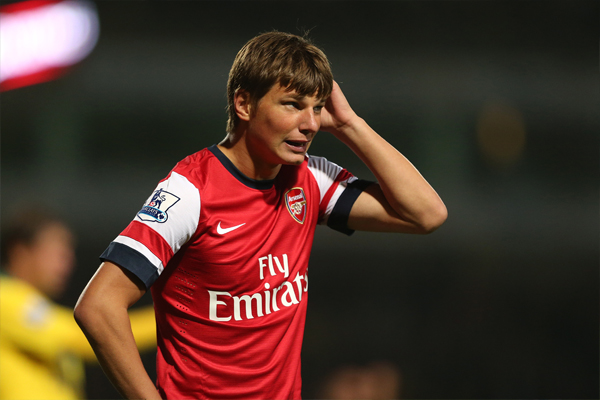
If there is one player who typifies the art of not making the most of talent, it is summed by the Russian maverick who tore international defences to shreds during Euro 2008. Injecting pace and energy into an inspired Russian side, they reached the semi-finals of the European Championships, before bowing out to Spain. While he had been touted as one to watch prior to the tournament, it had been confirmed for all to see a star was born.
It took six months and dogged efforts on Arsene Wengers part to battle off the interest in the Russian superstar, as he acquired his services in January 2009. It was a turgid and gruelling affair, in which Arsenal registered several bids in an effort to prize him from the clutches of Zenit St. Petersburg, but eventually they had their man. Arsenal chiefs had even been left to sweat at the 13th hour, following an English snowstorm which had delayed the registration process, with the league forced to extend the transfer deadline beyond 5pm.
In the end, it was much ado about nothing. Arshavin proved to be one of those players who built a spectacular repertoire of collectors items from the four-goal salvo at Anfield, to the late winner against Barcelona but apart from the occasional moment of magic, the Gunners were left wondering what all the fuss was about. Often cutting a forlorn figure in English football, the supporters grew tired of his abject displays, and even showed their dissatisfaction with their vocal chords as he was substituted on against Manchester United in 2011.
Arshavin has since admitted that he nearly suffered from depression, following his prolonged spells on the bench at Arsenal, and he was granted a swift reprieve in June 2013, when his former club offered him a lifeline.
6. Jermaine Pennant
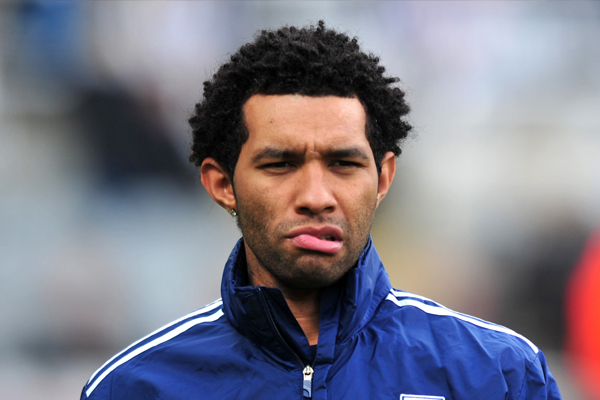
There was a time when Jermaine Pennant was the most expensive teenager in British football. While Luke Shaws £32 million fee makes a mockery of the measly £2 million that had been splashed out for the Notts County trainee in 1999, it was still a sizeable amount of pressure placed upon the 15 year olds shoulders.
Pennant was hailed as one of Arsenals most naturally gifted youngsters, and was tipped as one to watch for the future. Making his first team debut at the age of 16, he became the clubs youngest ever first-team player, before smashing in a hat-trick on his full league debut four years later.
His six year stay with the Gunners was a tumultuous one, with Arsene Wenger growing continually distressed with his record of tardiness to training sessions. He complained from homesickness, and publicly voiced his displeasure at his lack of game-time. He found himself embroiled at the centre of an international controversy, as he was sent home from an u-21 camp for breaking a curfew.
''You can understand that a young boy can make mistakes but if they don't learn then there is no future for them. We want players to represent the club and on this occasion he did not do it. We want him to learn from that and not repeat it. It is down to him because as a player he has everything. He is a good dribbler, good crosser, good passer. He's also quick with great vision. I believe he is the biggest talent of his generation." - Arsene Wenger, 2003.
5. Lassana Diarra
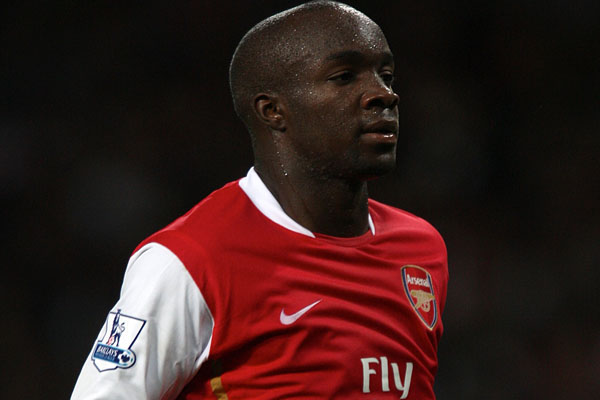
Patience is a virtue. Some players need it to survive at big clubs. In the space of six months, French midfielder Lassana Diarra went through two of the Premier Leagues elite clubs in Chelsea and Arsenal, before winding up at Portsmouth. That tells one all they need to know about Diarras refusal to bide his time.
Having managed to lure him from cross-city rivals Chelsea in the summer of 2007, the 22 year old midfielder was seen as Gilberto Silvas natural successor. However, the multi-functional dynamo soon found game-time hard to come by, such was anchoring midfielder Mathieu Flaminis continued excellence in the middle of the park.
''When I signed for Arsenal, I was made promises by the people who recruited me. But since the start of the season, the only matches Ive been involved in have been low-key, and to be honest Im getting fed up with it. I signed for Arsenal because I was led to believe I was going to be playing, and there would be healthy competition for the spot. That hasnt been the case. Lassano Diarra, December 2007.
Unamused by Diarras public strop, Wenger subsequently shipped him out the door in the next transfer window, with Portsmouth manager Harry Redknapp swooping for his signature in a £5.5 million deal.
''Wenger just taught me to doubt everything. He never addressed me until I told him I was going. He talked to others, but not me. I feel like I never played for Arsenal. If people do not remind of them, I forget about them. Its erased from my memory. Lassano Diarra, April 2009.
Dont worry, Lass. For most Arsenal supporters, they will have forgotten all about his seven substandard appearances as well.
4. Francis Jeffers
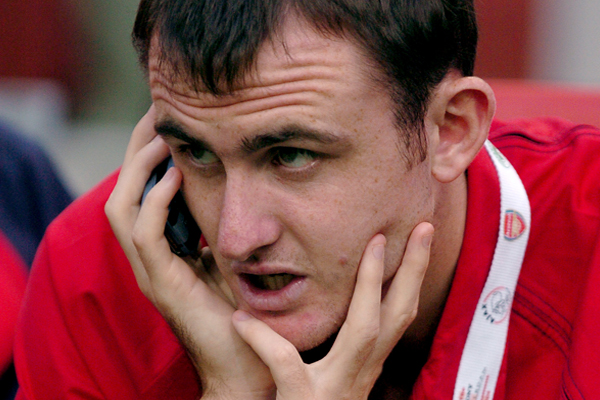
Francis Jeffers is 33 years old and is currently without a club, having recently failed a trial at League Two side Bury. The Fox in the Box has played for 11 different clubs, including a brief spell in Malta. One would think that he would have envisaged a slightly different career trajectory when he signed for Arsenal in an £8 million deal 13 years ago.
Scoring 18 league goals in three seasons at Everton, it has taken him over 12 years to double his career goal tally, so it goes without saying that he didnt quite make it at a goal-hungry Arsenal side in the early 00s. At the time, he was one of the clubs most expensive signings, and with it came a heap of pressure placed on the shoulders of the 20 year old.
In total, he made 22 league appearances for the Gunners, and found the back of the net on just four occasions, as his lack of ability to cut it at the top was quickly found out. From there, his problems only exacerbated as a loan spell at former club Everton produced no goals in Everton, setting the precedent for a horrifically incompetent footballing career.
Wenger is so usually so adept at plucking youth and moulding them into superstars, but on this occasion, it was better to have left the wallet in the bedside drawer, and ignored the Evertonian. For if they had waited just one more year, the Toffees would have been flaunting a new teenage starlet, who would just happen to announce himself to the world with a 25 yard wonder-goal against the Gunners.
3. Jose Antonio Reyes
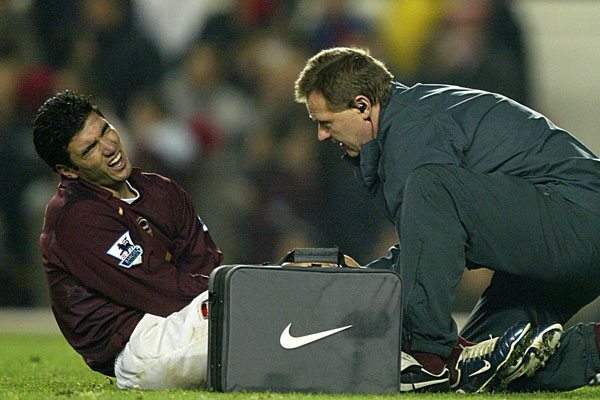
Having arrived from Sevilla in the winter of 2003 for a potential fee of £17 million, the 20 year old striker was to take Wengers men to the next level. On their way to cementing an unbeaten league campaign, the Spanish hotshot was to be the catalyst for a prolonged and sustained period of European dominance. With Reyes forming a healthy alliance alongside the potent Thierry Henry, the duo would become one of the most prolific and revered strike partnerships throughout the continent for years to come. At least, that was the plan.
Following a so-so start to his Arsenal career, Reyes began the 04/05 season on fire, finding the back of the net in each of the first six games. However, once the autumn leaves turned brown, a different animal reared its head, as the Spaniard began to pine for his native land.
In early 2005, Arsenal were forced to deal with a leaked phone call with a prankster perpetrating to be a director at Real Madrid, tricking Reyes into admitting that he would welcome a transfer to the Santiago Bernabeu. Citing bad people at the club, Arsenal supporters finally knew the reason for his inconsistent form he wanted out.
Summing up what proved to be a farcical and disruptive season on the Spaniards part, Reyes almost cost his side their only chance at silverware, as he received his marching orders in the FA Cup final clash with Manchester United.
Reyes would have to wait a year to get his wish to return home and sign for the nine-time European Cup winners, with Wengers patience wearing thin following increased attempts from the Madrid hierarchy to unsettle the player. Leaving in a part-exchange, with Julio Baptista going in the opposite direction, Reyes bid adieu to a miserable stay in England. Perhaps he should have read the brochure properly.
2. Nicklas Bendtner

Nicklas Bendtner is not the prolific Premier League marksman that he might have hoped to become by the age of 26. Instead, he is the punchline of a long-running joke, mocked and taunted by football supporters the length and breadth of the country. While he wasnt an expensive signing or the subjected of a protracted transfer saga, Bendtner has been a drain on the resources of the North London club for nine years, with Wenger waiting for his undeniable talent to shine through.
Not stuck for self-confidence, Bendtner has described himself as one of the better goal-scorers in the world, and touted himself for the likes of Barcelona and Real Madrid. The Danish marksman has never bagged more than nine league goals in a season, and has taken in loan spells at Birmingham City, Sunderland and bizarrely, Juventus.
He has proven to be something of a trouble-maker within the Arsenal camp, giving Wenger a plethora of headache-inducing problems, courting controversy at a whim. He has been spotted stumbling out of London nightclubs partially nude following crucial Arsenal matches, allegedly destroying cars in and around the Sunderland area, and was banned from the road for three years following a case of drink-driving in Copenhagen.
The much-maligned strikers troubles spilled over into the dressing-room, becoming embroiled in an on-pitch spat with Arsenal team-mate Emmanuel Adebayor. He has finally been released, ten years after having been poached from Denmark at the age of 16. Following 14 league goals in 108 appearances, and a rap sheet as long as his arm, Wenger will wish he just simply hadnt bothered.
1. Emmanuel Adebayor
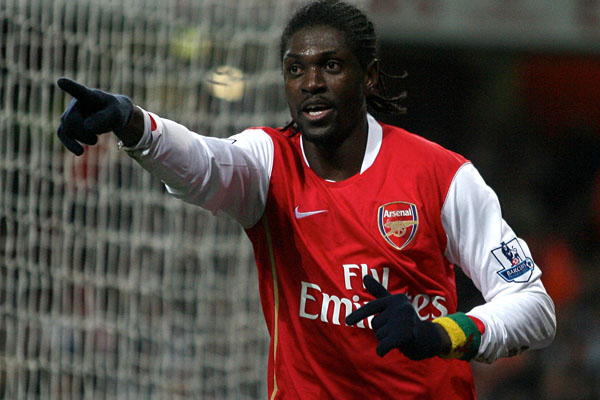
You would be hard pressed to find a more hated figure at the Emirates Stadium than the Togolese international. While Ashley Cole may run him close, Emmanuel Adebayor has proven to be a thorn in the side of the Gunners support for many a year, dating back to when he was donning the Arsenal jersey on a regular basis.
While Adebayor enjoyed goal-scoring success in the Arsenal jersey, and ultimately proved to be a great find from Monaco in the winter of 2006, his stay in the capital was marred by accusations of greed, laziness and apathy.
Two years after his arrival in North London, the former Monaco striker had recently embarked on a breakthrough 30 goal season, and used the summer of 2008 to flirt with the elite European clubs. Possibly a cynical ploy to increase his wage demands, the Arsenal board relented and doubled his wages to £80,000 p/wk.
He became involved in dressing-room conflicts, derby punch-ups, and began to become dogged by a spate of injuries. With the new bumper contract, Adebayor was seen to relax slightly and become disinterested, registering just 10 league goals before being shipped off to Manchester City in the summer of 2009.
While Adebayor was never a popular figure during his time in North London, since his departure, he has become something of a hate figure. In September 2009, Man City took on Arsenal in an ill-tempered clash, in which the Togolese frontman was seen to stamp on Robin van Persie, and run the length of the pitch to celebrate his goal in front of the Arsenal supporters. Inciting hatred, vitriol and violence, Adebayor felt the brunt force of their ire, as he was showed by blunt objects raining down from the away section.
He has since raised the proverbial two fingers to any relationship he may have had with the Gunners, by signing for Spurs in 2011. A decent player he may be, but he only ever hit more than ten league goals for the Gunners once was he really worth the lucrative wages, and more to the point, was he really worth the hassle?