Premier League: 7 Most Controversial Managers Ever
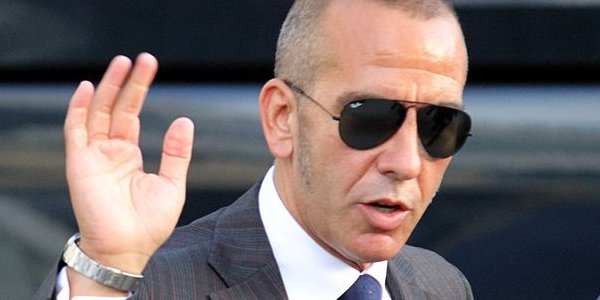 With the recent appointment of Paolo Di Canio at Sunderland, the English Premiership has welcomed back one of its most controversial figures. That statement is saying alot considering some of the mangers that have been in charge over the years. The following is a list of 7 managers who I believe are the figures to cause the most controversy. Disagree ? then feel free to add your comments.
7. Joe Kinnear
A bizarre appointment that seemingly came out of the blue at a very disjointed Newcastle team, on the 26th of September 2008 Newcastle hired the 61-year-old former Wimbledon and Luton manager Joe Kinnear as their interim boss until the end of October, following the resignation of Kevin Keegan. Kinnear blew his top just FOUR days into his reign as interim boss, issuing forth a foul-mouthed tirade in response to what he considered to be unreasonable criticism. 52 swear words spewed fourth in five amazing minutes. Kinnear said he was clearing the air as he confronted about a dozen journalists. The club's press officer tried to order the assembled journalists not to publish any extracts from the tirade, but Kinnear himself gave the journalists permission to write up whatever they wanted from his remarks. Later in the interview, he announced that he would no longer deal with the national media while he was Newcastle manager, and that he would only speak to local newspapers from then on, with first team coach Chris Hughton (and future manager) handling all other interviews. After a successful few games in charge Kinnear was named as the permanent manager until the end of the 200809 season.On 7 February 2009, Kinnear was taken to hospital after feeling ill, hours before Newcastle's clash with West Brom. It was later announced he would need a heart bypass operation, and that Alan Shearer would take over the managerial role for the remainder of the season. Joe Kinnear's contract officially expired at Newcastle on 30 May 2009.6. Sam Allardyce
 On 19 September 2006 the BBC current affairs television programme Panorama broadcasted a special investigation into corruption in English football. Sam Allardyce, a well-known wheeler-dealer and his agent son Craig were alleged to have accepted "bungs" (bribes) from agents for signing certain players. Two agents, Teni Yerima and Peter Harrison, were secretly filmed, each separately claiming that they had paid Allardyce through his son. Allardyce denies ever taking, or asking for, a "bung" he then Bolton manager was implicated in an expose of the football transfer market. ,As a result of the allegation, made on the back of the programme, called Undercover: Football's Dirty Secrets, Allardyce refused to speak to the BBC. While he also stated he was going to sue the broadcaster in order to clear his name, Allardyce failed to issue libel proceedings, allowing the year-long window following the show's broadcast to expire.
5. Paolo Di Canio
On the 31st if March 2013, Paolo Di Canio was revealed as Sunderland's left-field, kill-or-cure choice to stave off the threat of relegation from the Premier League. The move immediately proved controversial, David Miliband, the former Labour MP, stepping down as a non executive director in protest at Di Canio's political past in which he has admitted to being a fascist but not a racist. Miliband said: "I wish Sunderland AFC all success in the future. It is a great institution that does a huge amount for the north-east and I wish the team very well over the next vital seven games. However, in the light of the new manager's past political statements, I think it right to step down." With an overblown media reaction that seemed to change Di Canio's image from, a great character for football to Mussolini himself. Although Di Canio lacked Premier League managerial experience, he enjoyed an impressive 22-month stint in charge of Swindon after being appointed in May 2011. During his first season Swindon were promoted from League Two and they are now in strong contention to win a second successive promotion after thriving in League One, despite operating within severe financial restrictions, including a ban on transfers. Di Canio has hero status by many at the County Ground, where he is credited with transforming Swindon beyond recognition, although the club's former chief executive Nick Watkins said he "managed by hand grenade" and was "a challenge, no question". Watkins added: "He was demanding to work alongside and had his own management style. He managed very much from the heart and, along the way, created a bit of collateral damage I had to repair." I have a feeling in the next few seasons we will see Di Canio a lot higher on this list.
4. Alan Pardew
Wow, where to start with Pardew. In 2003, the BBC described him as being a "dangerous and distant animal" in the media, referring to his public relations abilities, which has led him to making several rash comments. Pardew got his first real break in Management at Reading in 1999. After a few great seasons in charge West Ham made an approach for Pardew's services. Royals Chairman John Madjeski refused him permission to hold talks with the East London outfit, which prompted Pardew to resign. A bitter legal dispute delayed Pardew's appointment at Upton Park, as he was placed on gardening leave. On 20th October 2003 he was finally free to join West Ham. The whole affair left a sour taste in the mouth of Reading fans who have never forgiven him for turning his back on the club. In the 06/07 season Pardew was gifted Corinthians pair Carlos Tevez and Javier Mascherano on 31st August 2006 in a controversial double transfer. He struggled to fit the Argentinians into the side however, and even bizarrely dropped Mascherano for the likes of Hayden Mullins. Results failed to improve and Pardew was starting to feel the heat from the supporters again. The final straw came on 9th December 2006. While in between jobs Pardew did some punditry work for the BBC. That was until he stated that Michael Essien had 'absolutely raped' Ched Evans (of all people). It wasn't the first time Pardew had upset someone with comments made to the media: he had previously criticised Arsenal for not fielding a single Englishman in a Champions League win over Real Madrid. Gunners boss Arsene Wenger responded by accusing Pardew of Xenophobia. On 9th December 2010 Alan Pardew made a surprising return to management with Premier League Newcastle. In 2011 ahead of the North-East derby against Sunderland, when a Ryan Taylor goal gifted Newcastle a 1-0 victory, Pardew made comments that are thought to have related to the referee, Howard Webb, who took charge of the clash. In response, the FA charged Pardew with improper conduct, a charge the manager denied and, after requesting a personal hearing, "the case was found proven" by an FA regulatory commision, leading to his warning.3. Jose Mourinho

Critics say Jose Mourinho's ego sometimes distracts from his ability as a coach. But all you have to do is look at the Portuguese's medal collection to realise that he can back all that up...and then some.
After guiding FC Porto to an unprecedented Champions League victory in 2004, Mourinho took the Premier League by storm, leading Chelsea to back-to-back league titles.Though his rivalry with Manchester United head Sir Alex Ferguson was highly publicized it was almost diplomatic in comparison to his sour relations with Arsenal's Arsene Wenger. Their rivalry hit a high (low?) point in 2005 when Mourinho became fed up with what he perceived as Wenger's obsession with Chelsea. "I think he is one of these people who is a voyeur. He likes to watch other people. There are some guys who, when they are at home, have a big telescope to see what happens in other families. He speaks, speaks, speaks about Chelsea." After Wenger threatened to take legal action, Mourinho retracted the comments and the two football icons apparently kissed and made up.Perhaps Mourinhos' most controversial moment was during the 2005 Carling Cup final. Mourinho celebrated Chelseas late equaliser against Liverpool a own goal from Steven Gerrard by sauntering down the touchline in front of the massed Liverpool fans and placing his finger to his lips in a shush motion. Mourinho later claimed that, despite where he had been stood, the 'shush was actually directed at the English press.
2. Arsene Wenger
Arsène Wenger changed the face of English football in 1996. A controversial view, but undoubtedly the statement contains some truth. The Frenchman was one of the first successful foreign managers in the country. He can be credited with the introduction of a unique footballing philosophy which persists to this day. Wenger's Arsenal sides are often criticized for their indiscipline; between September 1996 and October 2010, the team received 80 red cards. He has often tried to defend his players, involved in controversial incidents on the field, by saying that he has not seen the incident; this is an option Wenger says he resorts to when there is no "rational explanation" to defend him, and that he has the player's best interests in mind. Arsene Wenger and Sir Alex Ferguson have been rivals for many years now. A low point in this rivalry was the pizzagate incident in 2004. That year Arsenal had been enjoying a 49 game unbeaten victory, which was brought to an end in their game against Manchester United. Their 2-0 loss in the game was accompanied by a controversial penalty. This was made more controversial by two rumours. One alleged that an Arsenal member threw pizza at Alex Ferguson. Another, that Wenger called Manchester Uniteds Ruud Van Nistlerooy a cheat. The Arsenal manager was fined 15,000 pounds for his remark. Since this incident, both Wenger and Ferguson have indicated a willingness to restrain their rivalry.1. Sir Alex Ferguson
 Arguably the greatest manager of all time, and with 26 years as manager of Manchester United, he is the longest serving manager in their history and in the Premier League but he is no stranger to controversy. Ferguson is well known for using what the press have called "mind games" with fellow Premiership managers. This approach normally involves making a derogatory comment at a pre-match press conference about the opposition Manager or their team. This has led to several spats in the past with managers such as Arsene Wenger, Rafael Benítez, Mark Hughes and most famously Kevin Keegan. Keegan virtually created the Ferguson 'mind games' myth with the "I Would Love it" outburst as Newcastle's Premier League title hopes collapsed in 1996. Keegan would walk out of Newcastle the next season, and his clash with Ferguson would forever be remembered as a cautionary tale about the dangers of squaring up to the United manager. It has also been suggested that Ferguson's intimidation of referees results in "Fergie Time": that is, unusually generous injury time being added in matches where Manchester United are behind. The phrase is at least as old as 2004 and a statistical analysis by The Times suggests that this comment might be valid, though the article points out that other footballing criteria may explain the correlation between extra added time and United being behind. Analysis by Opta Sports of Premier League matches played between 2010 and 2012 found on average that 79 seconds more time was played in matches where Manchester United were losing. This was a greater figure than for other top clubs, although most of these clubs seem to benefit from a "Fergie Time" effect, particularly in their home matches. SAF most controversial moment surely has to be his saga with his star players David Beckham. In terms of stardom and profile, Beckham was to Ferguson as George Best was to Sir Matt Busby. And the two were on collision course after Beckham's marriage. "He was never a problem until he got married," said Ferguson. "He used to go into work with the academy coaches at night time, he was a fantastic young lad. Getting married into that entertainment scene was a difficult thing from that moment his life was never going to be the same. He is such a big celebrity, football is only a small part. The big part is his persona." The low point of their relationship came when Ferguson kicked a stray boot in anger, smashing Beckham above the eye. "Of course it was an accident," he later said. "If I was that good I'd still be playing." Did we miss any controversial managers from the history of the Premier League? Share your own picks and observations below.