8 Ways TKO Has RUINED WWE
The more things change, the more they stay the same in the TKO era of WWE
It's worth noting the obvious as a catch-all caveat before diving in here, lest it needs mentioning before every entry - WWE was not the babyface company before the 2023 TKO deal happened. The merger between World Wrestling Entertainment and Ultimate Fighting Championship didn't magically make the market leaders of either side the bad guys overnight - they'd long been that in order to reach the point where they could even become an all-new corporate legion of doom.
Vince McMahon increasingly leaned into it as a leader. Before he resigned in disgrace twice, he was known and almost celebrated for the autocracy he oversaw, with countless talking heads and colleagues noting how he remained involved in every single aspect of the empire he'd bought and built. It was evident in the on-screen output alone, particularly as younger wrestlers and writers pandered to his increasingly dated and deranged tastes. There could be no doubt who was at the wheel up until the day he departed, and even then the period in which he was allegedly consulting had "creative" flashes of what used to make him tick.
Part of that was a in-built culture of job insecurity, over-arching instability (his own, as well as that of many that worked with him) and a transparent lack of respect for just about every stakeholder other than himself. Customers, consumers - us, you and I - included.
WWE has vastly improved its on-screen product in the years since he departed. But everything else...
8. Releases Somehow Get Even Worse
The release process within WWE had gotten so brutal before the TKO merger that one of the worst days in company history for it became part of a recent grim lore.
"Black Wednesday" became shorthand for just how little the market leader cared for talent, calling back to April 15th 2020 - the day hundreds of wrestlers and staffers were released or furloughed by a company simultaneously declaring record profits.
The ills of the pandemic were at the heart of both these issues - the company had saved a fortune on costs in light of how little they could do, but talent being let go had hardly any options of where to go to work for the very same reasons. It showed a naked lack of humanity from the top down, particularly as people the world over grappled with very similar strains and stresses and were turning to pro wrestling and other hobbies like it for much-needed distractions.
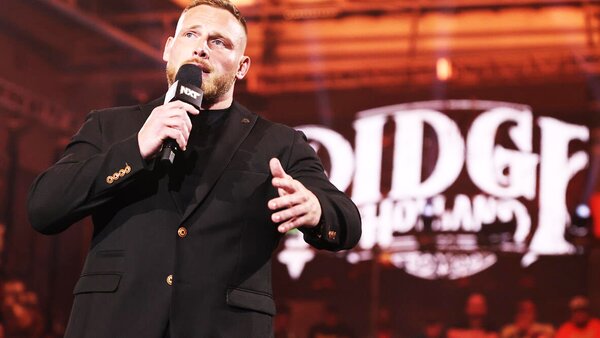
Half a decade later and the release of Luke "Ridge Holland" Menzies brought some brand new ugly conversations to the fore. Holland was injured while wrestling in TNA in September 2025 on behalf of WWE and earning "NXT money" (a sizeable cut from what he generated on the main roster), then revealed the company would not be renewing his contract when it expired in November. This, despite injury keeping him out of the game at least until early-2026. Historically, WWE has added times to deal in order to a) get every last cent from the talent and b) stop them going elsewhere, but Holland's reveal of this information allegedly expedited his exit, and with it, ended his pay sooner.
A rotten deal for the wrestler all the way around and horrific PR for the group, but that's never seemed lower on the agenda anyway...
7. The WrestleMania Change To Vegas
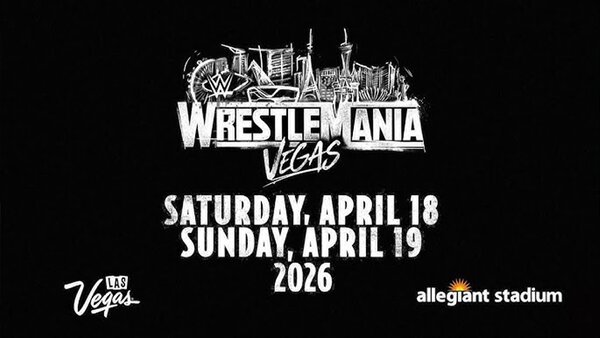
Alex Warren's "You Can't Stop This" became the first song attached to WrestleMania 42 when WWE dropped the maiden promo video for the show in May 2025, and the title felt like yet another slap in the face to those excited about where the show was originally supposed to emanate from.
Back in February, The Rock (more on him later) had turned up for a New Orleans edition of SmackDown to announce that WrestleMania would be returning to the city for the first time in nearly a decade. The Superdome had been home to the 'Show Of Shows' in 2014 and 2018, and was - per multiple reports - a dream host city for the show. A great, modern venue coupled with the 24-hour party atmosphere for those making their annual pilgrimage; there were lots of comparisons to the vibe curated in Las Vegas for WrestleMania 41. The graphic drop made it official - NOLA was set to three-peat as a 'Grandest Stage' city. Then, Vegas got in there and did it first.
WrestleMania is an arms race for major cities now, based primarily on the very simple economics attached to the 'Grandaddy Of Them All'. It costs money to get it but makes more when it arrives, and as the company's strongest IP has proven to be perhaps WWE's greatest ever promotional tool. But never had the show been announced - dates, locations, branding and all - only to be uprooted for cold hard cash several months later. Even when the pandemic forced the company's hand in 2020, the planned location of Raymond James Stadium was booked in for the following year when some order in the world had been restored.
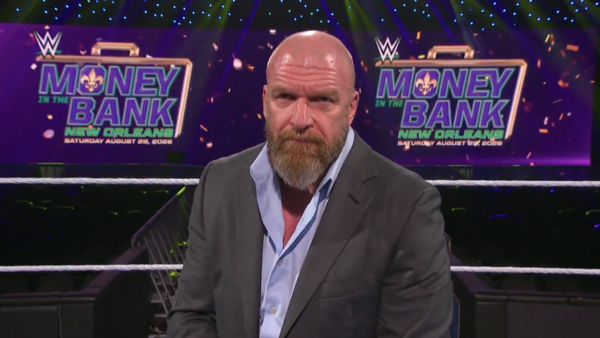
Triple H meekly appeared on a May edition of SmackDown to confirm that New Orleans would be getting Money In The Bank instead, without confirming how or why the change had occurred. He didn't need to - the answer was cold hard cash for TKO, and it's threatened to kill a town as a result.
Sound familiar?
6. Killing Towns
The numbers don't lie, and they're spelling disaster for WWE at Sacrifice.
Or, not quite disaster, and not (yet) at Sacrifice, but not good, and not showing signs of getting better any time soon.
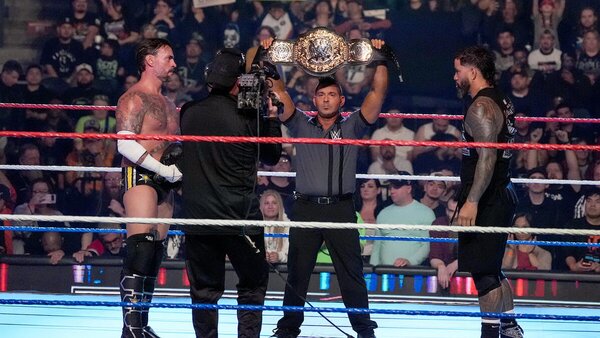
To deny that the market leader was hotter than the sun in 2023/24 was to bury your head in tribalistic sand, but 2025's been the year WWE has cooled substantially. And after months of undergoing a patently obvious creative decline, the organisation has finally been punished for its actions where it counts - at the box office.
TKO - seemingly in an act of defiance - are yet to act at all. Bad product is one big reason the numbers at the buildings are down, and will always be the most important reason of all. There's always been excuses for cold times in wrestling companies; bad weather, other local sports events, public holidays, something else on television, bad economy, you know and have heard the usual ones trotted out. But those identical excuses are never required when the going is good, and mostly why nobody within WWE was really talking about them in 2023 and 2024.
Even if we assume any of the above rationales were reasons for the lower turnouts in multiple towns, the booking fall-off wouldn't be the only thing keeping fans away. TKO, much as they did with UFC years earlier, have decided to take a very expensive gamble and let the market decide if it pays off...
5. Ticket Prices
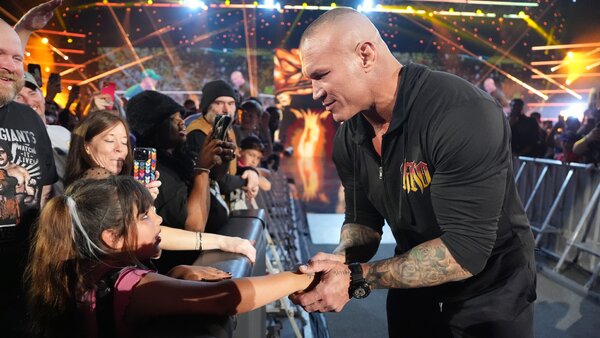
Speaking at the Goldman Sachs Communacopia & Technology Conference in September, TKO COO Mark Shapiro said, "WWE is not where the UFC yet is on ticket yield. We have our work to do there. We know we have a lot of room there because Vince McMahon was primarily pricing tickets for families and wasn’t totally focused on maxing the opportunity there."
Read that again should you need to. The brutal practice of TKO's ticket pricing has resulted in a scenario in which Vince McMahon is the situational babyface. WWE is increasingly not a family event but a luxury item for the very wealthy or very least cash-rich in society.
The market has and will always decide, regrettably. Tickets have been getting out of control for most live events since the pandemic, dynamic pricing has rigged the game against consumers even further, yet people still attend arena shows of all kinds, WWE included. They attended them in incredible numbers over 2023, 2024 and some of 2025 despite the costs, and likely still will for the right shows. This is merely "maxing the opportunities" as far as TKO are concerned, historic working class hobby of pro wrestling be damned.
Randy Orton himself was caught expressing shock at the prices for WrestleMania 41 when informed about them from fans at the WWE talent hotel in Las Vegas. When even the millionaire wrestlers are cartoonishly left in disbelief, what chances do unassuming fans have?
4. Counter-Programming
WWE's counter-programming of All Elite Wrestling specifically in 2025 has been a new strain of irritating if you're AEW and sort-of funny for a while if you're a casual observer of events, but the whole bit is starting to wear increasingly thin as the year draws to a close.
It might objectively work wonders and TKO certainly won't care at all if an audience within a bubble considers the moves to be petty, but the discourse has been decided once and for all at this point - the larger of the two entities has started to come across as smalltime for the first time, with NXT in particular being made to suffer the consequences.
The height of this hit over All In: Texas weekend in July when, at the risk of the wrestling world thinking even for a couple of hours that the challenger brand might also have the capability of filling a stadium, WWE ran three events over the course of a weekend to reclaim the conversation. Goldberg's retirement, the second ever Evolution and yet another NXT PLE were fed into the counter-programming meat grinder, and all in vain; Hangman Page becoming AEW World Heavyweight Champion was arguably North American wrestling's biggest moment of the year, mostly because it was an extremely satisfying payoff to a longterm story - something that does a substantially better of job of convincing audiences not to bother with the competition.
The strategy hasn't even been WWE's boldest of the year...
3. The Latest Monopolisation Strategy

Much like TNA Wrestling in 2025, Google isn't yet completely useless.
The search engine's otherwise-deranged AI engine throws up the following as a definition of a "fighter brand"; 'A fighter brand is a lower-priced product launched by a company to directly compete with and capture market share from cheaper rivals, thereby protecting its premium-priced flagship brand'.
In all but the fact that it's inexplicably existed on this mortal coil since 2002, TNA is now a fighter brand for WWE.
Current (as of writing) star Matt Hardy even believes it. He said as much to Ariel Helwani, who fed it back to Tony Khan, who agreed with the sentiment when they spoke cordially in November. The people directly involved with the process know it to be true, so to deny at this point that a series of social media posts of full TNA houses, coverage of their big events across various WWE TV vehicles and the usage of stars across Impact and NXT (in as much as TNA and the developmental have actual stars) aren't to try and fool a section of the fanbase would be naïve or wilfully ignorant.
As is the case with most of these entries, there's a Vince McMahon version of this sort of thing before TKO ever came into the picture. His dalliances with Smokey Mountain Wrestling and Extreme Championship Wrestling in the 90s were rooted in realising they could help him tackle a WCW on the rise. But TKO don't do things by half or - as McMahon was prone to doing his whole career - lose interest in things. The push for TNA's growth has been aggressive to the point of farcical, and shows no signs of slowing down into 2026.
2. The Rock
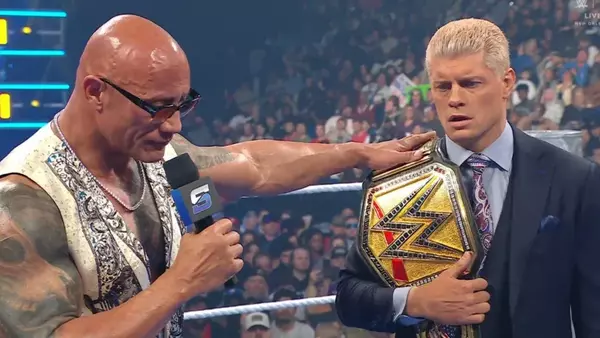
Or more specifically, The Rock getting in the way of Triple H becoming WWE's Dana White.
Or maybe both of them trying to be Dana White, or an amalgamation of what Dana White and Vince McMahon used to be before the TKO merger even happened. Or maybe just The Rock and Triple H full-stop, because this pissing contest has been one of the stories of their careers, starting when they were both in the midcard, then in the main event, then in a part-time capacity and now as chief powerbrokers in the company itself.
Cody once said Triple H was his favourite wrestler as he set about becoming an EVP of AEW, before leaving that post to become 'The Game's first main event quarterback when the time came to replace Roman Reigns. Should he have publicly name-checked Dwayne Johnson back then? Because it's felt as though 'The Final Boss' has been intent on derailing 'The American Nightmare' as Hunter's golden goose ever since he became a director for TKO.
Rock turned up in 2024 to claim a WrestleMania main event, then smartly pivoted when fans took it back on Rhodes' behalf. Then he put a knife through the programme (or a gun, or whatever he symbolically cuts his own throat with) on the Netflix debut while literally reducing Rhodes to the role of a bystander, then finally campaigned for a business-killing heel turn before having to settle for John Cena.
He claims he was airlifted in for his 2025 cameos to spike business around Elimination Chamber specifically, but the Triple H-directed follow-on from his appearances was anything but needle-moving. Multiple messes made by the pair of them, but always instigated by the former 'Most Electrifying Man In Sports Entertainment'.
1. Netflix Era Chuds
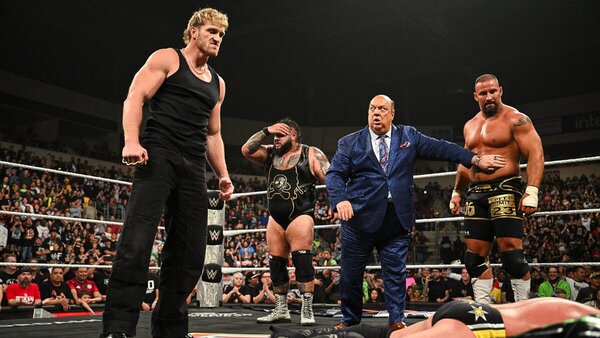
One's well en route to becoming a WWE main eventer and his brand was the very first one to appear on company canvasses when the change was made to slap advertisements everywhere the eye could see, but Logan Paul is the least of the concerns when looking upon a standard edition of Raw or SmackDown now. The front row's where the other heels are situated.
Andrew Shulz turned back up at Madison Square Garden to temporarily look like the hardest guy in the room when a fight broke out between The Judgment Day and some sports stars in November. Bert Kreischer was tearing his shirt off shortly before WrestleMania, Tom Segura took a break from using the R-slur to describe wrestling fans to promote his show on Raw, and Tony Hinchliffe's racially insensitive remarks across multiple performances and years earned him a spot as the host of the infamous Roast Of WrestleMania and infamously cancelled "Late Night With Tony Hinchliffe" special that didn't happen over SummerSlam weekend.
These chuds and others like them were long platformed and red-carpeted at UFC events, and with many of them plugging Netflix-based properties, the presence on on WWE television under the TKO banner as been perfect cross-promotion.
The promotion has never been a-political regardless of whatever it professed over the years, but not until recent time has it so flagrantly nailed its colours to the mast via the endless slew of this bro-coded losers and their terrible vibes.