How Good Were The Dudley Boyz Actually?
Conclusion
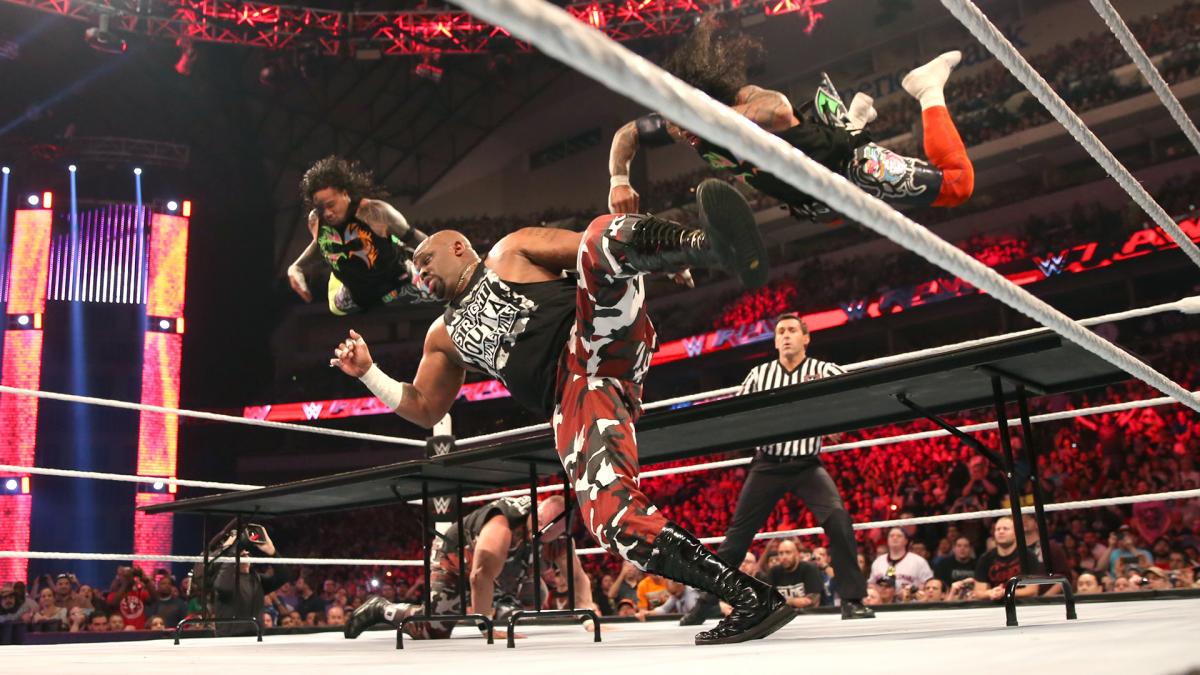
The Dudleyz hold something over many teams, if not the majority: longevity. This is undoubtedly an impressive achievement. Or is it?
The Dudleyz only rose to mainstream recognition in late 1999, around 18 months before WWE monopolised the business, which of course coincided with Vince McMahon losing interest in tag team wrestling entirely. The Dudleyz weren’t replaced by a generation of amazing teams until the next wave in the early-to-mid 2010s. They didn’t exactly steal a living in the 2000s - something like the Fish Market Street Fight is fondly remembered as a wonderful slice of pro wrestling bullsh*t - but they didn’t find work hard to come by, either, in a mostly terrible era defined by a lack of competition. With WWE creatively barren, and TNA weirdly fixated with it, a wrestler being over a few years ago was far more preferable to a wrestler who had the potential to get over.
Bubba is a great self-promoter, which helps. What also helps is the very long period of time in which WWE self-aggrandised its own Attitude Era.
Really, it’s only now, with Triple H leading a creative and business resurgence, that this relentless messaging is no longer beamed into all of our brains. It’s almost easy now to forget how prevalent it was. The various part-time returns, the DVD market, the Network retrospectives, Sting’s WWE run, the Raw Reunion events in which the Attitude Era guys humiliated the full-time roster, the dot com photo galleries displaying current ‘Superstars’ modelling the retro belts: you could never escape the idea that the Attitude Era was superior to everything - WCW, even the current product - and of course, the TLC matches featured heavily in this epic campaign.
The message that the Dudley Boyz were great, and involved in great moments, must have had some conditioning effect - and if there’s one other period of time that has been cannibalised as much as the Attitude Era, it is ECW. The brainwashing effect has doubled.
Very few teams in wrestling history have benefitted from the retrospective marketing campaign. The Steiner Brothers worked primarily across WCW and NJPW, only enjoying a brief early 90’s stint with the WWF as a team. WWE does not own the New Japan tape library, so their excellent work in the east isn’t put over through official channels. WCW was and is depicted in these documentaries as a disgrace of a pro wrestling outfit that only briefly competed with WWE because they spent stupid sums of money. It doesn’t benefit WWE’s narrative as the “recognised leader in sports entertainment” if they were to say “yeah, the Steiner Brothers were awesome, a lot better than Dudleyz actually”.
The Midnight Express were better at drawing heat than the Dudleyz, but again, they did nothing in the Fed. They were a dreaded territory team who wrestled in those “smoky bars” Triple H talks about.
This narrative, of course, is all-encompassing. You can’t escape it. History is written by the victors.
Overall rating: 6/10