Wrestling Psychology 101: Everything You Were Too Afraid To Ask
“It’s the way you present yourself, it’s the way your character’s portrayed, it’s the way that you walk, the way that you breathe, it’s the way that you smile. Everything that you do is a part of it. Most people do the big things, but nobody does the little things. To me it’s like making love, man, and hopefully you don’t start out with a big shot. You want to take those people on a rollercoaster, that emotional rollercoaster, with those ups and downs and in-betweens. It’s basically like an orgasm, man. You want to pop that nut at the last, folks, that’s key. Don’t do it upfront.”
Jake also added:
“Well if I do 50 moves, I’ll be the best. No: you’re just stupid. Give me a guy who can go out there and do three moves and make the people mad. That’s psychology”.
Jake played a deliberate, sinister creep who got off on being evil. He did very few moves at WWF This Tuesday In Texas. His match against Randy Savage strengthens his definition. Roberts mauled Savage in a red-hot brawl, and got off on it - before making a vital mistake. He climbed to the top turnbuckle and celebrated before signalling to hit the DDT. Savage, with one last burst of defiance, charged into Roberts gut-first with a desperate lunge, a tackle, barely a “move”. Roberts flipped the switch from fury to belief without a single throw, hold or creative counter - just one incensed man crashing, through pure instinctive vengeance, into his tormentor.
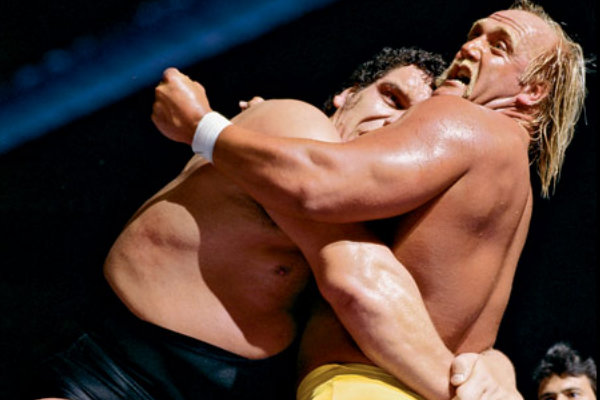
The best example of the “old”, fabled psychology, though, is probably Hulk Hogan Vs. Andre the Giant.
The promoter - a carny - told the public a lie. Andre the Giant had in fact been removed from his feet and slammed, but the majority of a new national pay-per-view audience had no idea. It was BS they could not smell. Hogan presented the audience with an impossible feat, and built the idea of it being impossible. He failed to achieve it throughout the match.
With a cartoonish grimace big enough for the back row of a stadium, Hogan made it feel as though his back had been mangled in the attempt. Then, imploring the audience to help, he executed it. Hogan, in doing next to nothing, had in fact convinced the audience - using the most rudimentary move in the history of the medium - that they had collaborated to pull off unthinkable magic.
Hogan enjoyed a luxury that no other wrestler would thereafter. The WrestleMania III main event is almost a myth that you can’t believe actually happened. It can’t exist anymore. A collective of people can never be that naive again, not with pro wrestling.
Psychology is also about working a limb over.
Bret Hart Vs. Steve Austin, ten years later, is more impressive. Bret and Austin no longer had the benefit of the lie, and wrestled their WrestleMania 13 Submission match amid a backdrop of excess. After an incredible, vicious, barely contained crowd brawl, Hart worked Austin’s leg. Hart, a genius, exploited the mood and articulated it before anybody else. Austin was the fans’ new guy. They hadn’t quite got that yet. 22 minutes and five seconds later, they would.
Hart - the babyface when the bell rang the first time, the heel when he won - didn't just attack the leg. After a while, it didn’t feel like mere strategy. Through the frequency of every strike, and the frustrated intensity of Hart’s body language, something felt wrong. Hart wasn’t actually doing anything wrong - he was weakening a body part within the parameters of a fight - but it was a berserk and relentless onslaught on the part of a supposed technical maestro. Hart was showing you, very gradually, that he had become a nasty piece of work. He wanted this to dawn on you, and he used his trust and instincts and ability to read the crowd. The wrestling fans might not have developed such a fierce bond with Steve Austin, had they not felt as though they were discovering him. Everything you might have hated about that early babyface Roman Reigns mega-push?
This was the antithesis: a masterclass of show, don’t tell psychology. Bret Hart and Steve Austin didn’t just make the fans care. They made them feel something they didn’t know they wanted to feel yet.
It was Austin’s breakthrough, Bret’s masterpiece. Austin readily accepted what was Bret’s layout, but he entered a phenomenal individual performance. Austin’s selling was outstanding. He never stopped moving, but he never failed to convey the pain, either. With his constant movement, he showed the crowd that they could always believe in him. He would never stop fighting. In the best finish possibly ever, Austin passed out through the pain of Bret’s Sharpshooter. You can watch this match as a grown adult over 100 times, and Austin’s blood-soaked anguish is so palpable that it always feels real.
Jake Roberts in the same interview said “less is more”, and this is true of almost every artistic medium - but more can also be more.
CONT'D...(2 of 5)