10 Reasons Why England Failed At The World Cup

Just what went wrong in Brazil for England?

When Roy Hodgson named a youthful squad for Brazil 2014, the nation was excited about seeing the next generation of young players gain valuable experience, without the pressure and expectation of success. But then, just two games later, the squad had sagged badly under the usual weight of expectation, losing to a poor Italian side and to a spirited, tenacious Uruguayan side that were yet to taste their controversy, and Roy Hodgson's men were unceremoniously dumped out of the tournament, with footballing heavyweights Costa Rica advancing to the group stages. So just how then did the team that had no pressure to succeed manage to not only fail to meet expectation, but to cause an entire nation to roll their eyes and collectively smack their hands against their foreheads in despair? Yes, this is England, and England seem forever doomed to repeat the gloom of every past failure at big tournaments, but it can no longer simply be a matter of accepting that the team's losses are as inevitable as death and taxes. England in general and the Football Association specifically now face a post-tournament tribunal, and now that the dust has settled and emotion has been replaced with logical analysis, it's time to look at exactly why England failed in Brazil. It is no easy task to change a culture of losing, but there are things - 10 of them in fact - that can and should be dealt with ahead of the next tournament, and if we can take one thing from the tournament, it is that the following mistakes were so costly that we will never see them again. Hopefully, at least.

10. Wayne Rooney

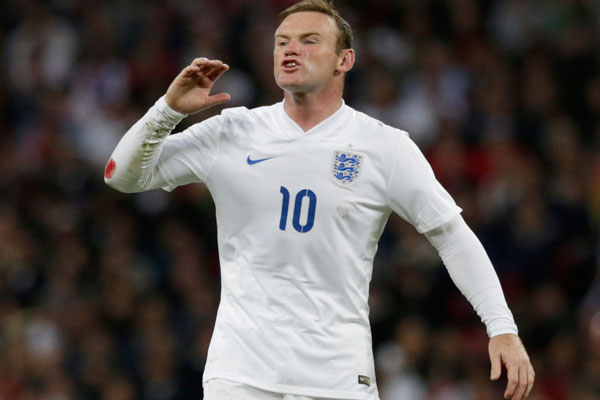
It may seem somewhat harsh to criticise the performance of one player and to place the blame at that individual's feet, but Wayne Rooney is a big reason for England's failure. He has been variously hailed as the nation's talisman, England's Lionel Messi, non-droppable, and the key member of the squad who would make the three lions roar. He didn't though, did he? Asked to play on the left wing against Italy by a horribly misguided Roy Hodgson, he neglected his defensive duties and proceeded to sulk for the majority of the game. There can be no questioning his talent though, as even in a game where he had little interest in putting in a shift he still managed to grab an exquisite assist from a left footed cross. That isn't enough though: for every goal Wayne Rooney produced for England, there were two or three chances against that he should have stopped, and it's all well and good blaming Hodgson for the decision to play him where he did, but the player presents himself as a hero who would bleed for the cause. He just doesn't concede that the caveats have to be that he's in the right position and it's against the right opposition...

9. Technical Superiority

Andrea Pirlo has been at the top for over a decade now and Suarez has shown himself to be one of the most prolific strikers in world football. The key to their success is superior technique. Everytime the ball is played into either man, their first touch is impeccable. Let's be clear though, any English player can get the ball under control in one touch. The difference with Pirlo, Suarez and the entire German team is that their first touch sets them up to execute the finish, cross, pass or skill that they already knew they were going to complete. The England player controls the ball first, then moves the ball into position for the next phase. The grace with which Pirlo receives the ball is majestic to watch: he always looks in complete control of any situation, whereas Suarez always looks like he could wriggle his way through any adverse situations. Either way, the England team have no similar fluidity. And on the subject of technical superiority...

8. The Youth Development System

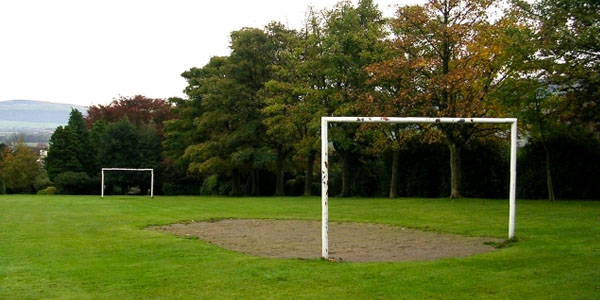
After Euro 2000, the German FA felt such shame at their nation's abysmal performance that they performed an entire overhaul of their football system in order to avoid failure again. England have no such intent. A shrug of the shoulders; an, "I say Alfred, that was a dashing poor performance from whatshisname, wasn't it?" accompanied by some fervent finger wagging before the maid enters the room with at the tea trolley; that's probably a pretty good estimation to the response from the English FA. As a nation, we have to feel ashamed of the state of our international team. We should be so embarrassed that we take a serious vow to change - and then we should actually change. When Brazil dominated the world with flair, their children trained on sandy beaches with tennis balls. When Spain were an unstoppable force, their children has been playing on small pitches and had the tickatacka passing style drilled into them. The unrelenting, mechanical efficiency of the Germans now is underpinned by their children playing on small pitches and trained to play in multiple positions. In England, our children are hoofing the ball on a full sized pitch and chipping the 5"2 goalkeepers who can't reach the crossbar. England has to change. It must decide on the national style and it must develop that style throughout the grassroots world. It has to target 2026 as the next winnable World Cup.

7. Gerrard And Henderson

With 3 games to go in the Premiership and Liverpool were leading the race for the championship and had clear daylight from the teams below them. But then Jordan Henderson became an invisible player and Steven Gerrard slipped at the worst possible time and in the worst possible way - we're still waiting for Uri Gellar to claim that one - and the league also slipped away. Why then, would you build the heart of your midfield with two players who have just proven that they buckle under pressure? Not only that, these are two players who have single-handedly lost the Premier League; their confidence would have been underneath the toilet and halfway towards the sea. They had just experienced Catastrophe Theory in its fullest and there is absolutely no way they should have been the central midfield at the World Cup. Gerrard looked a man with no belief and I'm not actually sure if Henderson was on the pitch during any of the games. One of them, maybe Gerrard, should have been starting, but Wilshere and Barkley were a much better second option.

6. The Group Of Death

To be fair to England, they were placed in a group that couldn't have been much worse' had they been drawn against the Algerians and another weaker side then we may have progressed to the last 16. Maybe. But then that's not really a justifiable excuse: a team who wants to win the World Cup needs to be able to beat any opposition, and we were certainly capable of progressing from this group, with the Italians under-firing and the two teams that qualified more on industry and spot-on tactics rather than individual skill. Their preparation pushed them through to success, and England should have been able to adjust their own play to deal with their opponents. Looking at all of the groups, though, in hindsight England had a tough task. Add into the mix the miracle recovery of Luis 'Jaws' Suarez and there is definitely an argument that the footballing gods were lined up against the three lions in Brazil. Maybe we will get luckier in Qatar...

5. People Who Blame Too Many Foreigners In The Premier League

First off, there ARE too many foreigners in the Premier League - if we're talking about the progression of young England players at least. But the argument really is a chicken or the egg type of thing: are the English youth players suffering because of a large number of foreign players or are there a large number of foreign players because the English ones are rubbish? Many would argue that it is the prior, but they are wrong. In Julian Draxler, Serge Gnabry, James Rodriguez, Romelu Lukaku, Coutrouis, Coutinho, Neymar, Kroos, there is a huge list of foreign young players who could waltz into most Premier League first teams, whereas the English youth system doesn't create the same level of talent. Simply forcing clubs to field more English players would lower the standard of football played in England. The truth is that quality is more important than quantity; there is no point in having 100 average English players in the league when only 11 can be on the field at any one time. It'd be more prudent to have 15 world class players throughout the league instead. We have neither though, and that's kind of where the problem lies. We need more English players in the Premiership, but first we need better youth players.

4. Inexperienced Defence

Against Italy, we looked threatening, and maybe if we had a few less long range shots and maybe if we had played Rooney central then we could have scored more goals but that is neither here nor there; the fact that we looked threatening is a good sign. Defensively however, we were a mess. Set piece marking was comical, to the extent that Pirlo had the opportunity to dummy a corner through his legs and the ball rolled to the edge of the D, where it was nicely lashed home without an England defender within 5 yards. Then came the back post cross that Balotelli rose for as elegantly as a salmon before nodding the ball past a helpless Joe Hart. Had Rooney tracked his man or Baines closed Rooney's man down, then the cross wouldn't have come in. Had Jones or Smalling marked their man, then they could have dealt with the cross. Had Joe Hart been on his toes, he probably could've come an collected a high, looping ball that took an age to reach the back post. Woulda, Coulda, Shoulda... Then there was Uruguay. Another set piece, another goal, another player not marked properly. Then we have the Gerrard paradigm appearing once again. He lost the Premiership by not dealing with a long ball and we were eliminated from the World Cup because he failed to deal with a long ball. The centre backs looked like they were waiting for a bus and Suarez only needs a glimpse at the goal. Bread and butter for most defences - except maybe Brazil - but for England even the basics seemed alien to our defenders.

3. Tactical Inflexibility

England Formation It was astonishing to watch Roy Hodgson not make any tactical changes throughout all 3 games in the groups, despite the results going against his team. It seemed that the strategy was go out and dominate possession, and when that didn't work, try plan B: dominate possession. England fatally didn't close down Pirlo and eliminate his controlling play from the Italian game; we didn't man handle an unfit Suarez so that he needed to be substituted through exhaustion after 30 minutes. Instead we tried to boss possession against two teams who both had special tactics for every one of their opponents. Yes it is a statement of a lack of confidence to play to the other team's game, but England aren't in a position to be as arrogant as to ignore that approach to stifling opposition. When Rooney was playing poorly, he was allowed to sulk and continue to play rubbish: when Sterling got tired, Lallana came on and was told to be like Sterling. Barkley came on and copied Henderson exactly in playing the invisible midfielder and Welbeck actually tried really hard - which was at least promising to see! Roy Hodgson may have to add a few pages to his game plan book because page one doesn't cut it.

2. The Lack Of English Coaches

With the lack of English players in the Premier League being the big bone of contention amongst pundits, very little attention is paid to the lack of English managers. Who are the leading English coaches in the Premier League? Sam Allardyce, Tony Pulis, Alan Pardew, Steve Bruce and before them, Hodgson and McLaren. 3 out of those 5 were infamous for the 'hoof' style of football that they play - not a style that will win any major trophies. The highest placed English performer this year was actually the young coach, Tim Sherwood, at Tottenham - who, despite being the most successful English manager out there, was sacked. So what does that say about the state of the English coaching system, when the most successful English manager in the league is sacked because his performance wasn't good enough?England need to start developing their young coaches; the Gary Nevilles and Jamie Carraghers need to start growing into their management careers, with the right approach to the game, now, rather than being drawn to the probably more lucrative world of post-game analysis. Unlike Spurs' approach with Sherwood, young coaches need to be given time; they need to be a key component in a long term project with a clear vision, in a similar way to the way Joachim Low's achievement with Germany was built.

1. Poor Officiating

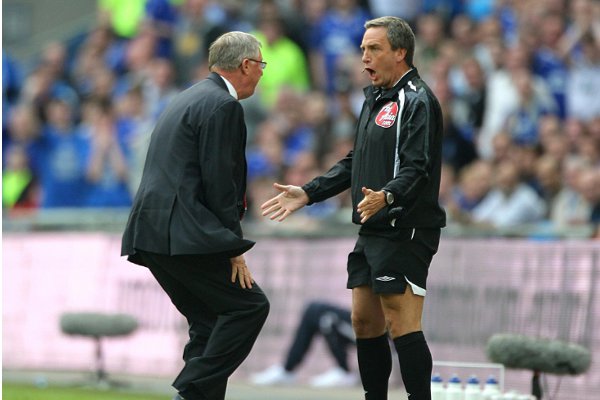
In South Africa it was the goal that never was: after being hammered by Germany initially, we fought back and really took the game to the old enemy, as Lampard rattled the crossbar with a 30 yard screamer, that bounced so far over the line as to be comical. No goal. Fast forward to Brazil and we now have goal line technology, which should have put an end to such catastrophic errors. Unfortunately though, referees are still human and therefore are still capable of making mistakes; conspiracy theorists would even suggest they're even more capable of being persuaded to make mistakes. The performance of officials in Brazil was nothing short of embarrassing, with disallowed goals for no reason, penalties for breathing too hard on a player's shoulder and the odd yellow card for breaking a fellow's back. In relation to England however, against Italy there were numerous offside decisions given as Sterling was sent racing through and a couple of huge penalty shouts that fell on deaf ears - all were pretty much up for contention, but a penalty chance is a penalty chance. Uruguay's battle hardened centre back, Diego Godin, picked up a yellow card in the opening minutes of the England game, and then put in an horrific tackle later on that didn't draw out a second card and a sending off. Uruguay were spared playing for an hour with only 10 men and went on to win the game when the game could've looked very different had the official not made the contentious decision. Perhaps it's easy to complain in these terms, but it's hard to ignore the fact that these decisions had genuine impact. There are many other factors that may have contributed to England's demise. Which do you think need to change if England are to become a real force in International football?

Contributor
Contributor

I have been described as a sportsman with the brain of an athlete and the body of a scientist. Since it was established that playing wouldn't work out for me I have taken to writing.